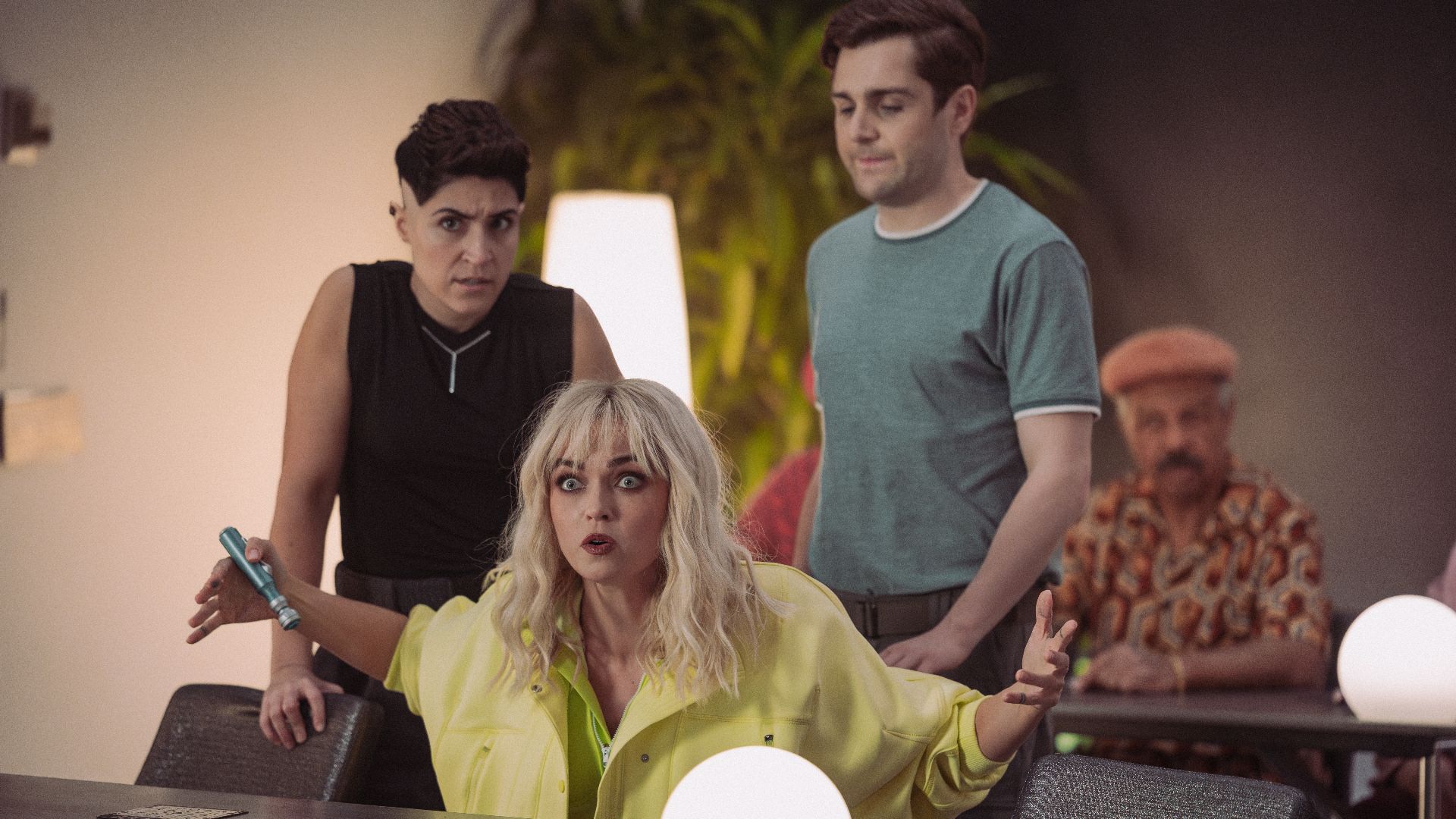
Slashfilm: "Strange New Worlds Season 4 Finale Has A Hilarious Star Trek DS9 Easter Egg For Serious Fans: Nurse Chapel dated someone from the Department of Temporal Investigations. The DTI didn't exist yet on "SNW." So it is confirmed that Nurse Chapel dated a woman who came from the future"
slashfilm.comScreenrant: "10 Classic Star Trek: The Next Generation Episodes Nobody Remembers Today: 11001001 / Symbiosis / Time Squared / Peak Performance / Tin Man / The Most Toys / Half A Life / The Quality Of Life / Face Of The Enemy / Parallels - they do show the versatility and power of the series."
Screenrant:
https://screenrant.com/classic-star-trek-tng-episodes-nobody-remembers/
By Dalton Norman
"Though highlights like "The Best of Both Worlds", "Inner Light", and "Darmok" are often heralded as some of the greatest hours of TV ever produced, there are just as many classic episodes of The Next Generation that go overlooked. ...
Considering how successful the show eventually became, it's easy to forget that the series stumbled out of the gate. The first few seasons of The Next Generation struggled to find their footing, and the series was nearly cut short before it could become a cultural institution. Thankfully, a handful of strong episodes in seasons 1 and 2 were enough to keep audiences tuning in during the rough patch.
As time went on, the cream rose to the top. The aforementioned episodes were revolutionary adventures for Captain Picard and the rest of the Enterprise crew, but they overshadowed other stories that deserved just as much attention. Most of the episodes on this list aren't groundbreaking, but they do show the versatility and power of the series. Almost nobody remembers them today, but that's not to say they aren't TNG classics.
"11001001" - Season 1 Episode 15
>"11001001" is a perfect illustration of the imagination of early TNG. The almost cartoonish alien race is reminiscent of the classic TOS era, where aliens were often symbolic in nature. Otherwise, it's a tense heist story that offers a look into the inner workings of Starfleet in the 24th century. Most of season 1 is abysmal, but "11001001" is a little glimpse into the future of the show.
"Symbiosis" - Season 1 Episode 22
>The episode grinds to a halt, so Wesley Crusher can receive the standard '80s anti-drug speech from Tasha Yar. That brutal few minutes detracts from what is an otherwise strong outing. It explores ideas like addiction, and effectively obfuscates modern problems through a sci-fi lens. Season 1, episode 22, is still a classic TNG episode, even if it suffers greatly from the early-season curse.
"Time Squared" - Season 2 Episode 13
>The episode is a bit more streamlined than later time paradox stories, and it actually helps "Time Squared". There's an eerie tone that's unique for TNG, and it reminds viewers that space is still a pretty scary place to be even in the 24th century. Picard's mettle as a leader is tested, and it's a theme that many of the later classics would return to. Like season 1, season 2 is pretty dull, but "Time Squared" is a must-see episode.
"Peak Performance" - Season 2 Episode 21
>Data really shines in the episode, and it's another step forward in the character's quest for humanity. "Peak Performance" teaches a few valuable lessons to the audiences, including thinking outside the box, being gracious, and that failure isn't a weakness. It finds a way to work in a lot of action, despite the fact that the real drama happens inside the characters themselves. The penultimate episode of season 2 isn't just good, it's one of the show's best.
"Tin Man" - Season 3 Episode 20
>"Tin Man" is an overlooked TNG classic that has ideas that are just a bit too big for one TV episode. The 20th episode of season 3 brings the Romulans back for their third appearance of the season, and positions them firmly as a consistent threat to Starfleet's mission of peace. The Enterprise finds a mysterious sentient spaceship, and they must race to keep it from falling into the hands of the Romulans.
>The biggest flaw of "Tin Man" is that it feels very much like a spec script (because it is). Though the main characters aren't given much to do, the imaginative science fiction is enough to keep things interesting. It really embraces the "strange" in "strange new worlds", and is the perfect offering for viewers who like their Star Trek a bit more unorthodox. There are plenty of throwaway episodes in Next Gen, but "Tin Man" stands above the rest.
"The Most Toys" - Season 3 Episode 22
>Despite its title, "The Most Toys" is an excellent example of how grown-up The Next Generation could be with its storytelling. Released toward the end of season 3, episode 22 hinges on a stellar performance from its guest star, and also continues the trend of excellent Data episodes. A wealthy trader concocts an elaborate scheme to steal Data and add him to his collection, but Data's defiance surprises them both.
>The series frequently shows Data questing for the brighter side of humanity, but he reveals a dark part of himself in "The Most Toys" that sticks out from the rest of his emotional arc. Saul Rubinek steals every scene as Fajo, and remains one of the best one-time characters in the show. It isn't the most action-packed offering of season 22, but the subtle strength of the writing goes a lot further.
"Half A Life" - Season 4 Episode 22
>Season 4, episode 22, is a classic Star Trek morality play. Making Lwaxana Troi the main thrust of the emotional arc was a brilliant choice, because it allows the show to examine the Prime Directive without forcing any of the Starfleet characters to betray their allegiances. Majel Barret runs with what she's given, and it's nice to see her character be something more than comic relief. If you like thought-provoking Star Trek episodes, "Half a Life" is an overlooked masterpiece.
"The Quality Of Life" - Season 6 Episode 9
>It took until nearly the end of the series, but the writers finally started paying off Data's character arc in episodes like "The Quality of Life." Having firmly established Data's case for sentience in earlier adventures, season 6, episode 9, allows the character to have agency and advocate for others in his position. The Exocomp probe shows signs of intelligence and self-preservation, which leads Data to fight for their rights as they are used to fix dangerous emergencies.
>Star Trek isn't just a franchise that shows humanity's idealized technological future, it often explores the deeper consequences of such tech. "The Quality of Life" is arguably the best use of this concept because it forces the audience to think about their own morality in an abstract sense. Much like the legendary "Measure of a Man", the season 6 gem is only getting more relevant as we get closer to the future.
"Face Of The Enemy" - Season 6 Episode 14
>Deep Space Nine would go further with the idea, but "Face of the Enemy" erodes a lot of the veneer of perfection Starfleet wears on its surface. If shows the inner workings of the Romulans, as well as the shadier side of humanity, and the empathetic Troi is caught in the middle. Even if the episode is a bit too convoluted for its own good, it's a rich and complicated adventure.
"Parallels" - Season 7 Episode 11
>Making "Parallels" part of season 7 was a brilliant decision because it offers a ton of what-if scenarios right before the series finale. Worf's unique perspective makes the parallel universe plot soar because his approach is different from that of Riker or Crusher, who had similar adventures in earlier seasons. Even when reusing ideas, Star Trek: The Next Generation was able to make them feel fresh with exciting twists—and more importantly—engrossing character moments."
Read more:
https://screenrant.com/classic-star-trek-tng-episodes-nobody-remembers/
Collider: "Wizards of the Coast has officially canceled the Magic: The Gathering | Star Trek Beginner Box in every region. In a new statement, the company attributed the decision to delays involving production, logistics, and shipping, confirming that the product will no longer be manufactured."
Collider:
https://collider.com/magic-the-gathering-star-trek-beginner-box-cancelled/
>"Anyone who has already preordered the Beginner Box will need to contact the game store or retailer responsible for the purchase to learn how it will handle the cancellation. Wizards did not announce a universal refund process, meaning the exact next steps may differ depending on where customers placed their orders. The cancellation will also affect previously announced Magic events that were intended to incorporate the Beginner Box, including MagicCon: Atlanta. Wizards is currently revising those plans and says it will provide additional information later, although the company has not indicated what could replace the canceled product at those events.
>Fortunately for fans who have been waiting to bring Star Trek into Magic: The Gathering, the problem appears to be limited to this single release. Wizards did confirm that no other products in the crossover are affected, allowing the larger collaboration to proceed despite losing its most beginner-friendly component. The decision nevertheless removes an important bridge between two enormous fan communities. Players already familiar with Magic can move directly into the crossover’s remaining products, but Star Trek fans attracted by the license may now need to learn the game through another starter release before attempting to boldly go into deck building.
>Production and shipping complications have created repeated problems throughout the tabletop industry, but permanently canceling a product across every market remains a more dramatic solution than simply delaying its release. Wizards has not explained why postponement was no longer viable or whether another introductory Star Trek product could eventually take the Beginner Box’s place.
>The remaining Magic: The Gathering | Star Trek products are still moving forward as planned."
Read more:
https://collider.com/magic-the-gathering-star-trek-beginner-box-cancelled/
Slashfilm: "Isaac Asimov was thunderstruck to learn that people find Spock sexy: Star Trek, he surmised, was tapping into something that his generation didn't have access to: the idea that intelligent individuals can be sex symbols. Spock stands in defiance of the male archetypes that preceded him"
Slashfilm:
https://www.slashfilm.com/2257499/spock-isaac-asimov-major-star-trek-personal-breakthrough/
By Witney Seibold:
"Of course, smart is sexy, and the fact that folks were lusting after Spock was something that famed sci-fi author Isaac Asimov found totally mind-blowing. In a 1967 editorial for TV Guide, he pondered Spock's allure and how this made him realize that thoughtful characters were the new sex symbols.
In his essay, Isaac Asimov portrayed Spock as being representative of a whole new cultural trend that he — as a professional writer — found quite appealing. His journey began, Asimov wrote, when his 12-year-old daughter, while watching an episode of "Star Trek," let slip, "I think Mr. Spock is dreamy." Startled, Asimov asked his daughter why Spock is dreamy. "Because he's so smart," she replied. "Star Trek," Asimov surmised, was tapping into something that his generation didn't have access to: the idea that intelligent individuals can be sex symbols.
Asimov then went on a tear about the male archetypes from the books he had grown up reading. Mark Twain's Tom Sawyer, for instance, was irascible, rebellious, sneaky, and actively avoided school. Meanwhile, the "villain" kids from those same stories tended to be well-off, well-groomed, and well-educated prigs. For Asimov, signs of masculine heroism came from a devil-may-care attitude, while intellect was associated with prudishness and villainy. Asimov was crestfallen to realize that he always did well in school.
Then, he cited cinema (although he didn't provide any specific movies) as having introduced new masculine ideals into his consciousness as an adolescent. Asimov was born in 1920, so these would have been films from the mid-to-late '30s. He generally recalled movies featuring taciturn, non-speaking heroes, i.e. physically large galoots that women would describe as "lovable big lugs." Big, shallow guys were attractive, the movies told him. Look at Tarzan.
And then, when he started to watch television, Asimov was exposed to sitcoms featuring clownish men and their sharp-witted wives (see: Jackie Gleason in "The Honeymooners"). The archetype was well-cemented. Un-thoughtful men, he internalized, were more desirable than considerate ones.
Isaac Asimov even admitted that he had internalized the images that pop media had been feeding him. He assumed that his intelligence made him less desirable as a mate and, so, he was insecure about his own marriage. His wife assured him that she loved him, but he felt he wasn't enough of a "lovable galoot," having an undeniable interest in literature, history, religion, science, and sci-fi TV. ...
Decades later, sometime in the early 2000s, I had a discussion with a co-worker of mine — a fellow Trekkie — and she admitted the same thing as Isaac Asimov's daughter: She always had a crush on Spock. Not Nimoy, but Spock, the fictional half-alien with a powerful intellect. Smart, cool, and emotionless, Spock is approachable, confident, and skilled. Hence, there's the alluring aspect of potentially seducing him. Flirt, make innuendos, break down his Vulcan emotionlessness, and enjoy the sensual and romantic passions that (we assume in our fantasies) are bubbling up underneath.
So, take a lesson. If you want to be alluring, you should read more, see plays, and enjoy the world. And you should definitely, definitely engage more with the "Star Trek" franchise."
Read more:
https://www.slashfilm.com/2257499/spock-isaac-asimov-major-star-trek-personal-breakthrough/
Star Trek EP Confirms Paramount+ Wanted To Cancel Strange New Worlds After Season 4: "They said, “Make a movie.” But we were like, no, two hours would just be awful." - Seasons 3 and 4 were produced under the suspicion that they could be the final seasons. (Screenrant / THR)
Screenrant:
https://screenrant.com/star-trek-strange-new-worlds-season-4-cancel-paramount-akiva-goldsman/
"Speaking to The Hollywood Reporter for Star Trek's 60th anniversary, Akiva Goldsman reiterated that Strange New Worlds' plan to end by leading into Star Trek: The Original Series "was always the promise," although they did not know "how long our show would last." Goldsman then confirmed, "Although they tried to cancel us after season four."
>THR: "Were you saved by a letter-writing campaign like the original Trek?"
>Akiva Goldsman: "No, we got into a conversation with Paramount. They said, “Make a movie.” But we were like, no, two hours would just be awful. So, we went back and forth, and to their credit we got six episodes. And that’s what next year is going to be, a six-episode goodbye that hopefully resolves everything viewers have been wondering about."
Like every Star Trek series on Paramount+, Strange New Worlds fell into the crosshairs of Skydance Media buying Paramount+. At its peak, there were five Star Trek TV series (and Star Trek: Starfleet Academy in development) on Paramount+ under the aegis of executive producer Alex Kurtzman. As the Skydance buyout happened, Paramount+ systematically canceled all of its new Star Trek.
Star Trek: Strange New Worlds season 3 was delayed for two years by the 2023 WGA and SAG-AFTRA strikes, and a lot changed in Hollywood during that time, including Skydance buying Paramount. Both Strange New Worlds seasons 3 and 4 were produced under the suspicion that they could be the final seasons. Season 4 is full of "big swings," in effect, to get their most pie-in-the-sky ideas produced in case it would be the end of the show. ..."
Read more:
https://screenrant.com/star-trek-strange-new-worlds-season-4-cancel-paramount-akiva-goldsman/
[Interview] Deidre Hall Made Star Trek: SNW's Soap Opera Legit: "Yes, and also, let's bring in the soap audience because they get to see Marlena in space now, so they know who she is, and now they're meeting everybody else on the starship. It is a staggeringly beautiful set. And the costumes, gosh"
Screenrant (Exclusive):
https://screenrant.com/star-trek-strange-new-worlds-diedre-hall-soap-opera-interview/
"When Star Trek: Strange New Worlds decided to do a soap opera episode in season 4, it was only logical to bring in daytime TV icon Deidre Hall to guest star.
"I was stunned and thrilled and very surprised" about getting the call to join the Star Trek universe in Strange New Worlds season 4, episode 7, Hall tells ScreenRant's John Orquiola. "And then it turned out to be sort of a Dr. Marlena Evans in space. I mean, it really is what I play every single day. But just a little better costume.”
....
ScreenRant: You coming aboard for the soap opera episode made me think about how back in 2009, J.J. Abrams rebooted Star Trek for the big screen. Leonard Nimoy came in to give it authenticity. I feel like you coming into Strange New Worlds for the soap opera episode gave it authenticity. This is like them saying, ‘Yes, we are a soap opera for this hour.’
>Wow, what you said, it's all true. Yes, and also, let's bring in the soap audience because they get to see Marlena in space now, so they know who she is, and now they're meeting everybody else on the starship.
Hall says that, as written, her Star Trek character, Dr. Eleanor Chivers, "didn't require any changes." Chivers is a Starfleet therapist assigned to help Captain Christopher Pike (Anson Mount) with his "cosmic amnesia." However, Pike was harboring real, unresolved grief from losing his alternate future wife and daughter in Star Trek: Strange New Worlds season 3's finale.
"I think the monumental moment is at the end of the piece when she helps Pike confront his past heartbreak," Deidre points out. Once the soap opera fever dream instigated by the meddling space god, Trelane (Rhys Darby), lifted, Dr. Chivers could finally counsel Pike.
"It opens him up much more emotionally, which is great for himself, and his crew, and everybody around them," Hall says. "So that was the takeaway from that episode. Very sweet.”
Hall traveled to Toronto to film Star Trek: Strange New Worlds, and she was surprised by how beautiful and immersive the show's USS Enterprise sets were. "It is a staggeringly beautiful set. Of course, Pike's office. Every inch of it is beautifully done," Hall raved. "The hallways are beautifully done. It's like walking through a spaceship. You don't walk off the set and then go into a new kind of set. It's all right there. The bar is right there, and the lighting is spectacular. It's an amazing set design, and they really brought it home.”
Deidre reserves her biggest applause for Strange New Worlds' hair and makeup team, and costume designer Bernadette Croft, who outfitted her with a fashionable, blue 23rd-century Starfleet counselor's uniform.
>Let's talk about [my] costume, okay? Should we talk about that? Gosh, oh my gosh, Bernadette Croft, is a genius designer. I met her, and thought I had no idea what [Dr. Chivers] would be wearing because she's, of course, a doctor, but then she's on a spaceship. So, hard for me to reconcile those two things... And Bernadette really, I think, brought it home. I thought every inch of it fit perfectly, felt perfectly, moved perfectly when I walked. I mean, you could not find her wanting anywhere. So, shout out to Bernadette for that.
Deidre Hall's scenes were mainly with Anson Mount and Celia Rose Gooding. In Trelane's soap opera melodrama, Dr. Chivers tries to help Captain Pike bond with Ensign Uhura, who believes she is his long-lost daughter. Hall called Anson and Gooding "a fine oiled machine."
>Anson, at that point, was in the middle of waiting for a baby, so his second child was about to be born. So everybody was on alert. He may get up and walk out at any moment because he needs to be there. So we were very aware of his state of mind, and excitement, and obviously eagerness to be there when his baby was born. So that was going on.
...
Read more:
https://screenrant.com/star-trek-strange-new-worlds-diedre-hall-soap-opera-interview/
Rod Roddenberry: "What Star Trek Has Taught Us After 60 Years - [My father] knew we were flawed. But he also knew we were capable of learning. Capable of growing. Capable of rising above the fear and division that keeps trying to hold us back. That’s the job “Star Trek” has."
Rod Roddenberry (for Screenrant):
>"Gene Roddenberry, the creator of “Star Trek,” and my father, was born on August 19, 1921. At a young age he took to devouring books at the local library. He loved how stories could take you away on journeys of exploration and discovery. That curiosity would follow him his whole life. As he grew, his love of adventure and storytelling grew with him, forming the foundation of who he would become.
>He lived a lot of lives before “Star Trek” was ever an idea. He flew over eighty combat missions in World War II. He saw death up close, and on some of those missions, he was the one who had to deliver it. ...
>Through these experiences, he saw some of the worst of humanity – conflict, greed, prejudice, fear. But he also saw the best of us – our curiosity, our courage, our compassion for one another. Throughout all of this, he was doing what storytellers do. Watching. Listening. Questioning. All of it fueled by curiosity. He was trying to understand people. Not just who we are, but who we could be.
>And this became the heart of “Star Trek.”
>He knew we were flawed. But he also knew we were capable of learning. Capable of growing. Capable of rising above the fear and division that keeps trying to hold us back.
>That’s the job “Star Trek” has. Not to save the future all by itself. But to keep pushing us toward optimism. Toward altruism. Toward wanting to be better, and living in a way that inspires other people to do the same.
>This is what I’ve gleaned from my father’s creation. It’s what I do my best to hold true to as I am now raising my own son. It’s what I carry with me as I witness a world full of change and complexity and uncertainty. It’s what I hope for all of us.
>Here’s to the next sixty years!"
Read more:
https://screenrant.com/star-trek-60th-anniversary-rod-roddenberry/
[Interview] Uhura Has A Conflict With Star Trek: Strange New Worlds' New Vulcan - Celia Rose Gooding: "I don't want to spoil too much, but the tales, the trials, and the tribulations of Nyota Uhura and Cadet A’Sha are far from over. There is something really cinematic and contextually rich ..."
Celia Rose Gooding:
>"There is something really cinematic and contextually rich about a conflict like the one that Cadet A’Sha poses to her.
>When you are someone who has really found your footing, and you meet someone who is the polar opposite to you, you can really make one of two choices: you can soften and melt and sort of abandon yourself in an attempt to appeal to someone who's difficult and so culturally different, or you can stand your ground and really back yourself, and believe in your energy, and believe in your spirit, and continue to stand in your convictions and your decision-making.
>I think the choice that Uhura makes [dealing with A'Sha] is really reminiscent of what Lieutenant Uhura would do. Uhura is not the sort of shy, sheepish girl she was in season one. This is season four Uhura. She has something to teach. People can learn from her, and I think it's really exciting to see her stand in that, as opposed to abandoning herself. I think season one Uhura would have made a different choice, but it's just another example of how far she's come and how far she's grown.
>Celia is "really excited for fans to get the immediately available entertainment of watching someone you love go through a really tense and friction-y relationship." At the same time, "The people who love her and are excited to watch her grow will really back her and really cheer her on in her choice to stay steadfast, and how she chooses to approach what is, no matter how old you are, no matter what you do, a difficult situation."
>Gooding has high praise for Bianca Nugara, whom she calls "a light. She's great, and what she has to offer as Cadet A’Sha is so interesting and fun, and so more goodness is coming, for sure, between the two of us. ..."
Read more (Screenrant):
https://screenrant.com/star-trek-strange-new-worlds-season-4-celia-rose-gooding-interview/
CBR: "Star Trek VI Paved the Way For Inclusivity & Diversity: The Undiscovered Country concludes with Kirk's final, heart-wrenching captain's log that offers a more inclusive, gender- and species-neutral term, 'where no ONE... has gone before.' This usage by Kirk signified the dawning of a new age"
CBR:
https://www.cbr.com/star-trek-vi-the-next-generation-kirk-quote-changed-franchise/
By Rebecca Budgen
>"This line is a more inclusive variant on the classic quote from Kirk's introductory monologue with which every episode began. Though the change from "no man" to "no one" was first used in The Next Generation's introduction sequence, spoken by Patrick Stewart as Captain Jean-Luc Picard, this usage by Kirk signified the dawning of a new age in the Star Trek franchise. ...
>While Star Trek has always been at the forefront of progressive representation, philosophical and political themes, and inclusive storytelling, its views — much like its charmingly terrible special effects — remain a product of its time. Shaped by a male-dominated industry, even TOS was a victim of deep-seated sexist attitudes prevalent in the 1960s that often relegated female characters to damsels in distress, emotional wrecks, or evil seductresses. ...
>The show's most infamous case of blatant sexism was its series finale "Turnabout Intruder," which has been widely panned for its explicit messaging that women are too emotional for command. Depicting them as incapable of captaining a starship, this was the first instance in this fictional utopian future that framed gender restriction as a rule in the progressive world of Starfleet. ...
>In spite of its previous failings of female characters in TOS, the continuing films and spin-off TV shows always attempted to improve inclusivity. As demonstrated in Star Trek's first spin-off*,* women were elevated to command positions. The Next Generation embraced more feminist themes with 3-dimensional female main characters, like Dr. Beverly Crusher, Counselor Deanna Troi, and security chief Tasha Yar.
>Representing different backgrounds and species dynamics, future iterations of Star Trek have endeavored to expand the progressive framework set by TOS to include disability representation and LGBTQIA+ visibility. While TNG was the first to put these new views in place, the change to the iconic monologue in Star Trek VI: The Undiscovered Country is crucial as it rewrote its unfortunate past.
>With a 60-year history, it comes as no surprise that Star Trek has evolved with the times. Not only with better examples of diverse representation, but the franchise has also frequently retconned its own lore. In addition to altering character history and drastically redesigning species' appearances (like the Trill and Klingons), it has retroactively recontextualized its own sexist storylines to better reflect Roddenberry's vision of an egalitarian future.
>While subsequent series depict a time period after TOS with female captains such as Star Trek: Voyager's Kathryn Janeway (played by Kate Mulgrew), prequel shows ignored or actively retconned this decision. This allowed prominent female characters like Star Trek: Enterprise's Captain Erika Hernandez and Captain Philippa Georgiou from Star Trek: Discovery to command starships.
>In response, many fans acknowledge TOS' sexism as an outdated mistake of 1960s writing that the franchise chose to leave behind. Others view Janice Lester from "The Turnabout Intruder", who swapped bodies with Kirk in order to command the Enterprise, as deeply unstable and delusional — meaning her statement that Starfleet doesn't allow female captains is her unfounded bitter rationalization rather than actual Starfleet policy. ...
>Shifting away from the pristine, utopian facade, Star Trek VI is a timeless story that confronts institutionalized xenophobia with the explicit hatred of Klingons and challenges the Federation's universal norms, such as alien physiology and homo-sapien-centric vocabulary. Kirk's changing of the famous quote to "where no one has gone before" shows how he has learned how to better value both non-human and non-male perspectives, background, and history.
>Highlighting the Vulcan concept of IDIC — Infinite Diversity in Infinite Combinations — introduced in TOS season 3, this quote addresses the changing views of the time and highlights its history at the forefront of progressive storytelling. While TNG featured the female commander in the franchise, The Undiscovered Country ushered in a new era of acceptance and inclusivity that led to the eventual inclusion of Captain Kathryn Janeway as Voyager's iconic lead character just 4 years later. Changing Star Trek forever, Kirk's final line perfectly encapsulates Roddenberry's inclusive and egalitarian view of a utopian future that everyone should strive for."
Read more:
https://www.cbr.com/star-trek-vi-the-next-generation-kirk-quote-changed-franchise/
Mary Trump Reveals How Star Trek Helped Shape Her Life: She says TOS became a “safe space” during a difficult childhood. Growing up in the Trump family, it also provided something considerably more important: an alternative set of values. Nichols' Uhura became an important role model for her. (WW)
Woman's World:
By Edward Gross
"What fascinated Trump wasn’t merely the Enterprise or the prospect of traveling among the stars. She responded to the relationships between the characters and, ultimately, the philosophy underlying them. Looking back, she believes Star Trek introduced her to the possibility that encountering people different from ourselves should inspire curiosity rather than fear.
>MARY TRUMP: “I loved the characters individually, but it was more the ways in which they interacted and that their friendships deepened over time. We got more and more insight into how they came to be friends and crew members. There’s also the spirit of exploration; the ethos of wanting to build relationships with people, species, what have you, that are different from us, and leading with the desire to understand and challenge ourselves to be better and not make judgments. Not be so human-centric that we always go in thinking we’re right about everything and everybody else must bend to our way of interpreting things. That sense of possibility was one of the things that spoke most deeply to me about that show.”
>“It’s had a huge influence on my life, especially early on, because I came from a problematic family [laughs]. I came from a family in which the so-called values were completely antithetical to who I wanted to be—not that I recognized that in any obvious way until I was much older. But to have this group of people, week after week, exemplifying the kinds of values that really resonated with me — even when they got it wrong, even when they messed up, even when they did things that were morally suspect on occasion, they still were coming from a place of real moral rectitude and ethics and striving to do better, be better.”
>“So it served for me as a safe space in a way. And it allowed me to hang on to the hope that there was more outside of the system in which I was being raised. I don’t think I can overstate the importance or the influence the original series had on me.”
It also sent Trump toward science fiction. Until roughly the age of 12, she says, the genre dominated her reading, including Isaac Asimov, Ray Bradbury and Robert Heinlein. But Star Trek remained different. And one character really stood out.
>“Star Trek was the very first and maybe only time in my life one character sort of became a role model—again, without my knowing that, because I wouldn’t have known what that was. But Nichelle Nichols was such a badass as Uhura. That was a character that became so important to me. I always wanted those characters, that world, that universe to be part of my life.” ...
Her second favorite Star Trek series, after the original, is Deep Space Nine, precisely because it expanded Roddenberry’s universe without simply duplicating what had worked before.
>MARY TRUMP: “I think DS9 is some of the most brilliant world-building I’ve ever seen. And it still stays true to the spirit of the original. I think that’s where some mistakes are made. It’s the spirit we need to stay true to, not the formula.”
For Trump, Deep Space Nine also demonstrated how fragile political relationships can be, exploring shifting alliances, cultural differences, religion, economics and the consequences of placing power in the wrong hands. Yet there’s another element of Star Trek that she believes has become almost radical in contemporary entertainment: its willingness to stop the action and allow intelligent people to talk. ..."
Read more:
Akiva Goldsman reflects on whether Star Trek has reached its final frontier: "I think it was a lot of trial and error for all of us in this modern era of Trek. One [lesson] is: chase the Trek you love – don't try to extrapolate it into something else. [Picard S.3?] It's clearly the best iteration"
Radio Times:
https://www.radiotimes.com/tv/sci-fi/star-trek-akiva-goldsman-exclusive-interview/
>"Despite his long history as a Star Trek fan, dating back to the ‘70s, Goldsman is known for his work on modern Trek – and, safe to say, it hasn’t always been easy. Certain shows of the modern era have been loved. Others have been hated. Goldsman is no stranger to both of these reactions, as the showrunner of Strange New Worlds, the Discovery spin-off that follows Christopher Pike (Anson Mount) and the crew of the Enterprise as they boldly go where no man has gone before. ...
>“It's always interesting to see the reactions,” Goldsman points out. “At this point, I'm disappointed if it isn't split evenly between people who say it's their favourite episode they've ever seen and the people who say it's the end of Star Trek as we know it.”
>But when the fanbase is so divided, how can you tell the direction to go in?
>“I think it was a lot of trial and error for all of us in this modern era of Star Trek,” he reflects. “I think some things became very informative over the course of the last decade or so. One [lesson] is: chase the Star Trek you love – don't try to extrapolate it into something else.”
>The writer recalls: “The real lesson for that, for me, was on Picard, where Michael Chabon and I were navigating it and Patrick [Stewart] had a lot of input, and he was saying, ‘I don’t want to do Next Gen again!’
>“When Terry [Matalas, showrunner] came on in season 2, he kept saying, 'We’ve gotta do Next Gen,' and everybody was like, ‘No!’ Patrick was like, ‘No!’ But Terry would pitch it with the same passion that I might pitch Strange New Worlds, until at one point, finally, I'm like, ‘Let's just go to Patrick. He's gonna say no, but let's go.’
>“So we went to Patrick's house. Out came the bottles of wine, and I'm like, 'Patrick, just listen.' Terry's pitching his heart out, about how everybody has to get back together... and suddenly Terry's crying, and then Patrick's crying, and then I'm crying. Everybody's crying.
>“It's clearly the best iteration. I'm proud of the show, but the iteration of it that really lands is that third season of Terry's, and it's because he chased what he loved, and I think that is the great lesson of Star Trek.”
>Goldsman has clearly followed that lesson throughout his time on Trek, most notably with Strange New Worlds. Season 5 will be one of the final projects of this era of Star Trek – although Goldsman did have plans for more.
>“Henry [Alonso Myers, co-showrunner] and I were begging them to give us more episodes. Every year we left cards on the board that were episodes that never got made.”
>There are also plenty of proposed Star Trek series that sadly haven't moved forward at Paramount. One of them is Goldman's Year One, which would have continued on from Strange New Worlds and followed James T Kirk’s first days commanding the Enterprise.
>“I would have loved to have done Year One and kept on with this group because they're my cohort now,” he says. "I feel familial with them, and I understand the Star Trek that we made together. And should [Paramount] call tomorrow and say, ‘Let's do that,’ I'll come running.
>“But I do think that, at least for me, my time with Star Trek is over now. I was really lucky – Strange New Worlds was everything I imagined when I couldn't even imagine it, as a little boy playing Star Trek. Now I got to be a bigger boy playing Star Trek with somebody else's toys.
>“It’s a literal dream come true, but now somebody else needs to do it. Somebody else needs to know what Star Trek is to them. `Somebody who fell in love with Star Trek watching Lower Decks, or somebody who has just never shaken The Animated Series.”
>It's been reported that Alex Kurtzman's contract is set to end this year – and if so, Star Trek will be in need of a creative force to drive the franchise into the future. Asked if he would ever take on the job, Goldsman is doubtful.
>“Never say never. I love Star Trek. I love it as much as anything I have loved that I've worked on," he says.
>"[But] to do the big job means you're only doing Star Trek, and I wouldn't do that. I'm 64 years old, and if I got 10 or 15 more storytelling years in me – or five, based on how Hollywood goes – I could see myself telling more Star Trek stories for sure, but I could not see myself only telling Star Trek stories.”
>Now, as Star Trek hits its 60th anniversary, the future is uncertain. But Goldsman points out that the franchise has been through many phases, with a lot depending on money, studios and audiences. At some points, we’ve had Star Trek shows in abundance. At others there’s been a significant lull.
>“It certainly became clear that Star Trek had a very consistent loyal audience, but it's finite,” he says. “It has proven to be finite. It's good, but it ain't Taylor Sheridan's audience!”
...
>“As much as I'd like to still keep playing, because it's fun, I also understand the value of renewal and whether it renews itself perfectly the first or the second or the third iteration of whatever the next – dare I say – generation of these shows are, it'll find its way. It always does.”
Read more:
https://www.radiotimes.com/tv/sci-fi/star-trek-akiva-goldsman-exclusive-interview/
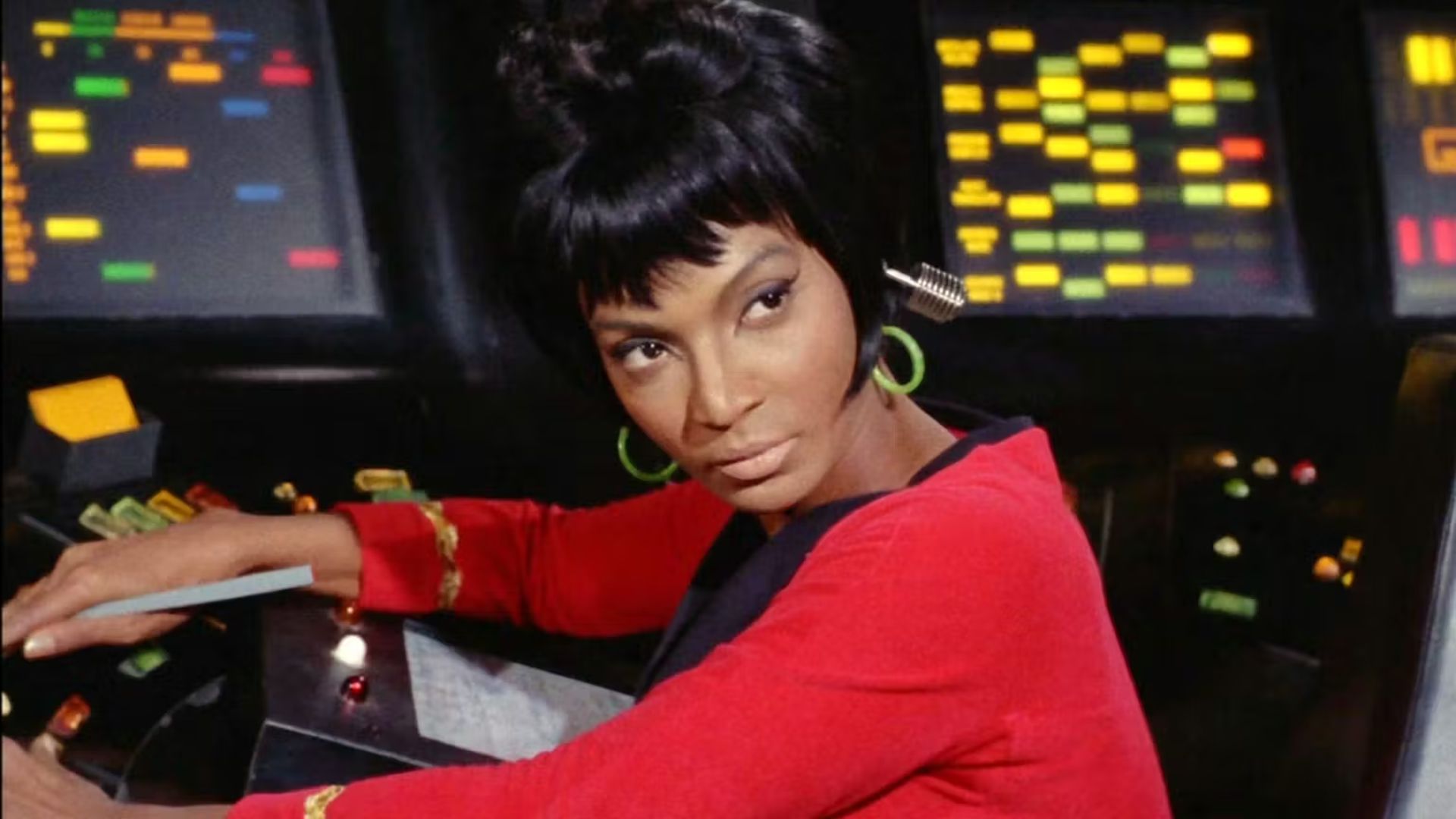
Screenrant: "One Underused Star Trek Character Is Still The Most Important In Sci-Fi TV History: Uhura was TV’s first black female main character in a non-domestic role. TOS isn’t perfect, but its depiction of a black female officer sets the show apart from every last one of its contemporaries."
Screenrant:
https://screenrant.com/star-trek-nyota-uhura-first-female-black-character-sci-fi-history-important/
By Guy Howie
>"It’s no accident that Star Trek introduced the world to Nyota Uhura at the height of the American Civil Rights Movement. The message the show was trying to convey by casting Nichols and developing Uhura as a character along these lines chimed with its overall progressive stance on racial integration, which was becoming an increasingly mainstream perspective.
>Nevertheless, in 1966 it took something special to overcome network television’s blanket denigration of black women. Star Trek: The Original Series could have done a lot more with Uhura. But it still did more than any other TV show of its day was willing to do for black female representation. ...
>Star Trek’s Kelvin timeline movies and Paramount+ series Strange New Worlds might have done more for Nyota Uhura as a character, but the Uhura of The Original Series has done more for black female characters in general than any other sci-fi creation of the mid-20th century. When it comes to social progress, she’s a singularly significant figure in sci-fi history."
Read more:
https://screenrant.com/star-trek-nyota-uhura-first-female-black-character-sci-fi-history-important/
GFR: "The Secret Society That Influenced Countless Episodes: Have you never noticed all the '47' references in Star Trek? They’re all over the place. Even JJ Abrams included numerous references to 47 in ST2009. What’s up with all this numerical weirdness? It all began with TNG writer Joe Menosky"
Giant Freakin Robot:
https://www.giantfreakinrobot.com/ent/scifi/secret-society-influenced-star-trek.html
By Chris Snellgrove
>"What’s up with all this numerical weirdness, and where did it start? It all began with Star Trek: The Next Generation writer Joe Menosky. When he attended Pomona College, he was a member of The 47 Society. This was a special campus club with a deliciously insane belief in a mathematical proof that demonstrates all numbers add up to 47. They also believe that 47 occurs with greater frequency than any other number. Now, it’s uncertain how much of this Menosky actually believed or if he just enjoyed numbers-based trolling. What is certain is that he started including references to 47 as an in-joke, starting in Season 4 of TNG.
>Once the rest of the writers learned what he was doing, they got in on the joke and started including references to 47 in their own scripts. This occurred across all shows in the Golden Age of Star Trek, though the DS9 writers eventually got tired of the joke and stopped doing it. However, Trek producer Rick Berman didn’t get tired of the joke; once, when he was asked what was so special about this number, he quipped that “47 is 42, corrected for inflation.” This is, of course, a winking reference to Douglas Adams’ Hitchhiker’s Guide to the Galaxy, which famously stated that 42 was the answer to life, the universe, and everything.
>While JJ Abrams brought some 47 references into the Kelvinverse, this joke pretty much died out after the Golden Age of Star Trek. Characters stopped referencing this number in later shows like Discovery, Strange New Worlds, and Starfleet Academy. Honestly, though, that might be for the best. Even at the height of Trek’s popularity, this was an in-joke that most fans never even noticed and few ever truly understood. It’s tough to imagine the subtlety-hating NTrek writers trying to weave these references in. Although, in her own way, Ensign Tilly carried on the spirit of Menosky’s insanity. After all, this decades-long numbers joke was a way to demonstrate exactly one thing: the power of math, people!"
Link:
https://www.giantfreakinrobot.com/ent/scifi/secret-society-influenced-star-trek.html
Gizmodo: "‘Star Trek’ Aims to Set a World Record for Vulcan Salutes on ‘Star Trek’ Day"
gizmodo.comMovieweb: "How 'Star Trek: Strange New Worlds' Admits 'The Final Frontier's Sybok Reveal Was a Cheap Twist"
Movieweb:
https://movieweb.com/star-trek-strange-new-worlds-sybok-twist/
By Daniel Bibby
>"It's easy to forget that William Shatner's James T. Kirk and company did not go on a perfect run of adventures. There were numerous storylines, twists, and even characters that were heavily criticized upon release.
>Regardless, there have been few efforts to retcon these more divisive elements from the canon. In fact, newer Star Trek shows have actually doubled down on some of the more disliked parts of the classic era, recontextualizing them in the canon at large. Strange New Worlds Season 4 has just done it again with Episode 7, "Like Chronitons Through the Hourglass." The soap-opera-inspired installment admits one of the biggest missteps the franchise has ever made, but it does so in a creative and playful fashion.
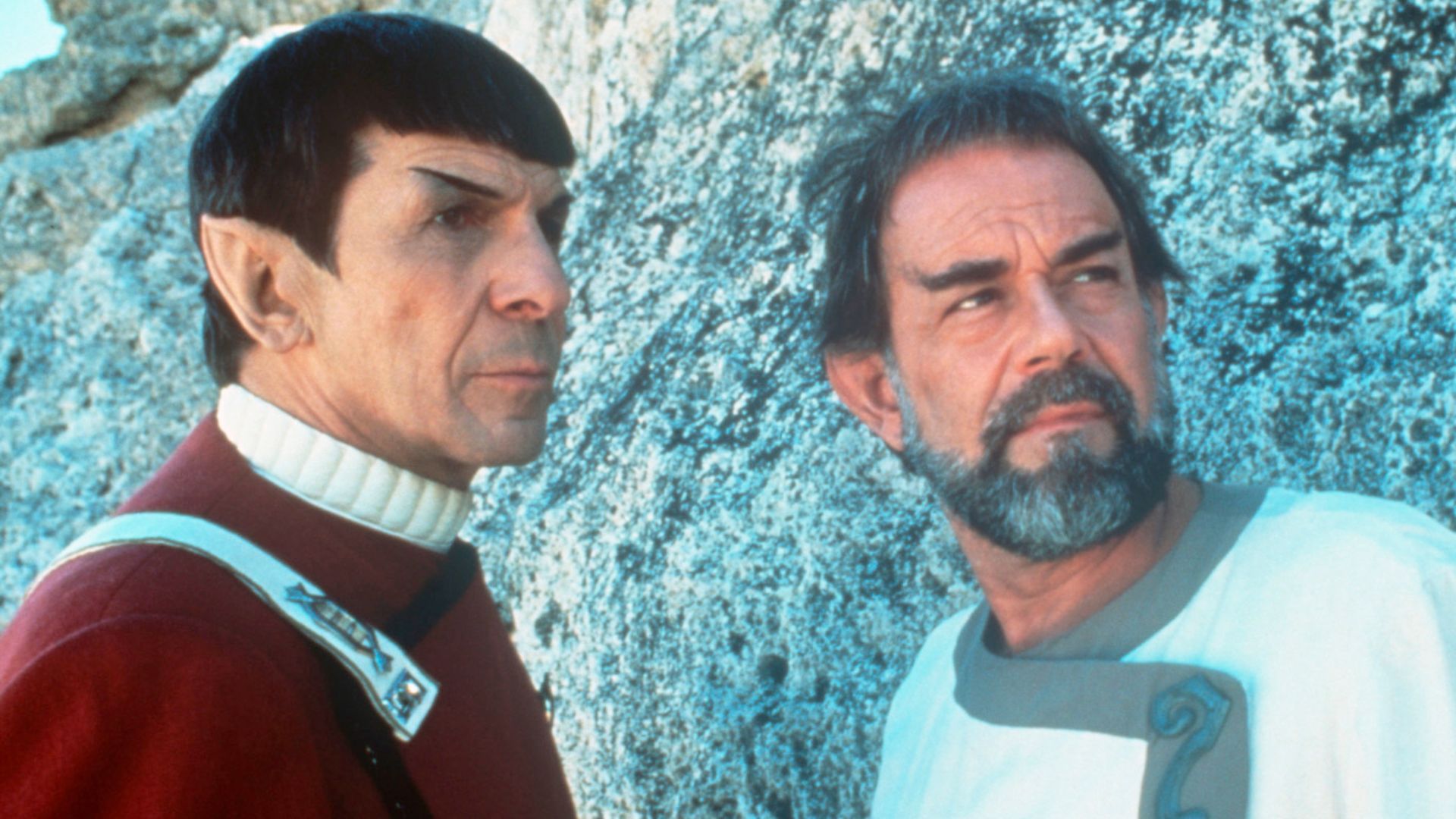
>Laurence Luckinbill's Sybok made a sudden debut in 1989's Star Trek V: The Final Frontier, giving Leonard Nimoy's Spock a half-brother. The connection to Spock was pivotal to the movie's plot. Still, even now, I firmly believe that it was completely unnecessary to debut a sibling who had never been mentioned before. Sybok could have just been an old friend. I'm sure I'm not alone in that belief, either. It felt like a very cheap twist designed solely to surprise the audience. It reeked of something from a soap opera storyline, which are routinely written to maximize melodrama rather than focusing on the grounded stories they masquerade as.
>"Like Chronitons Through the Hourglass" intentionally champions a soap opera format, drawing strong influences from genre standouts like Days of Our Lives. Because Trelane (Rhys Darby) has become a fan of soapy storytelling, the spell he casts over the crew of the Enterprise forces them to act out these over-the-top tropes. Uhura's (Celia Rose Gooding) claim that she's actually Captain Pike's (Anson Mount) daughter is a great example of this, but so is Ethan Peck being cast in the role of Sybok.
>Usually responsible for playing Spock in Strange New Worlds, Peck is also tasked with playing a version of Sybok in "Like Chronitons Through the Hourglass" who's nothing more than a part of Trelane's illusion. Peck's Sybok, unlike Luckinbill's, is unveiled as Spock's surprise identical twin. It's exactly the kind of over-the-top twist that regularly occurs in soap operas like Days of Our Lives. By extension, I can't help but feel like this is Star Trek finally admitting that writing Sybok as Spock's brother was unnecessary, and, in certain lights, somewhat laughable. ..."
Read more:
https://movieweb.com/star-trek-strange-new-worlds-sybok-twist/
Den of Geek: "Star Trek vs. Battlestar Galactica - Remembering When Enterprise Lost Post-9/11 TV: In the 2000s, BSG addressed America's fears and moral failings better than Star Trek ever could. Enterprise tried to turn the anxieties of post-9/11 America into some futuristic triumphalism"
Den of Geek:
https://www.denofgeek.com/tv/star-trek-battlestar-galactica-remembering-enterprise-post-911-tv
By Joe George
"Not unlike Archer and Trip, the heroes of Battlestar Galactica make some terrible moral decisions. Colonel Tigh succumbs to his alcoholism more than once. Chief Tyrol wrestles with his allegiances after learning that his lover Boomer is a Cylon. Commander Adama and President Roslin devote time and energy playing politics against one another instead of seeking consensus. Even Starbuck, the hot-shot pilot and most traditional action hero of the series, is an emotional wreck unsuited for anything but fighting.
But those shortcomings aren’t covered over by the humans’ victories. The show doesn’t assume that we’ll forgive the humans because we want the humans to win and the Cylons to lose. Instead, Battlestar Galactica understood that flaws and shortcomings were part of the human experience, which was the whole thing the heroes were fighting to save. Moreover, the show understood that the heroes have much in common with the Cylon enemies, and that the way forward must necessarily involve a complicated, imperfect peace.
Where Enterprise tried to turn the anxieties of post-9/11 America into some futuristic triumphalism, Battlestar Galactica understood that messy insecurity was our natural condition—and it showed us how to live in it.
Ironically, for all that Enterprise did badly and Battlestar Galactica did right, the two series ended on very different notes. After beginning with a coda that wrapped up dangling Temporal Cold War plots, the fourth season of Enterprise gave the show its best episodes. The series lacked grand ideas or big themes, but it did manage to tell entertaining stories about the early days of Starfleet and the founding of the Federation. Simply put, it became regular, old Star Trek.
Conversely, Battlestar Galactica tried to move out of the moral morass in which it excelled with a high-concept finale that rivals only the ending of Lost for its ability to anger or excite its audience, even to this day. The show concludes by revealing that all the events took place in the distant past, and that the peace between Cylons and humans eventually leads to the creation of Earth and its people. Peaceful though the ending may be, its ending was too easy for a show that embraced complexities.
Which is perhaps just as well. Star Trek has always been about looking beyond this present moment and toward a better future. Enterprise proved that the series stumbled when it tried to take on the current situation too directly. Fortunately, Battlestar Galactica could fill in the gap, if only for a few years."
Read more:
https://www.denofgeek.com/tv/star-trek-battlestar-galactica-remembering-enterprise-post-911-tv
Fandomwire: "Star Trek: Every Space God, Ranked Most to Least Powerful: 1. The Q Continuum - 2. V'ger - 3. Bajoran Prophets (Wormhole Aliens) - 4. The Douwd - 5. Nagilum - 6. The Organians - 7. The Metrons - 8. Apollo - 9. Trelane - 10. Gary Mitchell - 11. Charlie Evans"
fandomwire.comStar Trek guest star addresses 'the secret of Q' in SNW following soap opera episode: "Linking the fan theories and making it canon, it's a perfect role for me. I mean, who else am I gonna be? I just love that this entity has so much power and mischievousness.” (Redshirts)
redshirtsalwaysdie.comThe Unsurprising Reason 'Star Trek: TOS' Episode "This Side of Paradise" Is Leonard Nimoy's Favorite: "We saw him loving, picnicking, romping, and literally swinging playfully in the trees. It was a total exposure of internal Spock that so many people have always suspected was there.”
Collider:
https://collider.com/star-trek-leonard-nimoy-favorite-episode-spock/
By Lloyd Farley
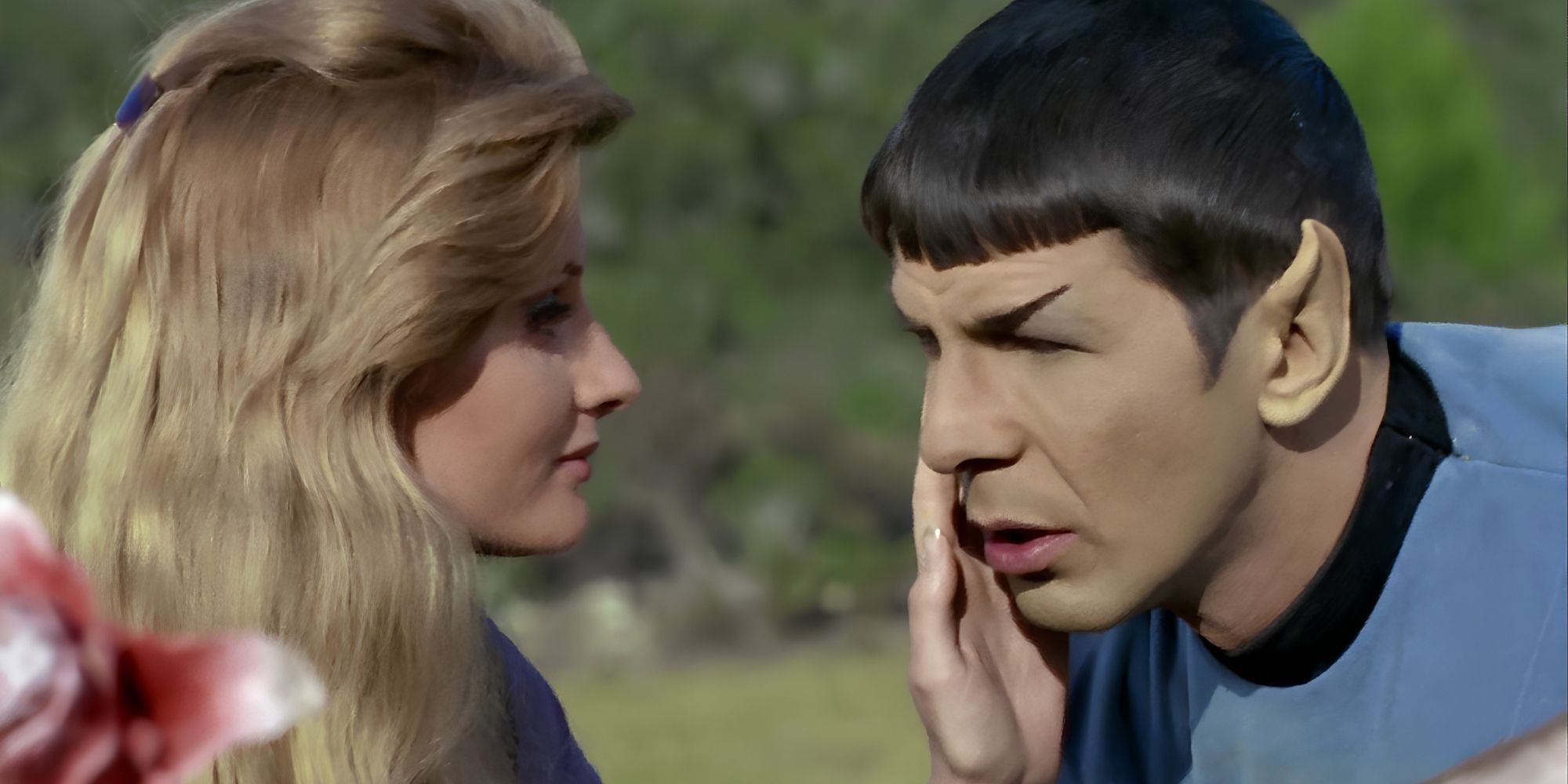
"Leonard Nimoy's personal favorite, "This Side of Paradise," is one of the series' best episodes all around. And the reason why, as Spock would say, is logical. ...
Leila offers to show Spock how the colonists have survived, leading him to a field of flowers, which expel spores that cover him. The spores have an immediate effect on Spock, causing him to lose his inhibitions. He laughs, swings on tree branches, and professes his love for Leila. With the two caught up in their romance, Spock dismisses Kirk's orders. In fact, everyone dismisses Kirk's orders, with the entire landing party, and soon those aboard the Enterprise, having been exposed to the spores as well.
You read that correctly: Spock, the logical Vulcan with the emotional output of a rock, laughs, smiles, plays, and lays the mack down with Leila. Yes, other episodes in the series have seen Spock express emotions, like the extreme emotions associated with pon farr in "Amok Time," or "Plato's Stepchildren," where he's seen laughing and crying. But the former is an uncontrollable condition tied to Vulcan mating, while the latter is triggered against his will by the telekinetic abilities of the Platonians.
What "This Side of Paradise" allows is a rare opportunity for Nimoy to show a playful, human side of Spock, without having to convey some inner struggle to stay in control. And that is exactly why Nimoy likes it, saying (per H&I):
>“This is a very special episode for me, for obvious reasons, and particularly because, where Spock was so totally adult in most of his attitudes and reactions throughout the series, this episode provided a chance to expose the complete child within. We saw him loving, picnicking, romping, and literally swinging playfully in the trees. It was a total exposure of internal Spock that so many people have always suspected was there.” ...
On a deeper level, the episode explores the idea that passivity and contentment stymie ambition and discovery, in a way that, like most Star Trek episodes, subtly hides behind the story being played out on the screen.
It ends, though, on a poignant moment that says more about Spock than at any other time. After Kirk asks Spock about his experience, Spock replies, "I have little to say about it, Captain, except that for the first time in my life ... I was happy." The realization that Spock has never known happiness and has effectively rejected it once again hits hard, a sacrifice he makes to follow his Vulcan heritage by denying himself his own humanity. As illogical as that might be."
Read more:
https://collider.com/star-trek-leonard-nimoy-favorite-episode-spock/