![[Interview] Ronald D. Moore | Closing the Book on Star Trek: The Next Generation | The 7th Rule #427 (New interview)](https://external-preview.redd.it/HGoao5DtBcTcQ8Nair6EaTFwZJsphYNkxTgzjS8V3Gw.jpeg?width=140&height=105&auto=webp&s=f9d2edeb1c0fc159f4d94e007685a01dd74e511a)
▲ 10 r/Star_Trek_
[Interview] Ronald D. Moore | Closing the Book on Star Trek: The Next Generation | The 7th Rule #427 (New interview)
youtu.beu/mcm8279 — 4 days ago
SCREENRANT:
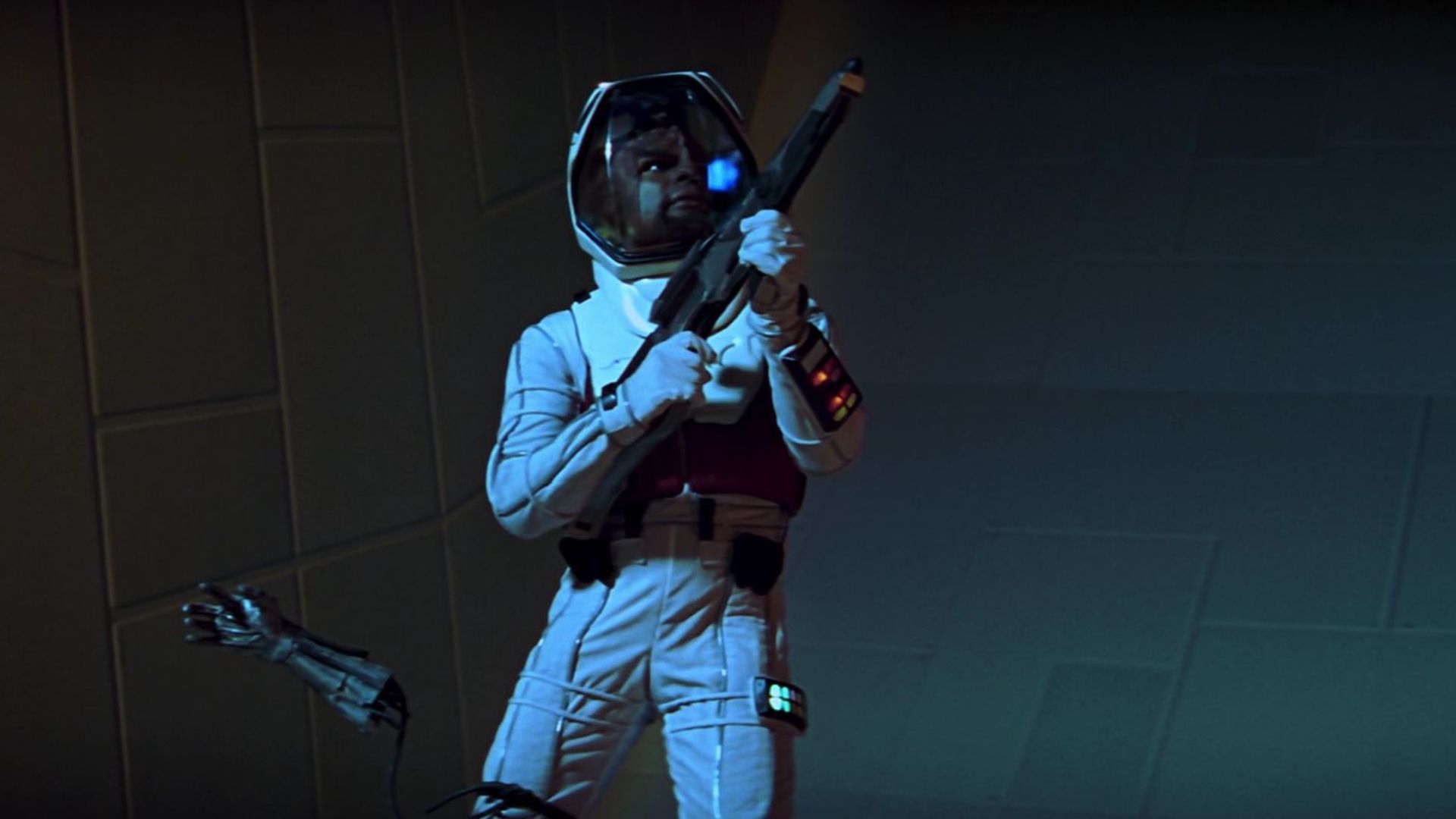
"1996's Star Trek: First Contact is hailed as the best of the Star Trek: The Next Generation feature films. One of *First Contact'*s most memorable sequences was its spacewalk, where Worf, Captain Jean-Luc Picard (Patrick Stewart), and Mr. Hawk (Neal McDonough) don space suits and battle the Borg on the USS Enterprise-E's deflector. Worf quips, "Assimilate this!" before blasting the Borg's device to signal the rest of the Collective in the Delta Quadrant.
On The Nacelle Company's Instagram promoting The Center Seat II: 60 Years of Star Trek, Jonathan Frakes says Worf's "Assimilate this!" was always scripted and not improvised. "Never. Never happened," Frakes confirmed. Agreeing that *"It's a great line," Star Trek: First Contact'*s director asserted that "Improvisation was not something that was ever part of Star Trek. We were never allowed to improvise. They were really, really strict." Watch the post below [Instagram]:
https://www.instagram.com/p/DeFbtMJS9hZ/
Now that Worf's "Assimilate this" is confirmed to be scripted dialogue, credit for the line goes to Ronald D. Moore and Brannon Braga. [...]"
Full article:
https://screenrant.com/star-trek-jonathan-frakes-first-contact-improv-rumor-false/
WILSON CRUZ:
"I know that my heart broke knowing that [Starfleet Academy] wasn’t going to continue because I think there was a lot more story there. I wish I had more to share. I know that my feelings are that there might have been something political involved there. I don’t know. I’m not there anymore day in and day out to find out.
But I pray that my worst fears aren’t true, and that whoever continues to produce this franchise understands the true value in its diversity, the true value in making sure that people understand that everyone, no matter who they are, no matter who they love, how they identify, can help create a better world, and is necessary in achieving the success of any mission.
TREKMOVIE: In terms of the negative talk about it, I sometimes feel it was a concerted effort. Do you feel that?
Well, you know, let’s make no mistake. There was negative talk about Discovery, right? And the franchise continued on telling the stories it wanted to tell, if not more so. You know that that is a minority view. I think they’re just loud voices. There’s a smaller group of people who are louder, and I think we understood that once we got going. I got caught up in in getting angry about some of the response, but I understood once I really kept going that there was an enormous majority of Star Trek fans that really loved the show and loved the fact that we were expanding the idea of what it could be.
You’ve been very outspoken about the Paramount merger….
[laughs] Me?
Would that affect if Star Trek wanted you back? I know that it’s going to be a whole different animal now, but would that change your thoughts about coming back to the franchise?
Not to the franchise. No, I think that I’m going to do everything I can, if ever I’m asked, to continue this legacy. I’m committed to helping people imagine a better world for themselves, and if they want to produce content that helps people challenge their view of what the world could be, and that includes a diverse cast and a diverse idea of who can be heroes, I want to be a part of that story because I know how it affects young people and it affects the way that they see their futures.
[...]"
Full interview (Laurie Ulster, TrekMovie.com):
TREKMOVIE:
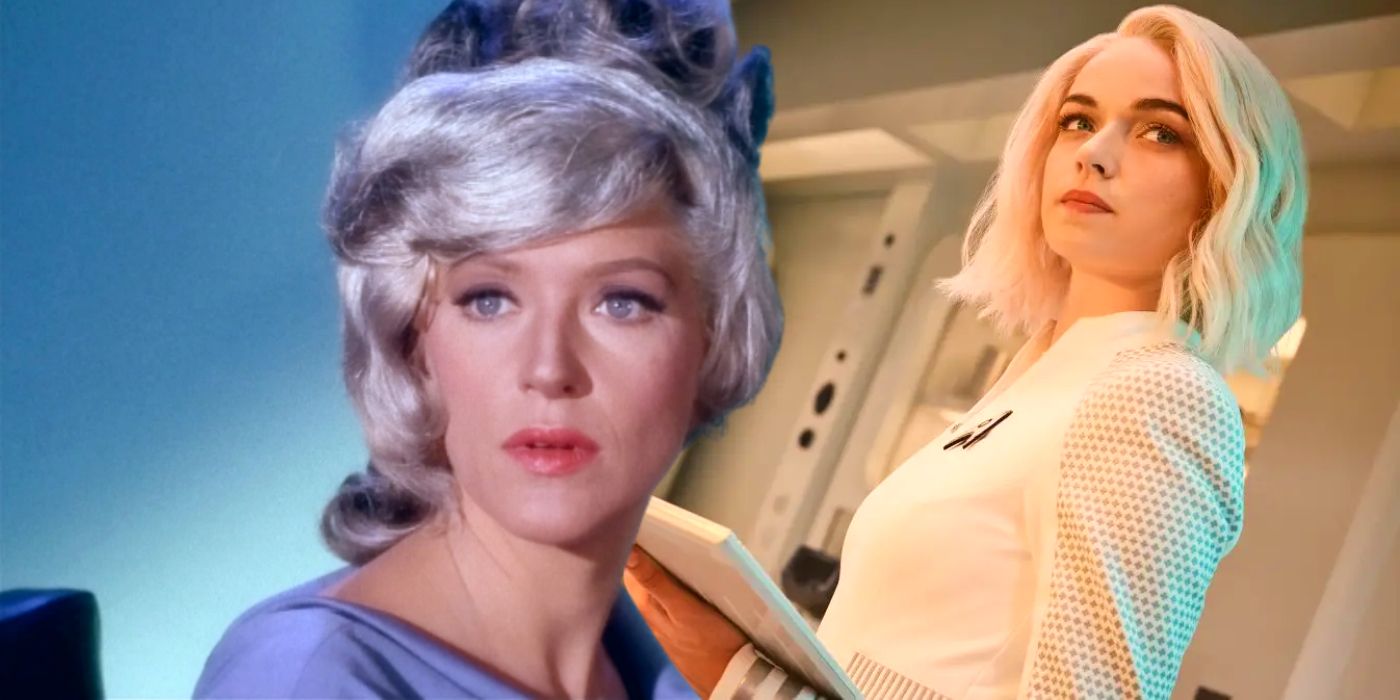
"At the Broadcast+Cable Hall of Fame Awards, where Star Trek received the first-ever Franchise of the Year Award, we caught up with Strange New Worlds‘ Celia Rose Gooding, hot on the heels of the show’s season 4 finale. We asked her about playing future Uhura, fan reaction to SNW’s use of genres, and her hopes for the future. [...]"
CELIA ROSE GOODING:
>"I think with something that is so heavy, like the plot of “Tomorrow’s Enterprise,” coming together to >!save Scotty, it was it was really important for me to not get too bogged down by the doom, because in order for the difference between the two to be clear, they can’t be the same person. So, Strange New Worlds Uhura still operated in that place of perfectionism, a little bit of worrying, just wanting to know everything all the time.!<
>>!And my TOS Uhura is someone who isn’t necessarily attached to that control and who isn’t so needing to know. She relies and trusts herself in a way that my Uhura, my Strange New Worlds Uhura, will be learning to do in the upcoming season.!<
TREKMOVIE: So when you made it, did you think that the Year One show was still very much on the table?
>I was hoping. I still hold that hope, but right now I’m just really excited about all we’ve done with Strange New Worlds. We still have another six episodes coming. We still have such good Trek coming. So whatever happens with Year One, I’m just really proud of the work we’ve done so far.
I’m sure you’re aware of the conversation with fans about genres this year. Is season 5 different from that? And how do you feel about that, because some people are very vocal about not being happy with all the “gimmicks.”
>"Oh goodness! How do I put this in a way my publicist will like? I think if our show tried to appeal to the opinions of everyone, we’d have really boring Trek. And so what I am so proud of is how we’ve able to how we’ve been able to maintain the true essence of Trek while being so genre-diverse. I mean, the show is called Strange New Worlds, so it only makes sense that we’re going to get into some strange activity every once in a while.
>And when I think of TOS, the episodes that jump out to me, when I think of TOS, when I think of TNG, when I think of DS9, the things that jump out to me, the things that immediately come to my memory are the more genre-diverse episodes, and so it was really important to me to stand by the show and stand by what we’ve done so far, because I’m really proud of that work.
>And we are the last of live-action Trek with SFA, and so I think what we really wanted to do with our finite time is continue to expand on what made the show, what made this franchise so beloved , and that is joyful curiosity, that is infinite diversity in infinite combinations, and not just in the species of people who work on the bridge, but also the diversity of the stories we try to tell.
[...]
Do you hope that there is a way to return to Uhura sometime?
>Oh, absolutely! I’ve loved this character. I will always love this character. I mean, I hope that Uhura’s journey continues, whether that be on screen, in novels, in any sort of continuation. I just would love to be a part of continuing her journey because her legacy is too powerful to let it just fizzle out. You know? She has a story to tell, and she will always have a place in my heart, and in the heart of Black entertainment, in the heart of sci-fi, in the heart of Star Trek. So I hope to be the one to continue Nyota Uhura’s story. But if I can’t, I’m just happy to see it continue, whether it’s me or someone else. But I hope it’s me.
Laurie Ulster (TrekMovie.com)
Full interview:
SLASHFILM:
"It's clear that someone over at Paramount — likely "Star Trek" head honcho Alex Kurtzman — very much loves the idea of Empress Georgiou, feeling that Space Stalin was a great addition to the franchise. The problem, though, is that she never becomes "good," per se. She just moves from being 100% evil to being maybe 98% evil. And Starfleet approves. That's damn dangerous, dude. [...]
In the Mirror Universe, Commander Burnham discovers that Philippa Georgiou has risen to the rank of Empress of the evil Earth empire, and that Empress Georgiou is a vicious, mass-murdering, cannibalistic tyrant. Trekkies will later learn that she also has a collection of doomsday devices. As "Star Trek" villains go, Empress Georgiou may be the most villainous.
Georgiou is eventually dragged back into the non-Mirror universe, and would go on to appear in 22 episodes of "Discovery," all told. The character is outwardly evil, and it's a wonder why the crew of the USS Discovery kept her around at all. Her advice is always to take the course of action that led to the most death, and she takes a near-sexual glee in knowing that others would die. And, yes, she's a cannibal. Early in "Discovery," she makes a meal of Lieutenant Saru (Doug Jones) and even attempts to feed some to Commander Burnham. Later, in the movie "Star Trek: Section 31," she is introduced enjoying a highball with an eyeball. She loves eating other people.
Curiously, Empress Georgiou came to be something of an admired figure on the USS Discovery. She even became sympathetic, briefly, when she went back to her home universe in the two-part episode "Terra Firma." She found that she loves the power and the sadism that her title provides, but that living on the Discovery gave her a new, more humble sense of purpose. Either way, the crew of the Discovery was weirdly forgiving of the war tyrant's crimes. Discovery, it should be noted, is a gigantically violent show overall, and the characters commit murder more frequently than on any of the previous "Star Trek" shows, so maybe they were ready to have a tyrant lead them.
Philippa Georgiou is so manipulative and clever that she can elicit sympathy from the forgiving members of Starfleet, even after they knew about the untold people she had killed in various world-culling conquests. She is a murderous villain who has, by dint of her being played by Michelle Yeoh, projected sympathy. How insidious. [...]
It seems that Section 31 is ideal for a murder-minded tyrant like Philippa Georgiou. Although she is technically not allowed to commit murder while a Section 31 agent, it's very insidious that a cannibal dictator is allowed to operate under the auspices of Starfleet rather than languish in a penal colony somewhere."
Witney Seibold (SlashFilm)
Full article:
MOVIEWEB:
"Generally speaking, the episodes that focused on either poignant storytelling or hard sci-fi tropes tended to be Season 4's superlative efforts. That isn't a steadfast trend, though, as I think some of the gimmicks were incredibly effective. The metrics I've used when ranking all 10 episodes include the quality of the script, the performances from the cast, implications for the broader Star Trek canon, and just how much I enjoyed or disliked them. Widespread reaction was something I lightly considered, but didn't allow myself to be too heavily influenced by. The internet can be a toxic place. [...]
https://movieweb.com/star-trek-strange-new-worlds-season-4-episodes-ranked/
Like "Off-Hour," "Valles Marineris" also addresses a decades-old Voyager mystery, but it doesn't drown out the fact that it's a Strange New Worlds episode. I will probably never tire of watching "Valles Marineris" and its clever ways of intentionally dancing around the Prime Directive while canonizing not just native Martian life, but another planet in the Solar System that's destroyed thanks to Star Trek: Strange New Worlds' main characters and the near-impossible decision they're forced to make.
Why It's #1: It's rare that a season starts so strongly that later efforts fail to top it, but "Valles Marineris" is a perfect example of how that can be achieved. [...]
Star Trek has made me laugh countless times through the years. It's a franchise that often nails its comic timing, but the funniest moments tend to come during scenes that aren't inherently comedic. It's the wit and sarcasm of the characters that allow the jokes to shine, rather than too much of a focus on making the context too zany. "Human Best Friend" is one of the purest examples of Star Trek trying its hand at a Hangover-style escapade that's built for laughter. I respect the attempt, but do not enjoy the outcome.
It was easy to tell where the jokes were supposed to be, but the lack of chemistry between Scotty (Martin Quinn) and Ortegas (Melissa Navia) is just one reason why it just didn't work. Watching Ethan Peck's Spock try to mind-meld with a plant was the only moment that actually amused me.
Why It's #10: Even the baked-in reveal of why Spock and Kirk (Paul Wesley) are so close in The Original Series wasn't enough to make this one feel worthwhile. [...]"
Daniel Bibby (MovieWeb)
Full article:
https://movieweb.com/star-trek-strange-new-worlds-season-4-episodes-ranked/
THE HOLLYWOOD REPORTER:
"Today, Paramount+’s prequel series Star Trek; Strange New Worlds has revived two of Majel’s roles, expanding both Chapel and Number One well beyond the social and cultural restraints of their mid-’60s origins. Jess Bush drew inspiration both from Majel’s performance and her off-screen persona. “I know that she was kind of disappointed with what she was really able to do with Nurse Chapel and the material that she was given to play with, but you can still see this kind of underlying, sometimes saltiness and sarcasm,” says Bush. “I wanted to reverse-engineer it into a more bright-eyed, bushy-tailed, more naive version of that energy.
“Because there wasn’t a heap of material for her in The Original Series, I also did more research into her as a person,” adds Bush. “The way that she dyed her hair and came back through the back door … She had this real vigor and it’s like, ‘I’m going to make this work for me.’ I think she just has this real kind of joyous self-possession, this ‘Life is magnificent and I’m going to take it by the reins.’ I wanted to distill that kind of energy.”
As SNW’s Number One, Rebecca Romijn had even less footage to study. “Only 13 minutes of screen time! That’s all I’ve had to go on,” she says, though she was determined to do right by both the character and the actress who originated her.
“I’m like, ‘Well, Majel, let’s prove them wrong at this point. Now’s the chance.’ So it’s been pretty incredible to take it on. I wish she were here for feedback.”
Romijn says she discovered a telling detail recently when Rod [Roddenberry] shared Majel’s signed, original script for “The Cage” with her at this year’s San Diego Comic-Con International. “She had written copious notes in all of her scenes. And I guess this script had been written for a man, because in all of the stage directions, it still said, “He passes to the left. He sits down. He picks up a thing,” and she crossed out every single one and wrote her, she. And I hope they reprinted that script for her. ‘Not him. Her.’”
[Marina] Sirtis says she especially admired Majel’s utter lack of complaint that her Number One never made it past the first pilot (though her performance would resurface through repurposed footage in The Original Series two-parter “The Menagerie” and, later, the release of the full unedited pilot). “She never harkened back to the unfairness of it and never complained.”
“There was always a humble quality when it came to Star Trek and fandom and a respect for the fans,” says Rod, who recalls his mother deeply valuing the fact that fans continually kept Trek alive whenever its longevity was at risk. At conventions, he recalls, “instead of going into the signing room with all the other actors, she would stay out at her table. And if anyone told her she had to go in there, she’d give them a certain finger … She wouldn’t just sign, collect money and walk away. She would engage with just about everyone who came by.”
“Without an audience, without people there kicking and screaming and saying, ‘We want this,’ it wouldn’t be here today,” he adds. “She knew that, and she gave the fans almost as much love as she gave my father.” "
Scott Huver (The Hollwyood Reporter)
Full article (Profile):
The Swagger and Stamp of the First Lady of ‘Star Trek’
TREKMOVIE:
"The $110 billion deal announced in March for Paramount Skydance to acquire and merge with Warner Bros. Discovery was put on hold in July following an antitrust lawsuit filed by 12 states. Over the weekend the company hammered out a deal, which will allow the mega media merger for the company that owns Star Trek to move forward. [...]
Since the Skydance takeover in the summer of 2025 we have seen a lot of talk about the importance of Star Trek, including how it will be a key franchise for the combined media company. But it still remains unclear what impact this merger will have. Warner Bros. Discovery is several times larger than Paramount Skydance, making the merged entity one of the biggest media companies in the world, able to compete directly with market leaders.
One thing hanging over all of this is how Paramount Skydance is taking on significant debt to make this deal happen. This will but major financial pressure on the company, and likely result in the search for more cost-cutting.
One of the big goals of the merger would be to combine the streaming services of HBO Max and Paramount+, which will now have the kind of scale to go head to head with Netflix and Amazon Prime. Paramount+ has been the home of Star Trek, including several streaming originals over the last decade. The streamer is winding down the two current shows (Strange New Worlds and Starfleet Academy), but executives are already talking about the “next iteration” of the franchise on TV.
Now any new development of Star Trek will have to sit alongside other major franchises in terms of priority, including Game of Thrones, DCU, and Harry Potter. But the combined streamer will have to reach a wider audience, which could benefit the Star Trek franchise on TV.
On the feature film side, there already is at least one Star Trek movie in development, a “new take” from John Francis Daley and Jonathan Goldstein. Paramount has made a commitment to release a combined 30 feature films, with 15 each from Paramount Pictures and Warner Bros. With both studios set to continue to run somewhat independently, the merger may not have as much of an impact on the feature film side for Star Trek, except that Paramount is on the hook to fill out their release calendar, so there will be more pressure to get things through, perhaps finally breaking the development hell we have seen for the last decade.
The new commitments to move more production to the USA could impact Star Trek, if the franchise does get some investment in the near future. Almost all filming for Star Trek in recent years has been done overseas, primarily in Canada. The last Trek TV show shot on the Paramount lot was Enterprise, which wrapped in 2005, with the 2009 Star Trek movie the last feature film on the lot. 2013’s Star Trek Into Darkness was shot primarily at another lot in Los Angeles, with 2016’s Star Trek Beyond shot primarily in Canada.
And the only streaming Trek TV series shot in LA was Star Trek: Picard, mostly due to a demand from series star Sir Patrick Stewart. Recently Paramount auctioned off assets in Canada for all of the Star Trek shows."
Anthony Pascale (TrekMovie.com)
Full article:
EX ASTRIS SCIENTIA:
"I also don't like that Kirk, both as "Prince Dashing" and as himself, is present yet again. And then there's that unresolved Kirk-La'an thing, which has been kept artificially alive and stretched across almost the entire season. It finally gets resolved now, as they decide to start over. I didn't see that coming. I was under the impression she would leave the show because of canon. The title "Once La'an a Time" certainly sounded like a departure to me, so I was mistaken about that.
https://www.ex-astris-scientia.org/episodes/snw4.htm#oncelaanatime
I was especially mistaken about La'an and Kirk because I firmly expected that relationship to be over. La'an had her affair with another version of him in the parallel reality. The real Kirk was drawn to her, but he was with Carol Marcus, so it never worked out. The disappointed La'an then turned to Spock, who himself was suffering from Christine breaking up with him, and that was soon over too. This is soap opera territory: they are together, then apart and together again, in various combinations. [...]
The big themes still exist in SNW, but by now the "smaller" episodes invariably revolve around a character's personal struggles. Discovery started this trend, but SNW has taken it a step further by making emotional drama a central theme in its own right. There are the eponymous strange new worlds, but too often they are merely the scenery for yet another story about a someone's feelings. This time, the world was literally created for that very purpose!
One or two episodes per season that are built around a character's inner conflicts are acceptable, but when this happens every other week (in season 4: 3x Spock, 1x Pike, 2x La'an, plus La'an's side plots), something has gone badly wrong. And I'm not even talking about the bizarre settings of these episodes here. Show us more science fiction! Show us more thought-provoking stories, not endless trauma therapy!
"Once La'an a Time" is funny in spite of everything. There are a few hilarious situations as Sir Rauth and Pollux take on the roles of Pike and Spock. Other than that, most of the entertainment comes from one-liners such as "Whomst is not a word." I laughed hard about a couple of jokes like this, so the humor is definitely there, unlike in the other episodes of this season that pretended to be comedies. And despite an equally silly premise, I think the acting is a lot better than the painful performances (whether they were intentional or not) we had to endure in "Human Best Friend" or "Like Chronitons Through the Hourglass". But when it comes to how everything is developed beyond preparing the jokes, I simply don't care for it.
Overall, "Once La'an a Time" is a sequel to an episode that almost nobody particularly liked in the first place, and I think it was made because the actors and crew had so much fun with it, simply ignoring how unpopular "The Elysian Kingdom" is among the fans. Once again, our characters find themselves in a scenario that makes them behave like a bunch of idiots, while the plot itself is an incoherent mess. It relies on pure magic and presents it as something that actually happens. There isn't even the slightest attempt to make sense of it in-universe, apart from La'an lampshading the absurdity with the line, "So magic is a real thing now?"
It's designed to conclude a totally unnecessary detour in La'an's character development, in the course of which she is "cured" by alchemy, rather than through the psychotherapy she would have needed and she even alludes to. It is wrong in so many ways. Yet "Once La'an a Time" is not quite as bad as I expected, and it clearly is more fun than the other whimsical episodes of this season. But if "not quite the worst" is the new yardstick, then the franchise is in serious trouble.
So we have ten episodes this season. Presupposing that the finale, "Tomorrow's Enterprise", is a traditional time travel story, it can be summarized as follows: four episodes with serious premises and six "big swings". The balance is totally off. And those six gimmicky installments sucked to various degrees. They range from really bad but funny, like this week's episode, to absolutely unwatchable. Only one of them was actually decent: "A Case of Chiaroscuro". That's a terrible record for this season."
Rating: 2 out of 10
Bernd Schneider (Ex Astris Scientia)
Full review:
https://www.ex-astris-scientia.org/episodes/snw4.htm#oncelaanatime
CHRISTINA CHONG:
"I think it’s about accepting pain, fear, and ugly emotions. But deciding that she deserves love. I have a really special connection to this character. She is me, partly. I put my personal stuff, my personal trauma, into her. And so I do feel very, very close to her. "
INVERSE:
"At first glance, the latest episode of Star Trek: Strange New Worlds is yet another high-concept romp full of hijinks. And while it's true that Season 4 has been stuffed with genre-bending episodes — from puppets to a soap opera riff — the truth is, Strange New Worlds has done some of its best character work in some of its wackiest episodes. Case in point, the now-famous musical episode from 2023, “Subspace Rhapsody,” actually did a fair amount of narrative heavy lifting for the Season 2 finale.
And now, with Episode 9 of Season 4, “Once La’an a Time,” a storybook fairytale episode actually helps complete a character arc that La'an Noonien-Singh has been going through since the very first episode.
“This is what she's been trying to get to since Season 1,” Christina Chong tells Inverse. “This is kind of the ultimate lesson she's learned.”
But what is that lesson? Other than Ortegas, La’an is one of the few characters in SNW who isn’t a legacy character embodied by a contemporary actor. She was one of the first new characters we met in the Season 1 debut, and for those new to Star Trek, La’an is both an audience surrogate and kind of an Easter egg basket; through her, a newbie can learn about not just the history of Khan, but also the Gorn. But through all of that unfolding of Trekkie lore, in many ways Strange New Worlds has been, at least partially, the journey of how La’an figures herself out.
In “Once La’an a Time,” a fairytale world, similar to the one we got in Season 1’s “The Elysium Kingdom,” creates mythological doppelgangers of the entire Enterprise crew. But for Chong, the episode was actually about as down-to-earth as you could imagine.
Since Season 1, despite being a capable officer, La’an has been beset by survivor’s guilt, concern over her hereditary connection to literal tyrants, and, after Season 3, as well as Season 4, the fact that her brief time as a Vulcan almost turned her into a Romulan.
>“I don't know how the writers do that, but they always tend to write to your real life,” Chong tells Inverse. “Even though they don’t know what’s going on, it’s like this idea of self-acceptance was imitating what I was going through in my own life.”
Through encountering a fairytale version of herself, who is full of love and hope, La’an is able to think about the softer sides of herself that she tends to hide away. This doesn’t mean she has to stop being herself, but rather, just the opposite.
>“I think something we probably all want to do is to love and accept ourselves,” Chong says. “I think it’s about accepting pain, fear, and ugly emotions. But deciding that she deserves love.” [...]
>“I think Kirk is probably the best guy for her,” Chong says. “I mean, if we're choosing between Spock and Kirk. Because where she is now, especially learning to love, growing emotionally. Kirk can help her with that. Whereas Spock is only half human and isn't quite able to fully access emotions in the way that I think she would want to. I think that’s the amazing growth lesson for her — to fully accept love and therefore grow and love someone else."
That said, we know La’an doesn’t appear in The Original Series; maybe this romance is doomed. Or is it? [...]"
Ryan Britt (Inverse)
Full article:
INTERVIEW MAGAZINE:
"Two Captain Kirks fifty years apart enter a Zoom chat. Both Paul Wesley and William Shatner have played the iconic Star Trek character on screen, in 2022’s Star Trek: Strange New Worlds and the original 1966 series respectively, but each managed to make the role completely and unforgettably their own, capturing new generations of fans across the decades. Both actors credit their youthful confidence with initially securing the part, but their willingness to experiment and delve deeper into Kirk’s psyche with keeping it.
Ahead of the Star Trek: Strange New Worlds season finale [...], Wesley and Shatner compared notes on the audition process then and now, learning to trust their craft, and not overthinking where your career takes you. Even when where it takes you is to the far-flung reaches of outer space.
[...]
SHATNER: Wait a minute. What do you mean you were a little bit lost? You’re either lost or you’re not lost.
WESLEY: Oh no, I was lost.
SHATNER: Okay. And lost in what way?
WESLEY: I was lost in the way that I felt defined by the show that I had done for many years [Vampire Diaries], which became a big—not as big as Star Trek, of course, but it still had an impact and it had some pop-cultural significance. People only looked at me for that character, and the character was not as sophisticated as…I’m not trying to disparage the show, but it was appealing to a younger audience.
It was a much more teenage, a lot of girls, and I was a 30-something-year-old man at that time. I was trying to [figure out], “How can I be more expressive of who I am, which is not this angsty teenage drama?” And I couldn’t find it. I was still searching.
SHATNER: Forgive me, dear, because it’s so interesting and intricate. You are conditioning you’re lost by saying, “I was a little bit lost.” But what does that really mean psychologically in you, being lost?
WESLEY: I guess I felt defined by the role.
SHATNER: And you didn’t want to be defined that way?
WESLEY: I suppose not. I suppose I wanted to understand the next chapter. Because unlike you, we weren’t doing movies of the series. It was like that chapter had closed, and I was still hungry as an actor, but not to do just anything. I wanted something special.
SHATNER: Could you define that?
WESLEY: Something with the magic that comes once in a lifetime to an actor where something has meaning to others—a deep meaning to others and a true impact.
SHATNER: I’m not sure you can see that to begin with.
WESLEY: I know, you’re absolutely right. You’re trying to find something that’s perfect.
SHATNER: Exactly.
WESLEY: You’re chasing this elusive thing rather than creating something.
SHATNER: That’s exactly right, because it’s totally malleable.
WESLEY: It’s a really good lesson in creativity, actually. It’s a good lesson in understanding that you can make something out of anything.
SHATNER: Because there are people who think like you. There are the producers saying, “Hey, we can’t spend any more money.” But you’re saying, “No, not more money. Just react with a sadness or anger at these.” So you write another couple of lines, and slowly you build a character that has characteristics the audience will recognize. Within those 13 shows, you can twist the character a little, is my point.
WESLEY: Yeah, and at the time before I got the call for this show, I was definitely feeling like a bit of a lost wanderer. But I got a call from my agent and he said, “Hey, you want to talk to Akiva Goldsman on Zoom?” Akiva and Henry Alonso Myers, the two showrunners of Stranger Worlds. I said, “I know who Akiva is and he’s an incredible writer. I would love to get on the phone, but what is this about?” “Oh, it’s Star Trek: Strange New Worlds.” And I hadn’t seen it. I said, “Yeah, sure. I’ll get on the phone.”
SHATNER: Did your heart leap or did you think, “Meh”?
WESLEY: No, I was kind of like, “Why do they want to talk to me?” And then when they said, “It’s for Kirk and they only want to talk to you.” I thought, “Well, this is crazy.”
SHATNER: Why is it crazy?
WESLEY: Well, because you doubt yourself. And here I am searching for this ambiguous, amorphous thing that I think I’m going to suddenly create myself, which is so silly of me. It’s so naive and egotistical. Then suddenly, you get a call and something’s just put in your lap in this bow. And you’re like, “Kirk?” I get on the Zoom with them and we’re chatting, and I’m just like, “Hold on a minute.”
I was like, “Guys, nobody has played Kirk on television other than William Shatner. This is a very big deal.” It didn’t dawn on me until I said those words. Saying it made me feel this immense whoa, butterflies in my stomach kind of thing. In any case, it was a Zoom and I didn’t audition for it. They wanted to talk to me and they wanted to just understand who I was, and they wanted to talk about the character and my connection to the character. That’s how the whole thing went down.
SHATNER: Wow. Have you started to film?
WESLEY: So I came in season one finale, and then the show’s been airing for a couple years now. We just started airing season four, and we’ve already shot season five.
SHATNER: No kidding?
WESLEY: The entire series is wrapped.
SHATNER: Are you younger or older?
WESLEY: Younger.
SHATNER: Everybody’s younger than me at this point.
WESLEY: Well, funnily enough, I’m older than you were when you shot your show. But yeah, so I’m Lieutenant Kirk on the Farragut, which is a neighboring ship.
SHATNER: Fantastic. I wish you all the best. I hope they renew and you enjoy playing it. I just wanted to be sure that you knew that I’ve got a podcast out there that I’d like to publicize a little. My daughter and I had stage four cancer three years ago. We both are cancer free, and we have a podcast going, and a couple of books, and a couple of movies, and stuff like that.
[...]"
Full interview:
CBR:
"Star Trek: Strange New Worlds is surging on the streaming charts after what fans are calling its best episode of the season. Strange New Worlds is back in Paramount+'s top 10 following the release of "Orders of Magnitude" on Thursday, landing at No. 6 in the United States and No. 8 worldwide.
Fans seem to be loving "Orders of Magnitude." The episode currently has an 8.4/10 score on IMDB, making it the highest-rated episode of Star Trek: Strange New Worlds since the show's Season 2 finale, "Hegemony," and its fifth-highest-rated episode overall. [...]
Strange New Worlds earned nearly universal acclaim in its first two seasons, but opinions began to shift in its third season. Some felt the writing didn't live up to the previous seasons' standards, which the showrunners said was due to the writers' strike. While Star Trek: Strange New Worlds maintains an overall series Rotten Tomatoes score of 93%, the show's audience score has dropped to 64%."
Link:
https://www.cbr.com/star-trek-strange-new-worlds-sci-fi-success-paramount-plus-september-2026/
"... for the future. [...] In fact, Bezos got to tell William Shatner, Captain Kirk himself, how much Star Trek meant to him in the latter’s new book, William Shatner … and You, excerpted in Variety. After explaining the ways in which he loved Star Trek as a child, Bezos said that one of his goals with Blue Origin “is to help humanity on its journey to the Star Trek future.” Yet if Bezos is going to realize that dream, he needs to pay as much attention to Star Trek‘s material reality as he does to its depiction of the stars. [...]
Yet the best example of Star Trek‘s ethos may be [Zefram] Cochrane himself, as portrayed in First Contact. Materialistic as he is, Cochrane is not heartless or craven. Rather he simply cannot imagine anything beyond the capitalist system put in place. In his mind, one succeeds by earning lots of money, therefore he puts his genius to work, creating a product that he can exchange for cash.
However, the arrival of Riker and the Enterprise crew shows Cochrane something different. As Picard tells Cochrane’s partner Lily (Alfre Woodard), “The economics of the future are somewhat different. You see, money doesn’t exist in the 24th century.” When Lily asks if that means people don’t get paid for their labor, Picard reveals that such a system no longer even exists. “The acquisition of wealth is no longer the driving force in our lives. We work to better ourselves and the rest of humanity,” he declares.
It’s this example that eventually expands Cochrane’s mind and shows him a different way. For us viewers, Star Trek does that expansion, reminding us that the system we currently have in place does not need to be, that other forms of life are possible. Of course that requires someone paying attention to the actual message of the show and looking beyond the limitations of their imagination, something Bezos might seem incapable of doing.
But if even Zefram Cochrane can change, perhaps there’s hope for Bezos yet. If Star Trek has taught us anything, it’s that there’s always hope in the future."
Joe George (Den of Geek)
Full article:
BLEEDING COOL:
"With the 60th anniversary of Star Trek, director of Nacelle's docuseries The Center Seat, creator Brian Volk-Weiss felt the time was right to tell the next chapter of the story of the Gene Roddenberry franchise as the torch is officially passed from The Original Series to The Next Generation cinematically in Generations, the final crossover project between the two shows entering the TNG era of films from 1994 to 2002.
Hosted by TNG and Picard star Gates McFadden (Dr. Beverly Crusher), the second season also dives into the franchise's remaining trilogy films with the Kelvin Universe from J. J. Abrams that rebooted the TOS universe, starting with 2009's Star Trek to 2016's Star Trek Beyond. In part one of our interview, Volk-Weiss spoke to Bleeding Cool about the goals he set for season two that he didn't cover in season one, which focused on the pre-Paramount+ shows and TOS films, the interviews, and how he ranks the Trek films from every era. [...]
https://bleedingcool.com/tv/the-center-seat-director-discusses-star-trek-tng-kelvin-films-more/
Bleeding Cool: When planning the second season, what goals did you have in mind when you set out to tell the story of 'The Next Generation' and Kelvin films?
Volk-Weiss: What we are trying to do with 'The Center Seat' in general is the way I always look at it, and this will show my age. When I was a kid, there was a thing called an encyclopedia, and we had this thing called the Encyclopedia Americana. Basically, and this was before the internet, you could look at it and be like, "I don't know what this is, pull out the right thing, and there's the answer." We're trying to make 'The Center Seat' that for 'Star Trek.' Season one brought us from 1967 to about 2005; now this is the next chapter, and we seem to be celebrating it every five years, so for the 60th anniversary, we got into 'The Next Gen', which is like closing out season one, and then by getting into the JJ movies, we're getting into new territory as we get closer to the present.
For the figures you got, some are from the archive, and some are brand new; were there any others you were trying to capture? I imagine people like William Shatner or any of the main Kelvin cast; was that ever in the cards?
We did get some of the Kelvin cast, but I mean, the way it works for us is that at the beginning of every pre-production, we never know who we're going to get. If you had told me we got Frank Murray Abraham, I would have been very surprised and probably said, "You're smoking crack," but we got him, and the way it always works is, some of the people you want, you don't get. Some of the people you don't think you'll get in a million years, you do get. I never thought we'd get Sigourney Weaver for 'The Movies That Made Us' (for) 'Aliens', but we got her. You wouldn't believe, for that same episode, how much trouble we had getting other people, so you do the best you can, you hope you get lucky, and we usually do.
What was your biggest surprise "get" for the season?
I already gave it away, sorry. Frank Murray Abraham (from 'Insurrection'), and I'm not taking anything away from anybody else, but I mean, this is arguably one of the greatest actors of our time, and he did a Star Trek movie, like thirty years ago. I didn't know if he'd want to talk about it, but he did.
[...]
As a follow-up, do you feel like Star Trek: Picard righted that ship in that third season?
Yes, I'm glad you added the term "third season," because I would have had a little trouble answering that question otherwise. By the way, the penultimate episode of Picard season one ("Broken Pieces") is third place for the strangest Star Trek ever made, but that's an aside. Season 3, I consider to be season 8 of 'Next Gen.'
I will say that the thing about the corrupt bad apples of the Federation (as mentioned in 'The Center Seat'), with 'Insurrection,' that's one of the most common tropes on the franchise in general with the rogue Commodore or Admiral who just lost his/her way, and I feel like the more modern Trek leans into that a little too much, but yeah, that was a common thing. 'TNG' and 'TOS' had that. You can have the entire separate thing on 'Section 31, right?
Yes, it's funny. Every franchise, within reason, seems to have their own thing that the people that make it are addicted to, but the people that watch it or read it don't want. I feel like a good example is in 'Batman' when he's fighting the police; I hate that. Anytime there was a comic book where he starts fighting the police, it was boring because by the end of it, he's going to be fine with the police. Same thing in the movies, he and Gordon will always end up okay, and it's the same thing with Star Trek with this where it's like, "Why are we exploring yet again the one bad dude who's doing dumb stuff but conversely do you know the episode, 'The Pegasus' (from 'TNG' season 7)?"
Yeah.
That handled it perfectly, because it was one guy in a specific situation, and it had backstory and future story, so it worked, but having this guy who wants to…yeah, not my favorite."
-------
Tom Chang (Bleeding Cool)
Full interview:
https://bleedingcool.com/tv/the-center-seat-director-discusses-star-trek-tng-kelvin-films-more/
"Sixty years after Star Trek first premiered, William Shatner sits down with CBS News correspondent Dave Malkoff for an extended conversation about the television series that changed both of their lives.
Shatner looks back at Star Trek's unlikely beginning, its cancellation after three seasons, the syndication that helped turn it into a global phenomenon, and why its ideas still resonate six decades later.
The conversation goes far beyond Captain Kirk. Shatner talks about artificial intelligence and his own use of ChatGPT, technology once imagined by Star Trek becoming reality, the enduring relationship between the franchise and its fans, and what he believes is the real “magic and beauty” of Star Trek.
The interview was recorded aboard the Star Trek Cruise as the franchise approached its 60th anniversary.
Near the end of the conversation, Shatner reflects on the ideas underneath the spaceships and science fiction:
“This to me is what Star Trek is. That's the magic and the beauty of Star Trek.”
[...]"
Link:
Star Trek: The Original Series: "The Man Trap" (1966)
>"Is something wrong, Captain?"
>"I was just thinking about the buffalo, Mr. Spock."
AV CLUB: "Out of context it sounds like a bad joke. Oh that crazy Kirk and his buffalo-thinking ways! But in context, the final two lines of "The Man Trap" form a surprisingly melancholy exchange. [...] The episodes are sometimes sad, in ways you might not expect; it's not like "salt vampire" is a phrase that lends itself to tragedy. (There's a bit in one of Shakespeare's unpublished plays about "yon slumbering saline succubus," but it doesn't scan, and most critics think it's something Harold Bloom stuck in there to screw with our heads.)
https://www.avclub.com/star-trek-the-man-trap-charlie-x-the-naked-time-1798205521
"Where No Man Has Gone Before" may be Trek's official pilot, but "Man Trap" was the first episode to air, not that you could tell from watching it. Apart from one hilariously forced conversation between Spock and Uhura, there's not much effort made to introduce us to the various crew members, or even the Enterprise herself. We get some standard exposition as to where the ship is, and why it's visiting this week's planet, and there's some obvious backstory thrown into the banter, but it's the sort of backstory that would've popped up regardless of where the ep fell in the show's run.
That's not to say the story's not hard to follow, or the characters aren't immediately recognizable; it's a nicely wound script, delivering just as much information as is required each scene to let you know what's at risk, and the cast already seems completely at home in their roles. The banter between Kirk and McCoy may be on the corny side, but it still comes across as natural ribbing between old friends.
One of the original Trek's great strengths—and it's something that none of the spin-offs were ever quite able to capture, though some came closer than others—is that feeling of immediate camaraderie. Some of the actors are better than others, and sometimes the whole boy's club atmosphere gets annoyingly thick, but hanging out with this crew is like going to a family reunion; only, here it's the reunion of a family you actually like.
TOS (the accepted nomenclature for Trek the original) has been credited as an influence on pretty much every genre series to hit TV since it originally aired—some sort of Velvet Underground parallel could made, I guess—and while that influence may have been exaggerated, it's not hard to draw a line between something like "The Man Trap" and at least a dozen different X-Files episodes. (The connection gets even more obvious with "The Naked Time," which isn't at all what it sounds like.)
The structure is familiar; our leads arrive at a new location, mysterious deaths occur and minor inconsistencies build up, a monster is discovered with a clear modus operandi, the threat strikes home, and ultimately, the creature is dispatched in a climactic confrontation. Come to think of it, that's the plot of half of the sci-fi movies ever made. And for good reason—it's logical, and, when done well, works like gangbusters.
"Trap" is done very well, I think. Back when I first bought the set, this episode was one of the few that I'd seen but didn't remember very well; watching it again then (and now), I was impressed by its efficiency and its pathos. It doesn't have the gimmicky brilliance of "City On The Edge Of Forever"—the threat, an alien that can change its form and needs high quantities of salt to survive, is clever but not exactly mind-blowing. But it's solid, and some of the additional touches are quite effective. In particular is the pathos I mentioned earlier that culminates in the Kirk/Spock exchange.
When the Enterprise arrives in orbit around M-113, they find Professor Crater and his wife Nancy, exactly as they were expecting, hanging around doing what appears to be frontier science in the ruins of a long dead civilization. Unfortunately, it's not that simple: it takes the deaths of three crew members before anybody catches on, but the Prof's wife (who happens to be a former flame of McCoy's) actually died a year ago. The woman everybody thinks is Nancy is actually a creature native to the planet, and now she's going about killing folks. What makes this interesting is that while faux-Nancy is a very definite threat, she's also the last of her kind; and after killing Crater's wife, the two formed a bound out of the Prof's grief and the creature's apparent need to be loved.
That's some pretty dark stuff. The buffalo idea comes from Crater, trying to explain why he protected his unwife for so long. See, once upon a time, there were millions of buffalo. And then white guys showed up, and they started shooting, and eventually, the buffalo died. There used to be millions of salt vamps on planet M-113—and now, but for one, they're gone. We don't know what killed them, but we do know that Crater's pet is the last of her kind, and that once she's gone, her species will be gone forever.
Crater's reasons for keeping Nancy 2 around are probably more personal than philosophical; he's lonely, and she doesn't seem that easy to kill. But that the show makes extinction a consideration at all is noteworthy, and makes Kirk and his crew's victory something less than a triumph. There's an ambiguity here that isn't just lazy writing. When Crater tells us the creature needs love, he's telling the truth, but that doesn't change what happens."
Grade: A-
Zack Handlen (AV Club)
Full article:
https://www.avclub.com/star-trek-the-man-trap-charlie-x-the-naked-time-1798205521