u/tomesandtea

[Discussion 11 of 12] Evergreen || The Brothers Karamazov by Fyodor Dostoevsky ||   11.10 thru 12.8

[Discussion 11 of 12] Evergreen || The Brothers Karamazov by Fyodor Dostoevsky || 11.10 thru 12.8

Welcome to the penultimate discussion of The Brothers Karamazov by Fyodor Dostoyevsky!  You can find the Schedule here and the Marginalia is linked here.  

I’ve included a summary of this week’s chapters below. Discussion questions are in the comments section.  You can mark any spoilers using the format > ! Spoiler text here ! < (without any spaces between the symbols themselves or between the symbols and the first and last words). 

++++++++++CHAPTER SUMMARIES++++++++++

11.10 - “HE SAID THAT!”:  Alyosha delivers the news of Smerdyakov’s death and finds Ivan frantic.  In confused language, Ivan tells his brother about the dream/visit from the man. He seems to think the man was real, that he told Ivan of Smerdyakov's suicide, and that he predicted Ivan would testify at the trial the next day. Ivan calls the man a devil and describes how he was taunted and tormented by their conversation. Ivan continues muttering and pacing, making Alyosha too afraid to leave him and get a doctor. Eventually, Alyosha gets Ivan to bed and lies down on the sofa to watch over his brother. Alyosha realizes that no one will believe Ivan's testimony the next day without Smerdyakov's corroboration. But he expects that Ivan will testify anyway, despite not believing in God, and this will either save him or lead him to hatred and destruction. 

BOOK 12 - A “JUDICIAL ERROR”

12.1 - THE FATAL DAY:  Dmitri's trial has been highly anticipated and is causing quite the stir. Everyone seems to have an opinion (sometimes causing family fights) and there is particular interest in the rivals for Mitya's heart, Katerina and Grushenka. People have traveled from cities around Russia to attend, and it seems that over half of the local population has also shown up to watch. Many lawyers are eager to view the proceedings for its effects on modern law as well as for the appearance of the defense lawyer, Fetyukovich, a famous and talented attorney who is known to take celebrity criminal cases. The jury doesn't inspire confidence in some people, including the narrator, who notes that a group of old officials, merchants, and peasants couldn't possibly understand the nuances of the case. Everyone takes their places in the courtroom and Dmitri is led in. His demeanor is almost haughty and he is dressed like a dandy in a brand new tailored frock coat and kid gloves. The list of witnesses is read aloud and when Dmitri hears that Smerdyakov has committed suicide, he exclaims loudly that the man was a dog and died like one. This leaves an unfortunate impression on the judges and jury, and it occurs just before the reading of the accusation. Dmitri pleads not guilty to murder and theft but gives a pompous speech about being guilty of drunken debauchery and behaving like a scoundrel. The judge cautions him to answer only the questions put to him. 

12.2 - DANGEROUS WITNESSES:  The prosecution witnesses are called first, and they each have very incriminating testimony to provide. The case seems open and shut, with not a hope for Dmitri. Yet Fetyukovich is cool as a cucumber and seems to have a master plan in the works. At each turn, he is able to find a way to discredit the testimony and tarnish the reputation of the witness.  

  • Grigory Vasiliev testifies about Dmitri's awful childhood treatment at the hands of his father and the pitiful inheritance he is given. He also introduces testimony about the open garden gate.  Fetyukovich counters this with questions about Grigory's drunkenness after applying the vodka-soaked salve to his back and drinking the rest.
  • Rakitin gives damaging testimony about Dmitri's history of callous and boorish behavior and the court is so impressed with his wide ranging knowledge that he is allowed to give commentary on societal issues. Fetyukovich manages to catch Rakitin implying a too-familiar knowledge of Grushenka and reminds Rakitin that he took her money and didn't give it back the night he fetched Alexei for her. 
  • The men who witnessed Dmitri's two visits to Mokreye try painting a picture of Dmitri's bad behavior and irresponsible spending but keep getting the sums of money wrong and contradicting each other's details. Fetyukovich is able to show the clashes in their testimony and discredit them with evidence that they had been stealing Dmitri's money and cheating at cards.


12.3 - MEDICAL EXPERTISE AND ONE POUND OF NUTS:  Three doctors are called to speak to Dmitri's state of mind. Dr. Herzenstube explains that Mitya has signs of a mental abnormality, which was on display when he entered the courtroom and failed to look to the left and admire all the ladies.  The Moscow doctor testifies to Dmitri's mania and fit of passion which would have made him act involuntarily, as evidenced that he did not look to the right when entering the courtroom where his defense attorney (his only hope) sat.  Dr. Varvinksy, a local rival of Dr. Herzenstube’s, argued that Dmitri is completely sane and his normal mental state was proven by his entrance into court, looking straight ahead and ready to face the judge. Fetyukovich sees that Dr Herzenstube gets emotional when talking about Mitya and he is able to draw out an anecdote from the German doctor about a time he gave the dirty and neglected child Mitya a pound of nuts. Years later, the adult Mitya proved his good character by seeking out the doctor to thank him for his kindness. Mitya also gets emotional, and the story goes a long way with the public. 

12.4 - FORTUNE SMILES ON MITYA:  Alyosha is called to testify and gives a defense of Mitya's noble character, citing it as the basis of his conviction that his brother would never have gone through with his violent feelings toward their father. Under the questioning of Fetyukovich, Alyosha recalls important details about his last meeting with Mitya which hint at the existence of the amulet holding Mitya's money! He notes that Mitya was hitting his chest high up rather than on his heart, and that he specifically said “half” of his honor could be restored (so, 1500 roubles instead of the full 3000). 

Katerina Ivanovna testifies next. She casts a favorable impression of Mitya as a man who gave away his last 5,000 roubles to her when she was young, and she does not even hint at the circumstances that brought her to bow low before him that night. She points out that she had never heard him threaten violence and had always trusted he would pay back the 3,000 roubles she had given him. Her story later caused gossip and speculation over what she might have left out, but during the trial it shows Mitya in an honorable light. Nevertheless, he exclaims that she has ruined and condemned him with her testimony, and he sobs openly in court. 

Grushenka is the next witness to be called. She doesn't have much substance to add and makes an unfavorable impression of herself by speaking hostilely of Katerina Ivanovna. She reveals that Rakitin is her cousin and was always asking for money, but was so ashamed of Grushenka that he wanted their family connection kept secret. Grushenka insists that Mitya is an honest man who would not lie about the murder, and she points out that she only heard about the envelope holding the money from the “villain” Smerdyakov. The narrator tells us that at this point, Mitya might have gotten a lighter sentence due to the favorable testimony of these three, except that a catastrophe comes next to derail it all. Ivan is called to testify. 

12.5 - A SUDDEN CATASTROPHE:  Ivan testifies despite being close to developing brain fever. He confirms that he heard his brother say he wanted to kill their father and that Smerdyakov had told him about the money in the envelope. He produces the money (sans envelope) that had been his father's, as “proof” that Mitya did not take it. Then he testifies that Smerdyakov killed Fyodor because Ivan himself wanted it to happen. He declares himself a murderer and mocks the court spectators with cries of “bread and circus” for pretending to be so scared and horrified of the whole proceeding, since everyone wants their father dead at some point. Katerina falls into hysterics and reveals the letter that Mitya had written in the tavern laying out his ideas about killing his father.  She testifies again, revealing details about her relationship with Mitya. She had given him the 3,000 roubles as a test because she wanted to prove to herself what a scoundrel he was. She had read the letter confessing his murder plot before the crime was committed, but had withheld it this whole time as a last ditch effort to save him. It is then that Katya admits to herself that her relationship with Mitya was based on her pride and revenge, while her feelings for Ivan are full of love and protectiveness. She fears Ivan has condemned himself, so she also testifies about how ill he has been and how he has been hallucinating. She insists that Ivan latched onto false rumors about Smerdyakov because he felt guilty over his own feelings about their father and didn't want to believe his brother could be a parricide. Grushenka screams about Katerina’s betrayal and tries to reach Mitya, but they are dragged apart. Ivan is seen by a doctor who confirms he has fallen ill with brain fever and must be taken away. There are other witnesses called, but they do not add new information. The case will be clinched by the prosecutor's closing speech. 

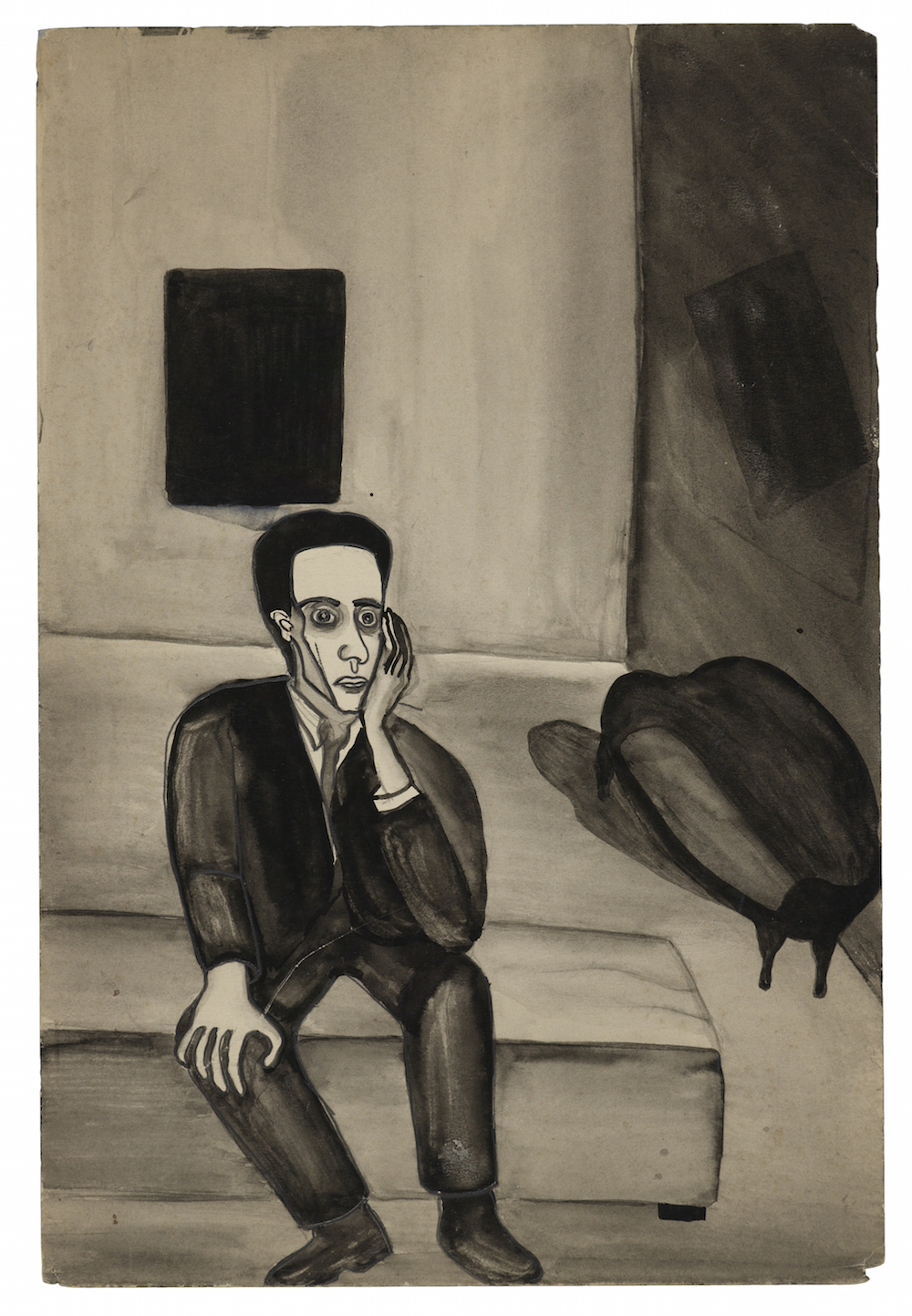
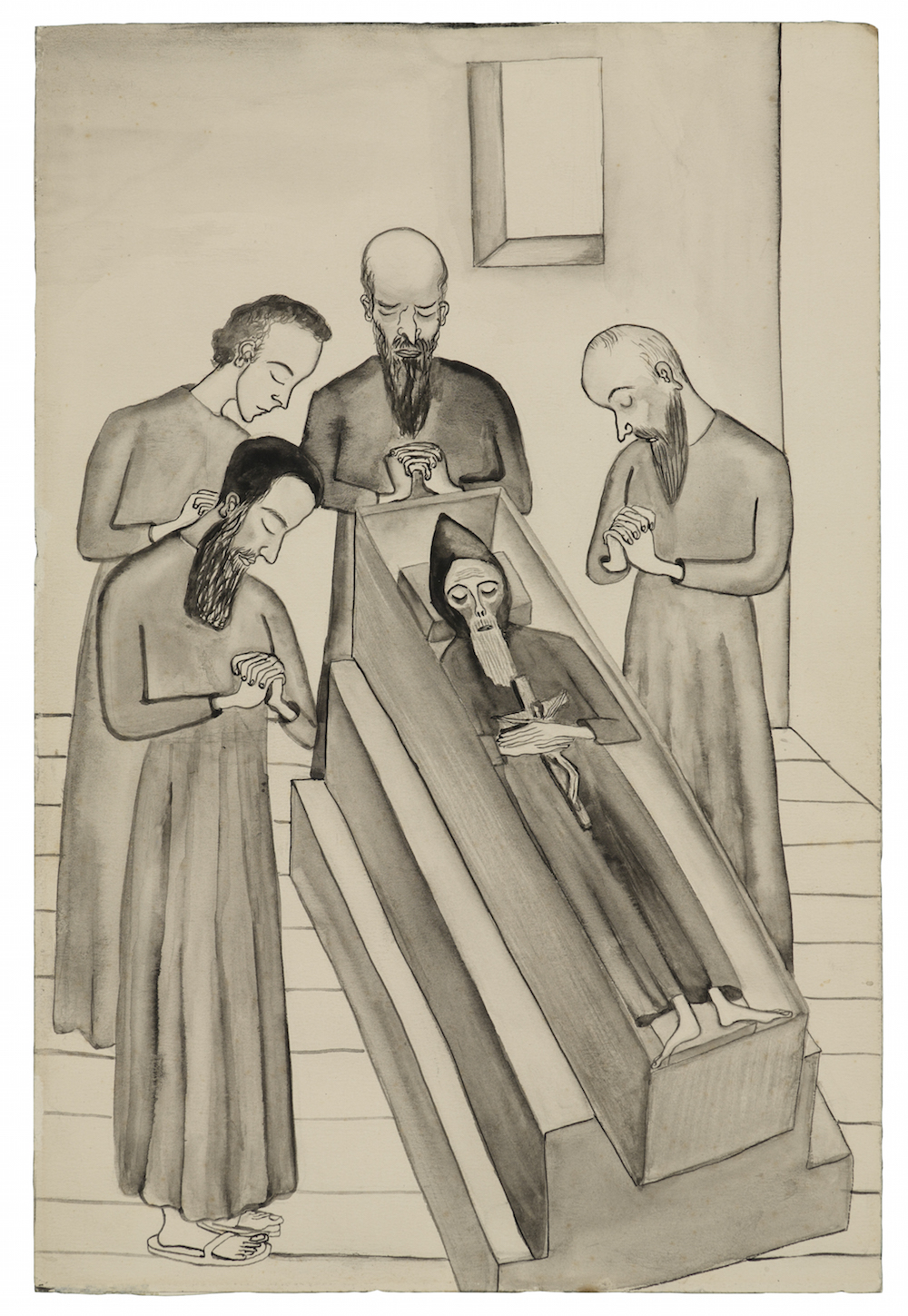
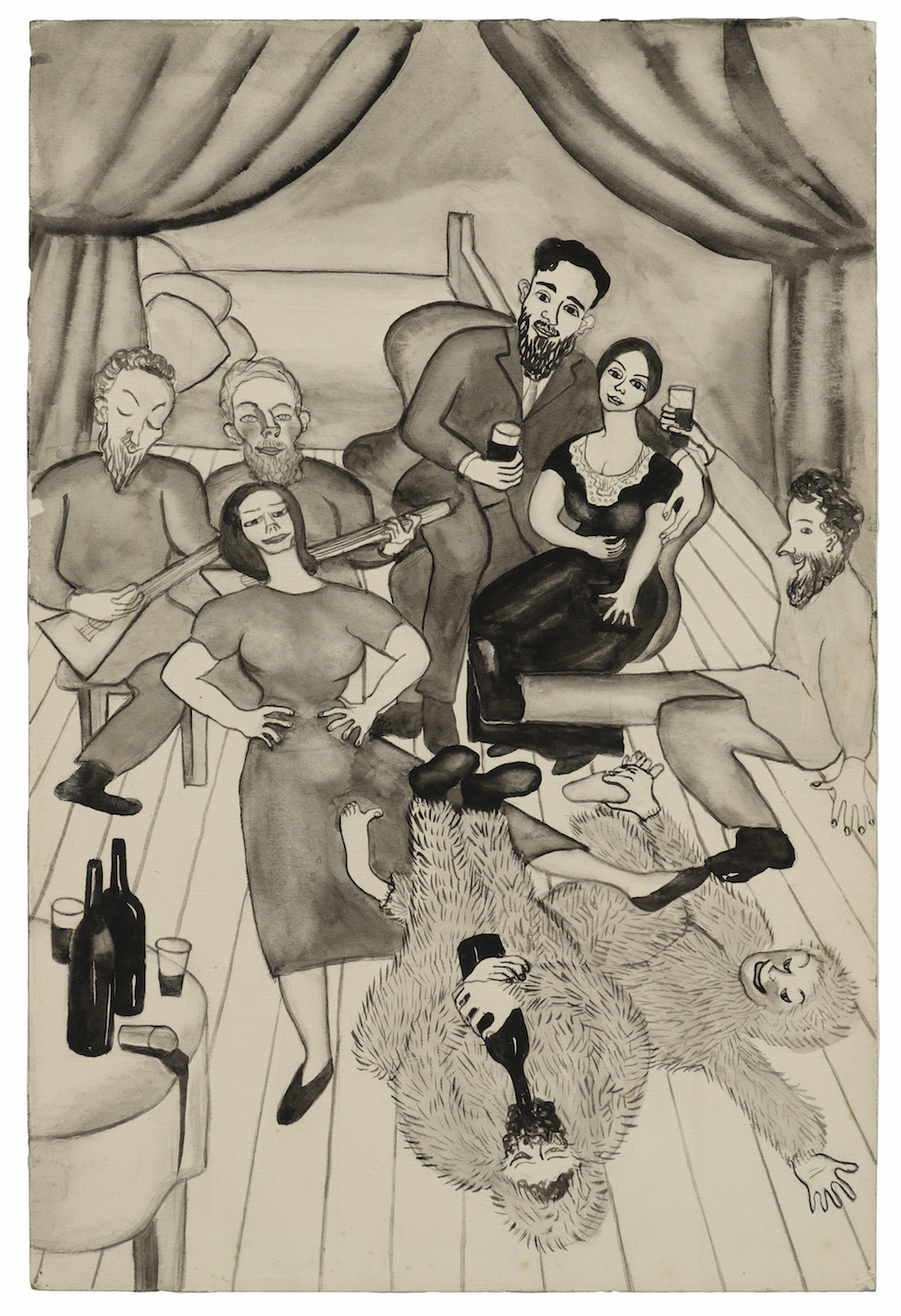
12. 6 - THE PROSECUTOR'S SPEECH. CHARACTERIZATIONS:  Ippolit Kirillovich prepares himself for the speech of his career, and what a (long) speech it is! He feels he is speaking to all of Russia because of the popularity of the case and the nature of the Karamazov family.  Kirillovich portrays the Karamazovs as a microcosm of Russian society (and its ills) and a chance for everyone to understand Russian crime and the Russian nature more deeply. He characterizes each family member in turn. (The pictures linked below are by Alice Neel.)

  • Fyodor Pavlovich was a wicked man who delighted in doing as he pleased without a thought to the impact on anyone else. He was a terrible father who neglected his children's upbringing and moral education, laughing as he ruined them - and in Dmitri's case, stole from him.
  • Ivan Fyodorovich is an opinionated man obsessed with European intellectualism. He has inherited his father's disdain for religious and moral concerns. He does not hide his cynicism, and he is the most like his father of the three brothers.
  • Alexei Fyodorovich is a talented but very young man with a perhaps naively cheerful outlook and a tendency to cling to the monastery too desperately. But he is the hope of the family (if he avoids being spoiled with age). 
  • Dmitri Fyodorovich represents the duality of Russian society, the idea that a mixture of good and evil is present in everyone. Dmitri often appears to be a principled man who rose above such awful early life circumstances. Yet he also fell prey to the temptations of debauchery and to his emotional passions. He claims to have kept exactly half of his wronged fiancee’s money - half because it shows the split between good/evil or between being merely a scoundrel but not a thief - in the unprovable amulet. But the prosecutor declares that someone with an evil side as his would never have had the willpower to carry half the money around untouched and would have gradually used it all, resulting in the need to steal his father's money.  Dmitri's early good nature should not distract us from the truth of his depravity.
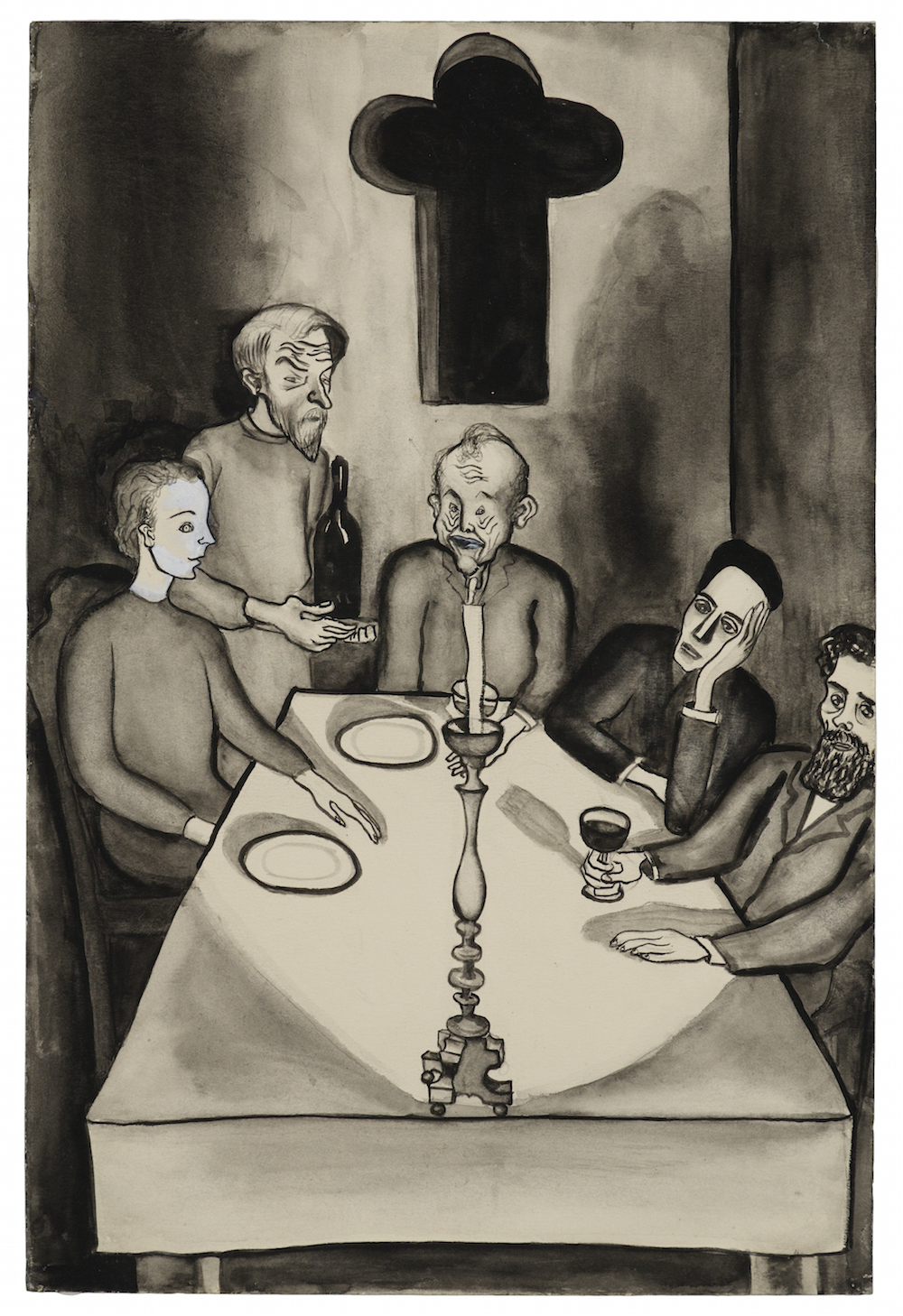
 

12.7 - A HISTORICAL SURVEY: Kirillovich next focuses his speech on the details that disprove the doctors’ claims of madness. Dmitri was consumed by jealousy and a “Karamazovian passion”, but the murder was premeditated. Dmitri wrote a letter stating his plan to seek the money and if he failed, to murder and rob his father. He went all around town shouting about the money. He obtained knowledge of the secret signal that would open his father's gate. He rejected Madame Khokhlakov’s reasonable advice to abandon his sinful path. He was told by a maid that Grushenka was with his father, and his response was to grab a weapon (the pestle) and rush to his father's house. Kirillovich says that surely no one but a murderer would see a pestle as a weapon. Surely no rational person would believe that someone with murder on his mind could arrive to see a perfect opportunity for the crime - the servants indisposed, the gate readily opened, the weapon in hand, the mistress and father about to be caught in flagrante - and yet calmly walk away without acting. The only detail left to refute is the accusation against Smerdyakov. 

12.8 - A TREATISE ON SMERDYAKOV:  Kirillovich portrays Smerdyakov as a feebleminded, bullied, sickly man who had been a loyal, honest servant. He points out that the Smerdyakov theory was first suggested by Dmitri himself, because Smerdyakov was the only other person who could possibly have committed the crime. Kirillovich goes through all the different scenarios in which Smerdyakov could have been responsible for Fyodor Pavlovich’s death, and he refutes each one.  If Smerdyakov had faked his epileptic fit, he would never have planned that part so well but then also carelessly incriminated himself by sharing details about the envelope and signal with the Karamazov brothers. Smerdyakov's prediction of his epileptic fit is understandable, because he was so stressed from the Karamazovian drama and Ivan's departure (whose presence guaranteed peace, according to the prosecutor), and because epileptics can often feel when an episode is imminent. If Smerdyakov's fit was real, then the timing of the crime would have been too coincidental for him to plan and accomplish.  If Dmitri had bullied Smerdyakov into being his accomplice, then surely the loyal servant would have realized his punishment would be small and he would have hinted at this during his testimony… or he would have confessed in his suicide note! Kirillovich paints a picture where it is highly illogical in any circumstances to suspect Smerdyakov, and very obvious that a man of such violent passions as Dimitri would never have been able to stop himself from going through with his plans. 

Next week, we will get the conclusion of the prosecutor’s speech and discuss the last chapters of the novel with u/bluebelle236! 

u/tomesandtea — 10 hours ago

[Marginalia] YA || A Wrinkle in Time by Madeleine L'Engle

Welcome to the marginalia for A Wrinkle in Time by Madeleine L'Engle.  This is our YA book selection for 2026.    

The marginalia is where you can post any notes, comments, quotes, or other musings as you're reading.  Think of it as similar to how you might scribble in the margin of your book. If you don't want to wait for the weekly check-ins, or want to share something that doesn't quite fit the discussions, it can be posted here.

Please be mindful to use spoiler tags appropriately. To indicate a spoiler, enclose the relevant text like this (without spaces between the characters and first/last words:  >! text to hide !<

Here are some tips for writing a marginalia comment:

  • Start with a general location (early in chapter 4, at the end of chapter 2, etc) and keep in mind that readers are using different versions and editions (including audio) so page numbers are less helpful than chapters and the like.
  • Write your observations, or
  • Copy your favorite quotes, or
  • Scribble down your light bulb moments, or
  • Share you predictions, or
  • Link to an interesting side topic. (Spoilers from other books/media should always be under spoiler tags unless explicitly stated otherwise)

Enjoy your reading, and we’ll see you in the weekly discussions!

reddit.com
u/tomesandtea — 9 days ago

[Discussion 2 of 6] Classic Author Profile || The Mill on the Floss by George Eliot || Bk 1: Ch. 9 - Bk 2: Ch. 4

Welcome back to The Mill on the Floss by George Eliot, the novel connected to our Author Profile.  The Marginalia post is here. You can find the Schedule here. This week, we will discuss Book 1 Ch. 9 through Book 2 Ch. 4. Next week, u/lazylittlelady will guide us from Book 2 Ch. 5 through Book 3 Ch. 8. 
 
As you discuss, please use spoiler tags if you bring up details not included in the chapters of this book so far.  While this is part of the Author Profile, we want to be respectful of those who have not read the full biography, so please be mindful of potential spoilers from the nonfiction reading, as well.  You can use the format > !Spoiler text here! < (without any spaces between characters). 

A summary of this week's chapters is below, with links for more information if you're interested!  Discussion questions are included in the comments, and you can also add your own as desired. 

>>>>CHAPTER SUMMARIES<<<<

BOOK FIRST, CONTINUED:

CHAPTER 9 - TO GARUM FIRS:  Mrs. Tulliver takes the children to see the Pullets at Garum Firs. Lucy and Maggie accompany the women upstairs to look at Mrs. Pullet's new bonnet, which is brought out with such solemn ceremony that it feels anticlimactic to Maggie.  Tom is stuck downstairs with his Uncle Pullet who bores the boy with his un-macho sensibilities but makes up for it by feeding him peppermint lozenges. When they all gather in the drawing room, the children are discouraged from eating the beautiful cakes that have been served until provided with proper tableware. Lucy agrees demurely, Tom stuffs a cake into his mouth to avoid making crumbs, and Maggie… drops hers on the floor and steps on it because she is transfixed by some art. The adults commiserate over how disappointing the Tulliver children are and how bad Mr. Tulliver is at managing money. They gossip a bit about Sister Glegg, and Mrs. Tulliver enlists Mrs. Pullet in trying to talk Mrs. Glegg out of asking for her money back. (Little does she know how determined Mr. Tulliver is to pay that money.) They agree that the Pullets will visit the Gleggs to intercede in hopes of staving off poverty for Mrs. Tulliver and humiliation for the Dodson family in general. Just then tea is served, except we get a jump-scare instead. Something horrifying brought through the doors has made the ladies scream! 

CHAPTER 10 - MAGGIE BEHAVES WORSE THAN SHE EXPECTED:  The cause of the screaming is revealed to be Lucy, partly covered in mud. When the children had been sent off to play, Tom took Lucy for a tour of the natural wonders of Garum Firs (a fat toad, a reclusive pike, an alluring water-snake) and purposely excluded Maggie. The jealousy was too much for Maggie to bear, so she knocked Lucy down in the mud by the pond. Tom brought Lucy home and blamed Maggie, only to discover that he too was considered guilty for luring the pristine angel Lucy to the muddy pond in the first place. Mrs. Tulliver goes looking for her wayward children and when Maggie cannot be found, she worries her daughter has drowned in the pond, saying her children are too much “of the water”. Tom suggests Maggie may have run home, so they set out in the carriage to search. 

CHAPTER 11 - MAGGIE TRIES TO RUN AWAY FROM HER SHADOW:  Maggie has decided that since everyone says she looks like a gypsy, she might as well join them. So she runs away from Garum Firs with the aim of joining the gypsies at Dunlow Common (but not knowing where she is going). After an hour or more of walking, Maggie comes across actual gypsies! She sits by their fire and immediately begins to try educating them, providing patronizing little monologues on her book learning and how unhappy she is at home. The women go through Maggie's pockets and take her bonnet, and although this is all returned to eventually, Maggie begins to feel uncomfortable. She begs for some food but turns her nose up at the offerings. She asks if their Queen is good and volunteers herself as the new Queen when theirs dies. Two men arrive and everyone talks in a different language while a large dog barks at Maggie, frightening her. One man keeps Maggie's silver thimble, and when she tries to leave and walk home, the older woman tells her to sit down and wait so they can bring her home after supper. At this point, Maggie begins to imagine that they are planning to kill and eat her, and she privately wishes for a storybook hero to arrive and rescue her, demonstrating her ignorance. Finally, the younger of the men takes Maggie on his donkey and they set off in the dark. She is terrified until she sees a sign indicating they are approaching St. Ogg’s. Mr. Tulliver appears on his horse and takes Maggie back, paying the gypsy five shillings for his trouble. Maggie is comforted by her father and promises never to run away from him again. At home, he gives the rest of the family a piece of his mind and neither Tom nor Mrs. Tulliver ever bother Maggie about her flight to the gypsies, which makes her think she has been too terrible for anyone to speak about it. 

CHAPTER 12 - MR. AND MRS. GLEGG AT HOME:  On the way to St Ogg to visit the Gleggs, we are treated to the legend of Ogg and a history and character of the town. St. Oggs is a simple, placid place with mills and shops. The people are perhaps a bit superstitious and uneducated, as was common in Mrs. Glegg’s time, and they are suspicious over political stances surrounding the Catholic Question. Mrs. Glegg likes to observe her neighbors with judgement and her husband with disdain for his gardening hobby. Mr. Glegg puts his active mind to use by searching for connections between natural phenomena and current events. He also tends to ponder the contradictions and mysteries of the female mind with Mrs. Glegg as a prime example. He is stingy with money, although generous and thoughtful towards individuals. Since Mrs. Glegg supports his frugality, he doesn't mind her temper and in fact considers her the perfect model of wifely habits. At breakfast, she seems eager to quarrel with him over the problem of Mr. Tulliver and the money. Mr. Glegg has made the mistake of suggesting that perhaps it isn't the best plan to recall the loan over hurt feelings without a place to invest it securely. Although she can see the wisdom in this advice, Mrs. Glegg continues to argue with her husband and stews for most of the day. But by evening they have made up. Mr. Glegg acknowledges how wrong Mr. Tulliver has been while Mrs. Glegg declares that she won't be so petty as to recall the money just yet. 

CHAPTER 13 - MR. TULLIVER FURTHER ENTANGLES THE SKEIN OF LIFE:  Although Mrs. Glegg has decided not to bother with the money, Mrs. Tulliver accidentally makes things worse by telling her husband that she has sent her sister Pullet to plead their case with her sister Glegg.  Mr. Tulliver, despite being a bad speller, writes a letter to Mrs. Glegg to tell her he will be repaying the £500 and she should also not do him or his children any further favors. Mrs. Glegg is too conscious of her reputation to actually disinherit the children, but she does resolve not to forgive Mr. Tulliver. She pays them a visit but sits outside long enough to make her displeasure apparent. Tom is relieved to be going off to school so all the drama will fall on Maggie's head. Mr. Tulliver determines that he must take a loan for the money to repay Mrs. Glegg and he borrows it from a client of Mr. Wakem’s, despite wishing he could avoid the man he has previously described as a scoundrel. 

BOOK SECOND - SCHOOL-TIME:

CHAPTER 1 - TOM’S “FIRST HALF”:  Mr. and Mrs. Tulliver are happy to leave Tom with Mr. Stelling for his private tutelage, since the young parson and his wife have impressed them both. Mr. Stelling, who has lofty goals for his future, is eager to take a pupil for the additional income, but soon finds Tom a dull student who is a bit too rough-around-the-edges. Poor Tom experiences homesickness and struggles with his lessons. He has plenty of practical knowledge but lacks the background and aptitude for success in Latin grammar or Euclidean geometry. He is reduced to occasional weeping over his errors and resorts to prayer which he considers girlish. Mrs. Stelling endeavors to make him feel part of the family by having him tend her toddler while she and the nurse care for the newborn infant. Tom does enjoy caring for the little girl and finds that when his own family visits, he also welcomes the company of Maggie. Part of his pleasure in having his sister stay for a fortnight lies in making himself feel more intelligent by teasing her over her own knowledge gaps. But he is also lonely and his studies improve when he has a fellow pupil to review lessons with him. Mr. Stelling allows Maggie to join Tom’s study sessions, although he does say that girls are “quick and shallow” and their ability to learn has limits. When Maggie returns home, Tom is miserable again and he counts the weeks until he can join his family again. Home has never seemed more dear and lovely than it does when Tom is restored to the Tulliver hearth. 

CHAPTER 2 - THE CHRISTMAS HOLIDAYS:  Tom is enjoying the holiday at home but notices a melancholy air hanging over it this year. Mr. Tulliver is up in arms because of a dispute over water rights with Mr. Pivart, who is trying to divert water upriver from the Tullivers’ mill for the purpose of irrigating his land. The Mosses (Mr. Tulliver’s sister and brother-in-law) must endure a long and detailed monologue by Mr. Tulliver on their Christmas visit about the nuances of water management and mill business. Mrs. Moss and Mrs. Tulliver chat privately about the folly in resorting to the law over such business, but Mr. Tulliver is already weighing the merits of which lawyer to choose. The trouble is that Mr. Wakem, that scoundrel lawyer who also brokered Mr. Tulliver’s loan, is representing Pivart. To Tom’s dismay, he has also heard that Mr. Wakem's son will be joining him at Mr. Stelling’s as a second pupil, and he cannot even give the boy a hard time because of his disability. 

CHAPTER 3 - THE NEW SCHOOLFELLOW:  Tom is worried about meeting his new schoolmate, Philip Wakem, but they soon warm to each other. When Tom arrives at Mr. Stelling's house, Philip is drawing animals quite expertly despite never having had a lesson. The boys compare how they feel about their lessons and discuss what a gentleman's education entails. Philip doesn't mind studying mathematics and Latin, and finds it easy enough due to his good memory. He is ahead of Tom and offers to help him with his grammar. When Tom brags of his physical skills and offers to teach Philip to fish, Philip declines because he thinks fishing makes you look silly. Philip’s spinal deformity comes from a childhood injury rather than a congenital condition, but of course Tom doesn't know this and he assumes Philip is unable to engage in sporting activities. The boys bond over an interest in “fighting stories” and Philip assures Tom he can read the Odyssey in English, but Tom prefers to be told the stories rather than bothering with books. Philip also boasts of knowing exciting stories about Richard Coeur-de-Lion and Saladin, William Wallace and Robert Bruce, and James Douglas. The boys go to dinner rather happily acquainted. 

CHAPTER 4 - “THE YOUNG IDEA”:  
Tom and Philip mostly get along as the term progresses, except for occasional friction when Tom is too patronizing about physical activities or too suspicious that a boy with a “rascal” for a father must be his enemy.  Tom’s academics improve marginally with some assistance from Philip. He is also receiving drawing lessons from Mr. Goodrich, who bores him with landscapes, and drill-lessons from Mr. Poulter, who enraptures Tom with his personal war stories. One day, Mr. Poulter agrees to demonstrate a sword drill and Tom runs to invite Philip, to hide the fact that the sword had frightened him. He interrupts Philip at his music even though he knows the other boy hates hearing about the drilling-lessons. Philip lashes out at Tom, who responds even more harshly by insulting Philip's father. Tom slams the door and Mrs. Stelling finds Philip crying. Because she is not very loving, Philip fakes a toothache and takes medicine. Meanwhile, Tom watches the sword demonstration and convinces Mr. Poulter to lend him the sword for a week in exchange for five shillings. Mr. Poulter makes a passing effort at impressing some sword safety advice on the uninterested Tom, who plans to convince Maggie he owns the sword and is to become a soldier. 

u/tomesandtea — 16 days ago

[Discussion 6 of 6] Gutenberg || North and South by Elizabeth Gaskell || Ch. 43-end

Thank you for joining us for the FIFTH (sorry) and final discussion of North and South by Elizabeth Gaskell.  This week, we will be discussing Chapters 43 through the end of the book. You can find the Schedule here, which includes links to each discussion and to the Marginalia.  

Below is a recap of the chapters from this section. Some discussion questions follow; please feel free to also add your own thoughts and questions! Please mark spoilers not related to this book using the format > ! Spoiler text here !< (without any spaces between the characters themselves or between the characters and the first and last words). Be aware that although this is a classic book with a popular screen adaptation, not everyone is familiar with the story, so be mindful when commenting on related topics.  Thanks! 

Ʌ+V+Ʌ+V Chapter Summaries V+Ʌ+V+Ʌ

CHAPTER 43 - MARGARET’S FLITTIN’:  Aunt Shaw and Mr. Bell arrange everything for Margaret’s departure and her life in London. Dixon assists Margaret in sorting through the Hale household for what to keep before the rest is sold. Margaret keeps some books for herself and chooses one to be delivered to Mr. Thornton after she departs.  Margaret is exhausted from grief but still makes the effort to call on a few people to say her goodbyes. Mr. Higgins is out when she calls, so she says goodbye to Mary and receives Bessy’s drinking cup as a token of remembrance. Mrs. Thornton and Margaret make their peace with each other and apologize for their mutual misunderstanding. Mr. Thornton enters at the end of the visit and seems distracted at the thought of Margaret's sudden departure. He determines that though he loves her, he must let her go. Mr. Higgins calls on Margaret on her final day in Milton and pledges not to forget her or Mr. Hale. She gives him her father's Bible and encourages him to study it. Margaret also gives him money, which he will only accept on behalf of the Boucher children and not for himself. 

CHAPTER 44 - EASE NOT PEACE:  Margaret soon falls back into her patterns of tending to Edith and observing London social life from the sidelines. Although Aunt Shaw and the Lennoxes do their utmost to settle Margaret in comfortably, update her wardrobe, and make her feel welcomed, she is often left alone while they enjoy the London social season.  Margaret finds that she misses the bustle and effort required of her in Milton, compared to her easy life in London.  Dixon is still in Milton, tying up loose ends for the Hale family, and Margaret yearns for her arrival. One evening when Margaret is sitting home alone, Mr. Bell surprises her by dropping in on his way back from Milton. He updates her on the efforts of Dixon and the helpfulness of Mr. Thornton in settling the family's affairs. As they are having tea, Henry Lennox arrives and awkwardly joins them. They discuss the lack of progress in securing witnesses in support of Frederick, and Mr. Bell is shocked to learn that Margaret's brother was in England when their mother died, because he recalls someone asking him about it. He tries to leave but Margaret begs him to stay so she won't be alone with Henry  Mr. Bell can meet Edith. After those introductions, both men take their leave and find themselves in a debate over the late Mr. Hale’s choice to leave the clergy, as well as the relative merits of the timeless Helstone vs. the ever-changing Milton. 

CHAPTER 45 - NOT ALL A DREAM:  Henry Lennox informs Margaret that there are no more avenues to pursue on behalf of Frederick. Though he and Mr. Bell try to cheer her up with the knowledge that Frederick has happily made a new home and family abroad, Margaret despairs that the last of her family is separated from her permanently. Mr. Bell proposes that he take Margaret to Helstone for a visit and she eagerly agrees. Aunt Shaw comes around to the idea. 

CHAPTER 46 - ONCE AND NOW:  The visit to Helstone is not what Margaret expected. She finds everything just changed enough to be uncomfortable to her. The villagers are acting superstitiously (don't make me retell the cat story) and not getting along without Margaret's peacemaking influence. Her former pupil has gone to learn at the primary school, and a visit there shows that the children are learning more from the Vicar's wife than they did under Margaret and her mother. The parsonage has been changed to accommodate a large and active family of seven children, and the Vicar is a teetotaler and a great talker, quite different from her father. Margaret is put into a bad mood by this and she begins to worry over her lie in Milton. She confesses this to Mr. Bell, who tells Margaret that he thinks the lie was justified but that Mr. Thornton didn't have the context needed to understand her behavior. She asks Mr. Bell to offer a full explanation should the opportunity arise naturally. That night, Margaret continues to fret over her weaknesses and the disconcerting feeling that everything changes.  If she were of the right religion, she might consider becoming a nun in her mood! The next morning, Margaret has a clearer perspective. She sees change as necessary and inevitable, and she greets Mr. Bell with a smile. He informs her that the Vicar and his wife have invited them to dinner. But since Edith is expecting Margaret back, she decides they should stick to their plans to leave by noon. She is relieved to have an excuse to decline the invitation and she privately decides she would prefer not to visit Helstone again, despite loving her memories of it. 

CHAPTER 47 - SOMETHING WANTING: Dixon arrives from Milton and catches Margaret up on all the news. Miss Thornton’s wedding was the talk of the town. Mr. Thornton is the only person besides Mr. Higgins to inquire after Margaret. The Higgins clan seems to be doing well (although Dixon wasn't too interested in keeping tabs on the lower classes) and Mary is apparently learning to cook at the Thornton mill, which confuses both of them. Mr. Bell’s correspondence is not particularly consistent or enlightening, although he continues to be her faithful devotee. He hints at health troubles but seems annoyed at being asked to detail his every complaint. Edith mentions that Mr. Bell may be interested in taking Margaret to visit Frederick in Spain, then immediately sobs about her cousin wanting to leave her. Margaret tries hard not to get her hopes up over this dream visit, while Dixon frets about the potential perils of being converted while traveling in a Papist country. Henry Lennox has been around quite a bit, and he seems to have a more comfortable relationship with Margaret than during their awkward post-proposal phase. Margaret enjoys caring for her nephew, even during his tantrums, as she feels it may be her only taste of motherhood. 

CHAPTER 48 - “NE’ER TO BE FOUND AGAIN”:  Margaret spars a bit with Henry over the superficial friends he invites to dinner parties and quarrels with Edith over her cousin's recent coarser demeanor in picking at Margaret and wishing her married. Mr. Bell had written with a promise to visit (and no further hints about Spain) but then he postpones. Finally on the eve of the second postponed visit, Mr. Bell’s servant writes to inform them of his master’s grave health and warns that Mr. Bell may already have died by the time the letter reaches them in London. Margaret rushes to prepare for the next train to Oxford, but the hysterics of Aunt Shaw and Edith slow her departure. Finally, she is accompanied on the later train by Captain Lennox, only to arrive too late. Returning home, Margaret's spirits are briefly lifted by the kind ministrations of her family but they plunge again as she ponders the state of her reputation in the eyes of Mr. Thornton now that Mr. Bell cannot deliver the promised explanation of her lie. Yet Margaret has come to see this as a fair punishment for her sin: she holds no stock in being excused by mitigating circumstances or honorable intentions, and so she feels it is right not to pursue absolution in his eyes.  She vows to devote herself to prayer and a completely honest life going forward. 

CHAPTER 49 - BREATHING TRANQUILITY:  To Edith's delight, Margaret receives notice of her inheritance from Mr. Bell. Margaret will inherit £2,000 cash and an additional £40,000 in Milton property holdings. Henry becomes Margaret's legal advisor and they form a warmer, closer relationship. This also thrills Edith, but Henry warns her not to ruin his chances by interfering because this time he intends to take things slowly and be completely sure of Margaret's feelings. No one seems interested in Margaret's longing to go to Spain, so she ends up spending the fall in Cromer with the family. Spending long hours staring at the sea in solitude and contemplation does her good, and Henry notices that she looks peaceful and healthy, like her old Helstone self. (Edith tries to take credit for this by means of a new bonnet she had selected for her cousin.) Henry also comes to discover that the surest way to engage Margaret is to talk about Milton, which fascinates them both. Now that Margaret can support herself, she seems ready to direct her own destiny by making plans to live independently, although Aunt Shaw and Edith still do their best to influence her decisions. They are hopeful that with her preparations, Margaret will have no time to entertain other suitors interested in her looks or her money, and will be left with Henry as her only option. Henry himself seems interested, not only because he finds Margaret charming but because her fortune would do wonders for advancing his career. 

CHAPTER 50 - CHANGES AT MILTON:  Life as usual has gone on in Milton this whole time, but business is not booming. Mr. Higgins can see on Mr. Thornton's face that he is worried and suffering. He asks his master if he has heard any news of Margaret (he says only through her agent, as his landlord) and notices him perk up a bit. Margaret is said to be possibly close to marrying, but nothing is definite yet, and they do not expect her to return to Milton. Then Higgins asks if Margaret's brother has been cleared of charges, accidentally revealing to Mr. Thornton that the brother had been the mysterious visitor who Margaret wouldn't explain. This comforts Mr. Thornton, who has privately believed in Margaret's good character but is glad to have confirmation. Meanwhile, Mr. Thornton is much less glad about his business prospects. A series of bad international dealings, the fallout from the strike, and overextending his expenses in pursuit of expansion have led to financial ruin. Now that he has come to see his workers as men and not merely cogs, Mr. Thornton resolves that no one will go unpaid because of his failure. He has a tender moment with his mother, who has stayed up all night with him as he labors over the finances. She mourns the loss of the high position he has worked so hard to achieve. He reassures her that no matter the outcome of his business, he will be proud to maintain his character and dignity. Mr. Thornton determines to sell the businesses and resists entering into a risky speculation with his brother-in-law that would require him to risk other people's money.  Although other manufacturers would be happy to have him as a partner, Mr. Thornton declines to be tied to another man whose business practices he disagrees with. He also declines advice from his brother-in-law, who ends up making it big in the stock exchange.  

CHAPTER 51 - MEETING AGAIN:  Edith is out of sorts because she has planned a dinner party and at the last minute, Henry has invited another person and upset the balance of numbers (and also because Dixon is bad at matching flowers to dresses). That surprise guest is Mr. Thornton, who is coming to London to handle the legal business of selling and letting his properties. Margaret offers to skip dinner but Edith won't hear of it.  Just as Henry is filling Margaret in on the details of Mr. Thornton's failures, he arrives and sees them talking. Although Mr. Thornton gets on well with the other guests and appears to enjoy himself, he avoids any contact with Margaret except one accidental gaze which turns him nervous and serious. After dinner, a rising Parliamentarian asks Mr. Thornton potentially embarrassing questions about his business plans, which Henry tries to help avert. However, Mr. Thornton returns to the subject and admits his failures while explaining the hope he has for finding employment with someone who will let him experiment with a new business model. He has come to believe in the great value of employers and workers having a mutual understanding of each other, as an improvement but not a cure-all. Then he directly approaches Margaret to let her know that Higgins and the other workers have written a letter telling him they'd like to work for him again should he ever become an employer in the future. She is proud of this development, and he is glad she likes it. After Mr. Thornton leaves, Margaret asks Henry if she can talk to him the next day about “something”, and he hopes their conversation will bring an indication that he can propose with confidence in her acceptance. 

CHAPTER 52 - “PACK CLOUDS AWAY”:  After three hours in consultation with Margaret, Henry comes out in a huff. They've talked business the whole time, and Mr. Thornton is coming the next day to finalize the proposals. Emphasis on proposal, and not in a way that satisfies any of the Lennoxes. But the next day, Henry does not show up for the appointment. After an hour’s waiting, Margaret tries to stumble through an explanation of her plan to lend Mr. Thornton the money he needs to keep running his business and living in his home while paying her back at a reasonable rate.  Immediately, he warns her to send him away if she doesn't want him to say how he really feels about her.  Of course she doesn't do any such thing. He proposes by showing her the (dead) roses he keeps in his wallet, collected from Helstone where he visited so he could see where she had grown. And then they tease each other about what each aunt/mother-in-law will say of their engagement! 

reddit.com
u/tomesandtea — 19 days ago

[Off-Topic] Fifth Friday Fun Forum || July 31, 2026 || Book Character Birthdays! 🥳

Hi, reading friends! I’m happy to announce a special surprise edition of Free Chat Friday.  This month has five Fridays instead of four, so we thought it would be fun to change things up for this bonus Friday!  Whenever a month has five Fridays, we will host a “Fifth Friday Fun Forum” (or FFFF) with a special themed topic to discuss.  When you respond, feel free to be as creative as you want and share anything that the topic brings to mind.  Just be cautious, as usual, of any spoilers that others might not want revealed to them.  You can mark spoilers with the following formatting, leaving no spaces between characters:  > !Words to hide! < 

This week’s Fifth Friday Fun Forum topic: Book Character Birthdays

Happy Birthday!  July 31st is Harry Potter’s birthday, so we wanted to take this opportunity to celebrate.  Name a book character whose birthday you’d love to celebrate!  Here are some ideas for what you might want to share if you need them:

  • Why would you want to celebrate with this character?  
  • Would you want to plan the party or just attend? 
  • Is the party in the book world the character is from, or in the real world where you’re from?
  • What will the party be like? You can go in any direction with this: food, decor, activities, other attendees, or any other details you imagine!


Note:  Be extra careful about what details you share related to the character and the books in which they are featured, since this might bring up a lot of spoilers for those who haven’t read them yet. 

If you’re missing the regular Free Chat Friday format, don’t worry!  August will put us back on track with our regularly scheduled free chat hosted by u/Pythias.  And as usual, please follow the Free Chat Friday rules when posting.

RULES:

  • No unmarked spoilers
  • No self-promo
  • No piracy
  • Thoughtful personal conduct
u/tomesandtea — 19 days ago

[Off Topic] Free Chat Friday || July 24, 2026

Here we are again at the end of a week!  Welcome back to Free Chat Friday! What are you up to this weekend?  Are you looking forward to anything in the coming week? Shark Week programming is airing on the Discovery Channel starting Sunday, and I've always been fascinated by sharks. Is anyone planning to watch? 

In case you're new to Free Chat Friday or need a refresher on what this thread is for: this is a space to know one another better and share whatever you'd like with the group. Of course, we can talk about books, but we'd also love to hear what you're doing this weekend or what you've been up to recently!

RULES:

  • No unmarked spoilers
  • No self-promo
  • No piracy
  • Thoughtful personal conduct

Today is:

Happy Birthday to:  Simón Bolívar, Alexandre Dumas, Kristen Chenoweth, Jennifer Lopez, Yulia Navalnaya, and Elisabeth Moss

u/tomesandtea — 26 days ago

[Discussion 1 of 4] Quarterly Nonfiction || London Falling by Patrick Radden Keefe || Prologue &amp; Part 1

Welcome to our first discussion of London Falling by Patrick Radden Keefe.  The Marginalia post is here. You can find the Schedule here. This week, we will discuss the beginning of the book through the end of Part I (Ch. 6).        
 
As you discuss, please use spoiler tags if you bring up details not included in the chapters of this book so far.  While this is nonfiction, we still want to be respectful of those who are learning the details for the first time, as well as being mindful of any spoilers from other media you might refer to as you share.  You can use the format > ! Spoiler text here ! < (without any spaces between the characters themselves or between the characters and the first and last words). 

A summary of this week's chapters is below, with links embedded for more information if you're interested!  Discussion questions are included in the comments, and you can also add your own as desired. 

>>>>CHAPTER SUMMARIES<<<<

PROLOGUE:  History sets the stage for the book as the author highlights the gritty and glitzy sides of London and the Thames. We are introduced to the mysterious death this book centers around: on November 29, 2019 at 2:23 a.m., a young man jumped to his death from one of the balconies of the Riverwalk, one of the “ghost mansions” full of unoccupied luxury dwellings bought up by the powerful and wealthy from across the globe. The death was caught by a surveillance camera of the MI6 headquarters which is across the river. 

PART I - THE FALL

CHAPTER 1 - THE BIG I AM:  Zac Brettler was the name of the young man who jumped. He was the grandchild of Holocaust survivors and the son of Rachelle, a freelance journalist with a bohemian upbringing, and Matthew, a university-educated finance professional. His brother, Joe, is a successful student and athlete who had a warm but competitive relationship with his brother. The family prefers not to flaunt their financial success, but Zac takes a different path. Failing to gain admission to an elite private school like Joe, Zac ends up at a second tier private school named Mill Hill attended by the children of extremely wealthy oligarchs (with a shady, dangerous reputation and flashy habits). Zac started out known as a smart, funny student with charisma and an excellent memory. By the time he started boarding at Mill Hill to avoid the commute, Zac was obsessed with antiheroes from movies like The Wolf of Wall Street and with his own money-making schemes on campus. The author details how Zac’s seemingly typical adolescent rebellion against his family's liberal but conventional path descended into emulation of the “gangster capitalists” he admired and led to a change in personality. 

CHAPTER 2 - A FAST LIFE:  Rachelle and Matthew developed a parenting style that borrowed from both of their own upbringings to be gentle and hands-off. This clashed with Zac’s brash insistence on showy materialism, prematurely adult behavior, and adamant praise for Vladimir Putin and oligarchs like Roman Abramovich of Chelsea Football Club. The family and Zac began to clash, at one point resulting in Zac putting his hands on Rachelle. They sought therapy, but both Zac and Matthew were skeptical. Zac’s behavior calmed a bit, but by 18 he had developed friendships and business partnerships with adults that perplexed his parents. Matthew and Rachelle were out of their depth at this point as parents, unsure of what to make when their teenage son started making high-powered business deals and leading a seemingly successful adult life out of the blue. From what they witnessed, the schemes felt suspiciously close to illegal, yet when they did surveil their son Zac always came up clean. 

One wealthy businessman, Akbar Shamji, provided Zac’s entry into the world of high-end real estate and other business dealings. Zac and Akbar would party thr exclusive night club Annabel’s and meet in front of One Hyde Park, a secretive residential tower for the most private wealthy clientele. Zac began driving a Maserati and waving around wads of cash. When Matthew questioned him, Zac revealed he had accumulated £850,000 through oil and gas businesses, real estate deals, and a car importation scheme. Fearing that they could push Zac away completely with too much interference, Rachelle and Matthew decided to walk a fine line whenever responding to their son: they would neither encourage nor criticize, neither ignore nor legislate his choices in hopes that by keeping him engaged they could somehow influence him.  It didn't work. By November, Zac had disappeared.

CHAPTER 3 - AN EDIFICE OF LIES:  The day Zac went missing, he seemed exhausted and stressed but said he just needed a break from his phone and a needy client. When Rachelle returned from an appointment, she found he had left without his coat or credit cards. After 18 hours, Zac’s parents reported him missing. It took longer than usual for the police to follow up because the London Metropolitan Police were dealing with a terrorist knife attack by Usman Khan. Rachelle and Matthew had been able to track down Akbar in their search for their son, and he offered to meet them at Le Méridien so they could talk privately. 
 
Akbar was shocked to meet the Brettlers because Zac had concocted an entire alternate identity as Zac Ismailov, son of a Swiss model and a billionaire Russian (or Khazak?) oligarch, who was entrusted with making investments in London for their family. He spoke with a thick Russian accent, even at school, and pretended to have billions of dollars at his disposal. Akbar said that their business deals together had been real, but Zac had also been wheeling and dealing with people he met through his contacts in Chelsea Football Club, which legitimized him in the eyes of Akbar and others. Who would fake being a Russian oligarch’s son in front of people so closely associated with the most famous oligarch of them all?  Zac had made up lies about living in the Ismailov family property at One Hyde Park, losing his father to a heart attack, and feuding with his mother over his inheritance. He pretended to be homeless due to the fallout, leading Akbar to introduce him to Verinder Sharma who lived at Riverwalk. Zac had told his parents he was staying alone in an empty unit there, but Verinder said Zac occupied a bedroom in the man’s own apartment.  Recently, Zac had started contacting Akbar frantically with stories about suffering from a heroin addiction and a mental health crisis. Akbar and Verinder had been working getting Zac into a treatment program when he went missing, they assumed in search of drugs. Verinder and Akbar assuaged Rachelle and Matthew's concerns about the potential dangerous consequences of lying to such powerful people in the crime world, saying that they cared about Zac and could use Verinder’s reputation to protect the missing teen if they found him. Akbar said he would speak openly to the police to avoid trouble falling on himself and Verinder promised to keep reaching out to Zac with encouragement to come home. 

CHAPTER 4 - MISSING PERSONS: Concerned about Zac getting in legal trouble, the Brettlers didn't share what they knew with the police about Zac's business dealings and oligarch fake identity. Instead, they hired Clive Strong, a former Scotland Yard detective turned private investigator. He went to Riverwalk looking for information about Zac’s night there and when he requested CCTV footage of the teen’s movements, the staff alerted Verinder Sharma of the request.  Right away, Verinder assumed a sinister affect and tried to intimidate Strong, which was very different from the fatherly concern he had displayed with the Brettlers. Verinder gave permission to show Strong the footage and the staff found shots of Zac arriving and Akbar leaving with Verinder's daughter, but no images of Zac ever leaving the building.  While Strong waited in the lobby with Akbar, who had also shown up at Riverwalk, two police officers arrived to investigate. They asked Verinder to show them his apartment and while Judith McCabe took his (reluctant) formal statement, Gemma Scott looked around. When she discovered Zac’s highly encrypted Punkt-brand phone broken on the floor and balcony rail, Verinder ended the interview until his lawyer could be present. 

CHAPTER 5 - RIVER OF DEATH:  Zac's body was discovered on Friday, Nov. 29th, hours after his last text to Rachelle saying he was okay. The commuter who discovered it, Baxter Willis, had coincidentally known another person whose body was found in the Thames and had been wrongly implicated in his death until it was deemed an accidental drowning. The onlookers and first responders mostly assumed suicide in Zac's case but never considered Riverwalk as the location because the Thames had a storied history of bodies washing up from distant locations. A connection was not made to Zac's missing persons case until several days later when McCabe and Scott were investigating at Riverwalk. Zac was buried at Hoop Lane Cemetery, a Jewish burial ground where his grandfather was also laid to rest. His funeral was well attended but, oddly, Akbar and Verinder did not attend the funeral despite having seemed so close to Zac. Mourners felt unsettled because of the mystery surrounding the circumstances, which Matthew acknowledged in his eulogy.  Neither Zac's friends nor his family could accept the explanation of suicide. 

CHAPTER 6 - THE NIGHT IN QUESTION:  The police questioned both Akbar and Verinder on Thursday, December 5th. Verinder was not compliant with questioning and used the phrase “No comment” over 200 times.  Akbar, with a lawyer present, engaged openly with the police questions. He was rambling and bungling some details but also insisting he was telling the truth. Unfortunately for him, the police already knew he was lying. They had CCTV footage that showed Akbar leaving with Verinder's daughter at 1:25 am, but then returning just before Zac's 2:23 am jump from the balcony. Akbar headed back up to Verinder's apartment and then exited the building again at 2:48 am. Instead of going home, Akbar walked around Riverwalk to the Thames side of the building, leaned over the wall to check the river, and then went back to his car.

reddit.com
u/tomesandtea — 29 days ago

[Off Topic] Free Chat Friday || July 17, 2026

That’s another week in the books, friends!  Welcome back to Free Chat Friday! What are you up to this weekend?  Are you looking forward to anything in the coming week? I'm going to see The Odyssey today and I'm very excited! Has anyone seen it yet?

In case you're new to Free Chat Friday or need a refresher on what this thread is for: this is a space to know one another better and share whatever you'd like with the group. Of course, we can talk books, but we'd also love to hear what you're doing this weekend or what you've been up to recently!

RULES:

  • No unmarked spoilers
  • No self-promo
  • No piracy
  • Thoughtful personal conduct

Today is:

Happy Birthday to: Toni Stone, Vince Guaraldi of “Peanuts” fame, Donald Sutherland, Queen Camilla, Angela Merkel, and Brett Goldstein!

u/tomesandtea — 1 month ago

[Discussion 2 of 2] DR Poetry || Where the Sidewalk Ends by Shel Silverstein || Flying Festoons to the end

Welcome to the final Discovery Read Poetry discussion for the second half of Where the Sidewalk Ends by Shel Silverstein!  You can find the Schedule here and the Marginalia is linked here.  

Discussion questions for this week’s poems are below.  You can mark any spoilers using the format > ! Spoiler text here ! < (without any spaces between the symbols themselves or between the symbols and the first and last words). 

reddit.com
u/tomesandtea — 1 month ago

[Discussion 7 of 7] Bonus Book || The Bright Sword by Lev Grossman || Ch. 35 - end

Welcome to our final discussion of The Bright Sword by Lev Grossman.  This week, we will discuss the second half of the book.  You can find the Schedule here and the Marginalia is linked here.  

Discussion questions for this week’s chapters are below.  Please use spoiler tags to hide anything outside of this book, such as references to other books or media.  You can mark spoilers using the format > ! Spoiler text here ! < (without any spaces between the symbols themselves or between the symbols and the first and last words). 

+++CHAPTER SUMMARIES:+++

35 - THE LADY OF THE LAKE:  

Our ragtag bunch of heroes bury Arthur and mourn him by sharing stories and memories of their king.  A general feeling arises that it is time to move on; even Bedivere seems somewhat unburdened. That might, Nimue and Collum discuss the future while getting ready for bed. Nimue has decided she'll have to believe in herself for a while, since neither Christianity nor Fairy seem to be helping her that much.  Collum can see his wings again and when he shows her, she said that while it'd be very cool to have a fairy boyfriend, this probably just indicates there's still more for them to learn about the mystery that is Collum. 

The next day, Morgan lends them a flying ship and they head back to Britain. Discussing what to do and where to find supporters makes Collum realize that the road ahead will be a real slog. Guinevere checks in with Collum about how he's doing now that it's confirmed he isn't Arthur's son. She tells him the timeline works out for him to fit a different story.  There was a flower-fairy who fell in love with a human, Sir Bleoberys. (Uh oh.) She became pregnant but didn't want to follow the fairy custom of leaving her baby with the human father, nor did she want to be with Sir Bleoberys. So she went to live in a remote place, Mull, to raise the baby herself. (Double uh oh.) She fell in love with another human man, who must have been Collum's stepfather. Sir Bleoberys never got over this and wandered the country looking for his family. Guinevere thinks he just might still be out there searching… Nope, says Collum. He's super dead because I killed him. Patricide, just like Mordryd. Collum takes this better than expected, but he also doesn't have much time to process. 

The group is considering a redesign for Collum's coat of arms when suddenly they hit a bump in the road, except it's the sky. Dinaden very adorably wonders if you can make roadkill in the clouds by smooshing an angel. Then their ship begins dropping from the sky and they realize it must be Merlin working against them. Several ships full of soldiers and archers approach and since Merlin controls the winds and tides, they prepare to fight rather than flee. Just as Collum is about to resign himself to a sudden death via sword, he gets an idea.  Without explaining to the group, he dives below the waves. Unable to reach the bottom on his own, he uses the anchor to take him to the depths of the sea where he can use his gift from the well to stand, walk, and talk. The Lady of the Lake appears with a bright sword, Excalibur. Collum asks for help so he can strike a blow for Britain, but she doesn't care about any of that. She only helped Arthur with his sword because Merlin promised her the king would use it to drive Jesus out of Britain. Now that she sees this isn't true, she is not interested in helping more Christian kings. She tells Collum he'll have to solve things the hard way and leaves the sword in a large stone on the seabed. Collum pulls but cannot budge it. Drawing on his fairy strength, he uses the anchor to smash the stone and it crumbles, allowing him to retrieve the sword. He jets back to the surface with the last of his air.  
  
36 - THE NIGHT OFFICE:  

Two years after the failed quest for the Holy Grail, Camelot is holding yet another extravagant tournament. The hollowness of post-Grail Camelot is starting to show. Life is easy and decadent, but there seems to be no meaning to anything.  After being denied the Grail and rejecting God, Arthur had expected punishment and curses. Instead, they are living in an age of leisure and bounty. Yet underneath, it feels unsatisfying. (Was this the curse in disguise?!) Desperate to experience the thrill of glory, the Knights of the Round Table have thrown chivalry to the wind and taken to cheating so they will win the tournaments.  The cheaters are usually punished with humiliating public paddlings, but this time Arthur grants them clemency. Everyone is pretty bummed. Seeking a solution to the degeneration of the kingdom, Arthur decides to go on the hunt that Bedivere has been pleading with him to join. 

Wandering in the woods, Arthur isn't content with simply going through the motions of a royal hunt. He wanders deeper, trailed by Gawain and Lancelot, seeking adventure. He finds it in the castle of Old Britain which belonged to King Bran (before Arthur killed him). It is now ruled by Bran’s children, Ystradel and Elidir. Arthur kneels to them (gasp!) and asks forgiveness for his youthful foolishness.  Ystradel sagely observes that her father was cursed at their first meeting, but Arthur now appears to be the cursed king. Gawain suggests beheading (lol what a joker) and Lancelot prepares to fight, but Ystradel and Elidir have a little surprise for them instead. 

They are led to a stone circle in the center of which is a most beautiful object. Behold, the Holy Birdbath Grail! Lancelot and Gawain are horrified (it's got rain in it, eww) but Arthur seems intrigued. They discuss the symbolism of finding the Grail in the hands of pagans, and Arthur begins to wonder if it even belongs to God in the first place. Ystradel tells them a pagan story of how the Milky Way was formed when a jealous king tried to separate a hero and his lover, but even in death they found a way to reach each other. Again, Lancelot and Gawain aren't all that impressed but Arthur is here for it and open to hearing more. Ystradel tells him the story is a lesson of broken things trying to become whole, and no one in this room is a damaged king beating himself up over everything and fighting the past, right? Right?! Suddenly Arthur understands: Britain is changing and healing itself, but Camelot is only perfect because it never changes, meaning it will have to fall. He turns to his knights and invites them to taste of the birdbath-grail with him, to better know its nature (and probably contract giardia), but it's a hard pass for them. Lancelot declares the Grail - and by extension Arthur - false tools of the devil. He decides to chop the cup in half with his sword, but it vanishes before he can strike the blow. He hightails it out of there, all the way back to Guinevere’s door. 

37 - LANCELOT: 

Collum surfaces to find everyone tied up on the beach while Lancelot makes fun of their gender/sexuality/race, because he is the villain of an 80’s movie. There's some trickery by Merlin to show that Lancelot's sword can glow just as bright as Excalibur, which the younger soldiers seem to be swallow hook, line, and sinker. Fearing imminent prisoner execution, Collum challenges Lancelot to fight him and when he declines, to pull Excalibur from its scabbard. (He isn't sure it'll work, but wow the embarrassment for Lancelot if he fails! Go big or go home!) Lancelot chooses a duel, and the prisoners all try to pump up Collum's self-confidence as he prepares to fight. 

Fighting clean ends up just playing to Lancelot’s strengths, so Collum decides to stop denying his country-boy bastard roots and fight dirty.  That works much better until Lancelot manages to cut off two of Collum's fingers. For a moment, it looks like Collum is prepared to die, but he feels Arthur with him and taps into his fairy blood and uses what he's learned about Excalibur and Lancelot to make a startling comeback. Still, Lancelot is pretty unbeatable. Collum lets Lancelot take Excalibur so he can get an opening to punch him right in his stupid face. Collum knocks him to the ground, lands several more punches, and repeatedly bashes his beautiful face with the grip of his sword. Just as he presses the tip of Excalibur to Lancelot's throat, Guinevere calls out to Collum not to kill the knight. Merlin saunters forward to congratulate Collum, apparently deciding to throw his support behind the victor but also possibly getting up to more tricky sorcery so he can… well, we'll never know because Dinaden runs him through with Lancelot's sword and he dies slowly, choking on his purple blood

Collum demands the prisoners be released and they rush to check on the injured men, stanching Collum's bleeding and lightly teasing him about his lost digits. A few of Lancelot's soldiers seem ready to declare Collum the new king, which he most definitely doesn't want to happen. He realizes the answer is Guinevere, and begins leading chants to the Queen, Guinevere the Good! Everyone falls in line with this, she accepts Excalibur from Collum, and Bedivere is the first to bend the knee. 

38 - THREE WITCHES:  

Little Art (future King Arthur) is muddling through his miserable childhood and exploring at the edge of the Weald, which is forbidden because of all the deadly things that live in it. Art has seen fairies in there before, but today he sees the perfect stick to use for a sword. As he retrieves it, he hears three girls laughing at him. They introduce themselves as Morgan, Morgause, and Elaine - three witches from Camelot. Turns out Morgause is the only one who knows how to be a witch so far, because she won't teach Morgan yet. Morgan tells Art that his name means Bear, which is what their mother used to call him. Elaine says he has daddy's hair. Morgan gives him an old coin of their mother's and says she loves him (and hates him). Belatedly, Art thinks to offer Morgan his sword-stick, but the girls are already gone. 

39 - ANGLE-LAND:  

Nimue puts cursed serpentine stone in Merlin's mouth and they bury his body as deeply as possible, just to be on the safe side! They can't find all of Collum's finger bits, but it's a price worth paying in his opinion. Guinevere is looking regal to him, even without a crown yet, and while sailing/flying home they all speculate what the Age of Guinevere will be like. Will she change the laws or the shape of the table?  Camelot can be seen far in the distance, looking just as splendid as ever, but before they can begin their descent, Morgan appears on deck. She’s got a big surprise for them! She shows them the coast, which is teeming with refugees. The Saxons, she explains (according to the fairies), are going to take over Britain and expel the British who resist (calling them Welsh). According to the fairies, the language and culture will change as the Saxons (and Angles and Jutes) are integrated, and they will begin calling it Angle-land (later England). She previews a bunch of changes that will happen, and everyone is dismayed except Guinevere who says that Arthur would have decided it was all okay and Britain was just different but not worse with the Saxons in the mix. What to do with Excalibur, they wonder? Guinevere decides that they'll keep it; the gods and fairies have abandoned Britain, so it seems they owe them that much. Palomides brings them down to Earth. 

40 - A BRIGHT WORLD:  

The last chapter feels almost like an epilogue. Guinevere remarries and has a son named Bedivere, who becomes King. Camelot becomes the capital of that small kingdom resisting the Saxons. Dinaden, the last surviving knight of the Round Table, had married and been widowed before setting off on one last quest at age 70. It was an adventure for adventure’s sake, a journey without a destination, ending at his death, in a land that has never heard of Arthur or Camelot. 

HISTORICAL NOTE:  The author acknowledges that this book draws from both history and myth, in the tradition of so many other Arthurian tales which play fast and loose with the details. Grossman gives a very brief overview of the real historical context and the anachronisms common to Arthur's stories. He ends by reflecting on the beauty in the messy mash-up of tales of Camelot that, no matter how accurate or contradictory to the historical record, always give us the eternally recognizable and beloved Arthur. 

u/tomesandtea — 1 month ago

[Schedule] Quarterly Non-fiction || London Falling by Patrick Radden Keefe || July-Aug. 2026

We’re back with another Quarterly Non-Fiction!  This summer, we’ll be reading London Falling: A Mysterious Death in a Gilded City and a Family's Search for the Truth by Patrick Radden Keefe.  Our amazing team who will help lead discussions each week includes: u/Coffee_fuel, u/Less_Tumbleweed_3217, u/nicehotcupoftea, and me - u/tomesandtea!  (We will work on getting Less_Tumbleweed a hot beverage of their own!) The discussions begin on July 21, and we will have 4 Tuesday check-ins for this book.  I’ve been excited to read this book since it was first published, and I can’t wait to chat about it with all of you!

Here is a summary of the book according to Storygraph: 

>!From the bestselling, prize-winning author of Say Nothing and Empire of Pain, a spellbinding account of a family devastated by the sudden death of their nineteen-year-old son, only to discover that he had created a secret life which drew him into the dangerous criminal underworld that lies beneath London’s glittering surface!<

>!In the early morning of November 29th, 2019, surveillance cameras at the headquarters of MI6, Britain’s spy agency, captured video of a young man pacing back and forth on a high balcony of Riverwalk, a luxury tower on the bank of the river Thames. At 2:24 a.m., he jumped into the river.!<

>!In a quiet London neighborhood several miles away, Rachelle Brettler was worried about her son. Zac had told her that he had gone to stay with a friend, but then he did not come home. Days later, a police car pulled up and two officers relayed the dreadful news: her son was dead.!<

>!In their unbearable grief, Rachelle and her husband, Matthew, struggled to understand what had happened to Zac. He had his troubles, but in no way seemed suicidal. As they would soon discover, however, there was a lot they did not know about their son. Only after his death did they learn that he had adopted a fictitious alter-ego: Zac Ismailov, son of a Russian oligarch and heir to a great fortune. Under this guise, Zac had become entangled with a slippery London businessman named Akbar Shamji, and a murderous gangster known as “Indian Dave.” As the Brettlers set about investigating their son’s death, they were pulled into a different and more dangerous London than the one they’d always known, and came to believe that something much more nefarious than a suicide had claimed Zac’s life. But to their immense frustration, Scotland Yard seemed unable—or unwilling—to bring the perpetrators to justice.!<

>!In a bravura feat of reporting and writing, Patrick Radden Keefe chronicles the Brettlers’ quest, peeling back layers of mystery and exposing the seedy truths behind the glamorous London of posh mansions and private nightclubs, a city in which everything is for sale, and aspirational fantasies are underwritten by dirty money and corruption. London Falling is a mesmerizing investigation of an inexplicable death and a powerful narrative driven by suspense and staggering revelations. But it is also an intimate and deeply poignant inquiry into the nature of parental love and the challenges of being a parent today, a portrait of a family trying to solve the riddle not just of how their son died, but of who he really was in life. !<

Helpful Links:


Schedule - Check-ins are on Tuesdays:

WEEK DATE CHAPTERS READ RUNNER
1 of 4 July 21 Prol. & Part I (Ch. 1-6) u/tomesandtea
2 of 4 Jul. 28 Part II (Ch. 7-13) u/Less_Tumbleweed_3217
3 of 4 Aug. 4 Part III (Ch. 14-18) u/Coffee_fuel
4 of 4 Aug 11 Part IV (Ch. 19-22) & Epilogue u/nicehotcupoftea

We hope you’ll join us for this exciting and mysterious true crime nonfiction read-along.  Are you planning to come along for the ride? 

reddit.com
u/tomesandtea — 1 month ago

[Discussion 5 of 6] Classic Author Profile - George Eliot: The Last Victorian || Ch. 11-13

Welcome to our penultimate discussion of George Eliot: the Last Victorian by Kathryn Hughes.  The Marginalia post is here. You can find the Schedule here. This week, we will discuss chapters 11-13.        
 
As you discuss, please use spoiler tags if you bring up details not included in the chapters of this book so far.  While this is nonfiction, we still want to be respectful of those who are learning the details for the first time, as well as being mindful of any spoilers from other media you might refer to as you share.  You can use the format > ! Spoiler text here ! < (without any spaces between the characters themselves or between the characters and the first and last words). 

A summary of this week's chapters is below, with links for more information if you're interested!  Discussion questions are included in the comments, and you can also add your own as desired. 

>>>>CHAPTER SUMMARIES<<<<

CH. 11 - ‘PURE, NATURAL HUMAN RELATIONS’ - Silas Marner and Romola - 1860-3:  

As Marian and Lewes cannot agree on the name of her new book, Blackwood comes up with the title The Mill on the Floss, which sticks.  The novel receives good reviews which proclaim George Eliot a magnificent writer, but they also demonstrate that critics do not fully understand her approach. Still, the book is a huge success and the financial windfall allows the Leweses to travel in Italy without sticking to a budget. In Rome, Lewes is strongly put off by Catholicism. While Marian agrees about organized religion, she sees no problem with being blessed by the Pope. During this period, Marian expresses respect for personal faith and the comfort of spiritual rituals, perhaps influenced by the recent deaths in her family.

After traveling in Italy, the Leweses head to Germany so that Marian can finally meet her stepsons in person. Eager to prove her maternal skills, Marian has been rehearsing for family life in her (often moralizing) letters with the boys.  Charles, the eldest, will go on to live with Marian and his father in London while he struggles to pursue a career in the Post Office. He is quiet and serious, so he fits in well with the life of the literary couple. The middle son, Thornie, has a… thornier time fitting into the family home. He is loud, mischievous, and does not apply himself to his studies. The youngest, Bertie, has perhaps the hardest time as he is neither well behaved nor intellectually gifted. (In reality, he is probably dyslexic.) Thornie and Bertie are dumped at boarding school for several more years, including over holidays and summers. 

The stress of city life and becoming a mother at forty weighs on Marian to such a degree that her exhaustion shows through in an 1860 portrait of her by Samuel Laurence. Similarly, her writing reflects these internal conflicts, the most notable of this period being Silas Marner, which seems to force its way out of Marian as she struggles to begin work on what would become Romola. Marian may have been resentful of bankrolling her disappointing stepsons while foregoing her own children; whether or not this is the case, she and Lewes begin calling her books her “babies”.  

Silas Marner is well-reviewed, received enthusiastically by readers, and financially successful. The Lewes celebrate with another trip to Italy. After briefly remembering they have a kid in Europe (Bertie), they travel to Florence to research Marian’s Savonarola novel. She becomes mired in her desire to learn Renaissance Italy down to the last cobblestone, and the novel stalls several times in her despair that she cannot hear her characters speak. Sure enough, while the setting of Romola is richly detailed and the plot and characters are compelling enough, the dialogue is stilted and odd, making the novel feel clunky and dull. Marian might even have abandoned the novel due to her writer's block, except that she has agreed to begin publishing it in serialized installments when only halfway done writing. To further add to her angst, the serialization is being done by George Smith in his Cornhill Magazine because he has offered her more money and blind confidence than Blackwood could. Almost immediately, she regrets the decision. The time crunch of publishing in installments plus the break from her longtime devoted publisher-friend leads Marian to apologize to Blackwood, asserting her devotion and regret. Despite being a commercial success, Romola does not bring a good return on investment for Smith. There are many critics of the novel, but Lewes (as usual) keeps Marian insulated from public opinion of her writing. 

All of this stress - having failures for children, enduring city life, combatting writer’s block - causes Marian and Lewes to frequently fall ill with headaches, weight loss, and other symptoms.  Lewes is still unable to obtain a legal divorce and Marian cannot long stand the hectic, lonely separation from the countryside and her closest friends. The Leweses host many people at their home in Blandford Square, although the accepting guests are almost exclusively male. When they move to the Priory near Regent’s Park, even this lavish party does not attract the wives of their guests.  The Lewes' prominent architect friend Owen Jones (who I can only seem to picture as Martin Short in Father of the Bride)  takes charge of decorating not only the house but Marian herself. At fourty-four, she is finally getting not just criticism but advice about her looks. 

CH. 12 - ‘THE BENT OF MY MIND IS CONSERVATIVE’ - Felix Holt and The Spanish Gypsy, 1864-8:  

Entering her forties, Marian finds a new peace in middle age. (As someone at this same stage of life, I can confirm that - as Marian proves - it is the time you truly feel confident in your career, settled in your relationships, and you decide to just stop giving a f*!k about everyone else's nonsense.) Marian is now basically considered a secular saint who can dispense wisdom on how to live a good life, based on George Eliot's masterful and insightful writing voice. But it isn't all rainbows and ice cream cones, because middle age is also when death starts encroaching on reality. George Lewes’ health continues to deteriorate, and Marian would rather lead a decrepit life with him than enjoy vigor alone. Several deaths in her family, who she has not heard from in seven years because her brother Isaac is the worst, cause a partial thawing in those relationships. And the death of the Brays’ adopted daughter pushes Marian to reflect on spiritual matters. She continues to show a respect and understanding for the human need for faith while adamantly refusing to take part in organized religion. Though her admirers long to have George Eliot on their side for Comptism and Positivism, and even spiritualism, Marian remains unattached. 

As political issues begin to heat up during these years, many people hope George Eliot will support their causes. Marian explains that she has a conservative view of social issues, preferring a gradual approach rather than anything that bucks the system. While Lewes gets involved with a political (but balanced and nonpartisan) magazine as editor, Marian worries mostly about the effects on her friends as changes come for the ribbon and silk industries. Despite being expected to weigh in on “The Woman Question” due to her personal choices, Marian surprises feminists with her reluctance to push forward the vote or education for women, expressing concern that important household labor will be neglected. She does make modest donations to socially progressive causes that touch her personally. 

Reflecting this turbulent time in society, Marian writes Felix Holt, a novel that continues her themes of a great family fallen from grace while layering on political events. In the novel, Marian gives voice to her belief that while progress is necessary, it also leaves behind many good things about the past. She has her main character embody her concerns about the rush to universal suffrage. A complicated legal subplot gives her fits of despair and stress which the men in her life - not only Lewes but Blackwood, restored as her publisher - once again assuage with flattery, reassurances, and a shield from negative press. 

With Marian now an established celebrity, the Lewes household’s social gatherings expand in size and their marital status fades in significance. Although their guests are still mostly men, a few women begin to socialize openly with her in the late 1860s. In particular, Marian strikes up friendships with several younger women who admire her, even visiting them in a break from her usual pattern of refusing invitations. Occasionally, Marian is even overwhelmed by mobs of adoring George Eliot fans in as far-flung locales as Grenada! 

Felix Holt is an overall critical success but loses Blackwood money due to the difficult economic climate. Inspired by meeting Helen Faucit, the actress wife of Lewes' friend Theodore Martin, Marian had already begun work on a play set in 1490s Spain. The Leweses traveled and researched deeply in Spain, but Marian’s struggles to complete the drama leads her to change it into a dramatic poem. This is even more of a disaster, and yet the poem is a modest commercial success and an avenue for continued exploration of Marian's recurring theme, the conflict of destiny vs. duty for impressive women. Blackwood would likely not have published it had it not been the work of George Eliot. However, Marian continues to gain literary and social influence, with their Sunday At Home gatherings drawing the best and brightest of London. Lewes seems content to sing his wife's praises and, despite unproven rumors of his infidelity, Lewes remains devoted to Marian.  Their relationship is only strengthened by difficult family circumstances that they weather together. First, Lewes' father dies and the care of his mother falls to them, cutting short their plans to travel to the East. Then, Thornie and Bertie write from Africa with bad news: they have squandered all their money, failed at various shady schemes, and now face Thornie’s failing health.  The concerned parents fund Thornie's journey home and are disturbed at his dangerous weight loss and constant wracking pain. Doctors and specialists are stumped, including the Queen's own physician. Eventually it becomes clear that Thornie is dying of spinal tuberculosis. Despite having never warmed to the rascally, boisterous 25-year-old, Marian grieves his loss deeply. 

CH. 13 - ‘WISE, WITTY AND TENDER SAYINGS’ - Middlemarch 1869-72: 

As Marian and Lewes continue to mourn Thornie, they turn to travel but find the wandering unconsoling and the continent overwhelming, as it is crowded with tourists and adoring Eliot fans. Marian begins plans for a new novel called Middlemarch, but her creative juices run dry and her efforts stall for two years. During this time, she writes a series of poems with autobiographical themes: the ‘Brother and Sister’ sonnets reflect her desire for reunion with Isaac while ‘The Legend of Jubal’ and ‘Armgart’ hint at the fear that she has lost her artistic gift.  

While Marian may have been doubting her talent at this point, society is not. George Eliot gains fame as the Sage of Unbelief, a mind of piercing intellect and warm empathy who can dispense wisdom for how to live a good (if secular) life.  What a change from the early years when she was considered a heathen and a whore!  To help Marian the introvert cope, she and Lewes carefully orchestrate their Sunday At Homes to tailor the guest list and conversation topics for Marian’s comfort. They collect famous friends and accept invitations on their own terms. Their social life seems designed to advertise just how accepted they have become, and most people seem to forget they aren't legally married.  There are the occasional snarky critics such as Charles Norton, who delights in criticizing Marian's morals, appearance, and taste in interior decoration. But haters gonna hate, right? When you can get Longfellow uninvited to an ambassador’s dinner and make the Tennysons panic over who pursued who in your friendship, you've made it to the top of the social pyramid. Still, Marian finds spontaneous social situations risky and stressful, and uses her frail health as an out when needed. 

Marian's fans get younger and younger as time goes on, leading to a Greek mentor-student relationship with many young men and women. Alexander Main, “the Gusher” who was granted permission to publish a collection of Eliot's wise and witty quotes, would never meet the author about whom he was prone to stan all over himself. Unlike him, these new young admirers spend time with Marian in conversation, send her thoughtful gifts, look to her for guidance, and gain the status of honorary children and grandchildren. (While some researchers have speculated a sexual interest in these young people, especially the women, there is no evidence to clarify how deep or in which direction the affections ran.) Marian and Lewes are also becoming grandparents in real life, with Charlie's wife producing several daughters (much to boy-mom Marian’s disappointment) and Bertie’s wife naming their daughter and son after the family elders. Marian relishes family and household duties, endeavoring to micromanage her staff down to their undergarments and hosting guests with excessive emotion. She acknowledges that she can be overenthusiastic, blaming her overflowing maternal instincts on having never given birth herself. 

Marian is less enthusiastic about writing Middlemarch, which is slow going.  She begins with the story of Lydgate, drawing on her knowledge of medicine and real-life doctors. However, she stalls again and turns to work on a piece about Dorothea as another sort of clerical story. Eventually, she joins the two characters into a novel, and the negotiations about publishing plans can begin.  Blackwood and Lewes eventually agree on eight installments, published every two months.  Serialized publishing puts extra stress on Marian, who frequently needs to retreat to the country to make progress.  When her pace picks up, Lewes encourages Blackwood to publish the final two books only one month apart. They celebrate with another trip to their happy place, Germany. Throughout her career, Marian has maintained her haughty views on writing trashy novels for money, yet Middlemarch was her most pecuniary novel. Having not published anything significant for five years (since Felix Holt) she and Lewes are in need of some cash and the idea to serialize Middlemarch is in service of increasing the windfall.  Lending libraries such as Mudie’s tend to cut into an author's profits since even wealthier fans are happy to postpone reading in order to borrow a book for free. 

The serialized editions of Middlemarch are modestly profitable, but it is the single-volume edition that makes a fortune for Marian. It sells like hot cakes! The novel itself is very well received by critics, although Lewes continues filtering reviews for Marian and she continues being disappointed even in the complementary reviews, worrying that the critics don't fully understand her art. Her adoring readers fill up her mailbox with praise, however, and the novel ends up solidifying George Eliot as a certified literary genius. It is the crowning achievement of her deep empathy and keen insight into human nature, a treasure trove of her scientific knowledge and masterful grasp of language and metaphor, and confirmation that she conceives her characters from her rich imagination. Rather than plagiarizing from real life by forming characters from her acquaintances, Marian remembers and learns from everyone she meets and everything she experiences in order to spin realistic characters and create moving portrayals of life across all parts of society. When friends and readers ask who inspired a character (or volunteer themselves as the possible model), both Marian and Lewes deny that direct copies of individuals live in the novel. However, Lewes does privately wonder if Marian put a bit of herself into Dorthea to live vicariously the life of a wealthy and beautiful girl who also has great ambitions.

reddit.com
u/tomesandtea — 1 month ago

[Off Topic] Free Chat Friday || July 10, 2026

Welcome back to Free Chat Friday (or Saturday for many of you since I posted late in the day, sorry)! What are you up to this weekend? Are you looking forward to anything in the coming week?

In case you're new to Free Chat Friday or need a refresher on what this thread is for: this is a space to know one another better and share whatever you'd like with the group. Of course, we can talk books, but we'd also love to hear what you're doing this weekend or what you've been up to recently!

RULES:

* No unmarked spoilers

* No self-promo

* No piracy

* Thoughtful personal conduct

Today is:

* Independence Day in the Bahamas

* Don't Step on a Bee Day

* World Kebab Day

Happy Birthday to: Nikola Tesla, Marcel Proust, Eunice Kennedy Shriver (founder of the Special Olympics), Arthur Ashe, and Chiwetel Ejiofor

reddit.com
u/tomesandtea — 1 month ago

[Off-Topic] Free Chat Friday || July 3, 2026

Wow, it’s July already?! I’m excited to hear how everyone has started off the month! Tomorrow is America’s 250th birthday, so many of us in the USA are gearing up for some fireworks, cookouts, and parades! What are you up to this weekend?  Are you looking forward to anything in the coming week?

In case you're new to Free Chat Friday or need a refresher on what this thread is for: this is a space to know one another better and share whatever you'd like with the group. Of course, we can talk books, but we'd also love to hear what you're doing this weekend or what you've been up to recently!

RULES:

  • No unmarked spoilers
  • No self-promo
  • No piracy
  • Thoughtful personal conduct

Today is:

u/tomesandtea — 2 months ago

[Vote] Quarterly Non-Fiction || ANY || Summer 2026

Welcome to the next Quarterly Non-Fiction (QNF) of the year. Our summer theme for 2026 is Any, and this means that the field is wide open for nominations on any topic!

What is Quarterly Non-Fiction (QNF), you ask?  The Quarterly Non-Fiction is meant to provide more opportunities for the sub to explore the deep catalog of non-fiction texts which may not be as readily chosen in other categories like Read the World, Gutenberg, or Discovery Reads.  So start thinking of what you’d like to learn next, based on the theme of, well, “Anything”.  

Voting will be open for four days, from the 1st to the 5th of the month. The selection will be announced shortly after. Reading will commence around the 21st-25th of the month so you have plenty of time to get a copy of the winning title!

Nomination specifications:

  • Any topic you’d like to learn more about!
  • Any page count
  • Must be Non-Fiction
  • No previously read selections

Please check the previous selections to determine if we have read your selection. You can also check by author here.

Nominate as many titles as you want (one per comment), and upvote for any you will participate in if they win. A reminder to upvote preferred reads will be posted on the 4th, so be sure to get your nominations in before then to give them the best chance of winning.

Happy Nominating and Voting!

reddit.com
u/tomesandtea — 2 months ago

[Discussion 1/5] Big Summer Read || The Devils by Joe Abercrombie || Part 1: Start - Empress or Death

Welcome holy ladies and reluctant monks, practitioners of the White Art and the Black Art, to our first discussion of The Devils by Joe Abercrombie!  This week, we will discuss Part 1 through Empress or Death. You can find the Schedule here if you need it, and the Marginalia is right here. Next week, u/Joinedformyhubs will lead our discussion for Part 2: Least Worst Choices through In Circles!   

Discussion questions for this week’s chapters are below.  Please hide anything that comes later in this book or spoils details from other media. You can hide spoilers with the spoiler tags like this:  > ! Spoiler text here !< (without any spaces between the characters themselves or between the characters and the first and last words). 

++++CHAPTER SUMMARIES++++

PART I - WORST PRINCESS EVER:

SAINT AELFRIC’S DAY:  Brother Diaz is late for his audience with Her Holiness the Pope, and the flagellants are in his way. The Holy City is clogged with sinners - both pilgrims and the charlatans that sell to them (including a whole slew of tempting prostitutes) - and it is slowing down traffic. Brother Diaz is cursing and making bargains with both his carriage driver and Saint Beatrix, when the carriage crashes and his mouth smashes into the seat. 

HOW IT GOES: The cause of said carriage crash is Alex, jumping from a window onto the carriage roof to escape the thugs of Papa Collini who are trying to collect a debt. Bostro and two others chase her through the streets and eventually corner her in an alley. They are about to pull out her teeth or cut off some fingers as punishment for lack of payment when she is saved by Duke Michael of Nicaea, who announces that she is Princess Alexia Pyrogennetos! Even if she doesn't look (or smell) like it, Alex is the long-lost daughter of Empress Irene and heir to the Serpent Throne of Troy. He pays the shocked and skeptical thugs, showing them his impressive sword should they refuse his coin. 

THE THIRTEENTH VIRTUE:  Brother Diaz bursts through the doors of the Celestial Palace, sweaty and apologetic, only to discover that he isn't late. Because every day is some sort of saint’s day, they push back all appointments in anticipation of delays. Brother Diaz also discovers that instead of the Pope, he'll be meeting with Cardinal Zizka instead. This might be even better luck, because she is the Head of the Earthly Curia in charge of the whole holy bureaucracy, which is good news for a guy trying to get a promotion! Cardinal Zizka announces that with the Eastern and Western Churches in schism (can you believe they have male clergy in the East?!), a host of devilish Black Art practitioners threatening a resurgence, and ravenous elves posing apocalyptic threats, the Church needs to start fighting fire with fire devils with devils. Congrats! He is the new vicar of the Chapel of the Holy Expediency, the thirteenth chapel of the Celestial Palace that they normally keep tactfully under wraps. Brother Diaz insists fighting evil is above his pay grade as a bureaucrat whose talents include sorting library books and doing paperwork. Cardinal Diaz exhorts him to do good by serving the Church in a literal battle of good versus evil. She introduces him to Jakob of Thorn, a Knight Templar whose sword is at his service, and Baptiste, a lay minister of sorts with experience helping lead the Chapel of the Holy Expediency. Ever the people pleaser, Brother Diaz signs on. 

THIS MUCH LUCK:  Alex has been scrubbed cleaner than ever before and she's still getting used to the feeling. Duke Michael arrives to fill her in on the family history. His mother (her grandmother) was an Empress and when she died, his sister Irene was supposed to ascend the throne. But their younger sister Eudoxia killed her, usurped the throne, and caused a civil war. Irene's servants managed to smuggle baby Alexia to safety, but the family had believed her dead until recently.  Now that Eudoxia is also dead (possibly from regicide or her own sorcerous hubris), Michael hopes to place Alexia on the throne! He demonstrates her identity is true by pointing out her birthmark and matching his half-coin to the one she has around her neck, in classic BFF necklace fashion. Michael can't wait to show her their home in Troy, full of architectural and natural wonders. He's basically twirling in circles like a Disney princess at the joy of it all. Since they're in the Celestial Palace, Michael promises to introduce Alex to Cardinal Zizka, who will aid them. Alex is skeptical but knows a sweet get-out-of-jail-debt-free card when she sees it. So she steals the silver comb they've left her and giddily imagines how far she can ride this gravy train out of the slums!

A FLOCK OF BLACK SHEEP:  Brother Diaz gets acquainted with Baptiste, who enjoys detailing her experience as a painter's model, as they descend to the chapel. It is kept below for everyone’s safety (super reassuring, thanks). Baptiste and Jakob give Diaz a tour of the cells, which makes the chapel feel more like a dungeon. There is a magician (definitely not a sorcerer) named Balthazar Sham Ivam Draxi who only talked to one demon one time and then had to pledge his life in service to the church to avoid execution for practicing the Black Art. Next is Sunny, a taciturn and disappearing elf. Then they meet Baron Rickard, a vampire who tries to ensorcel Diaz into presenting his arm like a juice box. The last cell once had an occupant but they were relocated somewhere more secure because of their unacceptable behavior. Baptiste and Jakob insist that Diaz will be just fine, despite lack of experience, if he keeps far enough away from the bars of the cells. He asks about his predecessor and they tell him that Mother Ferrara had plenty of experience in this arena but was so dogmatic that she shattered under the “extremes of pressure”. If he's flexible, he'll be just fine. Her? She's dead AF. 

BORN IN THE FLAME:  To confirm her identity, Alex must undergo a ritual. Cardinal Bock and Duke Michael assure her that everyone is totally convinced she's the real deal, and the ceremony is totally standard and no big deal… but don't leave that copper circle on the floor under any circumstances!  So Alex finds herself in the middle of a purified pale chamber under the nine seals being examined by paired Oracles of the Celestial Choir. The withered, starved man and woman oracles are blindfolded and as they hold her hands they proclaim their visions about Troy and fire and teeth and elves.  It seems like the elves are coming to eat everybody, but that's a long term problem. The short term goal is to prove Alex was born beneath Saint Natalia's Flame as all firstborn of Empresses are, and those riddles about fire confirm it. Cardinal Bock is all business with the paperwork and the official declarations. 

Later, Alex and Duke Michael are eating with Cardinal Zizka, who is opining about the importance of reconciling East and West with a holy war that will unite them in the face of those pesky apocalyptic, hungry elves. Alex, demonstrating a severe lack of table manners and an inability to read the reports from their spies in Troy, gets more family information she didn't want to hear. Good news? She's got four cousins. Bad news? They'll do anything to win the throne and are the sons of her sorcerous aunt who enjoyed practicing the Black Art openly.  Eudoxia believed that by creating a Dog-Man she could discover the location of the soul and learn to control it. Total blasphemy, and dangerous, too! Everyone congratulates Alex on her bravery and nobility, despite her protests that she never realized she'd have to fight for the throne and she's got no clue how to go about princess-ing. They have every confidence that she'll learn quickly on the journey to Troy, and not to worry about the fighting because Duke Michael (a famed hero) has her back on that issue. Plus, she's got God and his Daughter on her side, and she's the rightful heir! That always works out! But… what about Eudoxia's demons? Cardinal Zizka assures her they have demons, too. 

THE START OF A BAD JOKEA priest, a vampire, an elf, and a sorcerer magician walk into a church... Balthazar watches in annoyed amusement as a procession of acolytes enters the Chapel of the Holy Expediency. They are followed by Cardinals Zizka and Bock, as well as Her Holiness the Pope, who turns out to be a 10 year old girl! She is said to be the greatest arcane power in centuries, and possibly the second coming of the Savior Herself. Mostly, she appears interested in lunch. Pope Benedicta the First performs a binding on the vampire and the elf, followed by Balthazar himself. She simply paints a streak of red ink on their wrists and recites a command supplied to her by Cardinal Bock. The Pope is commanding the three of them to escort Princess Alexia to Troy and see her enthroned as Empress, be nice to each other, and come straight back. Alexia herself is hiding in the shadows trying not to be noticed, and she's even more of a joke than the Popelet if you ask Balthazar. As they leave to bind Vigga (the mysterious fourth “congregant” who might just give the Pope a piggyback ride), Balthazar thinks over a plan to escape, skeptical that a fingerpainted child’s binding can do much of anything. Which of course results in a fit of violent vomiting to prove just how effective it is. 

HOLD ON TO SOMETHING:  The motley assortment of travelers leave the Holy City with the Papal Guardsmen as escort. Alex is still considering bolting when she can no longer keep up the princess charade. She tries to make conversation with Sunny, the taciturn elf. Balthazar is still attempting to break the Papal binding by making magical runes on stolen paper with excrementally improvised ink and a toenail, while the vampire watches in bemusement. Duke Michael is chatting up Brother Diaz, who is now suffering from saddle sores and mouth ulcers courtesy of his stressful new gig. Sunny warns everyone to hold onto something and points out to Jakob that they're about to be under attack. Their best hope is to make it to somewhere defensible along their route, such as a walled inn called The Rolling Bear. Realizing something’s about to go down, Balthazar decides to use his runes and make a break for it, only to get violently ill. And then the coach driver takes an arrow to the throat, the coach careens off course towards an inn, and Balthazar is sent sailing through the air, having failed as miserably at being a coachman as he did at his magical runes. 

NO ROOM AT THE INN:  They bust through the wall of the inn and prepare for an attack. Someone asks how many men are coming, but it's unclear they're actually being pursued by men! [Recapper’s note:  I'm gonna be real honest, my brain does not process battle scenes. There is no way I could possibly give you a satisfying synopsis of what went down in this battle. I'm just going to list a few highlights that stuck with me after my eyes glazed over amidst the chaos.] 

  • Jakob is used to this. He's recalling past glories and smearing himself with mud. He's sorta into it! 
  • Alex is in shock. She's following Duke Michael like her life depends on it (because it 100% does) and somehow she stumbles upon a sorceress as Michael gets tossed aside like a ragdoll and their guard literally combusts. Uh oh!
  • Brother Diaz is praying like his life dep… you get the picture. Everyone's in peril! 
  • They are apparently being attacked by Eudoxia’s hybrid abominations which include fox-men and a giant, armored goat-beast.


WRATH:  Balthazar wakes up very confused until he remembers they are under siege and spots Alex scooting away from the sorceress. Although he'd prefer to run away, his binding compels him to defend the princess instead. He steps between Alex and the flames, briefly blocking them with his shitty spell paper. Then he buys time by buttering up the pyromancer so she doesn't flambé him. Just as she is about to burn him alive, he reanimates the corpses that litter the room and they hold her down and smash in her head with a beer mug. Necromancer > Pyromancer

Eudoxia's beasts are killing just about everyone, but Jakob holds his own. Realizing they are in trouble, he gets the wagon key from Baptiste, who quickly flees the scene. Jakob loses the key in the mud as he takes arrows to the hip and lungs courtesy of a rabbit-woman. The man commanding this hybrid-creature army stabs Jakob through the chest and he collapses in the mud. Spotting Alex, the leader introduces himself as her cousin Marcian, the youngest son of Eudoxia. He forbids killing Brother Diaz (bad luck) but demands Alex stand up to meet her fate with a little royal dignity. He doesn't much care about her excuses that she's just a thief who took advantage of a good opportunity. As Marcian raises his sword, Brother Diaz jumps between them to give Sunny a moment to open the wagon. Out leaps the feared beast Vigga with a terrifying growl and just like that the tables are turned. 

THE GOOD MEAT:  The Vigga-wolf absolutely rips apart the beast-human hybrids, howling in search of “the good meat” but finding only bad. She spots the shiny-armored Marcian and goes to town destroying him. Not yet in possession of the coveted good meat, she turns her eyes on Alex and Brother Diaz, the latter of whom is desperately praying for divine intervention. But it is the (reanimated? immortal?) Jakob who rises and calls Vigga’s name.  She transforms into a human woman, naked and covered in gore, who seems bewildered about what just happened. Bemoaning her thirst and injuries, Vigga vomits up the offal her wolf form has consumed and complains that she hates being put in the wagon. Alex and Brother Diaz are absolutely gobsmacked at Jakob’s impossible liveliness and Vigga’s transmutations, but luckily they have Baron Rickard to explain it. Emerging bloody-mouthed from the inn and looking twenty years younger, he casually explains that Vigga is not a “crappy little German” werewolf but the Norse blood-and-lightning variety. Sunny further explains that for the Chapel of the Holy Expediency, this is all in a day's work! 

EMPRESS OR DEATH:  Everyone tries to regroup after the massacre. Sunny “comforts” Alex by telling her she'll get used to the PTSD.  Brother Diaz “respects” Vigga by slut-shaming her into getting dressed, not out of lust but for modesty, of course. Baptiste “operates” on Duke Michael’s mangled leg with the surgical skills she picked up as a barber’s apprentice. Balthazar has found Duke Michael alive and is trying to take the glory for saving the royal family amidst the chaos. Jakob explains that he cannot die because he was cursed by a witch. They discuss their next steps. Brother Diaz wants to return to the Celestial Palace but the group agrees that they were likely betrayed and therefore can't trust anyone. They'll push on because Princess Alexia will only be safe if she's installed on the Serpent Throne. Alex surprises/disappoints herself by demanding they get her to Troy. She has a history of making grand gestures and taking on too much, but she's committed now. The rest of Eudoxia's sons (and her experimental creatures) are likely out to kill her either way. The only surviving Papal guardsman will escort Duke Michael back to the Holy City due to his injuries, but the rest of our devil-heroes will escort Alex to Troy. Road trip! 

++++++++++++

And now, let's get to the good meat - the discussion! 

reddit.com
u/tomesandtea — 2 months ago

[Discussion 1/6] Bonus Book || Fool's Fate by Robin Hobb || Start - Ch. 6

Welcome to our first discussion of Fool's Fate by Robin Hobb.  This week, we will discuss up through chapter 6. Next week, u/fromdusktil will be back with chapters 7-12.  If you're still finding your sealegs, check out the Schedule here.  The Marginalia post is here in case you have any partially burned scrolls to enlighten us with. 
 
Discussion questions are included below, and you can also add your own questions and musings in the comments.  Please use spoiler tags to hide anything that was not part of these chapters. You can mark spoilers using the format > ! Spoiler text here !< (without any spaces between the characters themselves or between the characters and the first and last words). 

A note about spoilers for this series:  any information about the Farseer Trilogy (Assassin’s Apprentice, Royal Assassin, Assassin’s Quest) will not be considered spoilers as this is a direct sequel. Although The Liveship Traders (Ship of Magic, Mad Ship, Ship of Destiny) comes earlier in the recommended reading order, please mark these plot points as spoilers for the readers who may not have followed that second trilogy. Thank you! 

*****CHAPTER SUMMARIES:*****

PROLOGUE - BATTLING FATE:  The White Prophet attempts to change fate and push it towards a better future by keeping his Catalyst alive and directing things through small changes. Not everyone agrees with his vision, and one woman in particular sets out to stop him by destroying the fool in her way. 

CHAPTER 1 - LIZARDS: 

Fitz has arranged for the Fool to be left at Buckkeep when they set sail for the Out Islands. He can't face the prediction that the Fool could die there or that Fitz will have to choose between their friendship and his loyalty to the Farseers. He knows it is a betrayal of the Fool. 

++++++++++

For the few weeks before the journey to the Out Islands, Fitz is to tutor Swift (Burrich’s Witted son) in reading, writing, and weaponry.  Swift is much like his parents, which makes the task more challenging for Fitz. He also struggles with how to firmly steer the boy away from publicly flaunting his Witted nature without being harsh about it or revealing his own Old Blood status. Fitz also runs his Skill group with Chade, Dutiful, and Thick.  He had assigned them practice in Skill Walking, which everyone but Chade managed to accomplish. The dreams that resulted had connected Dutiful and Thick with a large blue and silver dragon who asked about a black dragon. Dutiful spoke of first being aware of a benign and comforting large presence, like a parent, similar to what saved him and Fitz on the beach the day they met. Then as the dragon spoke to him, he became aware of a less benign presence observing him. Thick had also encountered the dragon (which he described as a lizard) and heard her beckon him closer, but Dutiful warned him back to the safety of his music. Chase and Fitz are concerned that if this is Tintaglia, the Bingtown dragon, then the Bingtown Traders will soon learn about the black dragon’s location on Aslevjal isle. The war between Chalced and Bingtown could end up threatening Buck as well, and the Piebalds remain a lingering concern despite the royal acceptance of Witted magic. Chade worries that his apprentice (Rosemary) will not be fully trusted by his sources and he will return to incomplete knowledge. The preparations he must make before they leave are going too slowly. He beseeches Fitz to let him send for Nettle, but Fitz refuses. 

CHAPTER 2 - SONS:  

Ventern’s “Histories” tells us that Out Islanders and Farseers have common family roots, going back to Taker, the Out Islander who became the first king at Buckkeep. 

++++++++++

Fitz worries about Swift's Witted impulses when he will be away, so he decides to ask advice from Web, the Witmaster who is now well-liked at court.  Web says he understands why this would be concerning to someone like Tom Badgerlock, then reveals that he knows from Holly that Tom is really FitzChivalry and has Wit magic. Web says he will only teach Wit magic to the boy if he himself asks for the help and desires to learn. Fitz is worried about how far his secret identity may have spread.  

Among the preparations for leaving, Fitz spends an evening with Hap, who continues to struggle in his apprenticeship because he chafes at being so closely supervised both day and night. They also argue a bit more about Svanja, and this time Hap admits that he does feel naive about Svanja’s true intentions with him, yet he cannot go without her.  Fitz wants to leave money at the apprentice shop for Hap in case of emergency, but Hap fears his boss would withhold it if he isn't in the man’s good graces. Although he struggles with Hap’s recent choices, Fitz decides to entrust the money directly to his son, only to be dismayed that Hap’s secure storage spot is with Svanja.  They part ways when it is time for Hap to meet up with her, and Fitz wanders Buckkeep Town and observes the expansion of the city and the foreign presence at the docks. He is pleased to find that his studies of the Out Island language have prepared him enough to follow conversations he overhears. Fitz passes the Silver Key, an inn where the Fool (as Lord Golden) has been entertaining extravagantly.  Lord Golden has taken to spending money like water, renting the top floor of the inn and indulging in all manner of vices into the wee hours. His reputation has grown salacious, since he so frequently hosts overnight visitors from foreign cities. People assume they are there for sensual pleasures, but Fitz suspects they are spies and messengers from his friends abroad. He wonders what the Fool is planning, and also how he will react when he discovers Chade’s plans to exclude him from the Out Island mission. Fitz lingers to overhear two nobles argue over gambling debts only to have Lord Golden appear and diffuse the situation. Before going inside, Lord Golden nods in silent acknowledgment of Fitz. 

CHAPTER 3 - TREPIDATION:  

Scribe Cateran writes about the White Prophet Hoquin’s treatment of his Catalyst. Once called Redda, the Catalyst was forced as a child to deny her family and obey his authority. She had a wandering eye, so he gave her the name Wild-eye. 

++++++++++

Stress over his various worries are keeping Fitz from sleeping, so he studies the Outislander maps of the route they will sail. He finds it difficult to interpret the runes and markings they use. He falls asleep at the table and when he wakes, it is almost time for Swift's lesson. Just then, the Fool arrives and it is awkward between them. Chade did not deliver a message to Fitz that the Fool wanted to meet, hence the surprise visit. Fitz dismisses it as forgetfulness, but is privately alarmed. Fitz shares the worries he harbors about Hap and the Fool wonders if there is anyone staying behind who can look out for the boy. The Fool begins detailing how he has given away all his money and possessions in preparation for dying. When Fitz vows not to let him die, the Fool says that he shouldn't promise what he can't guarantee, and in any case Lord Golden must disappear so the Fool is done with Buckkeep forever. They part when Fitz needs to get to Swift's lesson, but they plan to meet up for the Skill lesson later. 

When they meet up again, the Fool begins disbursing the last of Lord Golden's items to Fitz. This upsets Fitz as it seems like a funeral rite, but they do end up enjoying some apricot brandy together. At the Skill lesson, Dutiful invites the Fool to join them so the group can see what he might add to the coterie. At first, they cannot sense the Fool. But when he touches the fingerprints on Fitz’s wrist, the two form such a deep and complete connection that it seems much more than Skilling. Fitz is afraid the Fool will sense his secret betrayal so he hurls himself out of the Skill bond and loses consciousness. They all decline to try adding the Fool to the coterie again. Before he leaves, the Fool says that Dutiful must not kill the ice dragon because Tintaglia needs a mate. Dragons will not help their cause, he says, but it will keep humanity in check, humbling them so they do not greedily and destructively live as if the world belonged to them. Chade scoffs at this and says his duty is to keep the peace between the Six Duchies and the Out Islands. The Fool points out that it may be Fitz's decision in the end, and Chade realizes that Fitz may choose to heed the Fool’s warnings over any Farseer duty. After the Fool leaves them, Chade complains that the Fool has challenged his authority and says it is good they are not planning to bring him along. Fitz returns to Lord Golden’s rooms one more time where he finds the finished carving that the Fool had started back at his cabin when they first reunited. It is Nighteyes! 

CHAPTER 4 - AN EXCHANGE OF WEAPONS:  

Fedwren’s Chronicles tells us of how Weaponsmaster Hod succeeded Crend after she had spent many years as his journeyman. She was very talented at creating weapons, but Shrewd promoted her anyway. She gave her life in battle for King-in-Waiting Verity. 

++++++++++

Fitz and Dutiful are packing for the Out Islands voyage. Fitz presents Dutiful with Verity's sword, encouraging him to wear it on the journey. But Dutiful reacts by running from the room! He returns with Chivalry's sword (which Patience had found amongst her clutter lol) and gives it to Fitz. As they both test out their swords, Fitz explains that it would be inappropriate and suspicious for him to carry a King’s sword. They agree that Fitz will hold Chivalry's sword until Dutiful is crowned King, at which point they will exchange swords again. 

At night, Fitz dreams he is scaling a mountain while carrying the Fool’s limp body. He spots Nettle ahead, and her dream takes over his. As a bee buzzes around them, she asks her friend “Shadow Wolf” for help with family trouble. Nettle reveals that Swift has not been thrown out by Burrich, but had run away when things at home got dire. Nettle had helped Swift by forging the letter showing Burrich had released him to seek his own way, and they had stolen the family's candle money to fund Swift's journey.  Because they'd covered Swift's tracks by having him ask about ships and ports, the family thinks he has gone to sea. They are crumbling under the worry and despair of losing him without knowing his fate, and Burrich has begun drinking again. While Fitz cannot talk to Burrich in real life or a dream, he says he'll try to get Swift sent home.  As they are talking, the bee turns into Tintaglia and she dangles Fitz high above the ground as leverage to extract information about the black dragon under the ice. Nettle’s Skill magic is so strong that she can control the dream and send Tintaglia back to the size of a bee. She also deposits Fitz gently back in his own reality. 

The next morning, Fitz is eating breakfast when Starling approaches him. First she asks why he doesn't go claim Molly since Burrich is ailing. Then she insists that she herself was Fitz's best match. She expresses a desire to come on the Out Islands voyage, until Fitz reminds her of the terrible food. Next, Fitz heads to his lesson with Swift and decides to confront the boy directly. He demands that Swift go home immediately because he owes his family honesty and loyalty (and labor) until he is an adult. Wit magic can wait until he comes of age, Fitz insists, but Swift disagrees. Fitz gives him enough money to travel and to repay his parents, then sends him on his way going he'll do the right thing.  

CHAPTER 5 - DEPARTURES: 

Treeknee’s “Lesser Uses of the Skill” explains that solo Skill users are often quite strong at fashioning dreams, which can be an effective way to serve a monarch. 

++++++++++

It is the eve of the voyage and Chade and Fitz are making final preparations. Fitz covers for Swift by saying he was homesick and had been sent back to reconcile with Burrich. He tells Chade that Web knows he is really FitzChivalry. Chade worries that it'll be used against them, but since Web and a few other Old Blood friends (including Civil and his cat) are going on the expedition, they can keep an eye on any potential problems. When Lord Golden is barred from boarding the ship, he makes quite a scene but winks to Fitz as if he expects his friend to intervene with Chade. Fitz never catches sight of him again as the farewells are made and the ships prepare to leave. As the Prince’s guard, they spend a lot of time below decks which is a miserable, smelly, and dark place to be. A young guardsman named Puzzle is eager and curious, annoying Fitz a bit. As they sail out of port, Fitz becomes increasingly uncomfortable and distressed, then realizes he is sensing Thick’s feelings. Thick is worried he will be seasick and die. They Skill to each other but Fitz is unable to reassure him. Then Dutiful and Chade connect to Fitz and tell him he will be assigned to care for Thick above deck. Fitz gets teased and has to listen to Thick’s dry heaving, but he welcomes the fresh air and freedom. 

CHAPTER 6 - VOYAGE OF DREAMS:

Partially burned sections of the Wit Scroll, discovered by Chade in the castle walls, imply that the Wit magic can be used to heal the mind and to learn about curative herbs through their animal bonds. 

++++++++++

Thick is helplessly seasick and convinced he will die. He keeps asking to go home and his Skill music is causing resentment, seasickness, and bad tempers throughout the ship.  Despite the best efforts of Fitz caring for him, Chade drugging him, and Puzzle bringing them food, Thick only worsens. Dutiful is considering turning back to put Thick ashore because Thick's magic cannot be controlled, but Chade strongly urges them to try one more day, hoping for an end to Thick's illness or the inspiration of a better solution. Fitz knows that the effects on the crew and guards are becoming so severe as to possibly threaten the safety of everyone aboard. Web offers to spell Fitz, remaining at Thick's side so Fitz can get some rest. Earlier, Web had seemed to emanate a sense of calm which may have been Wit magic, and Fitz accepts the break with Dutiful’s approval. Before leaving, Fitz asks Web about Swift, who he has discovered is aboard and acting as a page for the Old Blood man. Web insists that Swift has been mistreated, not cruelly but through Burrich's insistence on denying his son's true self, similar to how Fitz had been stunted and neglected in his magical abilities. This angers Fitz, who won't hear a bad word said about his surrogate father. 

He realizes that he let Nettle and her family down with Swift not returning home as he'd promised, so when he sleeps that night, he seeks her out. Dream-Fitz struggles through brambles which coil around him, and he takes the form of the man-wolf as he approaches Nettle in a glass tower that evokes a classic fairy tale of betrayal. She tells him that Burrich went after Swift despite his failing eyesight, but his horse returned without him. Against Molly’s wishes, Nettle went out to search for her father. She found him injured on the roadside and brought him back, where he has remained in bed. Nettle's parents are crazed with rage and fear at the entire situation, and Nettle has stopped trusting her Shadow Wolf friend or believing he is real. Fitz crosses the red line he had avoided with Nettle, giving her the words to say to Burrich that will convince him Swift is safe: she is to describe a dream where a wolf promised to protect Burrich's child as he has done for the wolf in the past. Nettle then agrees to help Fitz change Thick's dream. They enter the brambles and then walk across waves to find a drowned kitten representing Thick. Nettle revives him, comforts him, and helps him build his place of safety and happiness:  in a puppeteer’s wagon, he rests with his mother and hears the comforting music of his Mothersong. Nettle assures him that he can return any time he dreams by remembering one of the bed cushions, and she promises to sometimes meet him there.  When Fitz remarks about her magic, Nettle scoffs at the label and insists this is just something she can do. 

reddit.com
u/tomesandtea — 2 months ago

[Discussion 1/3] Bonus Book || The Last Battle by C.S. Lewis || Ch. 1-5

Welcome back to Narnia for our first discussion of The Last Battle by C.S. Lewis!  This week, we will discuss Chapters 1-5. You can find the Schedule for The Last Battle here and the Marginalia is linked here.  

A summary of this week’s chapters can be found below; discussion questions follow in the comments. Feel free to add your own thoughts and questions!  Keep in mind that The Chronicles of Narnia is a very popular series that has also been adapted but not everyone has read or watched it all, so please use spoiler tags to hide anything that was not part of the books we’ve read so far. You can mark spoilers using the format > ! Spoiler text here ! < (without any spaces between the symbols themselves or between the symbols and the first and last words). 

~+~+~CHAPTER SUMMARIES~+~+~

Edit: Thank you to u/Opyros for catching my bizarre and repetitive error in accidentally renaming the Ape. He is Shift, now Swift. Friends, I am listening to the audiobook and not looking at a hard copy this time around...and low on sleep... I'm not sure why my brain switched (shifted?😉) the words, but here we are! I don't have time to edit the entire summary or the questions right now, so please bear with the mistake.

CHAPTER 1 - BY CALDRON POOL:  This story takes place in the last days of Narnia, and we begin in the far west, past Lantern Waste and beside the great waterfall.  Swift, a very clever Ape, is friends with a Donkey named Puzzle (I wonder why he’s called Puzzle?) Swift treats his friend more like a servant and loves to manipulate him. One day near Caldron Pool, the two spy something large and yellow in the river. Swift convinces Puzzle to go in and fetch it at great risk to himself. They discover it is a lion skin and Puzzle wants to give it a proper burial but Swift, who is disdainful of non-talking animals, decides they should make it into a coat. He sends Puzzle to the market for fruit and sews the pelt into a coat for the Donkey. When Puzzle returns, Swift convinces him to wear the golden coat, although the Donkey feels it is disrespectful to Aslan. Swift then manipulates Puzzle into pretending to be Aslan so they can take charge and make things right again in Narnia. (I'm trying so hard not to make modern political references here.) Evidence that things are wrong? A lack of fruit and sugar, apparently.

CHAPTER 2 - THE RASHNESS OF THE KING:  Three weeks later, King Tirian is enjoying time at his hunting lodge with his best friend Jewel, a Talking Unicorn. They are happy because they've heard many rumors of Aslan’s return to Narnia.  A Centaur named Roonwit arrives, bearing news that the stars do not support such rumors. He cautions the King not to heed them, but Tirian and Jewel wonder if Aslan, who is not a tame lion and is the maker of the stars, could return despite the heavenly signs. Next to arrive is a Dryad from Lantern Waste, who reports that Men are murdering the Talking Trees on the orders of Aslan.  Terrified and furious, King Tirian dispatches Roonwit to Cair Paravel to summon support while he and Jewel rush out to see what is really going on. They are in horror of the idea that Aslan would order the murder of Talking Trees, but then again, he is not a tame lion and can do whatever he pleases.  As they are fording the river, a River-Rat is floating a raft of logs towards Calormen to sell. Tirian and Jewel rush on despite being only the two of them, and quickly come upon a scene of deforestation and animal abuse. Many Calormenes are rapidly depleting the Trees while harshly driving the Talking Horses of Narnia, whipping them and pushing them beyond their limits. When one of the Talking Horses cries out in protest, Tirian and Jewel see red. They rush in with sword and horn beared, killing two Calormenes. 

CHAPTER 3 - THE APE IN ITS GLORY: Jewel and Tirian flee when they see what they've done, but after a while they realize that they're murderers and deserve to face justice.  Tirian suggests Jewel could go on while he turns himself in, but Jewel would rather face death with his friend if the Aslan situation is as it seems. These two are noble, brave, and… maybe not super bright. Aslan must not be the Aslan they've always believed in, and the world must be ending, they decide. They surrender to the Calormenes and ask to be brought before Aslan. Instead, they are taken to Swift, who is posing as an ancient Human who speaks for Aslan. If you know your Dr. Seuss, he's a sort of reverse >!Lorax!<

Swift is laying down the law and cracking skulls nuts. He explains that Aslan has made a deal with the King of Calormen wherein all the Talking Beasts of Narnia will work for the Calormenes and their wages will be put into the Narnian Treasury to be used as Aslan sees fit. When questioned about the Caloremene god Tash, he uses the “potato-putahtuh” excuse: Tash is really Aslan, just by another name used by the Calormenes. A Ginger Cat has been watching the whole thing closely and asks for clarification. Does Aslan really mean no more than Tash? Swift and the Calormene leader confirm this, and the Ginger Cat (who must be getting his turn with the brain cell) says he is beginning to understand now.  Tirian sees that the Narnians are going to believe all of this gibberish, so he cries out that Swift is an Ape and a liar. Again, 100% brave and 0% effective. He is knocked down and tied to a tree out of hearing where Swift declares that he Aslan will enact justice later. 

CHAPTER 4 - WHAT HAPPENED THAT NIGHT:  Tirian wakes up cold, stiff, and bloodied. He has been tied to a tree by the Calormenes and left alone. Some Mice, Moles, and a Rabbit arrive and try to give him a little dinner. They are afraid to be caught there because they are going against the wishes of Aslan by helping Tirian. He asks if they really believe Aslan is as cruel as this, and they waver but are still afraid. Later in the night, a bonfire is lit. Tirian watches from a distance as the Ape brings the “Aslan” figure out to appear before a crowd of Narnians. The Ape listens to the yellow four-legged creature and proclaims the message to the crowd, who beg for mercy.  Then the Ape and “Aslan” depart.  Tirian is convinced this is a ruse. He thinks over the history of Narnia and realizes that for Rivian, Caspian, and even during the Golden Age when the White Witch was defeated, there has always been the intervention of Aslan and children from beyond the world. With new hope, Tirian calls out to Aslan for aid, not for himself but for Narnia. When nothing happens, he cries out for the children and is transported in a dreamlike state to a room where seven figures are sitting around a table. They are an old man and woman, a regal-looking young man, and several youths of various ages.  They are all shocked to see Tirian and wonder if he is a ghost. The royal man calls himself Peter, explains that they are the seven friends of Narnia, and commands Tirian in the name of Aslan to speak. But Tirian finds his voice will not work, and he wakes back in Narnia, colder and stiffer than ever, and soaking wet from dew. 

CHAPTER 5 - HOW HELP CAME TO THE KING:  Almost right away, two children appear in front of Tirian dressed in the drab, odd clothes of the other world. It is Jill Pole and Eustace Scrubb! They set Tirian free and as they are fleeing, they explain what happened to get them to Narnia. Diggory and Polly (the old man and woman) had asked everyone to the dinner that Tirian saw. After his appearance, the group concocted a plan to get Jill and Eustace (the only two young enough to return) back to Narnia.  Peter and Edmund dug up the magic rings and were planning to give them to the children, but it turned out Aslan transported them in his own way!  Tirian brings the children to a garrison where he has stashed some weapons and Calormen armor. The three of them don a disguise (which comes uncomfortably close to blackface but…) which will get them past the Calormenes. 

reddit.com
u/tomesandtea — 2 months ago

[Discussion 3/3] Read the World Azerbaijan || Days in the Caucasus by Banine || Pt. 2 Ch. 6 - End

Welcome to our third and final discussion of Days in the Caucasus by Banine.  This week, we will discuss from Part 2 Ch. 6 through the end of the book.  You can find the Schedule here and the Marginalia is linked here.  

Discussion questions for this week’s chapters are below.  Please use spoiler tags to hide anything outside of this book, such as references to other books or media.  You can mark spoilers using the format > ! Spoiler text here ! < (without any spaces between the symbols themselves or between the symbols and the first and last words). 

******************************
CHAPTER SUMMARIES:  

CHAPTER 6:  Communism was spreading through Baku in part with the help of new educational institutions meant to enlighten the “backward” and “oppressed” locals. The National Conservatoire for Muslim Women, for instance, aimed to bring music and modernity to young girls. The unconventional headmistress, Zeynab Khanim, recruited Banine to be a piano teacher despite her young age due to her musical skill and her knowledge of the Russian language. Banine struggled with teaching methods but gained a formidable reputation even though she was younger than many of her students. One day, the Commissar for Public Education and several dignitaries visited the school. Banine opened and closed the welcome ceremony with performances of the Internationale and Liszt’s arrangement of Verdi’s Rigoletto.  She was delighted but flustered to discover that one of the visitors was Andrey Massarin, the handsome man she had compared to Prince Andrey from War and Peace. He indicated he remembered her by calling her Miss Natasha. Andrey invited Banine to visit him at home (with Gulnar, if she couldn't quite get past her traditional social mores or the shyness of her youth). Banine is surprised to learn that Andrey is living in her childhood home. 

CHAPTER 7:  It became increasingly clear that everyone intended Banine to marry Jamil, despite her antipathy.  He became increasingly helpful to her father's case and increasingly distasteful to her.  Although Uncle Suleyman was eager to have her marry Asad, Gulnar warned Banine that Asad would treat her poorly. Banine went to live with Gulnar at this time. Gulnar was so uninhibited that she would give Banine a daily report of the previous night's sexual exploits with her husband Selim, right in front of the mortified man. She also mused about the polyamorous life the three of them could have enjoyed if polygamy was still legal, and confessed that she planned to have an affair as soon as possible, since she didn't believe in monogamy. Banine recognized Gregory's influence there.  Gulnar, eager to meet Andrey’s enticing roommate, agreed to the meeting at Andrey's house.  Biryukov was happy to flirt with Gulnar while Andrey got to know Banine better.  Banine felt they were meant for each other, but also the burden of knowing she would accept the marriage to Jamil at her family's insistence.  

CHAPTER 8:  Gulnar's family prepared to leave Baku for Persia as a way to escape the Bolsheviks. They hid their gold and jewels (which wealthy families all hoarded and sold on the black market to maintain their lifestyles) so they could travel without being discovered in a search. Unfortunately, Uncle Suleyman was so confident in his escape plan that he bragged about it until half the town knew. At the train station, they were destined by militiamen and had their riches confiscated. Fortunately, they were not arrested! 

Gulnar and Banine continued to spend time with Andrey and Biryukov. One night, they had dinner and drank with the men late into the night. They lied to Selim, telling him they were dining with Zeynab Khanim but had forgotten about curfew and needed to stay the night. Gulnar and Biryukov got up to whatever shenanigans they wanted while Andrey and Banine enjoyed a rather chaste cuddle in his study. Andrey asked her to run away to Kiev with him and promised to marry her (even though her age gave him pause) out of love. She sobbed happily for hours, falling asleep in his arms.  When they returned home, Gulnar and Selim had a huge fight because he suspected his wife had been unfaithful at Zeynab Khanim’s house since the headmistress had a scandalous reputation. Gulnar spares Selim’s feelings after much screaming and crying, saying that she hadn't been with a man that night. But then she warned her husband that she intended to have an affair eventually and he shouldn't talk about it again unless he wanted her to divorce him. 

CHAPTER 9: Jamil’s commissar friend finally got Banine's father released from prison and the very next day, Jamil made his marriage request.  Banine was revolted by him but lacked the courage to speak to her father about Andrey, who was soon coming back from Moscow to get her. She promised her father she would consider the marriage, which he wanted because Jamil had gotten him his freedom and could probably get him a passport next. Andrey returned and he decided it might be best if she left without telling her family, since it was upsetting her so much. They planned a rendezvous for the next day. Yet back home, Banine agreed to the wedding with Jamil and her father announced it to the entire family during a celebratory pilaff (plov) dinner. Fraulein Anna, who had advocated against the marriage, could see Banine's unspoken misery. Uncle Suleyman was enraged because he considered Banine unofficially betrothed to his son (and wanted the inheritance when the Bolsheviks left). A huge fight followed, and Suleyman never saw his brother-in-law again. 

Banine confessed the elopement plan to Gulnar, who considered her naive in thinking that Andrey never pushed to sleep with her because of his love for her. Banine asked Gulnar to break the news to Andrey that she had decided not to run away with him because of how much it would hurt her father. Perhaps she was thinking about the philosophy of happiness that Jamil had told her: some believe that there is a fixed amount of happiness in the world so that one person's happiness detracts from another's, while someone's sadness makes happiness available for another person to experience.  Banine took sleeping pills to ward off her misery and Gulnar went to tell Andrey the bad news. The next morning, Selim woke up Banine to ask where Gulnar had gone. It quickly became apparent that Gulnar had run away with Andrey in Banine's place. Grieving this betrayal and the loss of her love, Banine married Jamil in the traditional ceremony of contract signing. She was 15, and he was 35. 

CHAPTER 10:  The family traveled to Tiflis to wait for Banine's father to get his passport, so they could say goodbye when he sailed for France.  The wait lasted months and Banine began to wonder if she had married Jamil for no reason. Banine would not allow Jamil to touch her in bed, turning her back and reading instead, even weeping when he complained. Jamil became, if possible, even more repulsive to her with his constant bragging about her inherited wealth (never mind that she couldn't access it due to the revolution).  Jamil loved poker and Banine learned to be quite good at it with his help. She was befriended by Salome, one of the other poker player's wives, who began taking her out while their husbands gambled. Banine confided in Salome about her celibacy, and Salome counseled her to take a lover so she would know passion before letting Jamil ruin lovemaking for her permanently. Banine did not want a lover - she was still 15 at this point and more interested in daydreaming and reading - but eventually she gave in and let Jamil consummate the marriage. 

CHAPTER 11:  In October, Banine's father finally received a passport and he sailed to Paris, leaving her behind and in misery over missing out on the European life her sisters had obtained.  Banine became ill and associated it with the sorrow of this latest abandonment, although she was diagnosed with appendicitis. She was sent to her mother-in-law's house in Baku to recover. Banine was welcomed as the daughter that could hopefully bring peace between all the sons of the family who bickered and competed constantly, as well as the source of future babies. Her mother-in-law overfed her to show she was well cared for. Banine felt stifled and increasingly miserable.

CHAPTER 12:  Gulnar returned suddenly, walking back into Banine's life without warning. They argued over whether or not Gulnar was to blame for stealing Andrey from her cousin, but in the end Banine decided to give up being jealous. They went to see Gulnar's family together. Uncle Suleyman tried to shame her, and Asad and Ali were vocally skeptical of her lies about working in a Russian nursery school, but Gulnar stood up for herself and stuck to her innocent story. Selim rushed in and embraced her desperately. She moved back in with him, although after only one month Gulnar was already plotting her next escape due to boredom. 

CHAPTER 13: The passports promised to Banine and Jamil finally came through, and the mourning could begin.  Jamil’s mother wept over their imminent departure and Gulnar declared her hatred for Banine who would get to live abroad in a city full of internationally renowned lovers.  Banine grieved the loss of Baku and all the people she had known her whole life. She set out on an ambitious schedule of farewell visitations.  She went to the country to say goodbye to her childhood paradise, becoming lost in memories of simpler and happier times.  She visited her Uncle Suleyman and his family for one more explosive fight and an emotional tea service. She spent time with her grandmother, who had become diminished by age and the confusion of changing times, yet managed to give her characteristic mixture of pious religious blessings and biting social admonishments. Only as the train pulled away did Banine realize she was also mourning the final end to any chance of reuniting with Andrey. She realized that her understanding of life was possibly simplistic and definitely fatalistic: she believed that whatever she did was the only thing she could have done, that outcomes in life could never be different than what they were, even if they went badly.  It seemed a calm outlook to her, avoiding the torment of asking “What if…?”

CHAPTER 14:  Banine and Jamil crossed the Black Sea and waited in Turkey for their necessary visas to come through. Banine's father urges Jamil in a letter to focus on getting Banine's passport sorted out while Jamil himself could wait for his father-in-law to join him on business later.  Constantinople seemed wondrous and beautiful to Banine, who adopted the shorter and more colorful Turkish veil and felt intensely Muslim as she visited mosques, cemeteries, and pilgrimage sites.  Jamil remained a committed (addicted?) gambler as he had been in Baku. Between his many losses at the poker table and their lavish lifestyle in stylish apartments and popular nightclubs, they were soon penniless. Jamil borrowed money, which he proceeded to gamble away, and had to ask Banine's father for financial assistance. Finally, Banine's visas were obtained and her departure was imminent. She felt overjoyed to be joining her family and leaving behind her reviled husband. Jamil was exceedingly nervous that he would be forgotten now that he had served his usefulness to the family, who almost all despised him.  He begged Banine to write to him and remain faithful to him, which she promised in good faith to do. As the Orient Express departed, she wept tears of joy and stayed up all night enjoying her freedom from an unwanted marriage.  But in the morning she realized she was an unaccompanied woman traveling on a train full of strange men, which left her feeling vulnerable without the male protection Jamil had represented. She spent mealtimes in panic and cloistered herself in her compartment for the rest of the journey. After four days, she approached Paris with a new lightness and sense of hope for her future. As Andrey had once noted, she lived life in the clouds, and to Banine those were the best parts. 

reddit.com
u/tomesandtea — 2 months ago

[Discussion 1/1] Bonus Story || The Sins of Our Fathers by James S.A. Corey || The Expanse #9.5

Welcome to our discussion of The Sins of Our Fathers, the final short story from The Expanse series by James S. A. Corey. You can find the Schedule here in case you're still catching up. The Marginalia post for the series is here.
 
Discussion questions are below.  Since this is the last story, references to the main novels don't need spoiler tags. Please keep in mind, however, that not everyone may have watched the TV show or read the entire series. We'll still use spoiler tags for anything referring to details from other short stories or the TV adaptation. Spoilers can be marked using the format > ! Spoiler text here !< (without any spaces between the characters themselves or between the characters and the first and last words). 

SUMMARY:  Filip Nagata (awww) is stuck on Emerling-Voss Permanent Settlement Beta for life, the planet where he took a three year job before the ring gates collapsed. They go by Beta, now that they're cut off from their corporate headquarters and have lost radio contact with the distant Alpha settlement on this planet.  As an old Belter, he wasn't meant to live down a gravity well, but he has to adjust. Filip and some others help protect the town walls from the “monsters” (huge local fauna) that periodically try to break through on their migratory paths. One night, a monster breaks through, leveling a few buildings and killing one resident. When Nami Veh, an administrator with the science team, announces a town hall to discuss survival planning, Filip’s boss Mose tells him they cannot go unless their union clears the extra duties. (Mose is coping with all the changes by pretending things are still the same.) After Mose leaves, Filip and his friend Kofi decide they'll still attend. 

&gt;>>>>∆<<<<<

Filip has spent forty years trying to stay under the radar. He used Filip Nagata as his Trade Union name but also spent plenty of time under assumed names so he could keep moving around, fleeing from the panicked feeling that someone would find out about his father and their Free Navy terrorist past.  When the disruptions of the Laconian collapse and the hive mind occurred, Filip was serving first on the Rhymer in the Jannah system and then as a contract worker in the planet’s Alpha and Beta settlements.  When the hive mind untangled, Filip and the roughly two thousand others on the planet found they were alone, disconnected from the billions of humans across the universe(s). 

&gt;>>>>∆<<<<<

Leward, the town leader, presents a plan to relocate the town to a safer tertiary site on the planet.  The construction and tech crews, led by Jandro, are skeptical and hostile to the proposal. Nami Veh calms the crowd by making sure all voices are valued and assuring them that a vote will be taken in the morning.  Back at their barracks, Mose says he'll have to report Filip to the union for attending an unauthorized meeting, but he can smooth it over if Filip provides intel. Filip explains the upcoming vote and his assumption that the group will vote to relocate; Mose seems perturbed. 

The next day, relocation preparations begin but they stall because Jandro’s crew have commandeered all the carts for their own plan. They want to deter the monsters by making steep hills around the perimeter. Filip watches as things unravel. Jandro asserts his power by belittling Leward publicly. Town residents start to worry about the lack of spare parts and raw materials they will need to stay alive, and which are already starting to run low. The relocation efforts are largely abandoned. Leward tries confronting the construction crew about taking the science team’s carts. They mock him and shove him to the ground. Filip surprises himself by intervening, telling the construction crew to back off and follow union rules. Later, he alerts Nami Veh to the deeper issues looking just around the corner: without the corporation and union structures, no one has authority to stop Jandro, and Filip knows from personal experience that men like Jandro do terrible things when they gather followers and gain power. Mose is exasperated that Filip won't stay out of local problems, but Filip points out they're all locals now and Mose isn't in charge of anything. 

Nami Veh holds a mediation between Jandro and Leward, calling Filip in as a witness. She determines that they will stick with defense-building instead of relocation, that Jandro's crew must apologize, and that Leward must help with the construction. Mose and Filip have a raw and honest discussion about the reality of their situation: Beta is all that's left and survival is the only goal. Mose weeps and worries that any small mistake could doom them all. Filip says he worries more that they will survive but mess up civilization by making all the same human mistakes as those that came before them. He decides to take matters into his own hands, blowing up Jandro with an improvised explosive device. Filip is jailed, and he tries explaining to Nami that he is willing to die if it means he saved Beta from Jandro's narcissistic tyrrany. Nami refuses to resort to execution, so she exiles Filip instead. He intends to head for Alpha, hoping to find survivors or supplies. She urges him to figure out why his actions were wrong, because she'll welcome him back as soon as he repents.  They need everyone if they're going to survive. 

reddit.com
u/tomesandtea — 3 months ago