▲ 28 r/spacex
Starship Flights 1–14 Engine Reliability: Super Heavy Booster (Hot Staging) vs. Upper Stage (SECO)
u/GodofDarkSouls — 5 days ago
Four days before SpaceX listed on the Nasdaq in the largest-ever initial public offering, the U.S. Federal Aviation Administration quietly changed its safety policy to allow more aircraft to fly through airspace where they are at higher risk of a catastrophic accident due to falling space debris.
The FAA previously allowed no more than a few thousand aircraft per year to transit the outer portions of aircraft hazard areas identified in advance of each launch and re-entry operation — airspace where they face more risk than the agency’s Air Traffic Organization would normally tolerate. By capping this number at 6,412 aircraft per 12-month period, the FAA had maintained 95% confidence that no fatal accident due to falling space debris associated with a launch or re-entry operation would occur in 80 years.
No aircraft were allowed to transit the most hazardous portions of these zones, and that has not changed. But in a June 8 memo, the FAA’s Executive Safety Council removed the rolling limit that previously served as a cornerstone of its acceptable level of risk (ALR) policy, raising questions about whether the odds of a fatal accident will rise as SpaceX and its competitors increase their launch tempo.
Welcome everyone!
| Scheduled for (UTC) | Oct 13 2026, 10:33:44 |
|---|---|
| Scheduled for (local) | Oct 13 2026, 06:33:44 AM (EDT) |
| Launch Window (UTC) | Instantaneous |
| Docking scheduled for (UTC) | TBA |
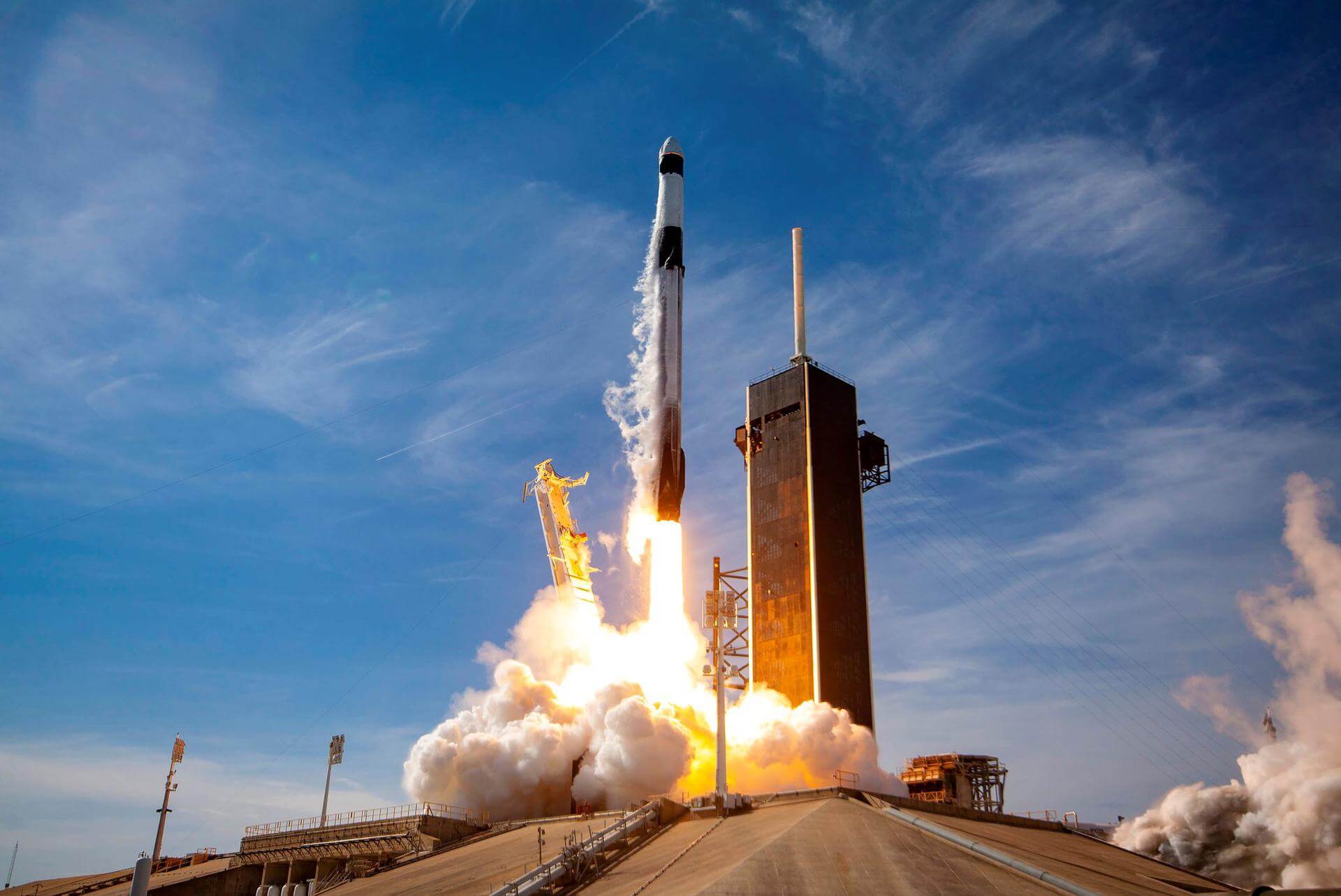
| Payload | Dragon CRS-2 SpX-35 |
| Launch Weather Forecast | 99% GO (Cumulus Cloud Rule) |
| Launch site | SLC-40, Cape Canaveral SFS, FL, USA. |
| Booster | B1096-8 |
| Landing | The Falcon 9 first stage B1096 will land back at the launch site after its 8th flight. |
| Dragon | Cargo Dragon C211 C211-4 |
| Mission success criteria | Successful deployment of spacecrafts into orbit |
| Trajectory (Flight Club) | 2D,3D |
| Spacecraft | Cargo Dragon 2 |
|---|---|
| Serial Number | C211 |
| Destination | ISS |
| Flights | 3 |
| Owner | SpaceX |
| Landing | The Cargo Dragon C211 spacecraft will splash down in the Pacific Ocean. |
| Capabilities | Cargo Earth Orbit Logistics |
Cargo Dragon 2 is a autonomous spaceship capable of bringing science to and from the International Space Station with large pressurized and un-pressurized sections to support a variety of missions.
Cargo Dragon 2 is an updated version of the original Dragon spaceship designed to service the International Space Station with first flights conducted in 2020.
In contrast to Dragon 1 it docks to the International Space Station instead of being berthed by the Canada Arm.
| Stream | Link |
|---|---|
| Official Webcast | NASA |
| Official Webcast | NASA |
| Official Webcast | SpaceX |
| Unofficial Webcast | Spaceflight Now |
| Unofficial Webcast | NASASpaceflight |
☑️ 738th SpaceX launch all time
☑️ 678th Falcon Family Booster landing
☑️ 8th landing on LZ-40
☑️ 223rd consecutive successful SpaceX launch (if successful)
☑️ 119th SpaceX launch this year
☑️ 49th launch from SLC-40 this year
☑️ 11 days, 19:23:38 turnaround for this pad
☑️ 75 days, 3:23:25 hours since last launch of booster B1096
Stats include F1, F9 , FH and Starship
| Time | Event |
|---|---|
| -0:38:00 | GO for Prop Load |
| -0:35:00 | Prop Load |
| -0:35:00 | Stage 1 LOX Load |
| -0:16:00 | Stage 2 LOX Load |
| -0:07:00 | Engine Chill |
| -0:05:00 | Dragon Internal Power |
| -0:01:00 | Tank Press |
| -0:01:00 | Startup |
| -0:00:45 | GO for Launch |
| -0:00:03 | Ignition |
| 0:00:00 | Liftoff |
| 0:01:08 | Max-Q |
| 0:02:15 | MECO |
| 0:02:18 | Stage 2 Separation |
| 0:02:22 | Stage 1 Flip |
| 0:02:26 | SES-1 |
| 0:02:31 | Booster Boostback Burn Startup |
| 0:03:25 | Booster Boostback Burn Shutdown |
| 0:05:58 | Entry Burn Startup |
| 0:06:06 | Entry Burn Shutdown |
| 0:07:04 | Stage 1 Landing Burn |
| 0:07:21 | Stage 1 Landing |
| 0:08:30 | SECO-1 |
| 0:09:18 | Dragon Separation |
| 0:10:33 | Dragon Nosecode Open |
| Time (UTC) | Update |
|---|---|
| 11 Oct 15:55 | Updated launch weather, >95% GO. |
| 02 Oct 17:25 | Tweaked T-0. |
| 01 Oct 22:00 | Refined tentative T-0. |
| 01 Oct 21:36 | Added approximate launch time. |
| 01 Oct 18:18 | NET October 13. |
| 16 Aug 15:28 | NET October. |
| 17 Jul 23:41 | NET Fall 2026. |
| 10 Dec 2025, 18:40 | NET August 2026. |
Information on this thread is provided by and updated automatically using the Launch Library 2 API by The Space Devs.
| Link | Source |
|---|---|
| Flight Club | u/TheVehicleDestroyer |
| Discord SpaceX lobby | u/SwGustav |
| SpaceX Now | u/bradleyjh |
| SpaceX Patch List |
[](/# MC // section participate)
🥳 Launch threads are party threads, we relax the rules here. We remove low effort comments in other threads!
🔄 Please post small launch updates, discussions, and questions here, rather than as a separate post. Thanks!
💬 Please leave a comment if you discover any mistakes, or have any information.
✉️ Please send links in a private message.
Tweet link: https://x.com/spacex/status/2106090316747207047
With SpaceX progressing toward the stretched Starship V4 architecture, the physics of hot-staging will shift dramatically. While it is widely expected that Starship V4 will fire all 9 of its upper-stage engines (6 Vacuum / 3 Sea Level) at ignition to minimize severe gravity losses, the optimal configuration for the Super Heavy booster during this hand-off remains an open engineering question.
On Starship V3, Super Heavy shuts down all but its 5 center engines at MECO. This maintains positive acceleration (ullage) to settle booster propellants while allowing the ship to pull away cleanly. However, with a much heavier V4 ship pushing back with 9 Raptors, the booster's counter-thrust profile must adapt. [1]
Based on potential booster engine configurations during hot-staging, I’ve mapped out three primary options:
Option 1: The 7-Engine Booster Configuration
The booster cuts down to a tight 7-engine cluster. This lower thrust floor guarantees a massive differential acceleration, ensuring the 9-engine Starship pulls away rapidly. The risk here is that dropping down to 7 engines requires shutting down and rapidly restarting 6 of the inner 13 cluster engines just seconds later for the high-thrust boostback burn—increasing ignition fluid dependency and hardware stress.
Option 2: The 9-Engine Booster Configuration
The booster leaves 9 engines burning at a heavily throttled state. This matches the engine count of the ship above it and provides a higher thrust baseline, meaning fewer engines need to be reignited for the boostback burn. However, because a nearly empty booster is incredibly light, engineers would have to carefully manage the throttle to prevent the booster from accelerating too quickly and risking a collision during the physical separation window.
Option 3: All 13 Center Engines Throttled to Minimum Floor
Instead of shutting anything down in the center ring, Super Heavy commands all 13 inner engines to drop to their absolute minimum throttle floor.
Discussion Points for the Community: