Peptide cheat sheet

Research reference only.

🩹 Repair, Recovery & Aging

- BPC-157 — gut lining, injury, tissue repair — 250–500mcg daily (oral 500–1000mcg for gut)

- TB-500 — inflammation, muscle repair, flexibility — 2–5mg weekly, split 2x

- GHK-Cu — skin, collagen, wound healing, hair — 1–2mg daily (inject or topical)

- KPV — gut irritation, immune balance — 250mcg–1mg daily (oral 250mcg 2x for gut)

- Epithalon — circadian rhythm, cellular cleanup, aging — 5–10mg daily × 10–20 days, 1–2x/year

- NAD+ — cell energy, longevity — 25–100mcg SubQ or 250–500mg oral daily

- Glutathione — detox, immunity, skin — 200–600mg, 1–3x weekly (IM preferred)

- Thymosin Alpha-1 — immune regulation, inflammation — 1.5–3mg, 2–3x weekly

- SS-31 / Elamipretide — mitochondrial protection, cell energy — 1–10mg daily

💪 Mass, Power & Recovery (GH/IGF)

- Sermorelin — natural GH, lean mass, sleep — 100–300mcg nightly

- Ipamorelin — GH release, deep sleep, clean — 200–300mcg, 1–2x daily

- CJC-1295 + Ipamorelin — classic GH recovery stack — 100–300mcg each, PM

- GHRP-2 — growth, appetite, recovery — 100–300mcg, 1–3x daily

- GHRP-6 — strong appetite, muscle gain — 100–300mcg, 1–3x daily

- IGF-1 LR3 — systemic repair/growth (advanced) — 20–50mcg daily

- IGF-1 DES — localized growth/healing (advanced) — 50–150mcg post-workout

- Follistatin-344 — muscle, strength — 50–100mcg daily, 10–30 day course

- Hexarelin — strong GH pulse (advanced) — 100mcg, 1–3x daily

- HGH — recovery, recomp, sleep, anti-aging — 1–2 IU daily (up to ~4)

🔥 Weight Loss & Metabolic

- Semaglutide — appetite, weight loss, blood sugar — 0.25 → 2.4mg weekly

- Tirzepatide — appetite, fat loss, insulin — 2.5 → 15mg weekly

- Retatrutide — aggressive fat loss (research) — 1 → 12mg weekly

- Tesamorelin — belly fat — 1–2mg daily

- Cagrilintide — appetite (amylin) — 0.3 → 2.4mg weekly

- AOD-9604 — fat targeting — 250–500mcg daily, fasted

- HGH Fragment 176-191 — fat burning, spares muscle — 250–500mcg daily, split 2x

- 5-Amino-1MQ — metabolism (NNMT) — 25–50mg oral daily

- MOTS-c — mitochondrial energy, fat burning — 5–10mg weekly, split

- Mazdutide / Survodutide — newer weight compounds — Maz 3→10mg / Survo 0.6–4.8mg weekly

🧠 Brain, Mood & Sleep

- Semax — focus, memory, mood — 50–100mcg per nostril, 1–3x (or 300–600mcg inject)

- Selank — anxiety relief, calm focus — 125–250mcg per nostril, 1–3x

- DSIP — sleep quality, calm — 100–300mcg before bed

- Dihexa — cognitive boost (experimental) — 10–30mg oral daily

- Kisspeptin-10 — mood, libido, hormones — 10–100mcg, 1–2x daily

✨ Skin, Hair & Looks

- GHK-Cu — collagen, texture, hair — 1–2mg daily (inject or topical)

- Melanotan II — tanning + libido — 250mcg load, then 100–250mcg 2–3x weekly

- RU-58841 — topical anti-DHT for hair — 3.5–5% topical daily

- Oral collagen peptides — skin, joints, elasticity — 10–20g daily

💋 Sex & Libido

- PT-141 — brain arousal — 1–2mg as needed (max once/24h)

- Melanotan II — libido secondary — 200–1000mcg before activity

- Oxytocin — bonding, mood — 8 IU per nostril, or 1–10 IU inject

- Kisspeptin-10 — libido, hormone signaling — 10–100mcg, 1–2x daily

🦠 Gut & Systemic Inflammation

- BPC-157 — gut lining, digestion — oral 500–1000mcg daily

- KPV — GI + general inflammation — oral 250mcg 2x daily

- Glutathione — detox, immune — 200–600mg, 1–3x weekly

- LL-37 — antimicrobial, immune defense — 100–250mcg daily

🔗 Popular Stacks

- Wolverine (BPC + TB) — soft tissue, recovery — 250–500mcg each daily

- GLOW (BPC + TB + GHK-Cu) — skin, hair, healing — ~1.67mg daily

- KLOW (GLOW + KPV) — adds gut/inflammation — ~1.67mg daily

- FLOW (BPC + TB + KPV) — recovery + gut — 250–500mcg each, 1–2x daily

- CJC + Ipamorelin — go-to GH support — 100–300mcg each, PM

⚕️ TRT & Hormone Management

Dosed to bloodwork — get labs and a provider first.

- Test C / Test E — TRT base — 100–200mg weekly

- HCG — fertility, testicular function — 250–500 IU 2x weekly

- Enclomiphene — raises natural test — 12.5–25mg daily/EOD

- Anastrozole — estrogen control — 0.25–0.5mg, only if E2 high

- Gonadorelin — LH stimulation (HCG alt) — 100–200mcg 2–3x weekly

🧮 Mixing Basics

- Bac water for most; IGF-1 LR3 & DES use 0.6% acetic acid

- Swirl gently, swab the stopper, never shake

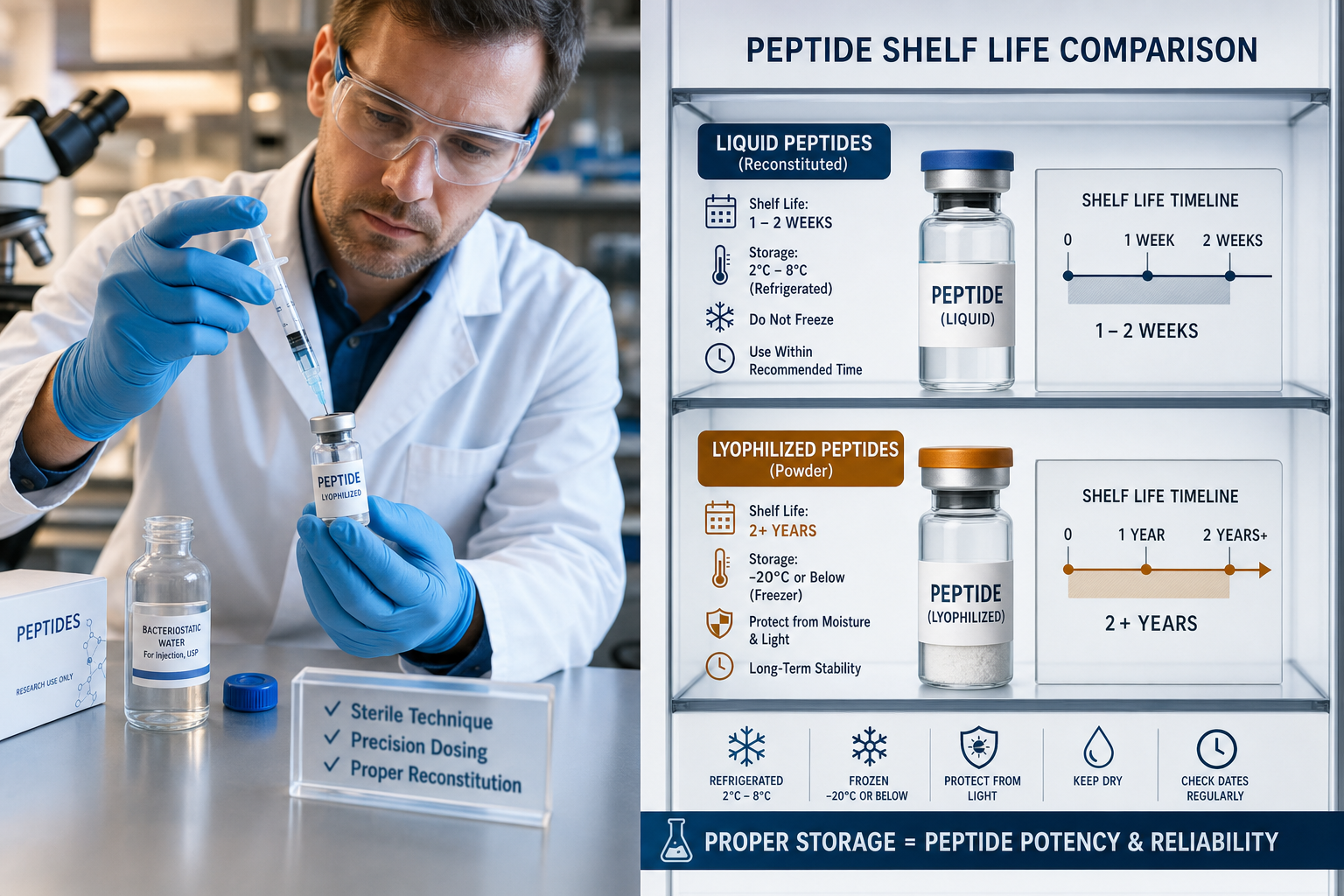
- Reconstituted vials last ~28 days refrigerated — never freeze

- Units ≠ mg. 100-unit syringe = 1mL. (mg in vial ÷ mL water = mg per mL)

- Quick fills: 2mg→1mL, 5mg→2.5mL, 10mg→5mL (each = 200mcg per 10 units)
reddit.com
u/AminoLABZoffical — 3 days ago
▲ 3 r/u_AminoLABZoffical+1 crossposts

Lyophilized (freeze-dried) peptides: what that means and why it's used

# Lyophilized (Freeze-Dried) Peptides: What That Means and Why It's Used

Last updated: July 1, 2026

**Quick Answer:** Lyophilized (freeze-dried) peptides are peptide compounds that have had nearly all moisture removed through a controlled freezing and vacuum-drying process, leaving behind a stable white powder. This method dramatically extends shelf life, prevents degradation, and makes peptides far easier to store and ship than liquid formulations. Researchers, pharmaceutical manufacturers, and clinical labs rely on lyophilization as the gold standard for preserving peptide integrity.

---

## Key Takeaways

- Lyophilization removes water from frozen peptides under vacuum, converting ice directly to vapor without passing through a liquid phase.

- Lyophilized peptides can remain stable for two years or more when stored correctly, compared to days or weeks for liquid peptide solutions.

- The process protects peptides from hydrolysis, oxidation, and microbial growth, all of which degrade liquid formulations rapidly.

- Reconstitution requires adding a specific sterile solvent (typically sterile water or a buffer solution) before use.

- Lyophilized peptides are not inherently "better" in biological activity than fresh liquid peptides, but they are far more practical for storage, shipping, and quality control.

- Improper storage (humidity, heat, or light exposure) can still degrade lyophilized peptides even in powder form.

- Most commercially sold research peptides, vaccine antigens, and therapeutic peptides are supplied in lyophilized form.

- Lyophilization adds cost to manufacturing, but the extended stability typically justifies the expense for high-value peptide compounds.

---

## What Does Lyophilized Mean in Simple Terms

Lyophilized simply means freeze-dried. The word comes from the Greek "lyo" (to loosen) and "philos" (loving), but in practice it describes a dehydration process where a substance is first frozen solid, then placed under a strong vacuum so the ice turns directly into vapor, skipping the liquid stage entirely. What remains is a dry, porous solid, often appearing as a white powder or cake.

For peptides specifically, this means the amino acid chains are preserved in a dry matrix with minimal chemical activity. No water means no hydrolysis, no microbial growth, and a dramatically slower rate of oxidation.

---

## Why Scientists Freeze-Dry Peptides Instead of Keeping Them Liquid

Peptides in liquid solution are chemically active and biologically vulnerable. Water acts as a medium for degradation reactions, including hydrolysis (where water molecules break peptide bonds), oxidation of sensitive amino acids like methionine and cysteine, and microbial contamination. Even refrigerated liquid peptides typically degrade meaningfully within days to a few weeks.

Lyophilization solves these problems by removing the water entirely. Key reasons researchers choose freeze-drying over liquid storage include:

- **Hydrolysis prevention:** No water means peptide bonds are not exposed to the primary agent that breaks them.

- **Oxidation reduction:** Dry environments slow oxidative degradation of sensitive residues.

- **Microbial control:** Bacteria and fungi cannot grow without moisture.

- **Concentration consistency:** A weighed powder gives more precise dosing than a solution that may have evaporated slightly.

> "Lyophilization is not just a convenience, it is often the only practical way to preserve complex peptide sequences over meaningful timeframes."

---

## How Long Do Lyophilized Peptides Last Compared to Liquid

Lyophilized peptides stored at -20 degrees Celsius in a sealed, desiccated container can maintain stability for two years or longer, with some manufacturers citing shelf lives of up to five years for simple, non-oxidation-prone sequences. Liquid peptide solutions, even when refrigerated at 4 degrees Celsius, typically degrade within one to four weeks depending on the sequence and formulation.

**Stability comparison at a glance:**

| Form | Storage Condition | Estimated Shelf Life |

| Liquid solution | 4°C (refrigerated) | 1–4 weeks |

| Liquid solution | -20°C (frozen) | 3–6 months |

| Lyophilized powder | 4°C (sealed, dry) | 12–24 months |

| Lyophilized powder | -20°C (sealed, dry) | 2–5 years |

| Lyophilized powder | Room temp (sealed, dry) | 6–12 months (sequence-dependent) |

These are general estimates. Peptides containing methionine, cysteine, tryptophan, or glutamine are more prone to degradation and may have shorter shelf lives regardless of form.

---

## What Is the Difference Between Lyophilized and Regular Peptides

"Regular" peptides in this context usually means either liquid-formulated peptides or crude peptide powders that have not been lyophilized. The biological activity of a peptide does not change because of lyophilization, the amino acid sequence and structure are preserved, not altered. The difference is entirely about physical state, stability, and handling.

- **Lyophilized peptides:** Dry powder, long shelf life, require reconstitution before use, higher manufacturing cost.

- **Liquid peptides:** Ready to use, shorter shelf life, more sensitive to temperature swings, lower upfront processing cost.

- **Crude peptide powders:** May or may not be lyophilized; "crude" refers to purity level, not drying method.

Choose lyophilized if the peptide needs to be stored for more than a few weeks, shipped without cold chain, or used in precise quantitative assays.

---

## Is Lyophilized the Same as Powder Peptides

Not always, but often yes. Lyophilized peptides are always in powder or cake form, but not all peptide powders are lyophilized. Some peptide powders are produced by spray-drying, precipitation, or simple evaporation, methods that do not involve the freeze-vacuum cycle of true lyophilization.

Lyophilized powders tend to be more porous and reconstitute more easily than spray-dried or precipitated powders. When a supplier specifies "lyophilized," it signals a controlled, validated drying process that preserves structural integrity more reliably than other drying methods.

---

## How to Reconstitute Freeze-Dried Peptides

Reconstituting lyophilized peptides means adding a solvent to dissolve the dry powder back into a usable solution. The correct solvent depends on the peptide's chemistry, and using the wrong one can cause aggregation or incomplete dissolution.

**Step-by-step reconstitution process:**

  1. Allow the sealed vial to reach room temperature before opening to prevent moisture condensation on the cold powder.

  2. Check the manufacturer's recommended solvent (sterile water, phosphate-buffered saline, or dilute acetic acid are common choices).

  3. Add solvent slowly along the vial wall, not directly onto the powder cake, to avoid foaming.

  4. Gently swirl or roll the vial. Do not vortex vigorously, as shear force can disrupt peptide structure.

  5. If the peptide does not dissolve fully, try brief sonication in a water bath or adjust pH with a small amount of dilute acid or base.

  6. Use reconstituted peptides promptly or store according to the manufacturer's guidance (typically at -20°C, used within 1–4 weeks).

**Common mistake:** Adding too much solvent at once and then being uncertain about final concentration. Always calculate the target concentration before adding solvent and add it in measured increments.

---

## Are Lyophilized Peptides Better for Storage and Shipping

Yes, lyophilized peptides are significantly better for both storage and shipping. The dry powder form tolerates temperature fluctuations far better than liquid solutions, which means they can often be shipped at ambient temperature for short durations without cold packs, reducing logistics costs and complexity.

For international shipments or deliveries to facilities without reliable cold chain infrastructure, lyophilized peptides are the standard choice. Most commercial peptide suppliers ship lyophilized products with simple desiccant packs rather than dry ice, which simplifies customs handling and reduces the risk of degradation during transit delays.

---

## Can Lyophilized Peptides Go Bad or Expire

Yes. Lyophilized peptides can degrade, particularly if storage conditions are compromised. The most common causes of degradation in lyophilized peptides are:

- **Moisture intrusion:** Even small amounts of humidity reintroduce the conditions for hydrolysis and microbial growth.

- **Temperature abuse:** Repeated freeze-thaw cycles or storage above recommended temperatures accelerate chemical degradation.

- **Light exposure:** UV light can oxidize aromatic amino acids like tryptophan and tyrosine.

- **Oxygen exposure:** Opening vials repeatedly without inert gas backfill allows oxidation to accumulate.

Most lyophilized peptides carry a manufacturer-assigned expiry date, typically 12 to 24 months from production. Sequences with oxidation-prone residues may have shorter stated shelf lives.

---

## What Happens If You Don't Store Lyophilized Peptides Correctly

Improper storage leads to measurable loss of purity and potency. A lyophilized peptide exposed to humidity may partially rehydrate, clump, and begin hydrolytic degradation. Visually, the powder may appear discolored, sticky, or collapsed rather than free-flowing and white.

Functionally, degraded peptides produce inconsistent assay results, reduced biological activity, and in some cases the formation of degradation byproducts that interfere with downstream experiments. For research use, this means wasted reagents and unreliable data. For clinical or pharmaceutical applications, it can mean failed quality control and product rejection.

**Best storage practice:** Store in sealed vials with desiccant, under inert gas if possible, at -20°C, away from light, and open only when needed.

---

## Who Uses Freeze-Dried Peptides and Why

Lyophilized peptides are used across a wide range of fields where peptide stability and reproducibility are critical.

- **Pharmaceutical manufacturers:** Produce lyophilized peptide drug products (such as GLP-1 receptor agonists and oxytocin analogues) for clinical use.

- **Vaccine developers:** Use lyophilized peptide antigens for immunogenicity studies and peptide-based vaccine formulations.

- **Academic and clinical researchers:** Rely on lyophilized peptides for cell biology assays, receptor binding studies, and proteomics work.

- **Diagnostic kit manufacturers:** Incorporate lyophilized peptide standards into ELISA kits and immunoassay panels for consistent lot-to-lot performance.

- **Cosmetic and nutraceutical formulators:** Use lyophilized bioactive peptides (such as collagen-derived sequences) in products where shelf stability is a commercial requirement.

![Who Uses Freeze-Dried Peptides and Why](https://zsxkvszxbhpwnvzxdydv.supabase.co/storage/v1/object/public/generated-images/kie/620084fa-46db-4ca9-bd4f-1f8137472a86/slot-2-1782926044780.png)

---

## How Much Does Lyophilization Cost Compared to Regular Peptide Prep

Lyophilization adds meaningful cost to peptide production. The equipment (industrial freeze-dryers) is expensive to purchase and maintain, the process is time-consuming (a single lyophilization cycle can take 24 to 72 hours), and the process requires validation for pharmaceutical-grade applications.

As a rough estimate, lyophilization can add 10 to 30 percent to the cost of producing a peptide batch compared to delivering it as a liquid solution, depending on scale and equipment amortization. For small research quantities (milligram to gram scale), this premium is usually absorbed into the per-milligram price quoted by peptide synthesis suppliers.

The cost is generally justified because the extended shelf life reduces waste, simplifies quality control, and eliminates the need for expensive cold chain logistics.

---

## Do Lyophilized Peptides Work as Well as Fresh Ones

When properly lyophilized and correctly reconstituted, freeze-dried peptides perform equivalently to freshly prepared liquid peptides in terms of biological activity. The lyophilization process does not alter the primary amino acid sequence, and well-optimized protocols preserve secondary structure in most cases.

The key qualifier is "properly." Peptides that were degraded before lyophilization, or that experienced moisture exposure during storage, will not perform as well as fresh preparations. Quality lyophilization of a high-purity peptide, followed by correct storage and reconstitution, should yield a product indistinguishable in activity from a freshly synthesized liquid preparation.

---

## What Peptides Are Usually Sold Lyophilized

The vast majority of commercially synthesized research peptides are sold in lyophilized form. This includes:

- Custom synthetic peptides from research suppliers (typically greater than 95 percent purity, lyophilized as standard)

- GLP-1 analogues (semaglutide, liraglutide precursors used in research)

- Peptide hormones (oxytocin, vasopressin, ACTH fragments)

- Antimicrobial peptides used in microbiological research

- Collagen-derived peptides for cosmetic and nutraceutical research

- Epitope peptides for immunology and vaccine research

- Neuropeptides and receptor ligands used in neuroscience studies

Peptides that are delivered as liquid formulations are typically short, highly stable sequences (two to five amino acids) or formulations where the end user needs immediate, ready-to-use solutions and the shelf life window is acceptable.

---

## FAQ

**What does lyophilized mean on a peptide label?**

It means the peptide has been freeze-dried and is supplied as a dry powder. The moisture has been removed under vacuum after freezing to preserve stability. The peptide must be dissolved in an appropriate solvent before use.

**Can lyophilized peptides be stored at room temperature?**

Short-term storage at room temperature (below 25 degrees Celsius) in a sealed, desiccated container is acceptable for many lyophilized peptides for up to a few months. For long-term storage, -20 degrees Celsius is recommended.

**How do I know if my lyophilized peptide has gone bad?**

Signs of degradation include discoloration (yellowing or browning), a sticky or clumped texture instead of free-flowing powder, failure to dissolve properly upon reconstitution, or unexpected results in biological assays.

**Does lyophilization change the peptide's molecular weight or sequence?**

No. Lyophilization is a physical drying process. It does not alter the amino acid sequence or molecular weight of the peptide.

**Why do some lyophilized peptides come as a fluffy cake rather than a powder?**

The porous cake structure is a normal result of the freeze-drying process. The ice crystal network leaves behind a fragile, sponge-like solid. This form actually reconstitutes quickly because of its high surface area. It is not a sign of poor quality.

**Is it safe to reconstitute a lyophilized peptide with tap water?**

No. Tap water contains minerals, chlorine, and microorganisms that can interfere with peptide stability and assay results. Always use sterile water for injection, HPLC-grade water, or the specific buffer recommended by the supplier.

**Can lyophilized peptides be re-lyophilized after reconstitution?**

Technically yes, but it is not recommended for research-grade materials. Each freeze-drying cycle introduces stress and potential for degradation or loss of material. Reconstitute only what is needed and store the remainder as powder.

**What is the difference between lyophilized and air-dried peptides?**

Air-drying exposes peptides to heat and oxygen, which can cause oxidation and structural damage. Lyophilization occurs at sub-zero temperatures under vacuum, which is far gentler and preserves peptide integrity much more effectively.

---

## Conclusion

Lyophilized (freeze-dried) peptides represent the most reliable and widely adopted method for preserving peptide integrity across research, pharmaceutical, and commercial applications. The process removes water under vacuum at sub-zero temperatures, converting a chemically vulnerable liquid into a stable, long-lasting powder without altering the peptide's biological identity.

**Actionable next steps for researchers and buyers:**

- When ordering peptides for experiments that will not begin immediately, always specify lyophilized form.

- Store lyophilized peptides at -20 degrees Celsius in sealed vials with desiccant until the day of use.

- Follow the supplier's recommended reconstitution solvent and protocol precisely to ensure full dissolution and accurate concentration.

- Inspect powder appearance before reconstitution; discard any vials showing discoloration, clumping, or moisture intrusion.

- For high-value or sensitive sequences (those containing methionine, cysteine, or tryptophan), request a certificate of analysis confirming purity at the time of manufacture and note the stated expiry date.

Understanding lyophilized (freeze-dried) peptides, what that means and why it's used, is foundational knowledge for anyone working with peptide-based materials. The small additional cost and the extra reconstitution step are minor compared to the stability, reproducibility, and logistical advantages that freeze-drying provides.

---

## References

- Manning, M. C., Chou, D. K., Murphy, B. M., Payne, R. W., & Katayama, D. S. (2010). Stability of protein pharmaceuticals: an update. *Pharmaceutical Research*, 27(4), 544–575. https://doi.org/10.1007/s11095-009-0045-6

- Wang, W. (2000). Lyophilization and development of solid protein pharmaceuticals. *International Journal of Pharmaceutics*, 203(1–2), 1–60. https://doi.org/10.1016/S0378-5173(00)00423-3

- Carpenter, J. F., Pikal, M. J., Chang, B. S., & Randolph, T. W. (1997). Rational design of stable lyophilized protein formulations: some practical advice. *Pharmaceutical Research*, 14(8), 969–975. https://doi.org/10.1023/A:1012180707283

- Kasper, J. C., & Friess, W. (2011). The freezing step in lyophilization: physico-chemical fundamentals, freezing methods and consequences on process performance and quality attributes of biopharmaceuticals. *European Journal of Pharmaceutics and Biopharmaceutics*, 78(2), 248–263. https://doi.org/10.1016/j.ejpb.2011.03.010

---

u/AminoLABZoffical — 4 days ago

Peptide cheat sheet

REPAIR, RECOVERY & AGING

**•**	BPC-157 — gut lining, injury healing, tissue repair  
**•**	TB-500 — cuts inflammation, muscle repair, flexibility  
**•**	GHK-Cu — skin repair, collagen, wound healing, hair  
**•**	KPV — calms gut irritation, immune balance  
**•**	Epithalon — circadian rhythm, cellular cleanup, healthier aging  
**•**	NAD+ — brain cell energy, longevity angle  
**•**	Glutathione — detox, immunity, skin clarity  
**•**	Thymosin Alpha-1 — immune regulation, inflammation  
**•**	SS-31 / Elamipretide — mitochondrial protection, cell energy, anti-aging

MASS, POWER & RECOVERY (GH/IGF AXIS)

**•**	Sermorelin — natural GH support, lean mass, sleep, recovery  
**•**	Ipamorelin — GH release, deep sleep, healing — mild and clean  
**•**	CJC-1295 + Ipamorelin — classic GH stack for recovery and fat loss  
**•**	GHRP-2 — growth, appetite kick, recovery  
**•**	GHRP-6 — strong appetite stimulation, muscle gain  
**•**	IGF-1 LR3 — systemic repair, muscle growth — not for beginners  
**•**	IGF-1 DES — localized growth/healing — advanced  
**•**	Follistatin-344 — muscle and strength support  
**•**	Hexarelin — strong GH pulse — advanced, can spike prolactin  
**•**	HGH — recovery, body recomp, sleep, anti-aging

WEIGHT LOSS & METABOLIC HEALTH

**•**	Semaglutide — appetite suppression, weight loss, blood sugar — strongest human data  
**•**	Tirzepatide — dual pathway: appetite, fat loss, insulin function  
**•**	Retatrutide — triple pathway, aggressive fat loss — research only  
**•**	Tesamorelin — targets belly fat — FDA context exists  
**•**	Cagrilintide — appetite suppression via amylin pathway  
**•**	AOD-9604 — fat targeting — FDA flagged safety concerns, limited data  
**•**	HGH Fragment 176-191 — fat burning, spares muscle — mostly animal studies  
**•**	5-Amino-1MQ — NNMT inhibition for metabolism — scarce human data  
**•**	MOTS-c — mitochondrial energy, fat burning — experimental  
**•**	Mazdutide / Survodutide — newer weight regulation compounds — investigational

BRAIN, MOOD & SLEEP

**•**	Semax — focus, memory, mood, mental energy — can feel stimulating  
**•**	Selank — anxiety relief, mood, calm focus — often paired with Semax  
**•**	DSIP — sleep quality, calms nervous system  
**•**	Epithalon — also used for sleep cycle support  
**•**	Dihexa — cognitive boost — highly experimental  
**•**	Kisspeptin-10 — mood, libido, hormone signaling

SKIN, HAIR & LOOKS

**•**	GHK-Cu — collagen, texture, wound healing, hair (injectable or topical)  
**•**	Melanotan II — tanning + libido boost — watch for nausea, mole changes  
**•**	RU-58841 — topical anti-DHT for hair retention  
**•**	Oral collagen peptides — skin hydration, joints, elasticity

SEX & LIBIDO

**•**	PT-141 / Bremelanotide — brain arousal centers (not vascular) — FDA-approved version exists for women  
**•**	Melanotan II — tanning first, libido second  
**•**	Oxytocin — bonding, closeness, mood — inconsistent effects  
**•**	Kisspeptin-10 — libido, upstream hormone signaling

GUT & SYSTEMIC INFLAMMATION

**•**	BPC-157 — gut lining repair, digestive support, inflammation  
**•**	KPV — GI-specific and general inflammatory conditions  
**•**	Glutathione — detox and immune support  
**•**	LL-37 — antimicrobial, immune defense — very limited human work

POPULAR STACKS

**•**	Wolverine (BPC-157 + TB-500) — soft tissue and recovery  
**•**	GLOW (BPC-157 + TB-500 + GHK-Cu) — skin, hair, healing  
**•**	KLOW (GLOW + KPV) — adds gut and inflammation coverage  
**•**	CJC + Ipamorelin — go-to GH support stack

TRT & HORMONE MANAGEMENT

**•**	Test C / Test E — standard TRT bases  
**•**	HCG — preserves fertility, testicular function on TRT  
**•**	Enclomiphene — SERM, raises natural testosterone without shutdown  
**•**	Anastrozole — manages estrogen on TRT  
**•**	Gonadorelin — HCG alternative for LH stimulation
reddit.com
u/AminoLABZoffical — 5 days ago