u/Hot-Association-310

Image 1 — A Korean college student’s side project
Image 2 — A Korean college student’s side project
Image 3 — A Korean college student’s side project
Image 4 — A Korean college student’s side project
Image 5 — A Korean college student’s side project
▲ 281 r/prusa3d

A Korean college student’s side project

My friends have the latest Bambu printers, but I personally still prefer my Prusa.

The only issue is that as I kept building it, I wanted to add more and more features, so it ended up much bigger than I originally planned.

As an IoT major, my 3D printer has become an essential tool for me.

I’m a university student in Korea, and I used a translator to write this post haha.

u/Hot-Association-310 — 7 days ago
▲ 20 r/prusa3d+2 crossposts

I rebuilt my Prusa MK3S into a Klipper-based enclosure with filtration, sensors, and local monitoring

Hi r/3Dprinting,

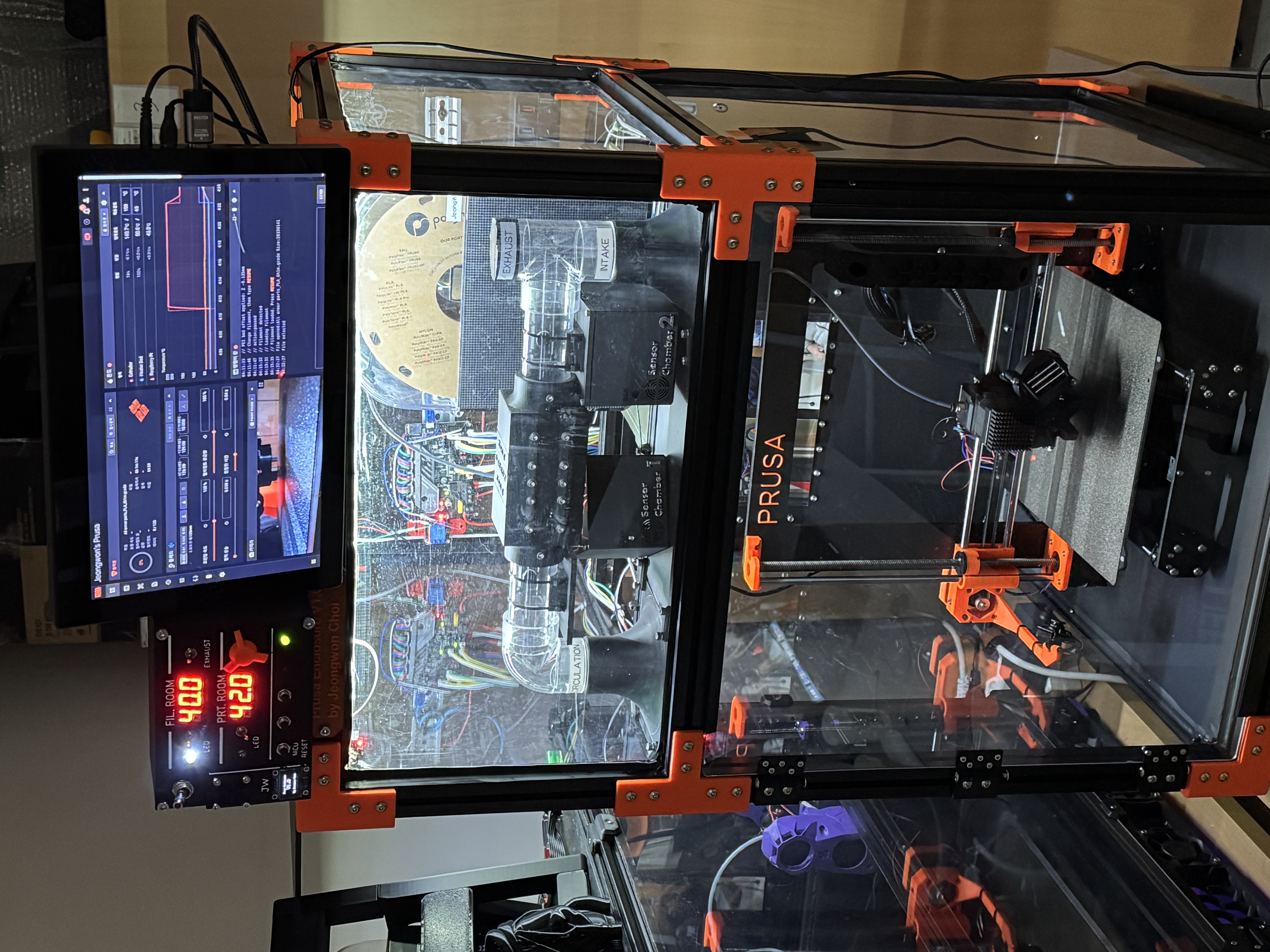
I wanted to share a Prusa MK3S enclosure project I’ve been building and documenting. It started as a practical upgrade for my own printer, but slowly turned into a full enclosure + Klipper + air-quality monitoring setup.

Project repo / photo album: https://github.com/Jungoari/Prusa-Enclosure

The main build:

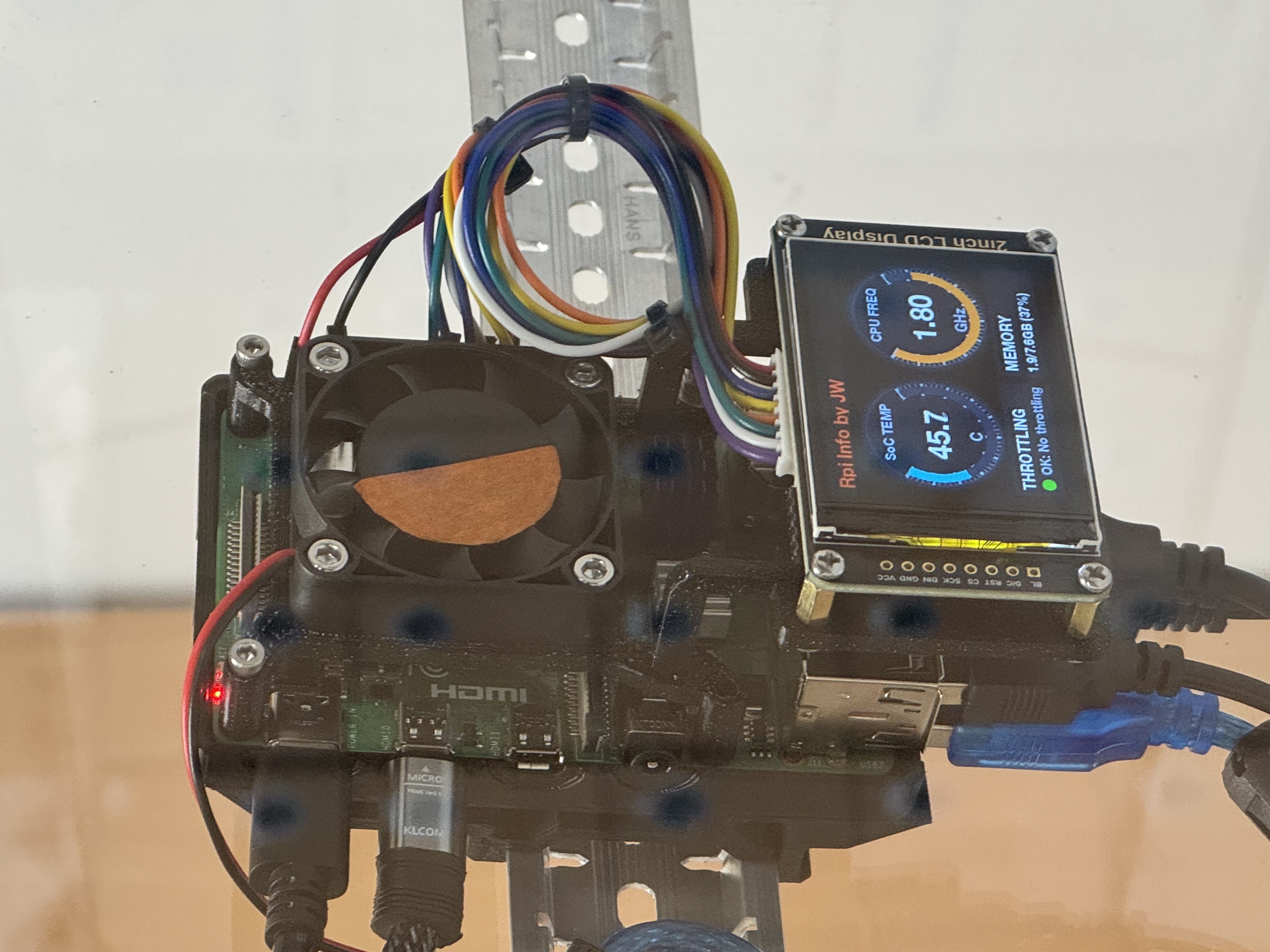
  • Prusa MK3S converted toward a Klipper + Raspberry Pi control stack
  • SKR Mini E3 V3.0 controller conversion
  • Custom two-level enclosure
    • lower chamber for the printer
    • upper chamber for filament/electronics/future humidity control
  • Closed-loop HEPA + activated carbon filtration path
  • PMS7003, SGP30, and DHT22 sensors for PM/VOC/eCO2/temperature/humidity
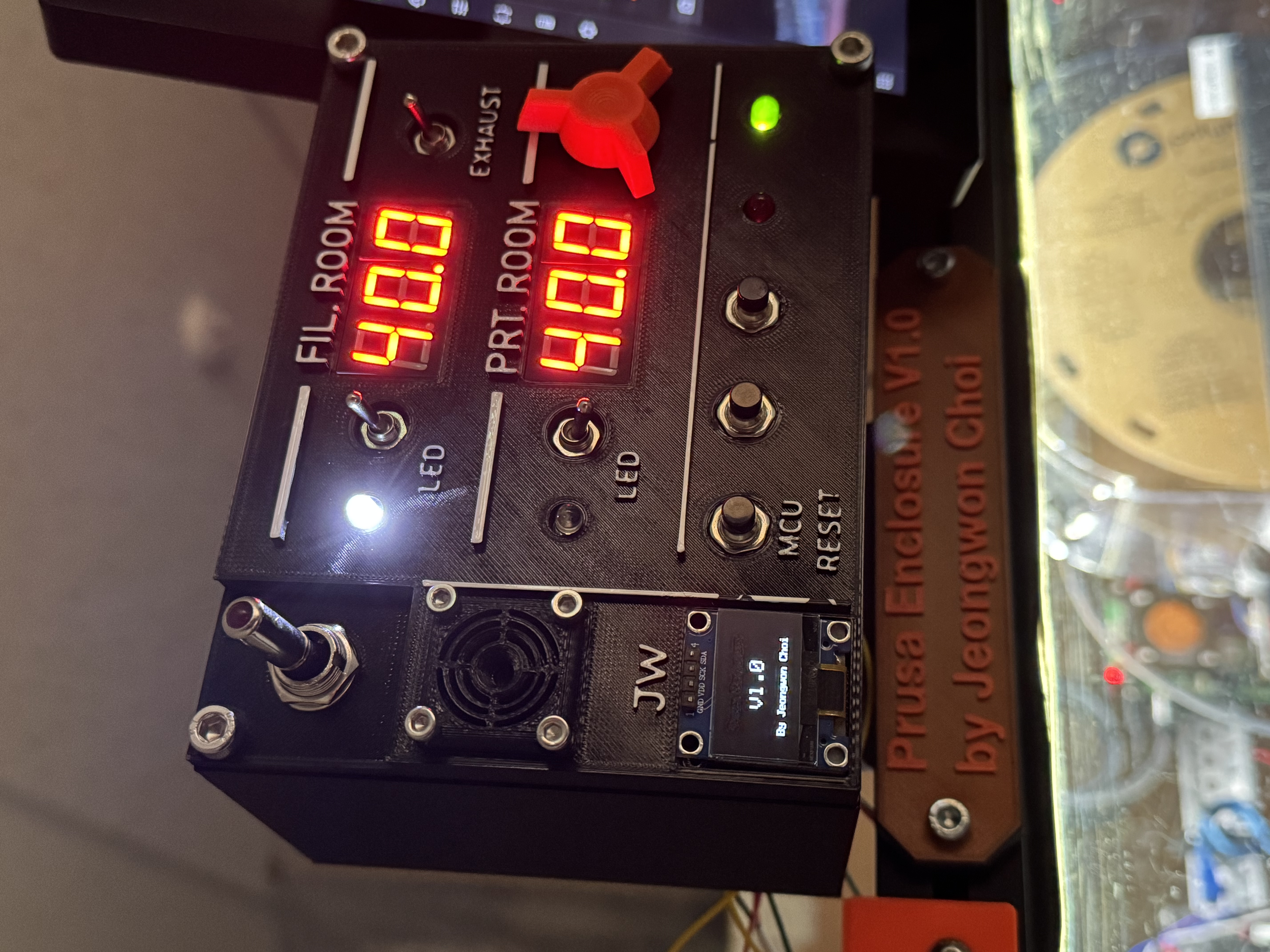
  • OLED/local dashboard for printer and sensor status
  • Camera monitoring
  • Separate sensor/filter chamber integrated into the enclosure

A few photos from the repo:

The most useful part of the build so far has been debugging all the real-world details: rewiring the controller, dealing with fan voltage mismatches, Klipper tuning, first-layer calibration, sensor placement, enclosure airflow, and making the electronics accessible enough that maintenance is not painful.

There is also a research side to the project: I used the air-quality and temperature/humidity data to experiment with early nozzle-clogging warning from multivariate time-series sensor data. But for this post, I’m mostly interested in feedback on the actual printer build: enclosure layout, filtration path, sensor placement, electronics organization, and Klipper conversion decisions.

If you’ve built a Prusa enclosure, done a Klipper conversion, or added filtration/sensors to a printer, I’d love to hear what you would improve.

Thanks!

u/Hot-Association-310 — 7 days ago