u/OkReporter4734

Intro or trailer or none just start conversation?

My podcast is niche and every episode I have guests from different countries as well as I will be bringing experts, who advice to my audience.

I have done trailers, basically nice bits of from the episode as well as few unanswered questions. People have moved on after trailer though, at the beginning my trailers were not as good so now I can make better ones.

I did intro for one guest, it's basically me telling who the guest is why you should watch it, 3 things they can learn. But I think my thumbnail and title covers little bit of it, not alll so not sure about repeating myself.

Or should I just jump into conversation? Basically start with fun part of it which can be a hook too.

Let me know what you think. Thank you

reddit.com
u/OkReporter4734 — 22 hours ago

I accidentally "poisoned" my subscriber base with ads. Is it salvageable?

I’ve been running a podcast for international students for a while. In the beginning, I used paid promotions to get subs/views. I stopped two months ago because I realized it was attracting the wrong people and those hours don't count for monetization.

​I’ve improved my thumbnails, titles, and editing significantly, but my organic reach still feels "stuck" because of those initial paid subscribers. I am getting 200 to 300 views now for shorts and long episode and 30 to 40 views on short clips.

​How long does it take for the algorithm to pivot to a new organic audience?

​Should I just keep posting, or is the channel permanently flagged for low CTR because of the inactive subs?

reddit.com
u/OkReporter4734 — 9 days ago
▲ 62 r/InternationalStudents+1 crossposts

International Student on Survival Mode

I had one of the most important conversation. She did everything right — Purdue, scholarship, internship offers, job offers. But she said something that I feel like many international students are going through right now. She spent 4 years in survival mode and never enjoyed it. Never even decorated her apartment because she was scared everything was temporary.

Please share your experience if you can relate, I hope this conversation gives you perspective if you are having a tough time as an international student.

Search This on Youtube - "International Student Mental Health: Successful Student Opens Up About Her Regrets" - International Student experience

reddit.com
u/OkReporter4734 — 11 days ago

I interviewed someone recently who moved from Taiwan to the Philippines at 14, then came to Los Angeles completely alone at 18.

Her English wasn't great. She didn't know anyone. Every night that first year she called her mom saying 'I don't think I can do this.'

Most people would have booked a return ticket.

She didn't.

What I found most interesting talking to her was this — she said the turning point wasn't money, or grades, or finding a job. It was the moment she stopped waiting to feel ready and just said yes to everything. Every club invite. Every lunch. Every uncomfortable social situation.

12 years later LA is genuinely home to her.

For anyone going through that first year right now — did you have a moment where everything shifted? Or are you still waiting for it?

reddit.com
u/OkReporter4734 — 17 days ago

I run a small podcast focused on the international student experience in the USA — real stories, Practical advice from internationals students and professionals who understands our journey.

After 2 weeks I'm sitting down with a therapist who has worked exclusively with international students for years. She understands the unique mental health challenges we face — culture shock, isolation, visa stress, family pressure from back home, identity confusion, feeling like you can never show weakness.

I have my own questions ready but I want this episode to actually help people who need it.

What would YOU want her to answer?

What's the question you wish you could ask a therapist who actually understands what it means to be far from home, carrying everyone's expectations on your shoulders?

Drop your questions below — I'll do my best to include the most important ones in the interview.

reddit.com
u/OkReporter4734 — 20 days ago

I run a small podcast focused on the international student experience in the USA — real stories, Practical advice from internationals students and professionals who understands our journey.

After 2 weeks I'm sitting down with a therapist who has worked exclusively with international students for years. She understands the unique mental health challenges we face — culture shock, isolation, visa stress, family pressure from back home, identity confusion, feeling like you can never show weakness.

I have my own questions ready but I want this episode to actually help people who need it.

What would YOU want her to answer?

What's the question you wish you could ask a therapist who actually understands what it means to be far from home, carrying everyone's expectations on your shoulders?

Drop your questions below — I'll do my best to include the most important ones in the interview.

reddit.com
u/OkReporter4734 — 20 days ago

Kiki's Delivery Service isn't just a whimsical film about a teenage witch; for me, it's something far deeper. It’s the most honest story ever told about the international student experience. Like Kiki, we leave everything familiar behind—Mom's love, Dad's protection, friends' support, the taste and smell of food, and the very language we speak—all to chase a dream. What follows isn't just education, but a full-blown hero's journey: loneliness, culture shock, identity loss, unexpected kindness, burnout, mentorship, and rediscovery. Kiki doesn’t just fly; she becomes. Just like we all try to.

The first time I watched Kiki’s Delivery Service, I didn’t just see a charming tale about a young witch—I saw myself.

The Great Leap: From Comfort to the Unknown

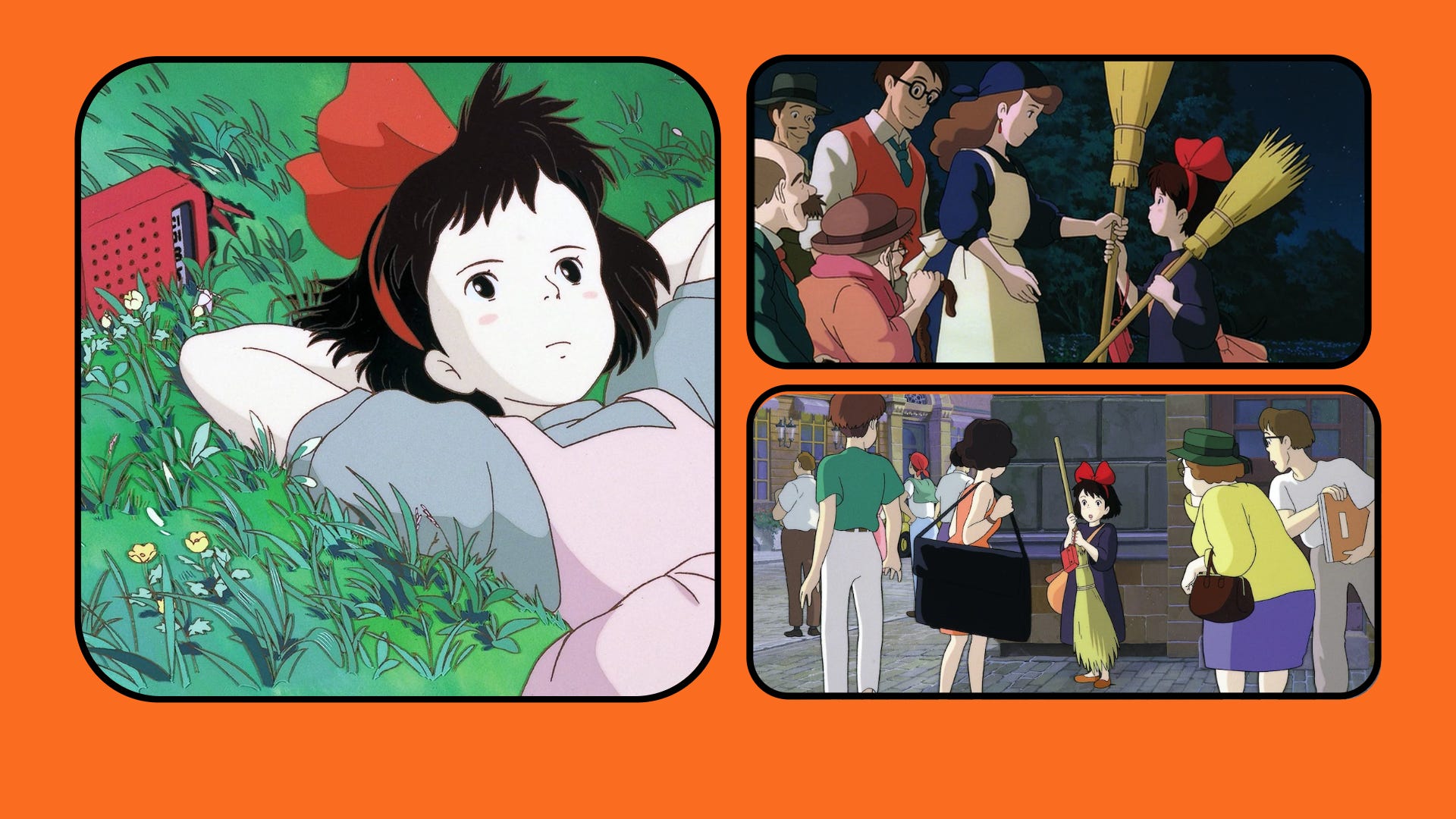
The film opens with Kiki's mother, Kokiri, preparing her daughter for departure. She's worried; Kiki is leaving earlier than expected. Yet, like countless parents of international students, she lets her go, not because she wants to, but because she must. Before Kiki takes off, her mother gives her a broom, and her father’s radio—essentially, "take a piece of home with you." The radio will entertain you, and the broom will be your trustworthy ride. This is the story of every parent who sends their children to another country, to chase a future none of us could fully picture yet.

I was incredibly excited on the flight, but I remember the exact moment the plane took off. My heart dropped. I had butterflies in my stomach—not the romantic kind. I thought, Maybe I’ve gone too far. That unease followed me into my tiny new apartment. As I sat alone among my luggage, a terrifying thought crossed my mind: If I die here, no one will care.

I didn’t know it then, but that was a panic attack. I almost called my brother to buy me a return ticket. But instead, I stepped outside.

Finding Solace: A Cup of Tea and Unexpected Kindness

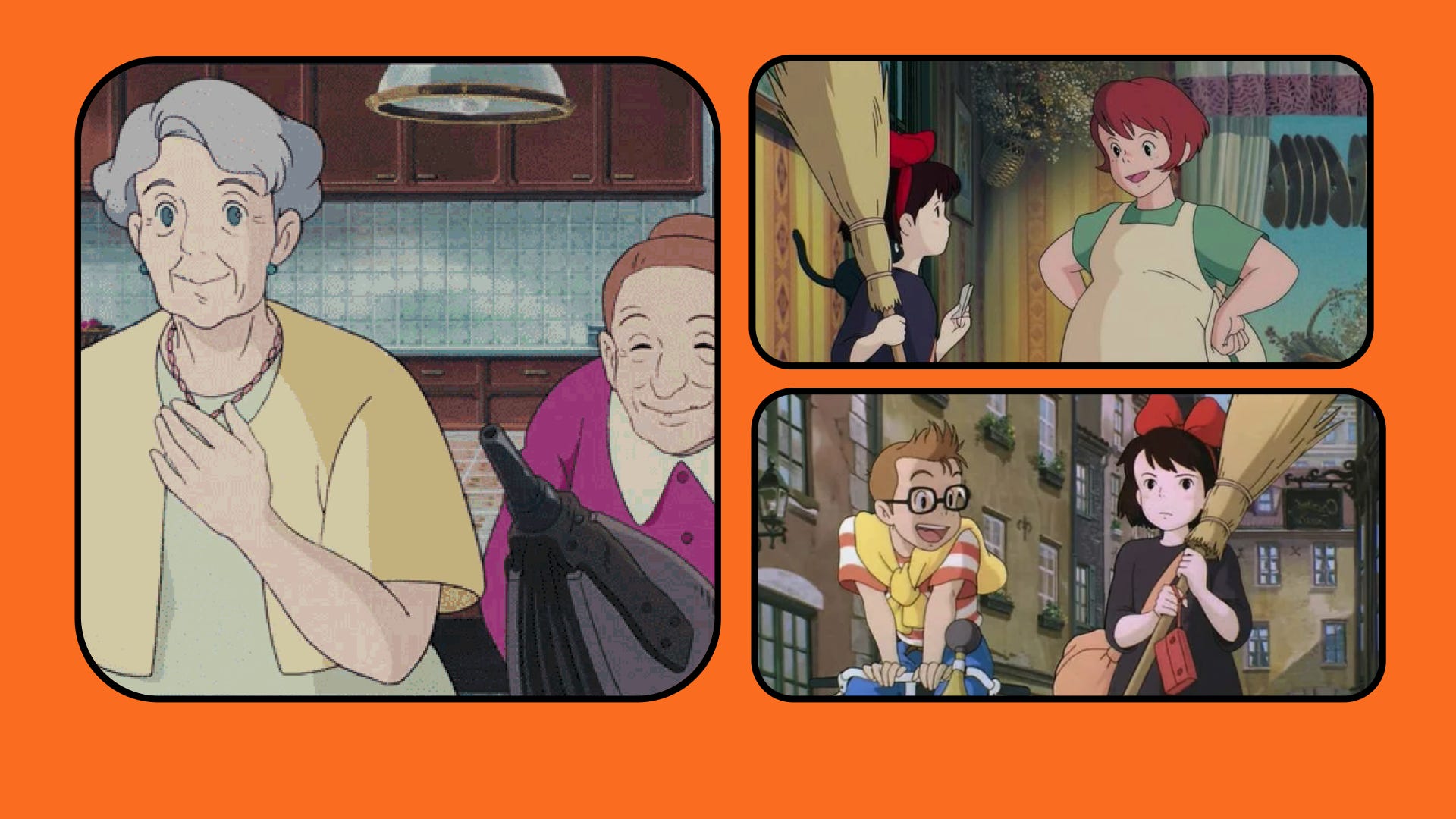
I wandered through unfamiliar streets, ending up in front of an Indian restaurant. I walked in and started talking to the staff. They gave me tea—just like Osono gives hot chocolate to Kiki. They listened. They understood. They learned I still had over a month before school started, and without hesitation, they told me to keep coming back. They gave me food, a place to belong, and eventually some work. I helped them out as a server, and they helped me hold on to my sanity.

That’s how you survive in a new city: Good things happen when you get out of your house.

Soon after leaving home, Kiki meets another witch on her journey. She’s older, sharper, and frankly, a bit arrogant. Kiki tries to connect, but is brushed off. I’ve met people like her—what I call "your own folks" who’ve been through the struggle, but instead of becoming guides, they become gatekeepers. Luckily, most of the international students I met were the opposite. We were all figuring things out, and we found comfort in each other’s confusion. But the pain of rejection from your own is especially sharp when you already feel alone.

The Harsh Reality: Culture Shock and Eroding Identity

Kiki arrives in a new city expecting warmth. Instead, she finds cold stares and closed doors. The city doesn’t care that she’s a witch; her talents don’t matter here. She started from zero, even though she was the only witch and she could FLY! Yet, what job did she get? Delivery service. It seemed like they all saw her talent but chose to ignore it, making her do the most basic job.

That’s the international student experience. Your degree, your knowledge, or your experience doesn’t matter when you first arrive. That’s the arrogance of these "first-world countries." You start from zero here. Kiki’s flying earns her a delivery job—like many international students who end up working in restaurants despite being highly qualified. I once met an accomplished author from the Middle East who was driving an Uber in LA. I’ve met many of them. I’ve been one.

But then comes the unexpected warmth—like Osono offering Kiki a room. The kindness of strangers becomes a lifeline. I still remember how much that tea and simple kindness meant to me.

There’s one scene where Kiki helps an old woman, Madame, bake a pie and delivers it in the rain, sacrificing her first real party invite. When she arrives drenched, the granddaughter sneers, “I hate Grandma’s stupid pie.” That crushed me. Not just because the pie went unappreciated—but because that kind of unkindness is unfamiliar when you come from a place where love and effort are sacred. That was Kiki’s culture shock. And I’ve felt it too.

I’ve seen kids ignore their parents and grandparents here, while people like us would do anything for that kind of love and connection. Kiki wasn’t just sad about missing the party; she was heartbroken from witnessing a kind of emotional distance she had never seen before at her home or village. And that kind of sadness changes you. You start becoming cautious, mistrustful. Like Kiki with Tombo—you don’t open up easily anymore. Not because he was bad, but because trust becomes a slow, painful process.

The Descent: Burnout and the Lost Self

Eventually, Kiki loses her magic. She can’t fly. She can’t talk to Jiji. Her entire sense of self disappears.

That’s burnout. And it happens silently. You’re so busy surviving, you forget to live. You forget your purpose. You start comparing yourself to others: the girl with perfect shoes, the guy with confident American charm, the families who say “I love you” like it’s nothing. You feel like an outsider—poor, tired, and invisible.

I remember when I was working as a server at a restaurant. I was happy to have something to do in the beginning, but after a point, it wasn’t fulfilling. I was a filmmaker-in-training doing anything but making films. Just like Kiki, I was only delivering. Long stretches without joy or creative fulfillment can make you sick, emotionally and mentally. Kiki’s sickness was magical; mine was spiritual. It hits you when you realize how much time has passed, and you’re not even struggling for your dreams anymore—you’re just trying to survive. That’s the real heartbreak. Not knowing where you’re going. Forgetting why you even came. That’s when you truly get lost.

The Reawakening: Mentorship and Rediscovery

But then, something—or someone—reminds you.

In her darkest moment, Kiki meets Ursula—a lone artist in the woods who doesn’t fix her but simply gets her. Ursula tells her that creativity and magic come back when you stop forcing them and start remembering who you are. Ultimately, two things happen that change everything for Kiki. First, Ursula opens up and tells her she too was once lost—creatively blocked, directionless. But she found herself again when she remembered why she paints and who she is. That realization, that others go through the same darkness, heals Kiki in ways words can’t. There’s something profoundly comforting in knowing you’re not alone in your struggle. When someone says, "I’ve been there," it doesn’t solve everything—but it lifts some of the weight. That’s why it’s admirable when influential people share about their struggle and failure.

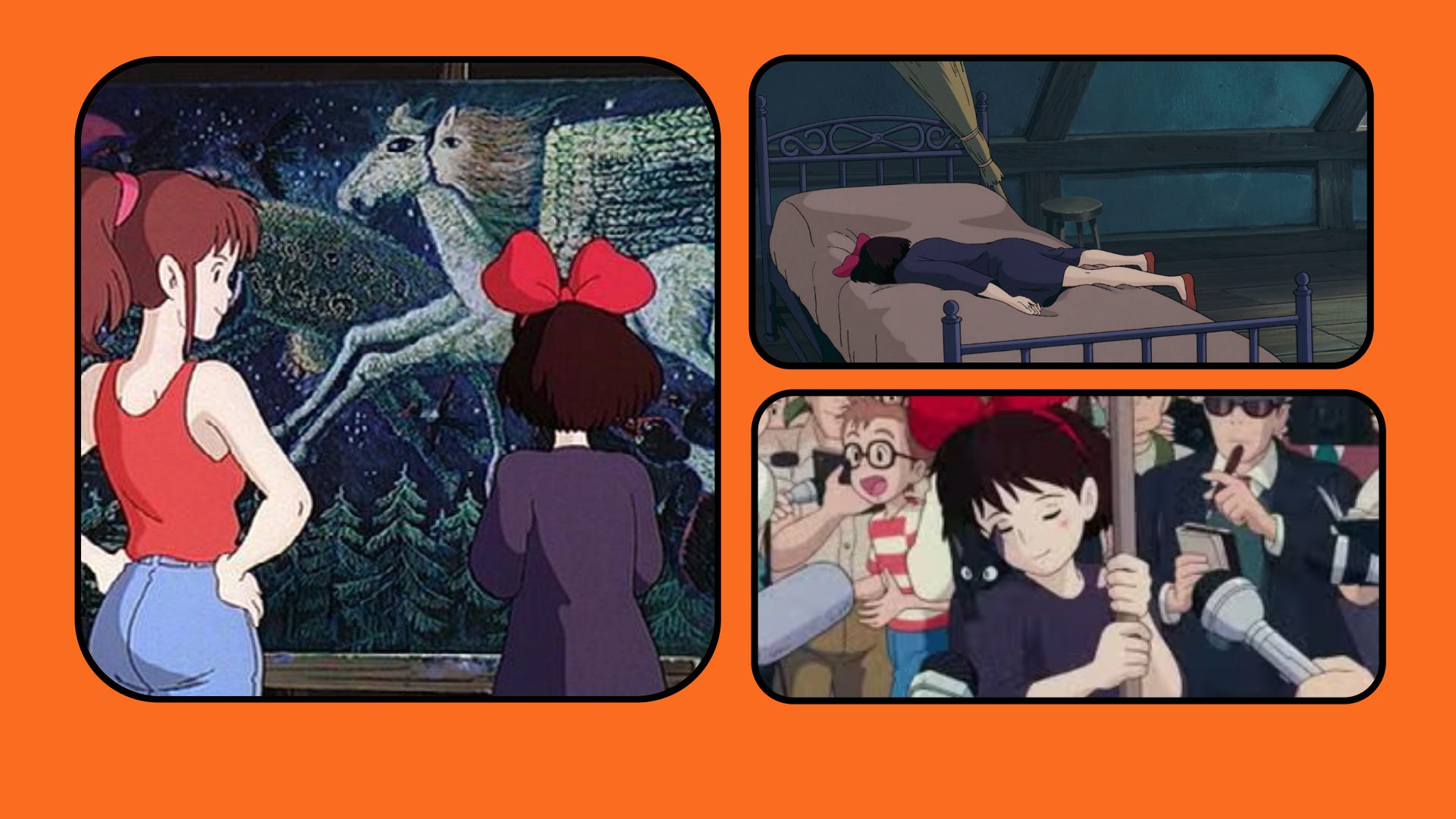
Second, Ursula tells Kiki she’s beautiful and asks to paint her. I remember working in a restaurant and how one compliment could turn my day from below average to a fun, enjoyable one. Kiki sees herself in Ursula’s giant, vibrant painting. That moment is transformative. She feels seen, valued, and needed. When you see yourself reflected in someone else’s art, it makes you feel real. That’s what gave her the confidence to return.

And as if the universe was sending her another sign, Madame bakes Kiki a cake. It’s simple, but it means everything. Kiki cries a second time, but these are tears of joy; she will no longer be jealous of that granddaughter because she has that kind of love for herself too. I remember getting emotional in the same way when my new friends got me a surprise birthday cake. Kiki doesn't just have friends and admirers; now she has love from a motherly figure as well. That’s such a powerful feeling, knowing that people will care for you and even help you if something happens. Unlike that feeling on the very first day.

That’s what Kiki gets: a friend in Ursula and a family in Osono and Madame. And that gives her the strength to save Tombo. She finally uses her power not just to survive—but to serve a greater purpose. She becomes a hero. And not just because she flies—but because she remembered why she wanted to fly in the first place.

With the passing of time, you go through it all as an international student. You meet and filter out all the right kind of people in your life. You meet great mentors, and that’s not by chance because I believe it’s because your mother at home is praying for you, and those prayers send the right mentors to you. Otherwise, it’s so easy to find the wrong influence in a city like LA. Mother’s prayers and father’s honest income go a long way for their children.

We can’t forget Jiji—Kiki’s talking cat. He represents her inner spark. When she loses her powers, she loses Jiji too; she can no longer hear him. That’s how it feels. When you get burned out, the most painful silence is the one inside your own head. But after her retreat with Ursula—away from the noise, away from the pressure—Kiki begins to hear herself again. She gets Jiji back. She gets her magic back. She flies again.

Kiki’s magic doesn’t return with rest or advice. It comes back in crisis. She must act. She must save Tombo. And she does. She rises. She flies again. That moment—that rebirth—is real. It’s when you get your first creative job in your field. Or someone tells you they loved your work. Or you realize you’ve built a life here, one chai and one act of kindness at a time.

Kiki: Every Immigrant, Every Student

Kiki’s Delivery Service is the truest story I’ve seen about the emotional arc of an international student. It’s about leaving home with a heart full of hope, getting knocked down by culture shock, loneliness, and rejection, and slowly rebuilding yourself with the help of unexpected kindness. It’s about how it takes getting lost to find your way again.

Kiki isn’t just a witch. She’s every immigrant. Every student. Every soul who stepped into the unknown and made it a home.

u/OkReporter4734 — 20 days ago

https://preview.redd.it/gr7gkfuqdnyg1.jpg?width=1456&format=pjpg&auto=webp&s=95b0328301c95cecf3468c922ade56ef06ca7aca

Kiki's Delivery Service isn't just a whimsical film about a teenage witch; for me, it's something far deeper. It’s the most honest story ever told about the international student experience. Like Kiki, we leave everything familiar behind—Mom's love, Dad's protection, friends' support, the taste and smell of food, and the very language we speak—all to chase a dream. What follows isn't just education, but a full-blown hero's journey: loneliness, culture shock, identity loss, unexpected kindness, burnout, mentorship, and rediscovery. Kiki doesn’t just fly; she becomes. Just like we all try to.

The first time I watched Kiki’s Delivery Service, I didn’t just see a charming tale about a young witch—I saw myself.

The Great Leap: From Comfort to the Unknown

The film opens with Kiki's mother, Kokiri, preparing her daughter for departure. She's worried; Kiki is leaving earlier than expected. Yet, like countless parents of international students, she lets her go, not because she wants to, but because she must. Before Kiki takes off, her mother gives her a broom, and her father’s radio—essentially, "take a piece of home with you." The radio will entertain you, and the broom will be your trustworthy ride. This is the story of every parent who sends their children to another country, to chase a future none of us could fully picture yet.

I was incredibly excited on the flight, but I remember the exact moment the plane took off. My heart dropped. I had butterflies in my stomach—not the romantic kind. I thought, Maybe I’ve gone too far. That unease followed me into my tiny new apartment. As I sat alone among my luggage, a terrifying thought crossed my mind: If I die here, no one will care.

I didn’t know it then, but that was a panic attack. I almost called my brother to buy me a return ticket. But instead, I stepped outside.

https://preview.redd.it/t8mw4j1xdnyg1.jpg?width=1456&format=pjpg&auto=webp&s=df29d7c5b73cc5326723a473591f50bb9a081b83

Finding Solace: A Cup of Tea and Unexpected Kindness

I wandered through unfamiliar streets, ending up in front of an Indian restaurant. I walked in and started talking to the staff. They gave me tea—just like Osono gives hot chocolate to Kiki. They listened. They understood. They learned I still had over a month before school started, and without hesitation, they told me to keep coming back. They gave me food, a place to belong, and eventually some work. I helped them out as a server, and they helped me hold on to my sanity.

That’s how you survive in a new city: Good things happen when you get out of your house.

Soon after leaving home, Kiki meets another witch on her journey. She’s older, sharper, and frankly, a bit arrogant. Kiki tries to connect, but is brushed off. I’ve met people like her—what I call "your own folks" who’ve been through the struggle, but instead of becoming guides, they become gatekeepers. Luckily, most of the international students I met were the opposite. We were all figuring things out, and we found comfort in each other’s confusion. But the pain of rejection from your own is especially sharp when you already feel alone.

https://preview.redd.it/otu7c6t3enyg1.jpg?width=1456&format=pjpg&auto=webp&s=288f720900f1bacb5a7a03cb850498fca5f03fb6

The Harsh Reality: Culture Shock and Eroding Identity

Kiki arrives in a new city expecting warmth. Instead, she finds cold stares and closed doors. The city doesn’t care that she’s a witch; her talents don’t matter here. She started from zero, even though she was the only witch and she could FLY! Yet, what job did she get? Delivery service. It seemed like they all saw her talent but chose to ignore it, making her do the most basic job.

That’s the international student experience. Your degree, your knowledge, or your experience doesn’t matter when you first arrive. That’s the arrogance of these "first-world countries." You start from zero here. Kiki’s flying earns her a delivery job—like many international students who end up working in restaurants despite being highly qualified. I once met an accomplished author from the Middle East who was driving an Uber in LA. I’ve met many of them. I’ve been one.

But then comes the unexpected warmth—like Osono offering Kiki a room. The kindness of strangers becomes a lifeline. I still remember how much that tea and simple kindness meant to me.

There’s one scene where Kiki helps an old woman, Madame, bake a pie and delivers it in the rain, sacrificing her first real party invite. When she arrives drenched, the granddaughter sneers, “I hate Grandma’s stupid pie.” That crushed me. Not just because the pie went unappreciated—but because that kind of unkindness is unfamiliar when you come from a place where love and effort are sacred. That was Kiki’s culture shock. And I’ve felt it too.

I’ve seen kids ignore their parents and grandparents here, while people like us would do anything for that kind of love and connection. Kiki wasn’t just sad about missing the party; she was heartbroken from witnessing a kind of emotional distance she had never seen before at her home or village. And that kind of sadness changes you. You start becoming cautious, mistrustful. Like Kiki with Tombo—you don’t open up easily anymore. Not because he was bad, but because trust becomes a slow, painful process.

The Descent: Burnout and the Lost Self

Eventually, Kiki loses her magic. She can’t fly. She can’t talk to Jiji. Her entire sense of self disappears.

That’s burnout. And it happens silently. You’re so busy surviving, you forget to live. You forget your purpose. You start comparing yourself to others: the girl with perfect shoes, the guy with confident American charm, the families who say “I love you” like it’s nothing. You feel like an outsider—poor, tired, and invisible.

I remember when I was working as a server at a restaurant. I was happy to have something to do in the beginning, but after a point, it wasn’t fulfilling. I was a filmmaker-in-training doing anything but making films. Just like Kiki, I was only delivering. Long stretches without joy or creative fulfillment can make you sick, emotionally and mentally. Kiki’s sickness was magical; mine was spiritual. It hits you when you realize how much time has passed, and you’re not even struggling for your dreams anymore—you’re just trying to survive. That’s the real heartbreak. Not knowing where you’re going. Forgetting why you even came. That’s when you truly get lost.

The Reawakening: Mentorship and Rediscovery

But then, something—or someone—reminds you.

In her darkest moment, Kiki meets Ursula—a lone artist in the woods who doesn’t fix her but simply gets her. Ursula tells her that creativity and magic come back when you stop forcing them and start remembering who you are. Ultimately, two things happen that change everything for Kiki. First, Ursula opens up and tells her she too was once lost—creatively blocked, directionless. But she found herself again when she remembered why she paints and who she is. That realization, that others go through the same darkness, heals Kiki in ways words can’t. There’s something profoundly comforting in knowing you’re not alone in your struggle. When someone says, "I’ve been there," it doesn’t solve everything—but it lifts some of the weight. That’s why it’s admirable when influential people share about their struggle and failure.

Second, Ursula tells Kiki she’s beautiful and asks to paint her. I remember working in a restaurant and how one compliment could turn my day from below average to a fun, enjoyable one. Kiki sees herself in Ursula’s giant, vibrant painting. That moment is transformative. She feels seen, valued, and needed. When you see yourself reflected in someone else’s art, it makes you feel real. That’s what gave her the confidence to return.

https://preview.redd.it/653t3dz9enyg1.jpg?width=1456&format=pjpg&auto=webp&s=21e11de7f1ea10e9389481ed0f45baaf7116e99d

And as if the universe was sending her another sign, Madame bakes Kiki a cake. It’s simple, but it means everything. Kiki cries a second time, but these are tears of joy; she will no longer be jealous of that granddaughter because she has that kind of love for herself too. I remember getting emotional in the same way when my new friends got me a surprise birthday cake. Kiki doesn't just have friends and admirers; now she has love from a motherly figure as well. That’s such a powerful feeling, knowing that people will care for you and even help you if something happens. Unlike that feeling on the very first day.

That’s what Kiki gets: a friend in Ursula and a family in Osono and Madame. And that gives her the strength to save Tombo. She finally uses her power not just to survive—but to serve a greater purpose. She becomes a hero. And not just because she flies—but because she remembered why she wanted to fly in the first place.

With the passing of time, you go through it all as an international student. You meet and filter out all the right kind of people in your life. You meet great mentors, and that’s not by chance because I believe it’s because your mother at home is praying for you, and those prayers send the right mentors to you. Otherwise, it’s so easy to find the wrong influence in a city like LA. Mother’s prayers and father’s honest income go a long way for their children.

We can’t forget Jiji—Kiki’s talking cat. He represents her inner spark. When she loses her powers, she loses Jiji too; she can no longer hear him. That’s how it feels. When you get burned out, the most painful silence is the one inside your own head. But after her retreat with Ursula—away from the noise, away from the pressure—Kiki begins to hear herself again. She gets Jiji back. She gets her magic back. She flies again.

Kiki’s magic doesn’t return with rest or advice. It comes back in crisis. She must act. She must save Tombo. And she does. She rises. She flies again. That moment—that rebirth—is real. It’s when you get your first creative job in your field. Or someone tells you they loved your work. Or you realize you’ve built a life here, one chai and one act of kindness at a time.

Kiki: Every Immigrant, Every Student

Kiki’s Delivery Service is the truest story I’ve seen about the emotional arc of an international student. It’s about leaving home with a heart full of hope, getting knocked down by culture shock, loneliness, and rejection, and slowly rebuilding yourself with the help of unexpected kindness. It’s about how it takes getting lost to find your way again.

Kiki isn’t just a witch. She’s every immigrant. Every student. Every soul who stepped into the unknown and made it a home.

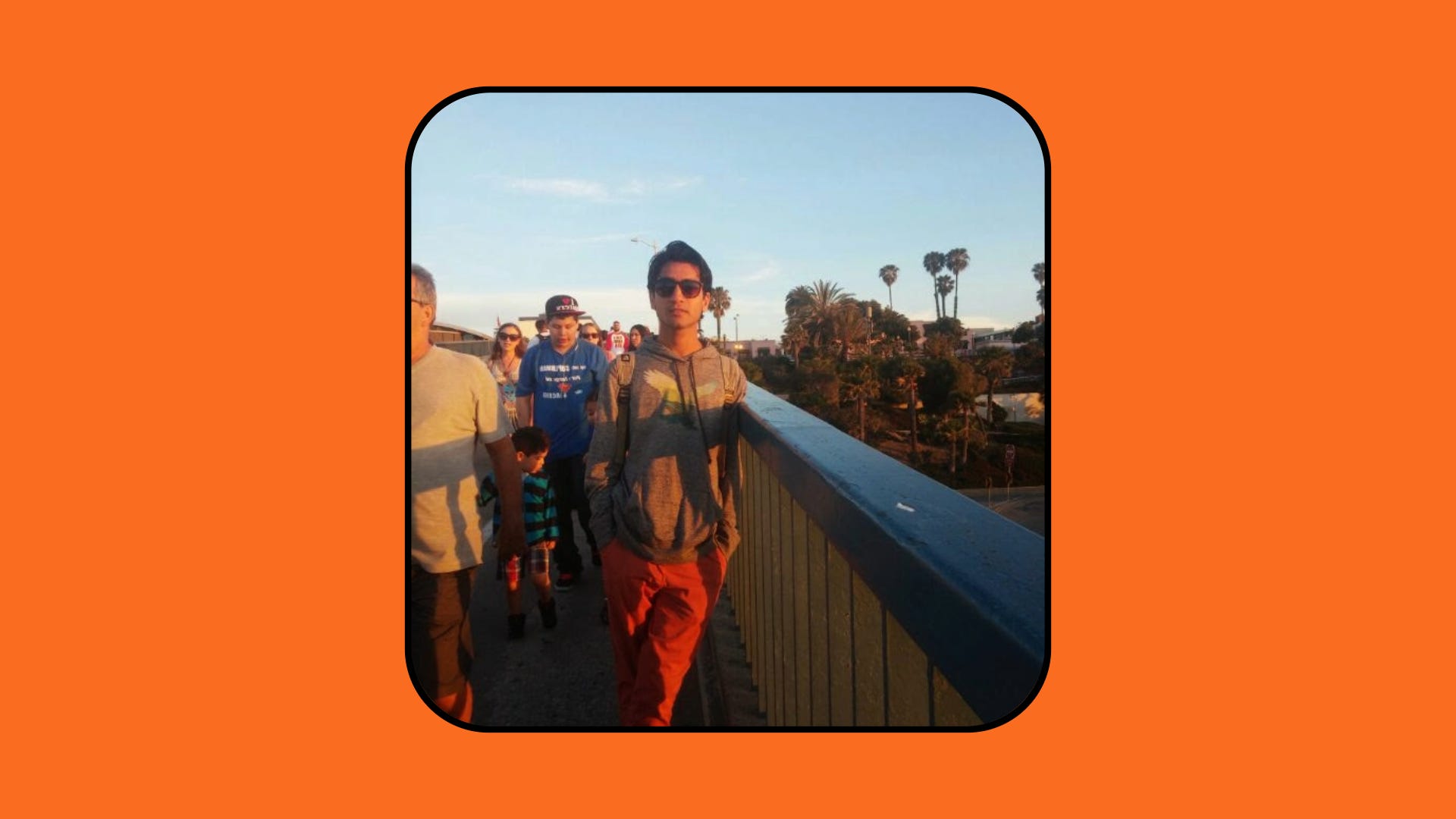
Me as an International Student in Los Angeles, 2014.

reddit.com
u/OkReporter4734 — 20 days ago