What Is The Item Held In Lord Shiva's Hand?

What Is The Item Held In Lord Shiva's Hand?

The one that looks like a sort of branch or root, with eight points. I have searched everything I could think of, and this is the only picture I can find of Shiva holding this item (or at least the item as presented in this manner).

u/Crimson_Praetor — 14 hours ago

Question About The Meaning of Engravings On This Yoni Lingam

Please ignore the text, I have not read and do not endorse the writing, my focus is purely on the picture itself.

What is the meaning of the arrows/heart looking symbols on the bottom, the ones that curl inward. I know I've seen them before elsewhere.

Additionally, is there any precedent to the flowing water engravings around the side? I have seen similar engravings on metal yoni, but I am unsure if it is a purely aesthetic choice, or if there is religious significance.

Thank you very much!

u/Crimson_Praetor — 15 hours ago

DHARMIC REBIRTH: A Primer to the Deep Connections Between Hinduism and Elden Ring

Hello again, travelers. I've taken a break from astronomy-posting to cover another topic that I think gets far too little attention in the EN Elden Ring fandom: Hinduism.

What is Hinduism?

This is unfortunately a question that will have disagreement no matter how it's answered, because it's a question with a flawed premise, as "Hinduism" is an umbrella term for a variety of different traditions. You've probably heard Hinduism referred to as "a million folk religions in a trench coat", which is... kinda true? You may have heard that there are different sects for different gods: one for Shiva, Vishnu, etc. and this is also partially true, but not completely accurate. Hopefully I can shed some light on the matter, and show how this religion, though confusing and foreign to the West, has its themes and cosmology borrowed over and over by Elden Ring.

The fact of the matter is that Hinduism, like it's younger sibling Buddhism, functions nothing like what we mean in the West when we say "religion" (to the point many will claim certain Dharmic traditions aren't even religions). I ask that going into this post, throw out everything you imagine when you hear "religion": gods competing for followers, holy wars, evangelicalism, etc. The idea of "denominations" doesn't exist like it does in the West (though for this post we will lean on the idea for familiarity sake), as while some people lean more towards the worship or focus on one god or another, all gods are worshiped and seen as part of a greater whole(*).

I'm going to use this (*) symbol as a disclaimer behind sentences that are mostly, generally, or contextually true, but have minor or occasional exceptions that I can't get into because this is a primer. Please bear with me, I'm really gonna try and keep this as simple and easy to understand as (im)possible.

Hinduism "denominations" should probably be thrown out and replaced with "traditions" for the purpose of this conversation. The specific god worshiped matters much less than if you are monist or dualist, for example (among many other philosophical outlooks).

Hinduism, like Christianity in the West, is also very different depending on how deep one dives into it, and the average Hindu layperson would be just as confused at most of what I'll be saying in this series of posts as a "regular Joe" Christian would if they stumbled across a theological debate on The Sacred Mysteries. It's just something to keep in mind, as I'm expecting occasional push back from practicing Hindus that are more familiar with their own tradition, the same way a Protestant might try to correct a post about Christians and saints, or maybe something about how the sacraments are handled (not realizing this hypothetical post is from a Catholic or Orthodox perspective).

Layperson Hinduism is what's being referred to by the "million folk religions in a trench coat" line. Before the British arrived, India was a thousand tiny nations with constantly shifting borders and cultural and religious lines. Hinduism as it is practiced in India is based on the Vedas, ancient traditions that bind these folk beliefs into something relatively cohesive. One area might primarily venerate the god Vishnu, while another may look to Krishna (one of Vishnu's avatars) instead, or even a local deity specific to a single village, but all three may interpret their god as the same as the other two, filling the role of "Preserver/Maintainer". The idea of monotheistically asserting your deity's superiority over others is a generally foreign idea (*). In this way, Hinduism might be described more as a framework of sorts, than as a religion in the (often monolithic) sense we use the term in the west.

The type of Hinduism I'll be using will generally be on the more esoteric and metaphysical side, but the foundations are also vital. I'll try to cover a little of both.

Before moving on, I highly urge you to read THIS POST. While I don't fully agree with everything, it's still a very good post and the only decent one I've seen so far covering this topic. I won't assume you've read it going forward, but it covers a lot of great foundationional concepts that I won't be diving as much into, so skip at your own risk.

Elden Ring and Hinduism

It's no secret that while Soulslike games are steeped in the aesthetic of the West, their philosophy has a strongly (though not exclusively) Eastern bend. Themes of universal cycles, cosmic law, and questioning the merits of dualism all stem from a shared history. Not to mention the classic trope of godhunting. Elden Ring keeps with this tradition, and some of its imagery, like Ranni as a four armed, moon themed, blue woman with a third eye and her hands in the hakini mudra (the mudra of memory and intellect) isn't exactly subtle. Because of this, redditors very often point out similarities. Ranni is far from a one-off connection to Hinduism, though.

Elden Ring is very aware of Hindu traditions, and seems to put them into two categories. This is just a primer, and the deeper details of why I believe this will be covered as their respective topics arise in later posts I plan to make, but for the purposes of simplicity, I will call them the "Left Hand Path" (LHP) for Shaivism/Shaktism, and "Right hand Path" (RHP) for Vaishnavism/Krishnaism, just be aware that this is an inherently flawed analogy for the sake of Western familiarity.

You may have heard these terms before in posts on this sub about alchemy or occultism, but they actually originate in Hinduism. Even the famous picture of Baphomet (often likened to Libra) is using the same R-L dichotomy as Ardhanarishvara themself. Hand signs are incredibly important in Hinduism, especially Tantrism, but that's a post for another day.

The Trinities

Hinduism is a trinity based religion. While Elden Ring cosmology pulls heavily from Hindu cosmology, especially with how the trinities manifest and influence the macro/microcosm (a core principle of Hinduism), that's a topic for a deeper post. I'll be discussing the most famous trinity here, but there are a plethora of variations based on regional tradition.

I have removed names to make it as simple as possible, but this is overall an incredibly complex topic: the Creator (think Crucible) manifests the world, the Preserver (think Order) maintains it, and the Destroyer (think Frenzy Flame) resets the universe when it's time for the cycle to restart.

If you read the recommended post from above, you'll aleady know that "male" gods are made up of two parts:

>In Puranic Hinduism, Shiva and Shakti are the masculine and feminine principles that are complementary to each other. The female deity is prakriti, the active, dynamic and creative principle. The male deity is purusha, the passive, unchanging and observing principle. The interaction of both principles is what creates the universe.

>If a goddess (Shakti) leaves or is separated from her male counterpart, the male deity (like Shiva or Vishnu) becomes inert or enters a state similar to deep meditation or inaction."

This may bring to mind Placidusax, and his fled god. Placid:

>showing lack of energy or concern:
It is difficult to understand her relatively placid acceptance of the truth and its impact on her future.
Emotions ebbed from anger into placid resignation with the passage of time.

Or Godfrey:

>He led the War against the Giants. Faced the Storm Lord, alone. And then, there came a moment. When his last worthy enemy fell. And it was then, as the story is told, that the hue of Lord Godfrey's eyes faded.

>My Lord, and thy warriors. I divest each of thee of thy grace. With thine eyes dimmed, ye will be driven from the Lands Between. Ye will wage war in a land afar, where ye will live, and die.

The first quote from the Elden Lord's Crown recounts a legend of how Godfrey lost his Grace, but the spoken echoes clarify: No, that was but a folk tale. Marika removed her divine energy from him, which the legend cleverly likens to being aimless and with no goal, and without the Grace of Shakti.

There's more, but I'll save that for a more in-depth Shakti post. The point is that a god is made of both their masculine and feminine halves (even if one is sometimes formless), and the famous male trinity has their own female counterparts (called consorts): the Tridevi. These are the two most foundational trinity concepts in Hinduism (*).

Shaivism/Shaktism

Shiva and The Goddess (Shakti) are two of the most important figures in Hinduism, but who are they? Shiva is often called the "Destroyer" in English, but a more accurate translation would be something like "transformer" or "recycler".

Shiva has many roles, but his famous one is as the Destroyer, wiping the slate clean using the Eternal Flame, Agni. The story is outside the scope of this post, but like with Agni, Shiva assimilated the Moon, earning him the title Chandrasekhara, or "He who wears the moon". A union of Moon and Fire, Night and Flame, it all fits quite snug into his major Elden Ring associations, as we'll see.

So, why did I chose the LHP for Shaivism/Shaktism? These seems to be the sect(s) most closely tied to the Carians, Gloam-Eyed Queen (GEQ), Formless Mother (FM), Frenzy Flame (FF), and a few other more complicated topics. Pretty much anything to do with nurturing mothers and birth in ER is probably tied in some way to these sects, and for good reason: Shaktism is the largest structured "Mother Goddess" religion in the world(*). This is where we get to the pictures in the OP.

The first two are comparisons between yoni lingam and GEQ imagery. Yoni is a difficult word to translate, as it is heavily contextual. It means, in the most simple terms: "womb/female reproductive system", but also the cosmic and generative forces of the universe(*).

>Yoni appears in the Rigveda and other Vedic literature in the sense of feminine life-creating regenerative and reproductive organs, as well as in the sense of "source, origin, fountain, place of birth, womb, nest, abode, fire pit of incubation". Other contextual meanings of the term include "race, caste, family, fertility symbol, grain or seed". It is a spiritual metaphor and icon in Hinduism for the origin and the feminine regenerative powers in the nature of existence. The Brahma Sutras metaphorically calls the metaphysical concept Brahman as the "yoni of the universe", which Adi Shankara states in his commentaries means the material cause and "source of the universe".

>According to Indologists Constance Jones and James D. Ryan, the yoni symbolizes the female principle in all life forms as well as the "earth's seasonal and vegetative cycles", and thus is an emblem of cosmological significance. The yoni is a metaphor for nature's gateway of all births, particularly in the Shaktism and Shaivism traditions of Hinduism, as well as the esoteric Kaula and Tantra sects. Yoni together with the lingam is a symbol for prakriti, its cyclic creation and dissolution. According to Corinne Dempsey – a professor of Religious Studies, yoni is an "aniconic form of the goddess" in Hinduism, the feminine principle Shakti.

This fits very well with a number of the GEQ's themes, but the concept goes even further for her. Many of you may recall the JP description of the seal:

>黒炎の掌を象っているといい
Said to resemble a palm of black flame.

This is a fantastic line, because when understood through the lens of the yoni as an "origin" or "source" and with the Godhead (Brahman) being called the "yoni of the universe", it demonstrates a core principle of Elden Ring in relation the Greater Will. As a game full of seemingly inexplicable fingers and hands as symbols of the divine, a hand IS a "divine source" when used to manifest creation.

When you use your hands to shape clay into a pot, they are a yoni within the microcosm.
When the Greater Will sends meteors burgeoning with life, they are "yoni of the universe" within the macrocosm.

If you're wondering about other parts of the GEQ, like Death,-

>In Tantric practice, Kali's figure represents death itself. The Karpuradi-stotra, dated to approximately 10th century CE, describes the Pancatattva ritual which is performed on cremation grounds (Samahana-sadhan).

-Godslaying, and fire: I plan to cover that and much more, like the importance of the kindling maiden and cremation in Hinduism, in the future Shaktism post. (Disclaimer: Kali is Shakti, if that wasn't clear. Gods take different forms depending on the situation(*))

Those who have been in the lore community for a while may notice that the yoni isn't exclusive to the GEQ. Not to mention the Iron Virgin (pic in the OP gallery), that pulls you into its yoni.

Let's take a closer look at the first OP picture for a minute. What is the significance of this black stone? That will depend somewhat on your sect and current ritual, as it simultaneously means many things related to Shiva (and to some degree IS Shiva)(*). For the purposes of this post, we'll just be looking at the linga in one of its primary modes: the Hiranyagarbha, or Golden Egg/Primeval Womb. Feel free to read about it if you like, but a Golden Egg may remind you of another egg, one of amber, and as Sellen puts it:

>"Glintstone is the amber of the cosmos,
golden amber contains the remnants of ancient life and houses its vitality,
while Glintstone contains residual life."

Amber is a form of Gold, and not just that, but the original Gold of the heavens.

>"If the stars command our fates,
then amber-hued stars must command the fates of the gods.
Such is the belief that inspired the use of these shards to prepare a most special draught."

I'm not gonna get too lost in the sauce on stars (but you know I wish I could) since you get the point. Its a golden womb of the cosmos/divine.

Those familiar with comparative mythology are probably saying right about now: "That's all well and good, but the cosmic egg isn't exactly exclusive to Hinduism, even with the yoni connections."

And you would be right, but I'd like to offer a pertinent detail: Rennala IS a yoni lingam. Rennala's body is the yoni (feminine generative force), holding the Golden Egg (lingam), her hat is famously a serpent, she sits on a stylized yonic base within the garbhagriha (temple womb chamber).

>The garbhagriha is the location of the murti (sacred image) of the temple's primary deity. This might be a murti of Shiva, as the lingam, his consort the Goddess in her consecrated image or yoni symbol, Vishnu or his spouse, or some other god in symbol or image.

The Grand Library is a Shaktist temple, even following the vastu shastra, the divine building code for Hindu temples (*), which in this case means facing east and having the mandapa and antarala, aka the foyer and transitional space leading into the temple. There is even another murti (see above) of Radagon above the yoni lingam, in an almost dominating manner.

All this is to say it's no wonder then, seeing Marika crucified at the summit of Leyndell, mirroring the Crucifixion as a symbol of rebirth and transformation, that the queen of the other major nation in The Lands Between would also be seated within a religious metaphor of rebirth.

I'll note that Marika embodies many religious figures, and so does Rennala, the depictions of them above aren't all-emcompassing. The idea here is to bring attention to some (of many) examples of the overarching motif of rebirth in the game.

And in case you were wondering: yes, the Church of Vows (famously womb themed) also faces east. Even the sacred tortoise is facing northeast (yes, vastu even has rules for tortoise idols, not joking).

Also, it might seem odd to some that I liken Shiva to Frenzy (athough there's much more I haven't said about him), but Shakti to Caria. If you've seen my other post, you'll know why I don't find it surprising at all. Shiva is both the Dark Moon and the Keeper of the Eternal Fire. Within the context of Elden Ring, he's the ultimate union of Night and Flame, and both of their capacities as "Transformer/Destroyer" of the current age.

>One day before Amavasya [the Dark Moon] is known as Shivarathri because it is Shiva’s night. It is primordial in nature. When everything is pitch dark, it is like creation is dissolved. There is a tinge of the destroyer in [The Dark Moon].

Fans of Nightreign will see this reflected in their title as well, but that game's Dharmic influences are best saved for another time.

This isn't even remotely everything for the LHP, as I'm not even halfway done with Caria and I've hardly touched on Mount Gelmir/Volcano Manor (thought the iron virgin should be hint enough), the Formless Mother, Night, or Frenzy Flame and Chaos. But this is a primer and I will be moving on.

Vaishnavism/Krishnaism

I'm going to keep things a bit more brief for the RHP, because it requires a bit deeper of an understanding to put things together, with one exception (who I will mention shortly).

You may think that if Shiva is tied to Caria, then it wouldn't be a stretch to associate Vishnu with the Golden Order, and you would be correct. The avatars of Vishnu are called the Dashavatara include (non exhaustive):

Also Shabari, the sage who feeds grapes to Rama. That's not an avatar, I just wanted to fit her in there!

Krishna was probably the one to jump out the most to you, being quite on the nose in his connections to Miquella. I definitely plan to make a future post about his connections to Kali, to Vishnu, and to Elden Ring as a whole.

Dharma and Law

Dharma is something so simple in concept, but incredibly difficult to communicate the nuances of. I hear it most commonly called "law" and "duty", but it's something akin to everything's correct actions and place in the universe. When even Wikipedia is telling you it's impossible to translate, you know you're in for a rough time:

>The term dharma does not have a single, clear translation and conveys a multifaceted idea. Etymologically, it comes from the Sanskrit dhr-, meaning to hold or to support, thus referring to the law that sustains things—from one's life to society, and to the universe at large.

I won't try too hard to explain the impossible, but I will say that this philosophy (along with Taoism and Legalism, which have similar concepts, at least relative to the West) has had a massive influence on how East/South Asians fundamentally view life and the universe. On that point, I'll bring up this amazing post and an important quote from it:

>"On pages 52 to 56, I explore the inconsistent translation of the term ri (理), and how this severely affects the comprehension of English-speaking players as to what things like "the law of causality" or "the principle of life in Death" even are. This analysis also relates to the translation of Ranni's ending, and Miquella's cut ending speech, and their parallels to each-other. As well as to the purpose of the Mending Rune of the Death-Prince. "
"I've also seen JP lore theorists ask "what are the laws of __ Order/age?", which is a question EN players would never ask, because there's no consistent translation for the thing that underlies an Order - the Order's "laws" or ri (理). That's pages 52 to 56. "

I heavily associate this comment with the general concept of Dharma, in the manner it applies in both Hinduism and Buddhism. Dharma isn't something I'm going to linger on (I added this section at the last minute, actually) due to its complexity, but I feel that having at least a baseline is fundamental to understanding the Dharmic religions of Hinduism and Buddhism, as well as their impact on Elden Ring.

Unfortunately there's so many philosophical, familiarity/exposure, and linguistic barriers that make so much of this game incredibly hard to parse. I have massive respect for everything from this community that's been put into all the research and content surrounding how Western pagan religions, Christianity, and Alchemical traditions have influenced Elden Ring, and hopefully I've been able to give you a glimpse into a mythological sphere you might not have even known was relevant to Elden Ring. I pray in the future we will see more posts about Dharmic religions, Japanese folk religion, and other underappreciated inspirations for Elden Ring.

That said, this post is barely scratching the surface, so I'm very excited to get to dive deeper in the future!

As always, please feel free ask questions or leave constructive criticism in the comments. And for those that disagree: I won't stop you, but remember that this is a PRIMER. It is a tiny fraction and minuscule peephole into the larger topic. Saying "this is wrong" with confidence after reading <10% of an argument is, in my opinion, a bit distasteful. Either way, I hope all of you enjoyed the read, and have a great day.

u/Crimson_Praetor — 9 days ago

Ranni Visual Connections to the Frenzy Flame

Just want to get this out there. I'm cooking something big for tomorrow and I'll be referring to this post for it, but I wanted to hear people's thoughts on Carian connections to the FF beforehand. For those of you that were hoping for more when you clicked on this, it won't be long :)

Edit: This topic was only supposed to be a tiny portion of the future lore post, but I'm noticing multiple people in the comments saying they've not heard of connections I kinda took for granted. I interact more in other parts of the lore community, so I guess I some things only permeate certain places. All that is to say, I might have to make a few revisions lol. This is why I'm glad I made a test post!

u/Crimson_Praetor — 10 days ago
▲ 74 r/EldenRingMemes+1 crossposts

The Regal Omen Bairn Was Hiding a Horrific Secret

It has a freaking rage comic in it dude. We got trolled

u/Crimson_Praetor — 23 days ago

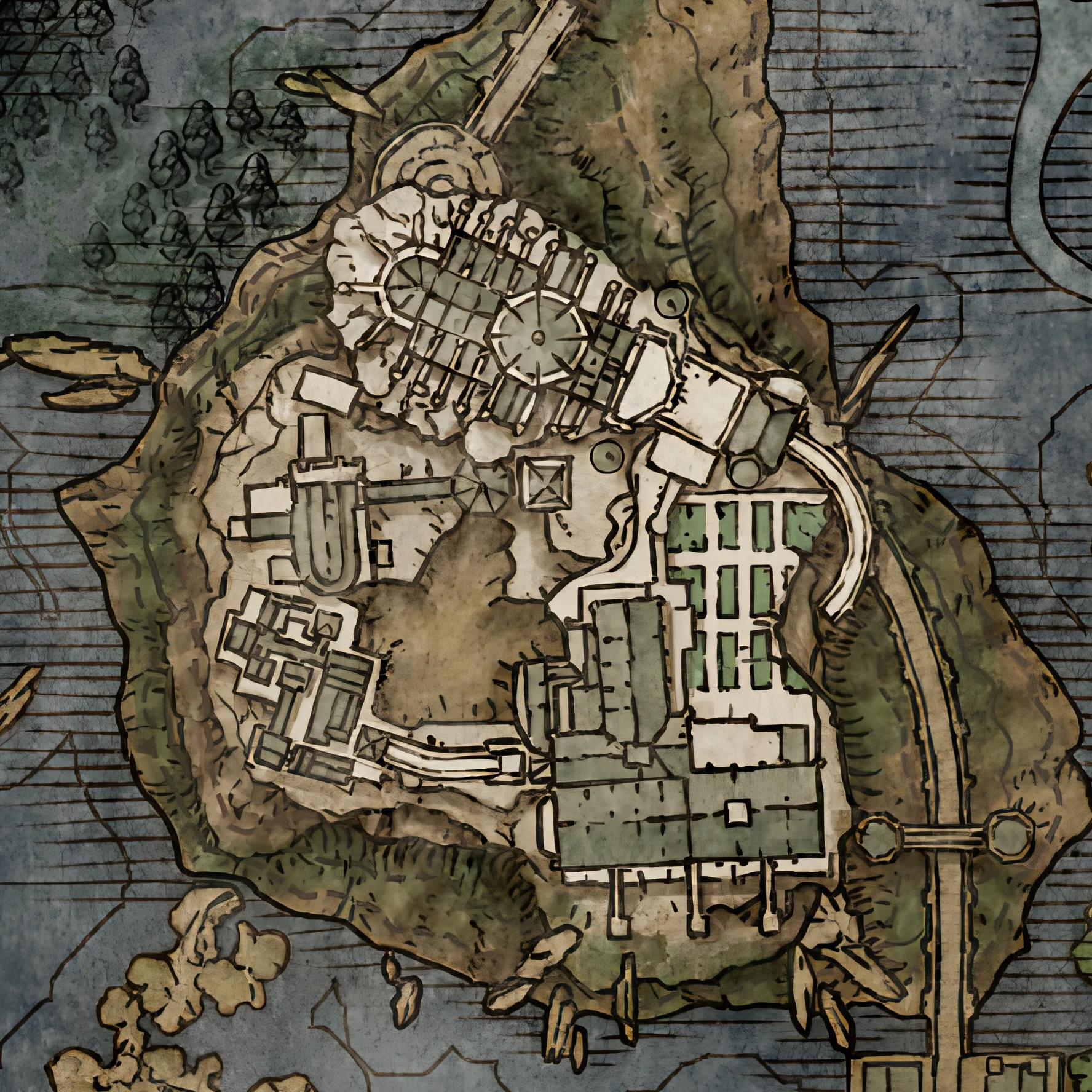
The Land of Shadow's Striking Geographical Layout is Loosely Based on the Olympus Mons Region, located on Mars (READ DESCRIPTION)

Still working on the Io post.
Here is the previous post.

I used these maps.

Like I said in my previous post, this is the tip of the iceberg, and I'm trying to keep the astronomy posts coming. This isn't a deep dive, more medium, just because there's a lot I won't be able to cover on this due the sheer scope of the DLC. And as always, be inquisitive, not combative! If there's something you're confused about, or find dubious, feel free to leave a polite comment either asking about it or going over your thoughts in a meaningful way.

MOUNTAIN OF THE GODS

Everyone here knows of Olympus, the Mountaintop of the Gods, but not everyone might be familiar with the largest volcano in our solar system: Olympus Mons. This massive geological feature is larger than most countries, often considered roughly the size of France. It's no wonder then, that it was named after a place considered the pinnacle of divinity.

It's also no wonder that Fromsoft, in their title so focused on stars, astrologers, and the Great Beyond, would then turn to Mar's equivalent to such a place of ancient divinity for their DLC about ascension to godhood.

THE PICTURES

The first two photos are just to give you the broadest overview. Details are hard to see, and the first two things likely to jump out are the volcano itself and the area that looks like the northern finger ruins. This latter area is called Acheron Fossae, after the mythological River of Sorrow that Charon ferries souls across.

They certainly make a case on their own, but the more subtle areas form strong connections as well, so I'll be putting a little more focus on them.

The third picture is simply an overview of the region.

The fourth picture covers Rauh. It might not have seemed like much in the first pic, zoomed out, but once you look closer the similarities become much more apparent. If we draw lines to visual separate higher and lower elevation, you'll find it matches quite closely to the outer aureole area in the northwest. There's even a smaller volcano overlaying where the Scadutree ought to be.

The fifth picture might seem odd with no context, but but it's no secret in the community that this area is meant to represent the twinbirds. This is just an example post, but it's something I had seen in the community discussion in general for a while about this area, so when I saw the clearly bird shaped area I was kinda floored at how literal Fromsoft took it.

The sixth picture is the abyssal woods, and a caldera where finger ruins would be.

The seventh picture is a map of Mars, globally. I know the Elysium region seems tempting right now, considering the starting area of the DLC, but unfortunately I'm sticking to Tharsis for this post.

Speaking of Tharsis, the eighth picture is of just that, but compared to the face of the Scadutree Avatar. You may notice that one of the volcanoes is missing as an "eye". I have thoughts about this, but unfortunately they're outside the scope of this post. If people are curious, I may answer in the comments, but I still have more I need to fit in the post and I promised I wouldn't go too deep for this one.

MYTHOLOGICAL TIE-INS TO ELDEN RING

With Tharsis being featured so prominently as inspiration for the DLC, what exactly is it? Tharsis was a mysterious, semi-mythological island whose long and contentious history I won't delve into, but is currently (generally) attributed to be based on myths that levantine peoples had about the area that is now modern day Sardinia.

Semi-mythological Sardinia might seem at first like an odd place to have a Soulsborne DLC, until you look at some of their most prominent archaeological features: The Tombs of the Giants and The Sacred Well Temples. The Wikipedia page is lacking, but it gives you an overview, so I'll give you some more pictures to make connections clearer, with photos nine, ten, and eleven.

As usual, I'll let folks come to their own conclusions, but I'm happy to discuss theory in the comments. I think it's very interesting that the mountain of the gods would also be a tomb of giants, and a lot of other connections I didn't have time to touch on.

Thanks for reading.

u/Crimson_Praetor — 24 days ago

The Mending Runes and FF Ending Visually Correspond to the Four Glilean Moons of Jupiter

Everyone knows about the Jupiter storm looking like the Fire Giant eye, so it always surprised me that more people hadn't looked to the stars for more answers. This picture is the tip of the iceberg of what I've discovered.

The four moons are Ganymede, Callisto, Io, and Europa (corresponding in visual order relative to the picture.

Ganymede is the largest moon in the solar system. It's also the moon of Death in real life, on account of the large eye staring at you being named "Osiris" Crater.

Callisto's similarities need no explanation.

Io is the strongest thematic connection of all four, but I'll save that for a later post.

And Europa is such a lovely mimic, as not only do the colors and shape correspond so well, but the large crater even matches the otherwise seemingly out of place eye in the mending rune.

The stories and myths behind the names are also pertinent to ER. Miyazaki loves his nymphs and fairies, after all.

New astronomy post: HERE

u/Crimson_Praetor — 25 days ago