Mummified remains of a hiker found in Värnamo, Sweden
▲ 348 r/gratefuldoe+1 crossposts

Mummified remains of a hiker found in Värnamo, Sweden

UPD: Regarding his key chain or bracelet charms (thanks to all the sleuths):

UPD2: Text slightly edited based on more clear explanations regarding age range and conditions he was found, from the latest article on TV4.

-------

Police is looking for information regarding mummified remains found in an abandoned house outside Värnamö, Sweden.

This is a loose translation from a Swedish articles and interview (linked below).

In November 2022, excavator operators discovered a mummified body of a man on the floor of an abandoned cabin outside Värnamo. Beside him were a hiking backpack containing hiking and cooking gear, small amount of cash, but no mobile phone or identification documents.

The man was found lying in a make-shift bed under a blanket. The door of the cabin was barricaded from the inside with a pole. Refusing to go into details police describes that there was some evidence indicating that he was sick, but no cause of death is revealed. There was no evidence of foul play, and no evidence of drug use. The man most likely died in the summer or fall of 2022, i.e. the same year he was found.

He is believed to have been born in 1988 (+/- one year) based on the carbon-14 and carbon-13 analysis of his teeth. He is believed to have light hair and eye colour.

The police seems to believe that he was most likely not a normal hiker but rather someone living a vagabond, off-grid lifestyle in nature. However, he was not previously known to the police (and usually they are aware of such individuals).

The body will be cremated and buried by the local church in Värnamo, but his DNA and other info is preserved.

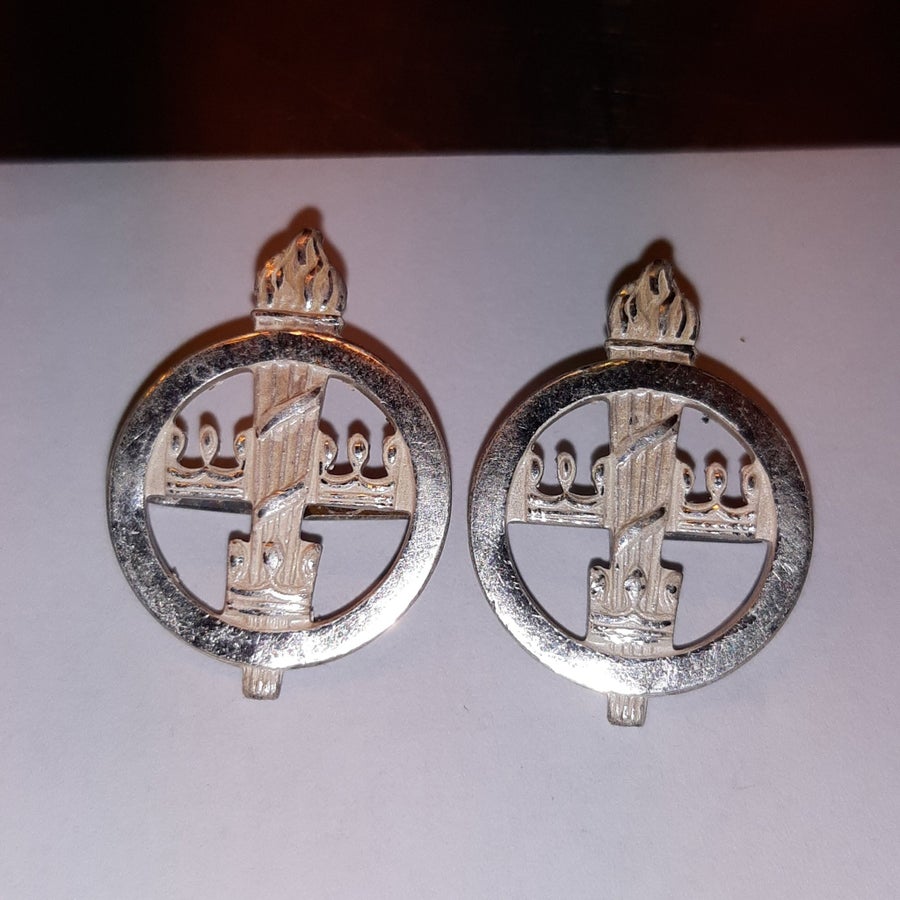
This incident had previously been unknown to the public. For four years, the police have worked quietly to identify the man but to no success. Now, the police are sharing images with the public in the hope that next of kin might recognize the man's belongings (such as bracelet charms with half-dollar coin and other accessories).

See photos of the man's belongings in the image gallery in the article below (click on the headline photo and a gallery will open).

Was he a local or a foreign tourist? Why didn't he have any ID or mobile phone with him? Was he really living off the grid? Why has noone been looking for him? Reminds me of the 'Mostly Harmless' case.

https://www.sverigesradio.se/artikel/polisen-soker-identitet-pa-dod-man-utanfor-varnamo

A few more pictures of his belongings can be seen here (from Expressen https://www.expressen.se/kvallsposten/detaljen-som-kan-losa-mysteriet-med-mumifierade-mannen-i-varnamo)

https://static.bonniernews.se/images/7a/09/7a09a641970b4f4db899bec7e4c9e797/annan/1920@90.jpg

https://static.bonniernews.se/images/2a/76/2a761bcedc294d518722f02e7298d64e/16x9/1920@90.jpg

https://static.bonniernews.se/images/e0/28/e02819f5e42e426c9339c11113c3ccc8/annan/1920@90.jpg

https://www.tv4.se/artikel/7BdWXEEABUoTiIunhL2ubk/mumifierad-kropp-hittades-i-ett-oedehus-polisen-vaedjar-om-hjaelp

u/Sad-Engine6561 — 7 days ago

För dig som växte upp som ensambarn – hur var det att växa upp i Sverige?

Jag växte upp som ensambarn i ett annat land, så undrar hur det är här. Vilka var de främsta negativa och positiva aspekterna för dig? Hur har det påverkat dig att inte ha syskon?

reddit.com
u/Sad-Engine6561 — 13 days ago

The Catrine da Costa Case: the most (in)famous Sweden’s “Dismemberment Murder” case

I’m writing about this case because it is extremely well known in Sweden and because it received very recent developments. This case is so crazy and convoluted that I will only scratch the surface.

In the summer of 1984, parts of a young woman’s dismembered body were found in plastic bags in the bushes in Solna, north of Stockholm. Her head has never been found. She was later identified as Catrine da Costa based on her fingerprints, as she was well-known to the police as a sex worker and drug user.

Catrine da Costa (nee Bäckström, she became da Costa after brief marriage to a Portuguese man in 1979). She was 28 years old a mother of two (whom she lost custody of) and living in a desperate situation marked by heavy drug use, homelessness, and sex work. She and her friends, coming from regular Swedish families, unfortunately fell victim of the 70s party lifestyle where soft drugs eventually led to heavy ones. Those facts would later matter, not only because they shaped how people talked about her life, but because they shaped how police, media, courts, and the public imagined what must have happened to her.

Essentially this becomes a story about panic, class, gender, media hysteria, fake news, child 'testimony', legal technicalities, and two men who were acquitted in court but still had their lives effectively destroyed.


Enter ‘the doctors’

Eventually, the police became fixated on two suspects: a forensic pathologist Teet Härm and a general practitioner Thomas Allgén. In the media they became known as ‘the doctors’ or “the forensic pathologist” and “the general practitioner.” I have to spend a bit more time on their personas because they mattered for how the case was steered.

Teet Härm was half-Estonian half-Swedish, and had an Estonian name (foreign to Swedish ears). He was not well-liked by colleagues and was perceived to be a creep. Not only due to his stigmatized profession but also because he led an alternative lifestyle. He was known to watch horror movies on his VHS player (around which there was a moral panic in the society). Moreover, he and his wife were in an open relationship, and he was known to visit sex workers (which was completely legal in Sweden back in the day, and sex work was quite rampant in broad day light). He eventually divorced from his wife, and she committed suicide the next day. She was known to have severe depression and suicide attempts in the past, she also left a note. He was a suspect but there was no evidence against him. However, all this created a very negative bias against him among his colleagues.

Thomas Allgén was a young beginner doctor, who married and got his first child just a year earlier. He and Teet Härm superficially knew each other because of Thomas’ studies, Teet once helped him with his course. To show his gratitude Thomas had once invited Teet to a family dinner where Teet came with his new girlfriend who had a ‘wild’ punk outfit, hair and makeup. Thomas’ wife was a conservative young mother and deeply detested Teet and his girlfriend, which played a role later.


Building ‘the case’

In building the case there are two key figures who essentially derailed this investigation – Teet’s boss and Thomas’ wife (there were also other witnesses who later proved unreliable). Because of Teet’s bad reputation and his wife’s death he immediately came under suspicion, since the body parts were also found not too far away from his workplace, i.e. forensic pathology department. Teet’s boss was the one who examined the body parts and in his first report he stated that the dismemberment was done in a sloppy manner, however, it is possible that the murderer had some previous experience as a hunter, i.e. some cuts were typical of cutting up an animal. However, upon learning that Teet is under suspicion he produced a new report where he stated that the cuts were undoubtedly made only by a forensic pathologist. He later on relentlessly called the police and provided more and more new arguments why it must be Teet. His claims were later debunked by other forensic pathologics.

Here comes the most bizarre actor- Thomases wife. One day when she picked their 1 y.o. daughter at the childcare the employee pointed out that there was an abrasion in the child’s genital area, and she mentioned that it might be the result of a SA. It has to be mentioned that incest happened to be a popular topic of the media attention at that moment. The mother naturally got shocked and took her daughter to multiple doctors. All of them however said that it was an eczema from diapers and there is no evidence of SA. However, she has become convinced that Thomas has SA’d their daughter and one day she took her daughter and quitely left. Thomas was unaware of all of this.

After she learned from the media that Teet is a suspect she called the police and mentioned that Teet must be the perpetrator because he was a creep, had a nasty punk girlfriend and he watched horror movies. But the most bizarre developments happened a year later when the daughter started talking. The mother became convinced that the daughter witnessed the dismemberment, and her ex-husband took her to the morgue where they did it together with Teet. Over the next few years she relentlessly invented more and more fantastical details attributing to her daugher's 'statements', eventually reminiscing of black magic rituals, cannibalism etc. Police made her tape record ‘interviews’ with her 2 y.o. daughter, and she produced 9 hours of them, all of which is just gibberish of a normal 2 y.o. talking while the mother invents more and more crazy stories. Nevertheless, this has somehow become a valid argument against Thomas and Teet.

In short, it has to be emphasized that the case against them never contained any single evidence linking them to Da Costa. It relied heavily on circumstantial reasoning, contested witness material, and especially on statements attributed to a toddler by its disturbed mother.

To modern ears, the alarm bells are obvious but in the 1980s, the case unfolded in a climate where fears about SA, ritualized violence, and hidden elite male networks could become entangled with real concerns about violence against women and vulnerable people. The media went wild and the public imagination filled in gaps the evidence could not. It has become essencially a witch trial.


The trials

In 1988, the two doctors were tried for murder. The first trial collapsed in spectacular fashion. Lay judges had spoken to the press before the judgment was finalized, creating a serious procedural problem. A mistrial was declared. This created a moral public outrage where feminists especially saw this as a cover up where male elites being protected while vulnerable women received no justice. Multiple publications and demonstrations followed, demanding justice for Da Costa. Second trial was called.

At the second trial, the court acquitted the doctors of murder, but their names were not cleared, which made it legendary in Swedish legal history. The reason was devastating for the prosecution: Catrine’s cause of death could not be established. The court could not prove beyond reasonable doubt that she had been murdered by the accused. But then the court did something extraordinary. Even while acquitting them of murder, the court wrote in its reasoning that the two doctors for sure must have had dismembered Catrine’s body. They were not convicted of that offense. They were not sentenced for it. The alleged dismemberment offense was also time-barred, meaning it could no longer be prosecuted.

So Teet and Thomas were legally acquitted but publicly branded and demonized. And because the verdict was an acquittal, they could not appeal the damaging statement in the reasoning in the normal way. This is the legal paradox at the heart of the da Costa case: the court’s reasoning carried life-destroying consequences, but the men had no ordinary route to challenge it.

The aftermath

The consequences were enormous. The two doctors lost their medical licenses. Their names became permanently attached to one of Sweden’s most horrific cases. Teet became so desperate he attempted suicide – he was saved but received permanent health damage. He also legally changed his name. For decades, the public memory of the case treated them not simply as acquitted suspects, but as elite men who had somehow “gotten away with it.” Meanwhile, nobody was convicted for Catrine da Costa’s death. The murder investigation was eventually suspended in 2009, after the statute of limitations had expired. Over the years there were many voices questioning this whole circus of an investigation but because of the heavily toxic history noone really want to touch this case in any serious manner.

There are really two tragedies here. First, Catrine da Costa was killed, dismembered, discarded, and never received justice she deserved. Her life is often reduced to the gruesome details of her death, or to the later legal scandal, but she was the victim at the center of the case. The second tragedy is institutional: the justice system may have created two additional victims by publicly fastening guilt onto men it had acquitted.


The 2020s revival and Ex Gratia of 2026

Decades later, the case returned to public attention, especially after a 2024 SVT documentary (an amazing one, btw) re-examined the investigation and criticized the grounds on which the doctors had been singled out. There was in fact no serious investigation of any other leads, even though there were many veryfied 'johns' of da Costa that could have been murderers. They also showed that Teet and Thomas have led meagre existence as recluses over all these years (especially Teet, who started to leave home only at night). This had an effect. The public opinion turned 180, Teet and Thomas started to receive letters of support. Two lawyers volunteered to work pro bono to try to bring some justice to them, specifically by appealing for ex gratia.

In 2026, just last week, the Swedish government granted the two former doctors ex gratia compensation - a special payment given not because a court has ordered it, but because the state recognizes that exceptional circumstances justify some symbolic compensation. They received 2 million SEK each (roughly 200 thousand euros). Minister of justice officially apologized for the miscarriage of justice they had to endure for 40 years.

Catrine da Costa’s murder remains unsolved.


https://en.wikipedia.org/wiki/Murder_of_Catrine_da_Costa

https://www.svtplay.se/dokument-inifran-det-svenska-styckmordet

https://www.sverigesradio.se/artikel/swedish-state-compensates-doctors-acquitted-of-da-costa-murder


u/Sad-Engine6561 — 2 months ago