u/UsualExercise7684

"All The Years" from Devotion (critical analysis)

"All The Years" from Devotion (critical analysis)

hey, y'all.  was just listening to this song form Devotion "All The Years" and thinking how it shows a worldview that's alien to the 21st century relationship zeitgeist (ya know, hookups and situationships, apps and texting, all that nonsense)

I know a lot of folks don't like dating dynamics in 2026 but we put up with it because of collective action problem in economics where one person's choice is a drop in the bucket so we all kinda default to the mainstream lol

Having said that, looking at All the Years from this critical, cultural, historicl-political-socio cultural context lens, I thought the sub might appreciate it.  Cuz All The Years shows a worldview of honor and devotion that a lot of people are hungry for.  Anywhoooo, here's my analysis —

All The Years is about a rustic maiden from Maryland 19th century

Ya, I know this is a stretch.  Just trust me guys.  you’ll see where I’m going with this.  First verse

“I was sitting on a rock
Just waiting for a key
To sleep inside the house
Of old serenity”

She’s a rural youth “sitting on a rock,” daydreaming about all the years to come and her future married life.  For her, marriage isn’t an addition to a completed modern life, it’s scaffolding for farm life. Next verse (2008, Devotion) —

“So I climbed onto your altar
Begged, please don't let me falter
We'll put our oaths at stake
In a Heaven that all icicles make”

The air she breathes is thick with tradition, religion, prescribed duty, and unchosen obligation. Her words - “altar,” “oaths,” “Heaven” - All religious.  “Begged,” “please” - Prayer. “Falter” - Sin.

The chorus —

“All my devotion
Compelled by an ocean
Of all the years to come (repeated four times - citation)

Scour the dictionary for words and metaphors which capture a traditional-religious worldview better than these. I assure you, you won’t find any.

First, “All my devotion.”  There is no stronger word in the English language than "devotion" for the unwavering, unyielding choice to bind oneself, come what may. We say “commitment,” a sterile legal, contractual word. Devotion is what’s called for when the parties enter a covenant, becoming partners for the whole of life.  It’s soaked in religion and solemnity.

“ALL” - a totalizing word, nothing held back, nothing held in reserve. Only work and sweat, hearth and home.  Sun and soil. And the little known, little appreciated light of farm life.

NEXGT, “Compelled by an Ocean.”  She’s compelled by something outside herself, namely, the vast ocean. The ocean is a metaphor for realities which dwarf us, like Isaac Newton contemplating existence beachside.

Outer space is another oft-used image for the cosmic and the incomprehensible.  But space, though vast, is weightless, pretty, ethereal.  The ocean, on the other hand, is as terrestrial and heavy as space is weightless, just like the traditions and obligations our rural 19th century maiden swims in.

NEXT, “Of all the Years to come.”  She isn’t looking back on a relationship that shouldn’t have worked but somehow did, like Paramore’s “I’m Still Into You” (Williams 2013, luv that song btw). Instead, she's looking to all the years to come and making the choice to bind herself for that future.  No matter what.

“YEARS” - another totalizing word - the maiden and her husband-to-be are in it for the long haul, not days, weeks, or even months. 

And in rural life, each new year unfolds in pretty much the same manner as the last.

Which brings me toooo —

“So we'll work until the night is quite
What once all our dreams were like
Doing all the housework
Returning all the schoolbooks
For good”

I know what your thinking.  Boring life, right?  Where’s the excitement? Lets think it thru, tho

Ironically “housework and schoolbooks” lead back to the dreams and bliss of youth in roundabout fashion (citation - "we'll work until the night is quite what once all our dreams were like").  This young couple chooses the long, hard road of enduring marital happiness over the “burn fast, flame out” Romeo and Juliet-style fling that fails to satisfy

AND

“Let's go on pretending
That the light is never ending
So we still have the summers
Let's be good to one another, hey”

"Fake it ‘till you make it” as we’d say in 2026.  That is - You're not going to feel love every moment but you have to act as if you do "So we still have the summers."  (Legrand, 2008). This totally rejects you,re contemporary notion that something is wrong in a relationship just because you aren’t constantly on cloud 9.

“Let’s be good to one another, hey” - the meaning of “be good” in this context completely subverts what you find in Weezer’s “El Scorcho” where Rivers sings —

“I’m a lot like you / So please / Hello / I’m here / I’m waiting / I think I’d be good for you / And you’d be good for me.” (Pinkerton)

Here, “be good” refers to a list of likes and dislikes or personality traits.  Rivers is saying “we’d be a good match” in the sense of passive suitability.  In “All The Years,” contrariwise, “be good” refers to an active choice.  This is a traditional view because it rests marital success not on matching personalities (hey, we both like Beach House), but on an active choice to be good to one another.

The Sound of “All The Years”

Just a final note on the band’s playing and singing on this track

First, Victoria’s vocal in the chorus (“AAAAAHHHLLL MAAHHHHH DEEEEVOOOOOOOSHUHN”) deserves mentions.  In order to create that “AHH” vowel you have to open your oral cavity wide and drop your jaw (like when doctor tells you to open and say “ahhhhh”).  This creates an open-mouthed, childlike facial expression of utter defenselessness (babies do it).  It’s so earnest, sincere, and innocent it makes me cry. Lol

Second, because of the slow tempo, Victoria extends the vowels on “All my devotion / compelled by an ocean.” Kids tend to extend their vowels when they’re excited to see family after time apart ("Daaaaadeeeee!!!!" "Mooooomeeeee!!!!!").  They rush final vowels before consonants that completes words because they’re out of breath.  This is exactly what Victoria does when she sings the words “devotion” and “ocean.” citation-LINK

Vocal bonus point!!!! - Children don’t often feel the weight of their parents' authority. Similarly, the rustic maiden of “All The Years” doesn’t feel the weight of “the ocean” of solemn obligation because she’s been formed for it her whole life. She can’t conceive of any other life than that prescribed by tradition, and so the burdens of domesticity are, for her, less straight-jacket and more tailored dress.

Third, Alex’s guitar and the church organ keyboards.  The guitar tone Alex uses is just as saturated as the balmy air of rural Maryland in summer. In a border state on the Mason-Dixon Line like Maryland, you can be sober and still see double because the air itself is drunk with water vapor.

Southern Summers are just as heavy as the ocean of tradition that weighs our rural maiden down (though she doesn’t feel the weight).

It’s also worth noting how Alex’s slide guitar differs from Mazzy Star’s.  The slide guitar in “Fade Into You” reads as West Coast free and easy.  Dry and arid.  Alex's slide guitar on “All The Years" reads as heat mirage and slow-mo, as if the heat and humidity distort the tempo of the wilting riff that opens the song.

Anywhooooo—

Srry for mispells BTW, I typed this out on at lunch on between class (Honors American studies 200 critical analysis paper due in 10 lol)

u/UsualExercise7684 — 9 days ago

Devotion, In honor of Father’s Day (ears, please)

This stream a’ consciousness was inspired by devotion to our fathers and to theirs'...

…ahem…

Listin’…

Beach House ain’t no Cocteau Twins…

Cocteau Twins - They’s Romantic opera
Beach House ain’t that old opera house world

They ain’t no Mazzy Cali neither
18th Maryland Houses, not 19th California Mansions

East Coast old world. A lazy, hazy summer of hammocks and cocktails

Southern Summer is oppressive and heavy, just like Antebellum slavery
The chains Grant’s men didn’t break were sweetened by the blues
Alex and Victoria do us the honor now
My body’s enchained; my spirit flows free
Summertime and the livin’ is easy…

No Sober Country twang, Southern Drunken slang - the dual consequence of the liquor and the heat

Sink into comfort provided by the hammock and the drink. An opiate that rolls like molasses

Hushed cannons give way to Maryland rustic and Myrtle Beach houses

u/UsualExercise7684 — 14 days ago

There are two Victorias in “Walk in the Park” (hear me out)

Hear me out, guys…

I think.  I ruminate.  I analyze.  I can’t help myself - It’s how I’m wired.  So naturally, my all time favorite pastime is the contemplative walk.

The walk suits me. It helps me decompress, process, sort the mental mess.  It fueled some of my best hunches, my best insights, and my best impulses.

Naturally - “Walk in the Park” is the tune that hooked me on Beach House. Its andante pace and plodding groove sound like the walk itself - It’s program music for the thoughtful walk.

What prompted Victoria’s walk?

Sigh..

post break-up ennui…

You go for a walk in the park
'Cause you don't need anything
The hand that you sometimes hold
Doesn't do anything
The face that you see in the door
Isn't standing there anymore

“He’s gone,” Victoria thinks to herself, “but his memory, his ghostly residue, lingers on.  I thought I was over him.  Guess I’m not, really..”

Victoria’s mostly over him, but not entirely..

She's over him enough that he doesn't live constantly in her head, but not enough that her thoughts don’t sometimes drift in his direction.  If they do, she considers that his company is now forever beyond her reach.

She thinks, “I’ll go for a walk.  By myself.”

And that’s fine…

In a matter of time
It would slip from my mind
In and out of my life
You would slip from my mind
In a matter of time

“Just give it some time,” Victoria convinces herself, “and he’ll be gone - completely - even as a ghost of a memory.”

The music swells - The reassuring thought cheers her up a bit.

“Time will heal.” 

This is melancholy of the finite sadness, not an emo screaming bedroom crisis.

The face that you saw in the door
Isn't looking at you anymore
The name that you call in its place
Isn't waiting for your embrace
The world that you love to behold
Cannot hold you anymore

“Walk in the Park” is an internal conversation between two Victorias.

This is the key that unlocks the drama of this introspective masterpiece.

The narrator in the verses is “rational Victoria” - the higher-order, detached, observer Victoria, hovering over and psychoanalyzing "you."

"You" in the verses is "hurt Victoria" - the Victoria who’s dealing with post-breakup doubt, asking questions like, “Could we have made us work?” “What did it all mean?” “What did he mean when he told me we’re through?” "What could I have said to keep him?" "Was there another girl?" "Was it me?"

...

"Did I fail him?"

...

On the walk, the two Victorias conduct a mental courtroom debate, litigating these questions.  Prosecution versus defense.  Back and forth - They evaluate shreds of evidence left behind by the ghost of what he said, of what he did, of what it might have meant.  Of what could have been...

The result of these deliberations is sung by “hurt Victoria” in the chorus - 

In a matter of time
It would slip from my mind
In and out of my life
You would slip from my mind
In a matter of time

Here, “You” is the guy she’s trying to get over.  She hopes she will.  She believes she will, given enough time.  It’s not a crisis.  She’s coping.  She can live with this verdict..

The Walk With No Destination

These mental reassurances are never final. 

Each verdict begets another appeal followed by another round of litigation.  It’s in the nature of ruminating.  We doubt - It’s what we do.  The more we chase reassurance with FACTS, DATA, and LOGIC, the further away from us it gets.

This is the trap of the solipsistic walk.

More, you want more
More, you want more
More, you want more, you tell me
More, only time can run me

"Rational Victoria” returns in the outro, noting that "hurt Victoria” wants more.

More of what?  More answers. More reassurance.  More certainty that it’s not her fault and that there was nothing she could have done, and that the spell of ennui will soon be broken.

“When will I emerge from this funk?  From this hibernation?  From this preoccupation?” asks hurt Victoria.

“Only time can run me,” responds rational Victoria.  That is - The data is in the future which sadly doesn’t exist yet.

Now, where we would normally expect a conclusion or a fade-out, the music starts to bubble and fizz, symbolizing Victoria's renewed mental turbulence in the moments after the hard-won, but brief reassurance owing to her solipsistic debate.

No answers, just more walking.  And more mental talking…

“Time” Doesn’t Actually Heal

No one ever broke the spell by counting the hours.

Healing requires many new things, new ways, and new people. And this takes many new sunrises.

Time doesn't heal. Healing takes a long time.

He’ll never completely “slip from her mind.” We never go back to the person we were. That’s not how healing works. Healing gives us a new perspective on those disquieting post-breakup doubts.

Time doesn't change us. We change over time...

And not necessarily for the worse.

u/UsualExercise7684 — 23 days ago
▲ 14 r/goth

The Tentacles of Post-Punk: The Theatrical Legacies of Peter Murphy and Robert Smith

Several years ago I was getting into vintage footage of classic bands with theatrical, charismatic frontmen, among them Bauhaus.

Murphy has incredible stage presence in those old live shows. This hardly needs saying.

When I watch The Cure, I see a still, statuesque presence in the person of Robert Smith. At the time, I thought, "Murphy is the better rockstar because he has moves on stage."

I quickly corrected myself,

"But Smith is a legend. He's one of the popularizers of the dark look. Pop culture would not be what it is without Smith. His impact is incalculable. And this is before we even talk about the music."

What I now understand is, it's not Murphy > Smith or vice versa. One is not greater than the other.

They bring something different to the table.

Murphy's Aristocratic Menace

Murphy has an imposing aristocratic presence. He channels Christopher Lee's Dracula. He's Olympian god-like, vaguely threatening - "other" in a word. You admire Murphy; you look up to him. The vast majority of us don't think we could be Murphy.

The Relatable Smith

Whereas Peter Murphy could be a fashion model, Robert Smith is a fashion trend-setter. Kids look at Smith and say, "I could be that guy." Every town has its Robert Smith. The goth next door.

To be sure, you can't really be Smith. The guy's an icon. But he gives off an energy that makes you think you just might. Smith is the guy who's different, but not that different. Girls could take Smith home, and their moms might initially be skeptical, but Smith would win them over with his infectious charm and undeniable cuteness.

Two Approaches to Goth Theatricality

You can't look away from Murphy. He mesmerizes like Dracula. Like the violin legend Niccolò Paganini or the piano legend Franz Liszt.

Robert Smith has a sweeping, cinematic vision. Smith is the bandleader, the kindly orchestra maestro. He points beyond himself to "the greatest (goth) show on earth" that he's staging, to The Cure's famed sonic wash that overwhelms and envelops the crowd. Alongside his loyal pit virtuosi, Robert is the master sound-smith making it happen.

So I stand corrected. Murphy and Smith are of equal stature as goth legends. Two approaches. Both necessary. Both vital.

Which do you lean towards? Discuss!

reddit.com
u/UsualExercise7684 — 25 days ago

The secret sauce in PPP is French Impressionism (hear me out)

I know all of us dream pop drones have our pet theories about our beloved Beach House.  All of us think “I’m the one who gets it.”

If y’all are thinking PPP means “piss poor planning” then y’all are wrong.  Trust me, guysTRUST ME

Guys listen.  I took piano.  I practiced Debussy’s Clair de Lune.

EVIDENCE - Debussy writes three p’s - literally “ppp” - as dynamic markings for the softest touch possible on the piano.  This is a French music thing, guys.  Satie, Ravel, Faure, the list goes on. Trust me, I took music history in undergrad.

MORE EVIDENCE - Victoria was born in Paris and she’s related to the French composer Michel Legrand.  Wikipedia says she studied theater in France.  LET THAT SINK IN

Victoria and Alex are low-key channeling Claude Debussy in “PPP,” guys.

Hear me out.

France and Beach House’s “PPP”

There’s something ineffable about France.  About the City of Lights.  Old world taste, refinement, and high culture at its peak is found there.  We all dream about going to Paris.

I think the same ethos underlies dream pop.  I mean, the band name of one of our founders, Cocteau Twins, is literally French.

What is this ethos?  I think it can be summed up by the French expression, “C’est la vie!”

Such is life.

This sentiment is the key to understanding Beach House’s “PPP.”

“PPP” - the story and the feels

“PPP” is an aspirational love song which idealizes the early, perfect, frictionless part of the relationship.  It’s about the infatuation stage in which the lovers are mutually entranced, finishing each other’s sentences, blissfully blind to each other’s flaws and tics.

In the breathy, spoken word intro, Victoria puts us “out in the Heartland” and asks “Are you ready?  Ready for this life?”

What follows is a masterful narrative on the bliss of infatuation.

“Did you see it coming? / It happened so fast / Timing was perfect / Water on glass”

Victoria gives us pitch perfect metaphors for this stage of the relationship.  “Water,” “glass,” and…

The absolute chef’s kiss of metaphors.  Two words that perfectly encapsulate infatuation… 

ice skating -

“Like tracing figure eights on ice in skates / Oh well / And if this ice should break it would be my mistake”

Ice skating is elegant, beautiful, virtually frictionless, like the early stage of a relationship.

Also like the early stage of a relationship, ice skating is fragile.  Without the maturity of years, the relationship is on thin ice.  The skaters fall, break the ice. The spell is lifted.  Now, they see each other’s flaws.

The next spoken word section sows doubt in our minds -

“Between the cities / between the thrills / there’s something inside you / that doesn’t sleep well”

Something doesn’t sleep well out in the Heartland, Victoria tells us, which prepares the French ambivalence, the shrugging nonchalance of “C’est la vie!”

“It won’t last forever / but maybe it will / white clothes they gave you / you wear them so well”

Here we see the French ambivalence about the question - “Will this last forever?” In lieu of an answer, Victoria gives us a saying she once heard -

“Someone once told me / in love that you must / place all you’re given / in infinite trust”

This thesis isn’t elaborated.  We don’t hear arguments, counterarguments, or corollaries or any such thing.

Instead, Victoria gives us this -

“Yet I’m tracing figure eights on ice in skates / So well / And if this ice should break it would be my mistake”

There’s a subtle shift in the lyrics here.  Earlier Victoria sings a simile - “Like tracing figure eights on ice in skates.”

Here, the poetic likening of ice skating to those early relationship feels is replaced with literal ice skating - Like tracing figure eights becomes Yet I’m tracing figure eights.  This subtle switch places us in the present moment and prepares us for the climax of the song - the long outro.

The “PPP” outro

Any possible elaboration or counterargument to the thesis is shrugged off and replaced with an outro of pure musical depiction, in which the listener is treated to Victoria’s lover's sigh and Alex Scally’s absolutely gorgeous - No - spellbinding - guitar work.

There are no words.

The dream pop palette and French Impressionism

Why do we call our music “dream pop?”  There never was a local scene that identified itself with that tag, unlike the shoegaze “scene that celebrates itself.”  I think it’s because of the nature of dreams.  Dreams are all middle.  They don’t begin with a thesis followed by elaboration and conclusion.  Dreams just are.

Dreams are clouds.  Like dreams, clouds appear to us fully formed. They’re gone before we realize it.

French Impressionism doesn’t tell the absolute truth of its subject matter, just how it appears in the present moment.  Monet painted several haystacks because there is no absolute “the haystack” to paint.

Like French art, Beach House’s work is gorgeous. It’s Lace-like ephemerality.  It’s all dreams and clouds.

Will this love last?

Victoria doesn’t answer, she skates.  She surrenders to the infinite present of the figure 8.

C’est la Vie

PPP

u/UsualExercise7684 — 30 days ago

The Eternal Maiden + Cathedrals in Sound: a lyrical and musical interpretation of Drab Majesty's "Cold Souls" from The Demonstration

Note from the OP.  Hello darkwave fans!  I’m an amateur, new-to-reddit music essayist who loves Drab Majesty.

My journey with Drab goes back to 2023 when they opened for Slowdive. I attended their Chicago show with a friend of mine who happened to be getting into Drab at the time.

For several years prior I had been a fan of Cocteau Twins and Slowdive, slowly collecting their music on vinyl.  The 2023 Slowdive show was my first exposure to Drab Majesty.  In retrospect I think to myself,

“Holy shit!  Where have I been all these years!?”

After that show I fell in love with them and the rest has been history.

I wanted to share my love for Drab Majesty with darkwave-heads with this essay that I wrote recently.  It’s a breakdown of my favorite Drab song - “Cold Souls” - which interprets the lyrics and the sonics, and looks at deep aesthetic traditions that might be informing Deb Demure’s art.

I hope all you darkwavers enjoy reading this piece as much as I enjoyed writing it!

The Eternal Maiden + Cathedrals in Sound: Analysis of Drab Majesty’s “Cold Souls” from The Demonstration

(links with timestamps included)

The “sonic cathedral in sound” associated with Cocteau Twins gets mocked because it’s easy to do and hard to do well.  When it’s done poorly it can impress normies while the critics roll their eyes. 

In this post I interpret an example of a sonic cathedral - Drab Majesty’s “Cold Souls.”  Read, listen, and you’ll see. Lead singer Deb Demure is no slouch artistically, and “Cold Souls” is a masterpiece.

The Eternal Maiden - lyrics and vocals

Lyrically, “Cold Souls” is a love song with a tragic arc.

In the beginning she wins his heart with “her song” “at dawn” which is “on his mind.”  In the middle, he wonders whether she’s real at all because she’s world weary (“dead and numb”) and maybe “just a dreamer.”  At the end she becomes “all light” and dies (departs). “When you were dead / I took you by your head” is the point. 

This image comes from a classic female archetype in Western art and literature - the Maiden who dies at the prime of life and whose beauty is thus made Eternal.

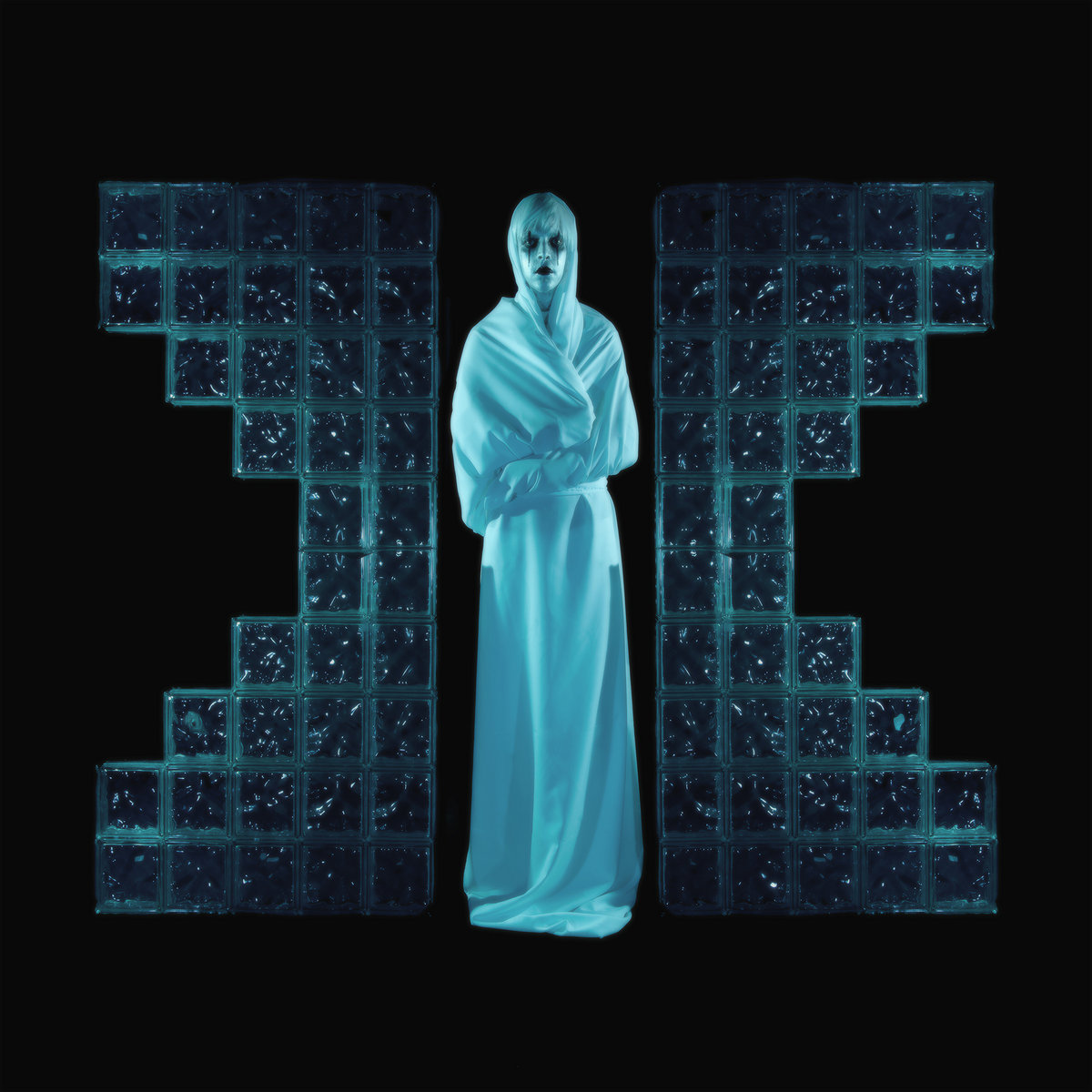
Vocally, Deb intones like a monk ritually “demonstrating” (see The Demonstration album cover art) - nearly devoid of affect, emotion, or bluesy wailing.  Contrast Deb’s vocal delivery on “Cold Souls” with Pearl Jam’s “Last Kiss”, for example, in which Eddie Vedder also sings about the death of a love interest, but Vedder’s delivery is filled with bluesy angst, wailing, and grief (1.00).

With his art school background, Deb Demure would know literary archetypes such as the maiden who dies young and becomes eternal (for example - Shakespeare characters, medieval Catholic saints and martyrs, and Marian imagery).

In this idiom, the maiden dies and her male adorer loses her in the flesh as she becomes "all light." However, as she departs to be joined to the only suitor worthy of her (God) he basks in her radiance, transforming his grief into religious awe - hence the “cathedral in sound” which I turn to next.

The Cathedral in Sound - instrumentals

Sonically, “Cold Souls” is the 4AD style cathedral in sound united to Drab Majesty’s austere, marble-like overall aesthetic, which supports the story of the lyrics and the religious atmosphere. 

The echo/reverb drenched instruments suggest the vastness of the cathedral interior.  

The opening guitar melody uses groups of three notes (0.00) which hint at prayer (Father, Son, Holy Ghost) and serve as a liturgical frame for the story in the verses.

The metronomic and repetitive synth drums suggest geometric cathedral architecture (as opposed to jazz, blues, hip hop, and prog rhythm which is more liquid and displaced). 

Synthesizers in the elegiac verses (1.56) suggest the dim light inside a cathedral created when the sun's rays penetrate stained glass. 

After she becomes “all light," the synthesizer choir comes in and the opening instrumental melody changes, ascending slightly, heralding her ascent to Heaven as Deb repeats “When you were dead / I took you by your head.”

Conclusion

“Cold Souls” is a masterpiece.  Deb Demure and Mona D are the darkwave artists for the 21st century!

Now enter the Cathedral.

u/UsualExercise7684 — 1 month ago