Wasteland 3 (2020): Like most role-playing games, sooner or later you'll have to beat a flaming pig to death with your bare hands.

I gave Wasteland 3 the time of day because it's a Western RPG I could comfortably play on the gamepad and it was dead cheap in a sale. I may have all manner of hardcore role-playing games under my belt, but these days I really don't care to try a game that has so many buttons I have to consider pressing the J key at some point.

While Wasteland 3 has continuity with the prior games, it has no ask of the player to know of them in detail. Five years after getting wrecked in a war against killer robots, the Desert Rangers of a post-apocalyptic Arizona are in dire need of resources. The Patriarch who runs Colorado with an iron fist offers them an olive branch in exchange for rounding up his three rebellious children. In the meantime a Desert Ranger called Angela Deth has her own agenda that may conflict with your mission...

You create a squad of two to four custom-made rangers plus two to four companions of your choice to make a party of six. While combat is a necessity there are numerous branching paths to make in quests, and diplomacy isn't treated like an old sock full of toothpaste as in Bethesda's take on the Fallout series.

Combat is XCOM-lite and very easy to understand. You take cover from gunfire, avoid grouping together so half your squad doesn't get merked by a single grenade, blow up explosive red barrels near enemies, and consider which combat-archetype is best for the given foe. Permadeath and friendly-fire are optional difficulty-settings, so most players don't have to overthink every scenario. Outside of battle comes exploration and it's very straight-forward. Skill-checks are abundant and follow New Vegas rules. Your skill level either meets the threshold for success or it doesn't, and there are no dice-rolls involved. You can pick up all the loot in a map without issue as your inventory capacity is unlimited. After battle you can sweep up all enemy drops with the press of a button. As is CRPG tradition you have a button which highlights all NPCs and objects you can interact with. All together this is a massive departure from Wasteland 2 where it took ages to get anything done, and at a 60% success rate at that because Fuck You.

The game world is fairly contained for the genre. I never finished Wasteland 2, but I'd say Wasteland 3 is half the length. Here you've got 50 quests, 39 distinct maps, and a 25+ hour runtime. I'd estimate there are 80 mandatory fights if you take the completionist route, and trash mobs are only found in the 5 main areas. Most of the 18 side areas on the overworld only have a single quest, fight, or weird Easter egg attached. Thankfully you can skip the random encounters on the overworld entirely if you remember to level your Survival skill. While the developers clearly intended on a larger experience given the level of cut-content, I think it's best that the game maintains a tight pace.

Character-progression mercifully shows 32 years of refinement. I remember playing the original Baldur's Gate a decade after release and all I could say is, "What is this crap? Thac0 my ass." Too often the Western RPGs of old were burdened with jank that muddled the experience and discouraged many builds. Entire classes, races, and skills could be busted or broken to ever consider using or going without. I loved Diablo II like the next guy, but what was the point of the Energy stat? In Wasteland 2 you could make two characters, either a guy who excels using assault rifles, or a guy who might as well have put 10 levels into the Suck Ass skill. I think Suck Ass was an actual skill in that game because there were 30 of them to choose from, too many of which did the same thing. It gets pedantic when a game has a Surgeon skill and a Field Medic skill that should have been combined.

Wasteland 3 cuts the crap and is streamlined sensibly with no attribute being left in the cold. You've got 22 skills; 6 combat and 16 utility. Every character in your squad should pick 1 combat skill and 2 utility skills to level. On normal difficulty I got by comfortably without the crafting ones. Intelligence is not a god stat here. Skill points gained per level is the same across the board and pumping Intelligence only grants an extra point in addition to raising your critical hit damage. Raising Intelligence and Strength upon levelling is retroactive, unlike the shit old days. If you're not feeling your current build, you can recruit a new ranger or respec an existing one for a nominal fee.

I'm a little confused at the presence of perk points. If a character hits level 24 by the endgame then they will have 11 of the things, but you can only buy perks in 3 or so skills you specialise in. They might as well have given you the perks automatically since there isn't a ton of choice in the matter.

I beat Wasteland 3 with a squad of diverse talents. The melee characters could run across the map in a single turn so they could punch a guy in the face. The sniper lacked action points because they only needed one bullet to decide matters. The gunner managed crowd control with a shotgun while the submachine-gun soldier was an absolute beast. In a reversal of Wasteland 2, I'd say the assault rifles are the only underpowered class of weapon.

Some quests will trip you up. There are four timed ones that will cancel if you complete too many other quests in the meantime. I suggest not talking to the fat guy who runs the Bizarre in a hurry unless you want to get mobbed by the Spanish Clown army. The biggest hurdle that nobody will ever accomplish without a guide is>!the third ending. This demands absolute respect across the board and two quests have to completed in a specific way. One guy is bugged when he says a peaceful transition is impossible, but I got the ending anyway. Props if you get it, no shame in using a walkthrough.!<On an unrelated some of the collectable achievements are a massive pain in the arse, as too often you can miss a unique item if you don't use the right skill-check at the right time. You can fail three of these achievements in the first map alone.

I'm not on board with the game's sense of humour. It doesn't get irritating like The Outer Worlds but I find Wasteland 3 too zany in the margins in a tired way. Wow! You meet Santa Claus, who runs his elves like slaves to make hard drugs! A honey badger is the strongest animal companion in the game! A cannibal clan make Bob Newhart references! And so on and so forth. Like a Pete Davidson stand-up special, I'm not sure if I'm supposed to laugh at any point. Mercifully the main arc of the game is fairly straight, apart the the son of the Patriarch who acts like the poor man's Joker.

I can't speak for the DLC because by all accounts it shit the sheets like a footballer the morning after kebab night. The phrases bandied around in reviews I've seen are "enemies respawning in the middle of a fight", "enemies level-scale to get tougher than your party", and "bugged up the arse". No shame in me not venturing there when I have otherwise enjoyed my time in Colorado.

Wasteland 3 is solid. It's not weak, nor is it spectacular. It's by far the best game InExile have ever made. Their first successor to Wasteland was underwhelming because it was too bland and outdated. Their successor to Planescape: Torment made nowhere near the impact it wanted, and Disco Elysium took the crown anyway. Can you believe there was a time when the involvement of Patrick Rothfuss was a selling-point? But Wasteland 3 is a success and a good time. You are given a high degree in agency in how you approach your problems and enough leeway to change your mind. It's not too long nor too big, and has half a mind to think out the ramifications of the main story where some crowd like Bethesda would never bother. It's a 4-star experience that may be overlooked, but never doubted or dismissed. Also you drive an APC in this game and can run over people with it in a fight, making blood angels in the Colorado snow.
reddit.com
u/DeadRobotsSociety — 12 days ago

LISA (2014): Never doubt a gasoline-spitting alcoholic and serial-killer goose in a fist fight.

"The wind blows in my favor, little man. You will not be walking away from this one."

LISA begins with the main character Brad in childhood, getting the absolute shit kicked out him by some bullies in the playground. When the boy enters his run-down home, bleeding and dishevelled, his father throws a beer bottle at his head and orders him to his room. Alone, all Brad can do is cry. Brad then grows up in a world where all the women have died in a flash. He's now a middle-aged martial arts instructor who's struggling with a drug addiction. One day he finds a baby girl out in the wild, probably the only woman he'll ever see again. He names her Buddy and raises her in secret to the best (and worst) of his abilities. When Buddy is taken by a warlord's army, Brad sets off to find her in the wasteland. If you're wondering who the Lisa is the title refers to, it's someone Brad failed.

The summary for LISA makes it sound like some literary novel that's positively reviewed by the Sunday Times and inevitably read by nobody. But mercifully it is instead a role-playing game and a pretty funny one at that. The very first instance of combat has you using karate moves to beat up a stray dog called "Cheese Legs". While this may be a game where your party members can get their necks broken by mutated horrors, it's also a game where you are in danger of having a stranger fart in your face while you camp at night.

"I did it for the nookie."

If I had a time-machine I'd go back to the 90's and stop Chrono Trigger from being made to save the future from the half-baked homages it inspired (and also visit the WTC to warn them about the Mariah Carey movie Glitter). It's all well and good to be influenced by the classics, but you need to add your own touch to the formula for the work to stand by itself. Personal taste and all, but I have no quarter for tribute acts when there is so much originality in the world. While this game has the mark of Earthbound's eccentricity scarred upon its DNA, it boasts many other influences like Fist of the North Star combined with a love of professional wrestling to give it an identity all of its own.

LISA is built upon atop the RPGmaker engine but plays like a platformer outside of combat. You move either left or right, climbing up ropes, and jumping down ledges. If you fall down a bottomless pit then it's game-over. Save-points only, no checkpoints. It's slow going for the first hour until you find the bicycle, which lets you jump gaps and speed down bottomless pits twice as fast. You'll have to get your head around the game world quick as it's a succession of hubs with all manner of side-areas and secrets. There's also no overworld map of any kind.

LISA is a three-act game spread across nine hours and its greatest strength is its variety. There are only two small locations with random encounters, as every other enemy is a hand-placed ambush that doesn't respawn after death. There is no one single battle theme that plays throughout, instead each fight has its own character musically. The soundscape of LISA cannot be described, only witnessed, survived, and vaguely remembered at 4pm on a random Tuesday. You'd also never expect such diversity in a world governed by sweaty, middle-aged dudes. There are snowmen with guns, exploding football players, giant twisted piles of drug-infused male flesh, and shirtless guys who could stand to lose a few pounds.

While LISA is only a third the length of an RPG like Earthbound, it has a much wider combat sandbox as Brad can be accompanied by any three party members from a pool of thirty. Their skills work off either an expendable resource like mana or can only be unleashed after landing enough melee blows in combat. If you've ever played a Shin Megami Tensei game before then you'll know that status-effects are king. Since Brad and some of his gang have drug addictions, they can suffer from withdrawal symptoms at the most inopportune times (i.e. the entire game). You can stave off the debuff by giving into your impulses, but this can cause other issues down the line.

I played the remaster of LISA a decade after my first run and found normal mode quite comfortable. I never had to rely on drugs and was always able to reload if a favourite party member ended up as the 1 in 6 people who can't recommend Russian Roulette. Some characters were buffed and others nerfed in the transition. Birdie the alcoholic has a move where he spits oil on the enemy mob, lowering their accuracy and making them vulnerable to fire. Since Brad has a fire-elemental move the results are obvious and most challenge runs avoid Birdie for this reason. The remaster might have dampened Birdie by giving him alcohol withdrawal symptoms, but he's still a powerhouse. The remaster also adds an EXP catch-up mechanic should you chose to soldier on with a new crew after some fatalities. All in all the combat is simple but rewarding because every move matters. Filling a bottle with diesel and chucking it never loses its impact, where in most other RPGs you stop using consumable items after the first hour.

"Don't pay for drugs, let your friends do that!"

One of these days I'll get round to finishing Pain Mode and earn the last trophy. This difficulty is meant for a replay, as the enemies are harder and save-scumming is gone since save-points explode after use. On every difficulty Brad will be forced to make painful decisions, and I'm happy to say that both outcomes suck. It's one thing for a game to kill off some character who's key to the plot, but it's another level for a game to punish the player on some mechanical ground. A game like The Outer Worlds felt toothless to me as every A/B dilemma I encountered had a "C ending" that fixed everything. LISA has no C endings and you have to weigh up what to lose every time, whether that be all your items, a major hit to your stats, or the lives of your party members.

The expansion to LISA acts as an epilogue and it's inevitably a step down from the main game. It tries to do too much in three hours and the main plot is too disconnected from the climax. Since it's the fourth and final act of a tragicomedy mostly played with a single character, it doesn't benefit from the bizarre humour or wacky party members that lifted the main game, but it is otherwise an honest and appropriate close.

"Soup's on, bitch."

I look at a title like Chained Echoes, an RPG throwback largely made by a solo developer, and can't help but find it lacking. That game has excellent graphics, a terrific quest-system that rewards exploration, an impressive score, and all manner of options to customize your party. But the story was too close to its inspirations like Final Fantasy IX and Xenogears, and crafted little of anything new in the short distance. It tried to muster an adult tone and fell flat on its face again and again. It was so grimdark that it even nicked the notorious twist from Bionic Commando for some flavour text.

By comparison LISA is a scrappier game that's also the passion project of one guy, but far more accomplished as art. It's a journey that tackles the heavy subject of alcoholism and abuse in the same breath that it mentions a religion devoted to a fast-food mascot and a society of hairy men who hate bald guys. Being an episodic game of a modest playtime it's highly replayable. It doesn't go overboard with the cutscenes and it's bursting with personality as you walk from one bizarre encounter to another. It's often silly, deliberately stupid, paradoxically serious, and yet utterly humane.

>!"Did I do the right thing?"!<

reddit.com
u/DeadRobotsSociety — 1 month ago

The Lamest Crafting Systems in Gaming. "You'll need 3 Oyster Shells, 8 Curtain Rings, and a Horse's Obituary to make that Biker Jacket."

A while back I played a game called Bloodstained, which was intended as a successor to the then dormant Castlevania series by some of the original creators. It's a solid 8/10 campaign, nothing mind-blowing like other Metroidvania efforts such as Hollow Knight, the Blasphemous series, or the excellent Nine Sols, but my time in Bloodstained was a pleasant one. Played normally it's a pretty straightforward 15-hour action-platformer with RPG elements. That said, you can double that playtime if you dig deep into the crafting-system.

Across the game-world are recipe-books that allow you to create new equipment, consumables items, and meals. You only have to create an item once since it is then added to the shop. Meals are important since they give you a permanent stat-bonus the first time you eat them, while your equipment and magic-abilities can be further upgraded by crafting. Notably, you can break down crafted items back into their original ingredients, letting you acquire copies of prime materials rarely found elsewhere. It may cost ten thousand gold coins but you can turn an omelette back into an egg. Thanks to this dense, inter-connected economy Bloodstained is one of the few games where money doesn't become useless halfway through. All in all it's fun to dig in and experiment with the tools on offer.

Crafting, whether that be creating new items from scratch or enhancing old gear, is a popular mechanic among gaming, but it's easy to get wrong. The system can be completely vestigial to the experience and serve no purpose. Or it might be useful but encourages a degree of grinding that bloats the playtime to no benefit. Hell, it might work and be interesting in practice, but let down by a horrid UI where it takes menu after menu to produce a single paperclip. This handful comes to mind.

Kingdom Hearts: Final Mix (2002)

Back in the day I remember creating the Ultima Weapon, Sora's best Keyblade, that's available after crafting every item on the menu at the Synthesis shop. A bit of a grind for my kid self in 2005 but doable. The thing is that you likely won't play that original version of Kingdom Hearts today. The director's cut brought a raft of new bosses, scenarios, and QoL features which are all welcome. Less welcome is the expanded menu of items to synth requiring new materials dropped by new enemy-types.

To get the Ultima Weapon today you have to kill mini-boss after mini-boss of these gimmick enemies, and you're not guaranteed to earn their rare drop anyway. For example there's this monkey who has to be stealth-killed five consecutive times or else he'll summon his simian buddies for backup who don't drop shit. As an adult replaying this game when it hit Steam, and only an hour away from the final boss, I did not have the patience of my younger self to spank that monkey. I definitely recall a trend in Square-Enix games of this era where they would create remakes and director-cuts far more tedious than the original games. Like Final Fantasy III DS still not letting you freely save, or every export of Final Fantasy X punching you in the face if you tried to backtrack after acquiring the airship.

Assassins' Creed III (2012)

AC3 is what happens when a hundred talented people work on the same project but are sectioned off in a hundred different rooms with no communication between them. It's a confusing, mediocre game with the odd flash of brilliance that makes a fascinating case-study in it's countless bizarre choices.

For instance in order to unlock all the fast-travel points in the city maps of Boston or New York, you have to spend hours navigating an underground series of dark tunnels to find shortcuts to above. In effect the time spent unlocking fast-travel points consumes more time than you'd ever save by fast-traveling. The naval-system has you captain a ship that you can upgrade and send on missions, but the main campaign only touches upon the mechanic twice. Fully-voiced side-missions with dedicated character moments are given the same priority as lazy fetch-quests programmed inside of an afternoon. There's good stuff in AC3 but it's held hostage by the bad. Hell, the prologue lasts for the first 50% of the game.

The strangest thing about AC3's crafting-system is that it even exists at all. This game is the furthest thing from an RPG; you can finish it easily with your starting-equipment. But there's this whole complex economy where you bring in tradesmen to craft furniture like ornate chairs and sell them on convoys to make money to fund the production of more chairs. I'm playing an angry indigenous assassin who's on a mission to tomahawk British men in the face, what the hell does he need an ornate chair for? Why do I need to get Big Dave to level 4? Who the fuck is Big Dave and what sitcom is he from? Somebody clearly poured time and effort into this system, only for it to barely matter in the final game. It's for this reason the sequel Black Flag threw out the bureaucracy and just had you hunt animals to craft upgrades, Big Dave not needed.

Demons' Souls (2009)

As the first of its genre Demons' Souls got a lot right. There's the melee-combat model that's simple in practice but demands constant player attention, the interconnected levels abound with secrets and shortcuts, the hands-off narrative that leaves the most important words unsaid, and the melancholic mood that seeps like a fog into every crack and crevice in the kingdom of of Boletaria. From Software have iterated on the formula of the game countless times since, but there's no topping the night-time prison block in Latria or the unwarranted execution of Maiden Astraea.

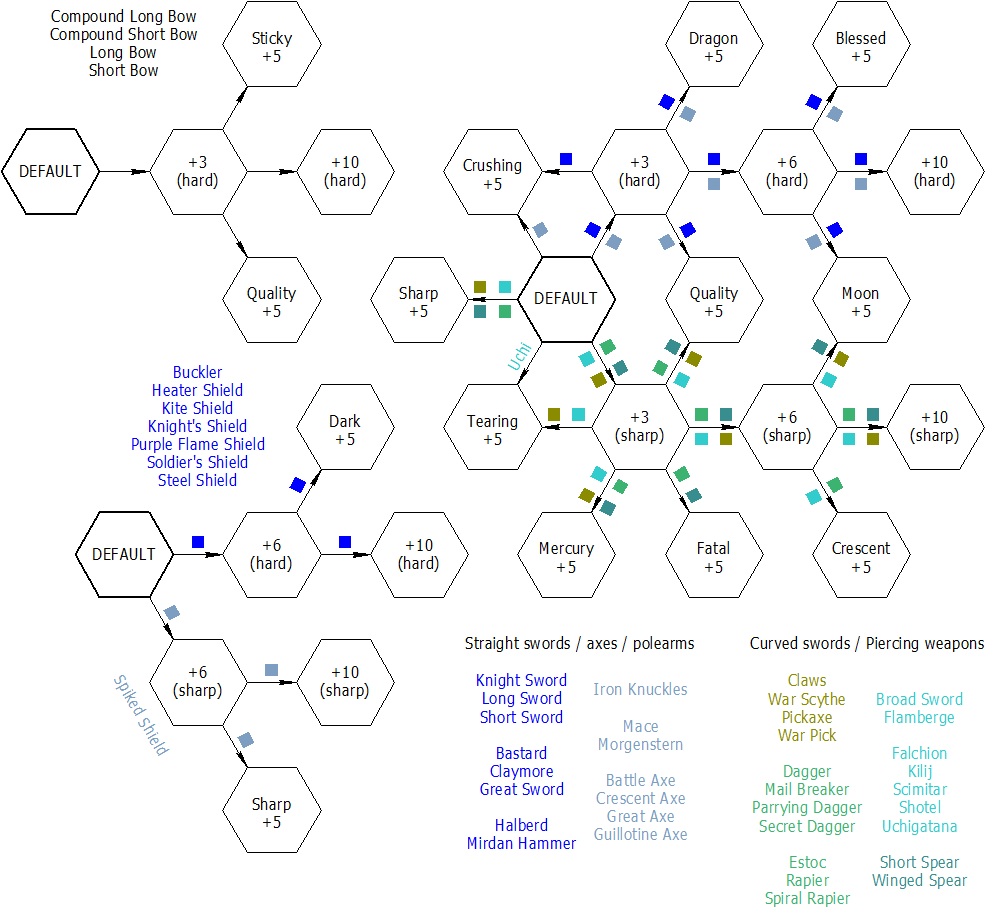
One thing they sure as shit didn't get right with Demons' Souls is the weapon-smithing system. It's far too complicated and grindy to bother with in what is otherwise a 12-hour-game. By my count there are 44 individual material types to collect. Getting a basic Long Sword to +10 needs a staggering 99 pieces of Hardstone across four tiers. I know the definition of insanity and it's called Pure Bladestone. Bluepoint Games made a lot of terrible artistic decisions with their PS5 remake, like sapping the personality from the score (RIP Tower Knight & Vanguard), but they oddly left the weapon-upgrading system intact. I only ever used a unique axe with no upgrade path anyway, since I never bothered with this flowchart crap. You'd think it be easier for a knight to make his long-bow all sticky.

Kingdom Hearts III (2019)

After the long wait I must thank Kingdom Hearts III for killing any interest in a fourth mainline game. Sweet Jiminy Jesus does Sora accomplish nothing this time round. While the Pixar cast may shine, the Disney characters are stunted by red tape. The retelling of Frozen here reads like a restraining-order. There's no satisfying progression to the main plot either, instead being a random series of set-pieces that hurriedly wraps itself up in the last two hours.

I played on Proud mode, which was the hardest difficulty at the time, and it was still too bloody easy. Had I needed that extra edge I could have tried the cooking mini-game. As Donald Duck will helpfully remind you every thirty seconds there are cooking ingredients to be found out in the world. You use these ingredients to make meals at a Bistro, aided by that little health-code violation Remy from the movie Ratatouille. Cooking has you complete a short quick-time event, and by short I mean less than five seconds. If you fuck up then the meal is thrown out and your (often rare) ingredients are wasted. Didn't ground the pepper-mill fast enough? Then game over. Save-scumming the process isn't worth it either, since the mini-game is gated behind a loading-screen. An RPG having a Cooking Mama-style mini-game is a brilliant idea, but this isn't it.

The Legend of Zelda (2017, 2023)

I wish I got round to finishing Skyward Sword before my Switch broke, but alas the game was too awful to pick up again after dropping it somewhere in the third act. Had I completed it I would have used the review heading, "The Groose is Loose but the Game is Lame." Anyway, a reboot of the series was on the cards after that title and setting aside the 57 million sales it was a success on most fronts. Link has a wider move-set than before and can freely explore Hyrule as he pleases without the constant nudging of an irritable sidekick. The control-scheme is conventional and simple to learn, while the world operates according to a robust physics-system that lets Link fulfil the dream of setting a shrubbery on fire, minus pants.

The cooking system is easy to understand when you know that combining two different buffs together will cancel each other out, and that Hinox balls aren't renowned for their flavour. You're better off just cooking meals en masse and storing them in your tunic pocket, because it's a pain and a half to ever bother upgrading your armour. I was forty hours deep into a replay of Tears of the Kingdom, having completed a hundred shrines and mapped most of the world, when I finally got around to upgrading my armour so I could tackle those overworld bosses.

Despite killing hundreds of enemies at this point all I could afford to upgrade was a common shirt by a single level. The same shirt I wore in the previous game. Making any set of gear battle-worthy is a grind in itself that's not worth undertaking, as there over 150 different materials needed to upgrade gear. On the opposite end it's terrible idea to ever max out your armour set since it completely evaporates any notion of challenge. It would have been an inspired decision to make Defence a separate stat you could raise like Hearts or Stamina, or just scrap it entirely and have clothing solely give passive-effects. Both Breath of the Wild and Tears of the Kingdom hew close to the RPG genre by including the worse parts of it, like the grinding and farming. All in all, The Legend of Zelda can do better than bogging the experience down with 00's MMO design. On an unrelated note if there's a game out there that lets me create Guts from Berserk and put him in a Disney Princess' ballgown that's viable in battle I will give it five fucking stars.

Other Offenders

Horizon: Zero Dawn was a good time and all, but why did an action game about fighting robot-dinosurs need me to spend 45 minutes in a forest plinking off rats and deer with a bow to increase my bag size? Far Cry, by comparison, made it fun to kill three endangered rhinos to craft a slightly larger wallet that you realistically could have bought in a shop.

Dying Light otherwise did both crafting and level-scaling right, but didn't register that crafting medkits one at a time in a menu is a hassle and should have been a shortcut only one button away.

Dead Space 3 was doomed for many reasons like ramming in co-op, largely dropping the horror aspect, and including a love-triangle in a story about body-horror zombies. But a major sticking point was that you can craft your own weapons from different parts and materials. Parts and materials that you can conveniently buy with real money, courtesy of EA. The weapon-crafting system is actually neat in practice, but included in the wrong game entirely, and for the most cynical purpose possible.

u/DeadRobotsSociety — 3 months ago

The Worst Skill Trees in Gaming. "+10% damage against enemies named Steve, upgrades Moustache to Handlebar style."

To my knowledge it was Diablo 2 that made the skill-tree popular in gaming. I don't care who did the concept first, and I'll admit to never jiving with the Diablo genre, but it is what it is. Many games that are long enough will have some kind of progression system, sometimes a couple of them, and they exist to empower the player and open up new avenues of play. The reasoning is that new players would be overwhelmed if every skill and move were dumped on them right after pressing the Start button. There's also that small jolt of endorphin every time you earn a little new perk. Hell, there's an entire genre of games on Steam devoted to filling out skill-trees after every thirty seconds of play.

But some games screw up the formula. Either the trees are lacking in any spice or have no real reason being in the game. Instead they just exist to give illusion of depth or choice, a sexy selling-point on the back of the box before the modern hellscape killed game boxes. This is the handful that come to mind.

Batman: Arkham Origins (2013)

The one scene I remember from this game is where Batman saves a gangster by pulling him off a torture-rack, only to then torture the man himself by kicking him repeatedly and threatening to short-out the man's pacemaker. Batman is a massive asshole in this game in a manner that doesn't line up with his characterization in the other titles. For instance Batman is far more civil in Arkham Knight, where he gently interrogates a henchman by rolling the wheel of the Batmobile over his head in a bid to jog the man's memory.

All in all, Arkham Origins is a weak link in the series given the muddled plot, lackluster level-design, and scathing loss of polish after the second game. Way down the list of sins is the skill-tree. In Arkham City you earned skill-points by playing normally and spent them on whatever you needed. You need body armour? Then buy body body armour. Want to augment your combo modifier? Then purchase any skill you want that strengthens your combo.

Arkham Origins shares many of the same skills as Arkham City, but screws it up by arranging them in a skill-tree with no rhyme or reason. For example you can't augment your combo until you buy all the body-armour upgrades. There's this batarang gadget I never got to use because it was tied to performing different stunts while in a predator-room. Since predator-rooms are limited in number and can't be replayed in a game with no manual-saving, I lost out on the upgrade for no reason. Just an ill-thought system thought-out in a game full of such odd choices.

Assassins' Creed: Unity (2014)

Thanks to over a decade of hindsight I'm able to arrive at the conclusion that this game is still pretty fucking bad. Sure, the late 18th-century Paris is a fun sandbox to explore in all its parkour glory, but that's only one leg of the chair. The combat is horribly sloppy with no flow-state and the stealth is akin holding three twigs to one's face in a grassy field and pretending to be Welsh. The story also has this bizarre Royalist bent that shits on the French Revolution and attributes its causes to some dumb conspiracy over the more interesting historical record.

AC Unity was the eight installment in the series and the first to try out a skill-tree to upgrade your protagonist Arno. The issue here is that all these "skills" are basic actions that previous player-characters could do right from the start. Throwing money on the ground? Two skill points. Air-assassinating two enemies? Five skill points.

Bear in mind that most skills are locked until you finish the first-three quarters of the campaign, and the skill points themselves are awarded only by completing main quests or randomly found in co-op missions. So unless you bee-line the main plot of this open-world then your basic move-set will be gimped for no reason. Where Arno Dorian with us today I doubt he'd be able to flush a toilet unless he spent three points on the Social Courtesy skill.

Xenoblade Chronicles 2 (2017)

Xenoblade 2 is a one-hundred hour game where forty of those hours are spent in the menu. The game was rushed in development and they hadn't the time to make a shorter game, so a long game had to suffice. Your five main party-members are called "Drivers", and they each have a skill-tree with fifteen nodes apiece. I'm not sure why they bothered since the upgrades are anaemic and priced linearly, ranging from 200 points to over 5000.

In addition to your drivers are their "Blades," which are technically slaves except Anime. Each Blade has a skill-tree that fills up automatically as you progress the game. It's a pretty neat concept, but the tree only updates when you check on them. A lot of goals on the tree aren't retroactive either, padding the playtime further, and they can be quite esoteric to fulfil. What the hell is a Scud Buggler and why do I have kill 5 of them? Do I really need to cook all these dumplings just so a Blade is 5% more effective in combat? Sweet Jesus, did people actually waste 20 hours trying to get that Blade with the polar bear a recording contract?

Mass Effect 2 (2010)

Gameplay-wise, Mass Effect 2 is a far more polished game that the first, ditching the empty open-world in favour of linear, hand-crafted missions. The overarching plot is completely stupid but delivered with awesome gusto, capping off with the greatest finale in gaming history. To compensate for the sheer spectacle, the game had to fulfil it's shit quota and bog it down with a resource-mining system nobody liked, as well as including a guy called Jacob.

Mass Effect only got skill-trees right in third game. The first game has a lot of options on show, but it was mostly illusory chaff and there was very little meaningful delineation between classes and squadmates. The second game has skill-trees for each squadmate, but they're so barren as to be non-existent. Three active skill and one passive bonus, arranged in four tiers. The second active skill is only unlocked by sinking points into the first skill, and the third active skill is gated behind that squadmate's personal mission, usually involving daddy issues. Had they not even bothered with skill-trees I wouldn't have a problem here.

Bethesda (2011, 2015)

Both Skyrim and Fallout 4 have the same issue with character-progression, in that you earn one universal perk per level. These perks can be spent on a pool of over 250 choices where the majority are fancy but situational, while a minority are boring but mandatory. What's more important? Having a 10% chance that an enemy's bullet will ricochet back at them, or your own gun being 20% stronger? Has anyone who ever played Skyrim ever bought a single perk in Lockpicking or Speechcraft? Lumping every facet of character-progression into a single blob just leads to a more homogenous style of play. In Skyrim sooner or later you'll become a stealth-archer and you'll be utterly gimped in Fallout 4 if you don't invest in crafting perks. Even fans of Fallout 4 prefer to mod out the asinine level requirements preventing you from earning any wild or interesting perks early on in the game,

By comparison a game like Fallout: New Vegas lets you define your character through their attributes, skills, perks, and traits. Your character is made up of an interesting series of choices that intersect and cross-over each other. That game is balanced around you hitting the level-cap, and there isn't a surfeit of crap to pick at any one time. I don't ask for every choice in an RPG to be hardcore or impactful, only interesting.

reddit.com
u/DeadRobotsSociety — 3 months ago

The final stretch of the final level in Mina the Hollower is bizarrely terrible.

I've played Mina the Hollower over 30 hours, having scoured the map for every collectible barring a few bonestone which I don't have any use for at this point. All levels maxed out and all trinkets acquired. I've beaten every challenge with the tools acquired and with no modifiers to affect the experience. I honestly thought the ring combo mini-game or those races against the ghost would be a pain, but those were dealt quickly.

However, the last five minutes of the game before the final shortcut is appalling, and I have no idea who play-tested the thing. It's a gauntlet starting with two tanky lion enemies. You have to beat them before every attempt because you're immediately ushered into an auto-scrolling level. Linked video. Spoilers for last level.

https://youtu.be/UcumKfQxy3U?t=31106

You're punished for going too fast. You're punished for going to slow. Enemies move erratically in tight spaces and they're hardy enemies at that. If you fall of a ledge you get teleported into an inconvenient nook where you'll likely get hit again anyway. The last twenty seconds is the hardest because you need to jump over projectiles while atop a one-square wide platform and at low-health.

Mina the Hollower evokes older titles like Castlevania and the Zelda Oracle games, but I have no idea why they decided to bring back the "Welcome to the Machine" level from Ecco the Dolphin. I've struggled on this one section for an hour and I find it a good argument against ever replaying the game. I don't want to throw in the towel and turn on easy-mode, but I do want to know what the hell the thought-process was for this atrocious set-piece in a game that otherwise has stellar level-design.

u/DeadRobotsSociety — 4 months ago
▲ 0 r/JRPG

JRPGs where you need to turn the music off for a while.

I finished a replay of Romancing SaGa 2 (2024) and it's still an outstanding game, though it does follow the SaGa series tradition of ending on a supremely hard boss. Where for the most part it's an open-ended sandbox with many tools for success, the last fight is brutal and demands a much narrower strategy to scrape by. It's like an eating contest where you have to devour a giant meatball under a strict time-limit, and there's no ketchup or relish or anything.

A less difficult but more present annoyance in the game is the music for your home-base. It fits the theme as you play an emperor who peacefully annexes neighboring regions in order to stop a cosmic threat, but the problem is this game is over thirty hours long and the music never changes. In your home-base you receive quests, craft new gear, gather your party, determine their skills, and pick their magic spells all while this bombastic orchestra follows you around. Where this gets really annoying is the University mini-game where you have to answer trivia questions under a time-limit, as in Like a Dragon. You're going to crank the music down to zero because it's not adult to lose your focus and rage-quit after failing a test with 17 correct answers out of 20. If there were variations to the home-base theme, and they were softer with less energy, there wouldn't be a problem here.

Unsurprisingly, Dragon Quest XI is an offender. It's a solid JRPG whose weakest link is the soundtrack and what little there is of it. The composer, whoever he was, evidently hated his listeners as he did foreign cuisine. Dragon Quest has had some pretty catchy overworld themes over the years, and XI isn't one of them. You hear the same three minutes of orchestral farting no matter where you go. Crossing the desert, climbing a mountain, running through the tundra, even walking through a jungle. The theme never changes; a feat made worse in that the original release had synthesized music. The director's cut let's you swap it out with the more pleasing theme from VIII, but that only proves how desperate the soundtrack was in how it relies so heavily on recycled hits.

Final Fantasy XIII is the game that allegedly gets really good in the chapter right after you quit playing. Excising towns, mini-games, overworld areas, and even basic NPCs in favour of linear dungeon-maps makes it an experience too solitary and dull for most players. The game is broken up into thirteen chapters and each chapter takes place in one locale. Chapter 4 is devoted to the Vile Peaks. That sounds like a snowy mountain area, but it isn't, it's a dump. You spend four hours wandering this dump at night, longer than the previous three chapters, and have to listen to this bizarre medley of radio chatter, a Middle Eastern sounding beat, and a ghostly choir. It's a maddening place to be and a microcosm of FFXIII's horrible pacing.

Xenoblade 3 suffers a flaw that is both obvious and frustrating, because it should be so fixable. If you're exploring a verdant field like Ribbi Flats and want to hear the evocative theme, then you can't access the menu. The menu has it's own theme and it always overrides whatever local music you should be hearing. I'm of the opinion that no game with any kind of free-roaming should ever have a menu theme, because you will have a music track that overstays its welcome and dwarfs the rest of the soundtrack in how often it's played.

This problem extends to combat. I'm sure the game has nice boss themes, but I don't remember hearing any as the Chain-Attack music overrides them as well. It's not enough for a game to have a strong soundtrack, the music needs to be deployed wisely. So that you're not constantly hearing the first fifteen seconds of a battle theme for the entire runtime, only to give a tender two-minute piano solo to a ten-second scene.

The Little Mermaid remains a landmark film that proved that Disney could move past a mediocre decade full of guff like The Black Cauldron (A terrorist could stow a DVD of that box-office bomb on a plane to make it explode). I will personally get mildly annoyed with the next wank-rod on the internet who says Ariel dropped everything in her life for a human man she barely knows. Rushed ending aside, The Little Mermaid will always be a classic.

Which makes its inclusion in Kingdom Hearts II somewhat regrettable. Where the rest of the game is an Action-RPG, the Atlantica level is devoted to a rhythm mini-game. It's not hard but it is annoying. If you try pausing the game you have to start the stage over, and the music itself is dire. Donald Duck sings in the chorus. "Swim this Way" sounds like a knockoff version of "Under the Sea", in a game where "Under the Sea" already appears. They somehow cram in a dozen syllables in the space of three seconds. No, I'm not linking any of this. Perhaps the plan all along was to anger the legendary Howard Ashman back to life. Playing Atlantica with the sound on technically counts as hard mode.

u/DeadRobotsSociety — 5 months ago

Got the two outstanding achievements. One is for beating a boss after the tutorial without incurring damage. The easiest candidate is the giant undead vicar who shoots glass shards from his hands.

The other achievement is meant for replays, where you need to sequence-break and enter a mid-game area in only the first thirty minutes of play. Never got the equivalent trophies in the first game, as they were far more strict.

Five dummy achievements were added for a future DLC or update that's likely to advertise Blasphemous 3. Will probably find the second game a hard act to top.

u/DeadRobotsSociety — 6 months ago
▲ 3 r/JRPG

Majuular, best known for reviewing the Ultima series and TekWar, finally gets round to making a video on the sequel to Golden Sun.

u/DeadRobotsSociety — 6 months ago

The first Suikoden is a 3 out of 5. It has a novel premise in that you can recruit over a hundred characters, but it's curtailed by a lack of confidence. Whenever you try to craft your own party from the seventy characters on show for the next story mission, the game slaps your hand and says no. At fifteen hours the pacing is tight, but the story told feels lightweight and rushed. There's a quest midway through where you stop at a village of elves. Every elf there is an asshole except the ones you can recruit. About twenty minutes later the village is vaporized, but all the recruit-able characters survive. When you confront the commander responsible for this atrocity it turns out he was magically brainwashed, so there's no argument in recruiting him to your army as well. That's what you call "pulling your punches" in fiction. Where you don't commit to depicting any real dilemma or loss. Not to say that every story needs to be dark and misanthropic throughout, but it helps to pair the bitter with the sweet.

Suikoden II begins with a camp of teenage military corps being slaughtered in their beds by their own side, as a pretext to declare war on their neighbors. The two survivors are our protagonist Riou and his brother-in-arms Jowy, two life-long friends from Highland who escape with Riou's sister Nanami to the opposing City States. The first act up until you unlock the fortress is a masterclass of pacing and storytelling, as so much is accomplished in the space of seven to eight hours. You're eased into the long-lasting conflict between Highland and the City States as well as their sordid history that involves Riou's late grandfather. Viktor and Flik return from the first game and have a double-act as your bickering dads. All the major factions and players are introduced. There's a trip through an ancient ruin and no shortage of twists and turns. Dracula also appears. By comparison I wasted 15 hours in Final Fantasy XIII and even then I couldn't tell you what the fuck a fal'cie is or why anyone should care.

Suikoden II is a game confident in it's narrative. It goes over similar beats as the first title, but grants them far greater weight and significance. Early on you see a village get razed and it's legitimately horrible. Instead of a magic mirror vaporizing some asshole elves, you've got a very human villain called Luca Blight putting ordinary people to the sword. While torching the village he forces a woman to crawl on all fours in the mud and make pig noises if she wants to live, only to murder her anyway. This may be a larger-than-life fantasy story with dragons and superpowers, but visceral moments such as these stick out because horrible people like Luca Blight actually exist. The biggest tear-jerker in the game comes from a young girl who loses her family to Blight's purges, >!because at the closing chapter she has to say goodbye to the little family she's made after losing everything the first time.!<

Observations

Immediately upon starting the game, having loaded a clear save from the first Suikoden, you'll notice the uplift in presentation. Instead of a garish and awkward town made in MS Paint, you instead begin at a military camp in a coniferous forest by a cliff-side in the moonlight. The villages and towns you visit feel like places that exist in a political context instead of being one-shot locales soon forgotten. The music is on point at enforcing the serious atmosphere while the goofy stuff like wooden robots and talking squirrels is made optional and pushed to the side. There's a firm grasp of tone and no point do you ever step on to a giant roulette-wheel while banjo music plays as in Suikoden I.

Yes, it's no longer railroaded like the first game. More often than not you can choose the make-up of party in addition to their equipped runes. The rune system is more appealing to me over something like the Materia system in Final Fantasy VII because there's no leveling involved. In fact, outside of fighting for cash at one point, there's no grinding in this game at all. The numbers of equippable runes has grown from 31 to 86, so it's inevitable you've got crap in there like Sleep and Silence spells.

The space you can explore at any one time is fairly small. In the first game the Scarlet Moon Empire were little more than ciphers. They didn't exist except when you chose to fight them. In the sequel the Kingdom of Highland is a more visible threat. Towns get occupied by their soldiers if they're not razed to the ground completely. Giant swathes of the world map are locked from the player because you're at war with them. Having an antagonist act as a thorn in the player's side on a mechanical level remains an inspired idea.

Since this a Playstation RPG from the nineties, you'll need a hint guide. No exceptions. Not because the game is hard, but because it's easy to miss time-sensitive stuff. Hell, I believe so many of these RPGs included esoteric quests was so they could sell strategy guides before the internet became a bigger thing. I myself wrote a short one on Steam that logs every missable character and item. Go me. Finishing a Suikoden game without recruiting all 108 stars is like running a marathon, only to cack your pants six feet from the finishing line and deciding to uncomfortably walk home instead. It's unfathomable. Why not beat an Atelier game without crafting anything if that's how you're gonna play?

Inventory management is still a pain. You now have a bag for 30 items, but the stash at the castle can only hold 60. Where this gets complicated is all these collectables you can pick up like old books, bags of seeds, hammers, statue plans, and even barnyard animals. These can't be discarded, only handed in to the quest-giver who accepts them if they've been recruited. For the love of God, don't pick up any hammers. Had all these collectables been registered as key items I wouldn't have a problem with the item limit otherwise.

I absolutely hated Gremio in the first game. He was the hero's pushy babysitter who constantly forced himself into the party, despite his crappy stats. The hero's sister Nanami is a far better take on the same character. While present throughout she's not mandatory party member for long stretches, and she can actually fight unlike Mr. Nanny. Nanami's angst is more palatable since it's coming from a sixteen-year-old girl who realizes she's out of her depth, instead of an adult man who can't take a goddamn hint.

It's been 28 years and I still doubt we'll ever find the words to describe Jowy Atreides. He's a difficult character to pin down but an easy character to write essays about. His motive is sympathetic yet his means are drastic. He's cunning yet also naive, like the protagonist he mirrors. You can fault him for his later actions but then you have to consider the fact that this is a conflict with no room for compromise. What use is another peace treaty if they keep getting ripped up? To date I've only seen his character reflected in Final Fantasy Tactics (you know who) and in Chained Echoes, but very poorly executed in that example.

Chrono Cross was a game with 44 recruit-able characters for no actual reason. The plot made zero sense nor had any emotional heft because it wasn't anchored to any relatable or interesting characters. Suikoden II has 119 characters you can recruit across the same runtime, yet it all makes perfect sense. The cast of heroes is fun in how they bounce off another in the same room. They're on the same side but with different agendas. After the first act the main goal is to unite these disparate factions to the same cause. One moment you have to weed out discord in a town run by three races, then you go undercover in a college like this is Nancy Drew, and later have to save a sandy mining town from Dracula's army. All these obstacles feel like digressions at first, but they eventually feed into the main plot by their resolutions. It looks effortless in motion, but for comparison see how a cutscene in a Trails game can't end until all twenty protagonists in the room eke out a line.

It may not be to every player's taste, but >!I like the fact that Luca Blight is not the final boss. Instead you kill him at the end of second act in the most intense set-piece of the game. It's refreshing because his defeat runs counter to so many RPG conventions and cliches. Luca Blight is not fought in his doom fortress. He does not transform into a big googly monster. The war doesn't resolve itself with his death. Rather, because Luca is a rabid dog who executes a lieutenant for failing him, his own kingdom sets him up for slaughter to avoid further ruin. You catch Luca on the back-foot to assassinate him, and even then he goes down in an immense struggle despite having no superpowers whatsoever.!<

This easy game is difficult in places only for the fact that sometimes you fight or boss or two a long way from the last checkpoint. When you know the trick you won't be fooled a second time. Outside of the above example I'd say only the final boss is all that challenging. They come right after the sole checkpoint in the game that gives a free heal, and they will catch you off guard given how straightforward the final act otherwise is. Twice now my endgame party for the final boss has included Lo Wen and Killey. Lo Wen because she's hot and Killey because he has an awesome hat.

Side Activities

I got the platinum for the Suikoden remaster fair and square and I'm going to roll my eyes at the next cretin who says trophies ruin games. The name of the game in Suikoden has always been getting 100%, long before trophies were a thing. If you're down for that endeavour then there are a handful of other tasks on the checklist.

There's this trading meta-game where you buy resources at a low price from one trading post and sell it high at another. You need to make 50K to recruit a star and 100K for a trophy. You don't have to engage with it much and should just follow a guide, given your limited inventory space.

The dice mini-game has been nerfed. No longer can you just bilk an inexplicably rich guy for millions to help fund your army. Now the game the game is truly random and a pain at that. You need to win 5000 potch in one sitting to progress the story, and another two stars must be gambled with before recruitment. Annoying but minimal.

The dancing mini-game looks impossible but can be circumvented. In effect the hardest level has you input 40 timed random presses to a rhythm of clapping without mistakes. On reading this back the mini-game sounds like arse cancer, until you realize it's a sequence of eight button presses that gets repeated another four times. If you turn off the music it's an awkward but achievable feat. Like Bowie and Jagger swinging in silence.

The real pain is Whack-a-Mole on hard mode. Six buttons for six holes. Whack the moles as they come. Where it gets bullshit is that your viewpoint rotates midway through the level but the controls remain the same. There's no real trick to this challenge, only persistence.

The MVP of the game is the chef Hai Yo. Despite being an optional recruit you'd swear he was the protagonist. Hai Yo joins the castle to set up a restaurant there and it turns out he has a tragic past, having defected from an evil cabal of chefs who plot world domination through culinary power. You must help Hai Yo in a life-or-death cook-off against these chefs. I'm being literal here. More than one rival chef will swallow poison upon being defeated. This side-quest is old fashioned in it's design, as each round requires thirty minutes of play to pass and you need to save-scum constantly as the side-quest can be lost completely. The point in your favour is that your opponents have very strange ideas as to what constitutes a dessert. Who the hell would end a meal with tomato soup over ice-cream?

Baby Got Back

My least favourite Star of Destiny is Tessai, the blacksmith for your castle. Initially he can only upgrade weapons to level 8, but by giving him these craftsman hammers you find out in the world he becomes the best blacksmith, and can then upgrade your weapons to the max level of 16. Why do I hate Tessai? Because you can only recruit him at the 90% mark of the story, when there are only three main quests left. Until then you have to commute to the town near your castle for your blacksmithing needs, and any hammers you pick up will just consume precious inventory space. Where the fuck was this asshole the whole time?

The Champion's Rune when equipped prevents any random encounters with weaker foes. That's a minor convenience since you can press the "Let Go" option in fights anyway to avoid wasting resources. Where do you find the sole copy of this rune? In the final dungeon.

Suikoden II is not a game that suffers from cut content, but rather shuffled content. Among the files of the PSX release are signs pointing to a New Game Plus mode that was never implemented. This would partly explain why so many cool toys in the game are found so late, often given by NPCs you'd never think of speaking to again.

Conclusion

One of my favorite pieces of media is Legend of the Galactic Heroes. It exists as a book series of ten volumes at two hundred pages apiece and as a 110 episode anime. It's a space-opera I would say is made of one-third galactic naval battles, another third political diatribes, and the last third being homo-erotic tension. Given that your average Star Wars product is shite 70% of the time it stands to reason another space opera would forcibly occupy my heart.

The appeal of LOGH is that despite its length and scope it's an easy story to follow. There's an everlasting war with a hero on each side, and the other characters are in either of these two camps or acting as a third party who secretly undermines them both. It's a political story with a lot of talking, but there's a certain energy to it that's hard to find elsewhere. Which is why this game appealed to me.

Suikoden II is a Fantasy RPG like so many, but it's one where the politics isn't an afterthought. In countless RPGs there's a political angle that gets dropped or ignored after Disc 2 so we can go fight God instead. For a JRPG Suikoden II is pretty grounded. It starts off with two nations fighting and ends with one succeeding. Like LOGH, the war doesn't so much hit a fever pitch as it does wind down, with even the climax being a sombre one. There's no catharsis in killing a pair of officers who want to die before their country does.

Even in a remaster Suikoden II may still be too easy with some jank, but it's never less than a compelling 5 out of 5. It says so much in 25-30 hours when many games twice that long have struggled to justify their bloat. The 108 star ending may be too neat and contrived for some tastes, but it's a damned hard feat to achieve, so I'll savour it on each and every replay.

reddit.com
u/DeadRobotsSociety — 6 months ago

That's him on the cover, dressed as a barbarian multi-classed as a thumb. He's not in the game, nor are most of those other weirdos. The western cover art for Suikoden is a funny relic of the time when publishers downplayed the fact that the product they were exporting was Anime. In another life this policy never ended, and Goku would have been Gary. Suikoden stands out for out a number of reasons in the RPG field.

It's short.

A completionist first-run should take fifteen hours. My replay lasted nine. While the pacing may be too fast for my taste, it never drags at any point. Most locales have just two or three points of interest and the dungeons are all linear paths with the odd treasure chest.

It's a hodge-podge both in narrative and looks.

The story is a loose retelling of an old Chinese epic called Water Margin, about 108 heroes gathering to fighting a bandit king. In Suikoden you play the son of a general in an Empire who defects after inheriting a much coveted superpower. The arc of the game has you building a home-base, recruiting new heroes known as "Stars of Destiny", brokering alliances with different factions, and taking the fight to the empire. There's one chapter in particular that is lifted straight from Water Margin, where your party is drugged at an inn run by bandits. The key difference here is the lack of cannibalism.

On top of that they throw in some Wizardry, having stock-standard elves and dwarves. There are kobolds too, but they follow the Japanese trend of being adorable dog-people instead of little draconids. Towards the end of the game Dracula shows up. His inclusion is hilarious because he has really nothing to do with the central conflict. He's just an undead asshole with his own agenda. Surprisingly faithful to the Bram Stoker book too, in that he's a day-walking abomination with no redeeming qualities instead of some tortured romantic.

Sadly, the hodge-podge extends to the graphics. Many areas of the game are quite ugly, and you'll see the same generic NPC man having cloned himself three or four times in the one room. On the other hand the sprite-work for the Star of Destiny is fantastic. They are so many expressions and little one-off interactions that are easy to miss. It's a broad feat of animation that wasn't possible before the Playstation generation. I'll give credit to the remaster replacing the ugly portraits of the original with more polished ones, courtesy of the same artist who didn't have to rush it this time. Ever wondered why the useless Gremio has throwing knives on the cover despite carrying an axe in-game?

An important thing thing to note about the remaster bundle is that while it has shiny new graphics, it retains the jump in presentation between the two games. The first scene in Suikoden II is stunning to look at and the game maintains that bar of quality throughout. Don't let the ugly look of the starting town Gregminster put you off entirely. We go from MS Paint to Maxfield Parrish in no time (I don't know who that painter is, only that his name alliterates).

Suikoden is an easy game to finish but not an easy game to complete.

The true goal of the game is to recruit all 108 Stars of Destiny before the endgame deadline. This is complicated by the fact that stars can die in strategic battles, or be missed entirely due to time-sensitive sidequests. I wrote up a brief cheat-sheet on Steam to avoid that fate on the first play. Go me.

Unusually for a JRPG with a massive cast there are only a dozen boss fights, and half of them are random monsters with no ties to the plot. The only difficult encounter is the zombie dragon who gates access to the fortress. It's a complete brick-wall for most players, but you can neuter the challenge with a little sequence-breaking if you now how. Every other boss is only hard because they come of nowhere, or they're some distance from a checkpoint and you've used up all your magic.

Random encounters aren't really a thing to talk about. In each area you level up fast, and when you hit the cap you can "spare" random enemies and avoid the fight entirely. It's not worth fighting for money either as it costs an exorbitant amount to upgrade a recruit's weapon, so you're better off cheesing the dice-game in your fortress. With a few consecutive wins you can max out your wallet, and you will need that cash.

In addition to the usual loop of traversing towns and dungeons there are a dozen strategy levels. These are simple rock-paper-scissor fights, but they demand save-scumming as recruits can permanently die in these encounters. They only get easier when finally the ninjas who can tell you the enemy's next move. Before that point it's tricky as the thieves in your army can also give you the same intel, but they will likely act like dipshits on the battlefield.

For an old game it neatly glides over a common RPG pitfall.

I find a game like Final Fantasy Tactics somewhat sloppy in how it handles its cast. For an entire chapter the knight Agrias is an active force in the narrative. But when she joins the party permanently she clams up for good. In Final Fantasy IX the party member Amarant stops getting lines a good half hour after he's introduced. Chrono Cross notoriously had no party members central to the narrative, instead having each interchangeable recruit speak the same exposition through a different filter.

Despite it's huge cast and short runtime Suikoden manages to tell an economical story with some affecting moments. Since the arc of the game is recruiting people to your cause it makes sense what their motivation is. Recruits who can't fight usually offer some other service, like acting as a merchant in your fortress or providing a mini-game. A character you recruited hours ago might become relevant in a later scene. Before the eve of the final battle there's a reflective moment where many recruits weigh in on their hopes and ambitions. Every single star of destiny gets their own little epilogue. It may not have deep character-building, but there is evident level of care with how Suikoden handles its cast.

The main fault of the first Suikoden will always be the fact that it's too linear.

There are seventy plus playable characters, but the game frequently forces select characters into your party. Even the endgame only allows you to pick three characters out of six. Let it be said that Gremio will forever be one of my most hated party members in an RPG. He's basically the hero's babysitter, even though he admits the hero has no need for his assistance. Gremio's stats are terrible across the board, being neither a fighter nor a mage, and he spends the majority of combat lying tactically face down in the dirt. A good half of the game forces Gremio into the party despite his uselessness. Just awful.

While the execution of the game is average I can't say it's in any way cliched or generic.

There are two scenes in Suikoden where a person close to the hero dies. It's supposed to be somber, but the mood is immediately ruined by the upbeat "Item Get!" sound effect that plays right after. Between both these moments you fight Dracula. While the game has intentional moments of snarky humour, the biggest laughs are from the shortcomings of the presentation. The dragons sound like elephants, for God's sake.

Suikoden is an average game and an obvious experiment for a nascent team. They learned the hard way that a game with seventy playable characters really should have given the player a bag to hold their stuff. The game is too cluttered to be cohesive on either a visual or thematic level, but there are inspired moments that speak to the talent of the team. The story has you fight an empire, but the emperor in charge is really a depressed, grieving man in servitude to the real villain. At the climax he says his empire has been reduced to the mere flower garden you find him in, but he'll still fight to the death to defend it all the same.

Suikoden is a 3/5 game. It trips over many annoyances, and the game-master has too heavy a hand on the player's agency, but it is still worth a try. Every creator needs to make an awkward start somewhere, and we wouldn't have gotten the pig-poking masterpiece of the second game had they not stumbled before then.

u/DeadRobotsSociety — 6 months ago

To my knowledge there are three RPGs I dropped right at the finishing line.

The first RPG is Octopath Traveler. I loved the sequel for shaving off the annoyances from the formula, and delivering a more colorful cast who come together for an excellent conclusion. Because the first game ends on a bum note owing to its lack of any real narrative payoff. When you complete every storyline you unlock a boss rush of previous foes, followed by the true final enemy. What makes this a pain is that there are no checkpoints whatsoever unlike the rest of the game. Die at any point and that's an hour wasted. As if the developers themselves didn't want players to continue.

The second RPG is Mario & Luigi: Superstar Saga. I played this one all the way back on the GBA. Whatever merits the game had I dropped it at the final boss and later gave it away. It's a two-phase fight and at the start of the second phase you're reduced to 1 HP. In my case my speed stat wasn't high enough and I was immediately hit with an attack that I didn't know how to dodge yet. Back to the start of phase one. I'm still salty about that boss since it goes against the fundamental rule of fair-play in RPGs. What if you risked getting knifed to death during character creation? Or if save points cost you real-life money to use?

The third RPG I never finished is, of course, Rogue Galaxy. The final boss was a factor, but there are a multitude of reasons that are testament to the game's mediocrity. It's easier to recall a stinker despite the years than it is a classic.

A Promising Start

So, I was a fan of Dark Cloud 2, an earlier game by the developer Level-5. It's an oddball mix of dungeon-crawler, town-builder, and photography sim with a side-order of golf. The protagonist Max is an inventor, and by photographing random objects he can combine three different ideas and come up with a new invention. Could be a new weapon, or a part for his robot, or some kind of consumable like a bomb to throw. I never played anything like it before and it had me hooked, though I will concede it's fairly grindy and that the other protagonist Monica doesn't get do anything as fun or as cool as Max. Who cares if she can transform into a monster that you already kill hundreds of in Max's awesome robot?

Rogue Galaxy started life as Dark Cloud 3, before changing gears early on in development. Instead of playing a single character who progressed through randomly-generated dungeon floors, you now steered a party of three who battle in hand-placed environments. The game is technically impressive in that random encounters occur in-game instead of transitioning to a different screen, but alas. For those that don't remember, the sixth console-gen developers really wanted large 3D levels, but there wasn't enough money, memory, or manpower to achieve the feat. If you line up Halo, Knights of the Old Republic, and Final Fantasy XII together you'll notice how they drag out their level themes to a breaking point. Like the looping backgrounds seen in a Hanna-Barbera cartoon. Rogue Galaxy is guilty of the same trend where every map is twice as big as it needed to be. There are five planets visited across thirteen chapters. The first is a desert one that's a riff on Tatooine from Star Wars, and like Tatooine you spend far too long in that coarse and rough and irritating place.

The hero of Rogue Galaxy is a young man called Jaster. Given the facial tattoo his employment prospects as an office temp are grim, so it's lucky that he chooses to be a "Hunter" instead. That's basically a guy who fights monsters and picks up loot like in any other RPG. In a neat touch there are other hunters out in the galaxy, complete with a ranking board. The more points you earn fighting monsters the higher you're rank, the more unique rewards you'll earn. Anything that dresses up the old loop of monster hunts and fetch quests with some context and ceremony is a plus in my book.

Combat looks action-packed but it's actually not that far removed from the plodding pace of Dark Cloud. Where in Kingdom Hearts you can beat the whole thing at level 1 thanks to the action-first combat, here in Rogue Galaxy it's a numbers game with the athletics on show as a smokescreen. Where the combat breaks down is the presence of a stamina system that prevents you from acting the bar is empty. Healing means freezing time and spamming potions. Unleashing skills means skipping through a canned animation of your guy attacking air for the one hundredth time. Very flashy in practice, but leagues less engaging than the simple Zelda-esque combat Level 5 had delivered before.

As in Dark Cloud 2 you level up your weapons and combine them to create new and more powerful ones. But what's interesting is that there is no armour whatsoever. Your characters unlock new cosmetic outfits, sure, but you can't augment your defence stat in any meaningful way. What this means is that every character plays like a glass-cannon, and the average boss can knock half your health bar with a swipe. Since there are no healing spells it means again you will religiously spam the potion menu.

The game has a novel take on the skill-tree where, instead of spending points earned at level-up, you slot in items on a grid to earn an upgrade. It's a neat system but I never made much headway without a guide, especially if an upgrade is gated by behind a rarely dropped item from a less than common enemy.

There's a crafting system whereby you set up a factory-line by arranging conveyor belts and smelters to process the right items at the right time. It's a neat idea but a touch too involved for a crafting system when most other games let you throw random shit in a pot and hope you strike gold, as in Dragon Quest VIII by the same developer. SpaceChem hit upon the same idea better by devoting an entire game to the factory concept alone.

"Live long and prosper." - Obi-wan Kenobi

There is not a single, solitary, original idea in the game's story. Early on the orphaned hero Jaster is assisted by a an older bounty hunter who looks out for him. This guy sure would make a great father figure. By the way, we keep bumping into this maudlin mother and daughter pair who are looking for their missing father. He's a short guy who got disfigured in an accident, sort of like the short guy on our team who never reveals his face. Moving on.

There are eight party members for the sake of it when there was no need to go that big. At the eleventh hour the game remembers there are six other people outside of the leading man and lady, so it crams in a brief scene of characterization for each. I really wish Rogue Galaxy had been a straight-faced comedy or at least possessed some degree of self-awareness. One party member is Second-Hand Captain Jack Sparrow, as voiced by Steve Blum. In the major scene devoted to his backstory we learn he had a fiance who was tragically killed... by a big bird in the middle of a cosmopolitan city?

I mentioned above how the maps just drag on and on. Hopefully I will dredge up some unsavory memories when I mention Gladius Towers. That's two connected towers that are eight floors apiece. Utterly grey without any landmarks or points of interest. I would rather retry that sewer level in that vampire RPG than ever set foot in this rocky-textured hell again.

The villains suck, which circles back to my initial point. Roughly halfway through the game Jaster gets a rival. He's not terribly original, and it's not a surprise he's clone of the hero, but he's a mite better than the trio of giggling villains that were hogging the screen before now. You spar with the smarmy rival for the middle act until he has a breakdown, turns into a monster, dies, and is never mentioned again. We still have another five chapters left, so the game hurriedly introduces a new villain called "Mother."

After trekking through cave after cave you fight Mother in a two-phase fight in the thirteenth and final chapter. She goes down quick, job done. Now we arrive at the place where I quit for good. I can forgive a game's pace for flagging here or there. Live a Live is a fantastic game with a somewhat weak final chapter, as it plays like a traditional dungeon-crawler when what came before was so much more novel. But the climax, especially in the remake, vindicated the whole affair by being a truly emotional convergence that brings every character together. If the ending isn't a bum note then I can overlook the occasional flat chord (Edit: I am not a music person).

Rogue Galaxy's gameplay turns stale as the hours drag on, while the story gets worse and worse as it employs every cliche possible, until both strands coalesce into a climax that is well and truly dogshit. After defeating the apparent bad guy called Mother, the three giggling villains from earlier show up on their airship. The story had forgotten they had existed for past couple chapters, but now they're back. Through some contrivance these three villains are pulled into a magic volcano along with their airship, and then spat out as a fused glob. This ugly flying glob with a giant face is the actual final boss. It doesn't have the cool factor of a dragon, a demon, or a giant two-headed wolf who could serve as the final challenge. Instead it's a shitpost made manifest.

You don't battle this monstrosity as a team. Rather, you fight it in eight phases with each party member going solo. I hope you properly grinded up each and every party member, and did the same for their two weapons. What's that? You ignored Second-Hand Captain Jack Sparrow, needed here in the sixth of eight phases? Then watch your health bar disappear and be sent right back to the last save-point. Yes, you have to defeat Mother again, meaning the final fight is actually ten phases in a row without reprieve. Perhaps I could have swallowed the loss and grinded for another couple hours, but I knew I was finished.

Conclusion

Rogue Galaxy was rightly forgotten. There was no follow-up nor any lasting nostalgia for the IP. It didn't stand out as a pirate-themed JRPG because Skies or Arcadia already existed, and by mentioning that game someone is now replaying it. It wasn't the big leap in scope I wanted from the JRPG genre, as that would come a few years later with Xenoblade. Rogue Galaxy is a game I'm harsh on because the developer did so much better before. Had it been bad throughout I wouldn't have a problem with it. But instead it started out promising before gradually sliding into utter mediocrity, which is so much more disappointing.

I used to bounce off Dragon Quest because it seemed cliche. In actuality while the games have conventional trappings, there is a level of care in how they're presented, being simple but effective narratives. Stomaching the occasional dud like Rogue Galaxy makes it so much easier to appreciate the craft on show by others.

reddit.com
u/DeadRobotsSociety — 6 months ago

Since 1997 we've had the name "Metroidvania" to define any game that lets you backtrack across a big interconnected map whenever you score a fancy gadget. The difficulty of these games can be malleable, as choosing to explore an area for optional upgrades will help lower the challenge of the next boss. Getting the fabled 100% save-file should be in grasp for most players while the speedrun trophies are aimed only at the most deranged determined of gamers.

Any Metroidvania game that wants to stand out in this day and age needs to pick a theme or angle that sets them apart. You can't make a game with a space hero fighting an oversized jellyfish because that's Metroid's turf. Gothic vampires belong to Castlevania and the sexy genies are filed under Shante. The cute melancholic bugs shelter under Hollow Knight and I doubt we'll see another game approach Taoism that reaches the heights of Nine Sols.

So it was that the Blasphemous series chose Spanish Catholicism as its theme. You play a nameless, faceless member from an order of pointy-headed knights who have taken a vow of silence. Having woken up atop a pile of corpses of your fallen brothers you embark on a journey across a Spanish region named Custodia that's beset by a curse called "The Miracle." The Miracle is a capricious thing, warping people into abominations while at the same time feeding off the flagellation and self-martydom of the masses.

This is a theme that speaks to me because too often in life people believe that a degree of suffering can lead to absolution. If you work hard for years at some crap job then no doubt it will pay off lucratively for your employer. Your childhood may suck now, but just imagine your future memoirs becoming a bestseller as you wait for mummy to unlock the cellar door. Every Francis Ford Coppola movie was the same production disaster, yet that fact only became relevant when he stopped making hits.

Blasphemous is a riff on Castlevania by way of Dark Souls. As in a Souls game you drop something valuable on death. Not cash but instead a chunk of your mana bar will be left behind as "Guilt." These can't be lost upon dying again but they do stack, drastically cut down on your magical potential. For the first-time player it will be frustrating dropping little piles of Catholic Guilt everywhere. Naturally there's the option to expunge your guilt at a church using cold hard cash as the good book ordains.

Rosary beads act as your accessories, granting buffs and mitigating damage-types like fire and magic. A problem is that often the item descriptions mixes lore with the the practical details. In any game I should know at a glance what a piece of equipment does mechanically or I just won't bother. What's more important, knowing that the amber bead you picked up was carved from the resin of a sacred tree, or that it raises lightning defence by 35%?

By visiting shrines you can power up your sword, eventually reaching quadruple damage. At the same time you can buy skills for your sword using cash, but I never found them useful. You can augment your sword at checkpoints with a modifier, but this option felt vestigial as well.

Blasphemous is an oddball in the genre in that it has traversal upgrades, but they don't affect your move-set at all and are entirely optional towards completing the game. There's no air-dash nor double-jump, and instead you equip relics that summon ledges made of blood or arrest your fall in bottomless pits. You don't even wall-jump the traditional way. Instead you have to physically plant your sword in a wooden surface with every jump. Most players, including fans of the game, hate the fact that you can't equip all the relics at once. Seven relics, but only three slots.

There are timed quests in the game. You won't know they exist until you've already failed them. The timers tick down when you kill certain bosses on the main path. This sort of thing is par for the course in a gritty, grounded Souls-like but an utter pain in a free-roaming platformer. Just use a guide to kiss those wounds.

Blasphemous came out in 2019 and was updated over 2 years, offering new bosses and modes. Looking back It feels like a period-piece from the Kickstarter era for several reasons. Namely the collectible body parts everywhere with some backer's cutesy name attached. There's also a crossover with Bloodstained where you meet the hero of the game, whatever her name is. She offers you five timed platforming challenges and they are absolute, unmitigated dogshit. Blasphemous is notorious for having instant death-pits everywhere, going against Metroidvania tradition, and having levels that lean hard on that fact is asking for trouble. That's too much grief for a crappy rosary bead I won't need and doesn't factor into any trophies anyway.

There's a series of bosses I can't comment on since they're exclusive to New Game Plus. Aside from that you're expected to play the game twice, because there's a highly missable path that was patched into the game that offers a new canonical ending. A thing to note is that Blasphemous is a pretty easy game despite appearances and only the first hour is all that hard. If you're not feeling the bosses in the second half you can just fire off a laser spell and be done. But on the hidden path the three extra bosses can't be cheesed so easily and need to be fought legit.

I've listed annoyance after annoyance above yet despite it all the game is more hits than misses. The level-design offers a shot of endorphin whenever you find a cool piece of loot or unlock a new shortcut. The game's greatest asset is its mood. The world is miserable, gore is everywhere, and nudity is prominent but never sexy. You fight unsettling bosses like a holy woman who disfigured her face, the skeletal remains of a bishop being propped up by his followers, and a giant baby held by a wicker effigy of his executed mother. The game is ultimately an okay action-platformer but a standout Goya homage.

Blasphemous II commits the sin of being beautiful. It's bloody like before but not as macabre and there's a reason for that. The first game had you on a mission to end the Miracle. The sequel has you wake up centuries later and here to prevent the Miracle's rebirth. The grass has had time to grow so it can get stomped on again. Whatever one's issue with the lighter tone the sequel is a massive step-up across the board.

The first is that the game is now a Metroidvania in full. At certain intervals you get upgrades like a double-jump and the air-dash, opening up avenues in both combat and exploration. That relic swapping nonsense is gone. This is a much larger game than the first, so it stands to reason that your character should be more fun to control and see in action in that time. I don't work for IGN so I'm not going to dock points for Blasphemous II for feeling too good to play.

Instead of wielding the one sword you now have three weapons to equip: a blade, a rapier, and a mace. The rapier is if you're fancy and flighty, the blade is for parrying, and the mace just bludgeons the opposition. Where the first game had one skill tree that barely worked the sequel offers three and there's a greater incentive to fill them up. Each weapon also acts as a Metroid tool in circumventing barriers and opening new paths.

This ties into the next improvement; the removal of instant-death pits and spikes. With platforming being more lenient the sequel has room to craft more elaborate challenges. Often you'll have to swap weapons mid-air while under a time-limit as you jump, dash, and slide towards the slowly descending doorway. There's dexterity involved but no shinesparking bullshit.

The rosary beads now just govern damage mitigation and their use can be discerned at a glance. Passive buffs are instead determined by a series of figurines you can collect and equip in a shelf, like Hollow Knight's charms. These figures are arranged in pairs, and certain combinations can unlock secret effects the game is happy to hide. Replay value is up thanks to the greater level of customization.

A flaw of both games is the lack of a checklist. There's no automatic indicator as in Metroid telling you if you've swept a zone clean. For the collectables that are numerous and not unique like the cherubs you're going to have put a map pin down every time you pick them up to avoid future grief. By my count Blasphemous II has nearly 300 items dotting the map, though it has the good sense to make them interesting. If anything the game is more rewarding than Metroid since you'll always find a unique item or token in some platform challenge or hidden room, where Samus would only score a missile expansion she doesn't need. I strongly recommend finding the fast-travel upgrade as early as you can. Fuck it, use MapGenie if you get stuck looking for a flask upgrade.

Missable quests are downplayed almost entirely and no action can threaten your 100%. You can witness every ending from the save slot without hassle. Items missed from a quest outcome you didn't choose can be found in a merchant's wares. Active quest-givers are marked on the map. This is a dense game already so it doesn't need a layer of bullshit to spoil the package,

The biggest knock at Blasphemous II is the difficulty spike right at the end. You'll be lost at the start because the first half is non-linear, but soon find your footing when you pick up all the weapons and score the double-jump ability. The second half is linear, though it unfolds in tandem with the DLC campaign that is strongly integrated with the base-game. My problem is that both plot threads culminate with bosses who are incredibly fast. Like fighting a Bloodborne monster at the end of Dark Souls. Their high-damage output I can live with, but the slight recovery-time between actions make them exhausting. You will have to grind both fights for an hour right when the game is at the cusp of finishing. The final boss of the first game was awful, but at least you could vaporize him in under a minute.

Aside from them I do love other bosses in the roster. They're not as flashy as the boney bishop from the first game, but they're much more dynamic in action. There's a duo fight against a headless fat guy and a small child, a zombie nun who fires lasers while she prays, a duelist light enough to stand on a spider's thread, and this random sword-sharpener with no connection to the plot who lays down hands anyway.

I've played six Castlevanias so far and Blasphemous II beats them all. It's a gorgeous game ripe to replay and a testament to its dedicated team. Yes, the tone is less miserable and the animated cutscenes are too normal, but it stands at the top of the Metroidvania genre. The series is a must-buy because it delivers so much Spanish culture and history in the guise of a game and I'd love to see more. Except for those guys in the vestments who stun-lock you with their candle stands. Fuck em.

Score

Blasphemous: 7/10

Blasphemous II: 9/10

reddit.com
u/DeadRobotsSociety — 6 months ago