u/jbriones95

With gas prices climbing in the metro area, is there something that would nudge you to consider bike to work/transit as a realistic option for commuting?

u/jbriones95 — 6 days ago

Google Wants To Be Your Therapist [Long Post]

This is a post from the Moving Offline newsletter, contains links for research, articles, and affiliate marketing.

Introduction

Every year, I used to tune into the latest keynotes from tech companies. It was the moment to see what new features, devices, and ideas were about to enter the world. I used to enjoy them, but it has been a few years since I have watched one. Not only are they more of the same, small improvements and negligible hardware upgrades at the same or higher costs, but they have also become a way for companies to hype up “answers” that do not actually settle real world questions.

However, a friend who works at Google told me I should pay attention to the I/O keynote for 2026. He said Google would be introducing an interesting feature for digital minimalism and overall wellbeing. Moreover, he gave me an insider preview of what is coming down the pipeline. Not every feature will make it to the final version, but the theme is clear. Google wants to become our therapist.

Translating Corporate Speak

Before we analyze whether these new features are actually helpful, it is useful to look closely at what Google said, what they avoided saying, and what they truly meant throughout the presentation.

Alanna Veiga, product manager at Google, opened the Digital Wellbeing segment with “We get it. Sometimes, our phones can be a lot.”

Translation: We built a device ecosystem that exploits your vulnerabilities through habit forming design, attention draining features, and patterns that damage mental health. Now we want credit for pretending to empathize with you.

She followed this with a relatable anecdote: “We have all been there. You open your phone just to check the weather and 45 minutes later you are scrolling with no clue how you got there.”

Translation: You may not know how you got there, but we do. We expanded screen sizes, encouraged addictive services to flourish, and built the pipeline that lets other apps exploit your life. Our model of business is extracting your data, after all.

From there, she shifted to the limitations of existing tools. “If you are like me, you have already tried setting app limits. But here is the thing. They are just as easy to snooze as they are to set.”

Translation: We created Digital Wellbeing features like screentime as a bandage for the psychological strain we helped create. We could have made it effective, but that would make us less money.

Finally, she closed with “Extreme measures that completely lock you out of apps are simply not practical.”

Translation: We cannot let you switch to a dumbphone because our business depends on your data.

It is important to recognize that Google and other large tech companies understand the conundrum they are in. The public is becoming more aware of digital addiction, the mental health crisis among children, and the growing fatigue around always‑on technology. Courts are no longer siding with them as easily, and the old model of endless engagement is starting to crack. This is why features like pause point now exist. They are designed to keep Google in your pocket, not to give you real control. So let’s dissect these new features coming to Google’s Android and whether they are actual solutions to the digital void we are in.

Pause Point, School Mode, Digital Reset

The feature that Google touted is called Pause Point. It works similarly to apps like Clearspace or OneSec. When you open an app you have marked as “distracting,” Pause Point interrupts you with a screen that encourages you to breathe, set a timer until the next intervention, or choose an app that Google considers more productive than the social media abyss.

While there is research showing that these interventions can help, they are still another example of something that can be bypassed. As you see in the final screen on the image above, there is an option to ignore the alerts and open the app anyway. All you have to do is wait ten seconds. Some people will benefit from the interruption, but the root cause remains untouched.

Think of it like a child who wants cookies and you simply place the jar on a higher shelf. Yes, you have made it harder to reach. For some kids, that is enough. Others will pull up a chair, stack a few cushions, build a makeshift ladder, and get to the cookies anyway. Not that I am speaking from experience. Google is once again trying to convince us that they care, when in reality they are offering a small hurdle. If they were serious, they would create a true hard blocker. A blocker that you set and when you hit your limit, the app will no longer open. Small companies are doing this, like Dumber Mini, but not Google.

Instead, more capitulating features are coming. As more schools ban smartphones from their campuses, tech companies are scrambling to convince education officials to keep allowing these devices. Google is planning to harden School Mode on Android, I’ve been told. The feature began in 2024 and expanded last year, but now it is slated for a full overhaul. When a child enters a designated location, only approved apps will appear. This gives schools a “reason” to keep smartphones in circulation because the software locks itself down to the bare minimum.

Another digital minimalist feature that was shared with me will introduce AI as a kind of coach. There were plenty of AI mentions during the I/O 2026 presentation. It will auto‑fill your information in a browser, book a reservation at your favorite restaurant, and manage or create new widgets for your screen. But later this year, Google hopes the on‑device AI will be able to create something far more personal.

Their “Gemini intelligence” will feed on even more of your data by studying patterns of usage for your distracting apps, identify when you are vulnerable, and talk you through the difficult moment. This is the feature that will probably not make it or will need to be heavily refined due to legal concerns. We already know what has happened when people have used technology as their confidant or coach, unfortunately.

Finally, there are other digital wellbeing refinements in their aesthetic department. The direction that Google and other tech startups are taking is to take advantage of this moment of tech fatigue to sell you more products, mine more of your data, and deepen your dependency while presenting it as a “choice.” Instead of doing what they ought to do, which is give you an actual choice to opt out, they are packaging the same system in softer colors and calling it care.

Real Digital Wellbeing Solutions

I was once happy to hear about digital wellbeing solutions from big companies. Ten years ago, when Apple released Screen Time, I genuinely believed I would stop doomscrolling and finally put my phone down. But as Alanna reminded us, those features were just as easy to turn off as they were to turn on. They never addressed the underlying problem, and how could they? Big Tech cannot fix the problem it profits from. All it can do is add another layer of soft friction that most people learn to bypass within days.

The real solution to our digital fatigue and the rise of controlling technologies is to overhaul our expectations entirely. To take care of ourselves. I know that sounds daunting, but do not be afraid to start. I have gone through countless setups in my own digital wellness journey. I have used tablets and flip phones, restricted smartphones, Light Phones, and even lockboxes. I tried everything and learned something from each iteration. Seven years in, I finally found what worked for me. I have a dumbphone for personal life and a work phone for my job. I organized my life, built a calendar I actually follow, and prioritize offline time from 6-9pm when I don’t have work meetings. Am I always perfect? No.

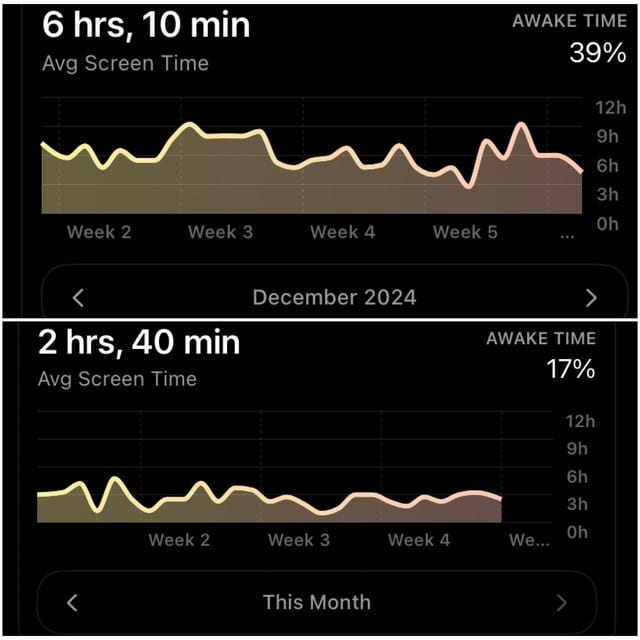
But in a typical week, my total device screentime across work, laptop use, and phone use has decreased to about four to five hours per day. That is a huge shift for someone who once spent nine to ten hours on their phone alone. As you begin your own changes, I am confident you will find a solution. Will it be hard? Yes. Will it take some time? For sure. But in the end, it will be worth it because offline always is.

u/jbriones95 — 7 days ago

Light Phone Office Visit and Report

Hello everyone. I was in NYC for the day for work meetings and ended up visiting the Light's office for a few hours with Will and Daisy from u/dumbwireless. I got to talk to Joe and here are my thoughts:

  • Light just got a new shipment of devices this week and all of those are released into the wild. I hope for those of you who have been waiting, you get it soon. It is very encouraging to see how this small team cares about their customer base and pays attention to the small details.
    • You can see this with the box of prototypes of LP3. They went through so many of them and worked through so many different ideas and iterations. They are talented, yes, but that they have a specific ethos, philosophy, and direction is the most important part.
  • They have the backplate colors almost ready I'd say. I got to switch mine to the orange and it looks fire. It is a backburner project, but maybe if you comment below, it'll get expedited. They have a leather option as well and I know so many people would love to customize theirs, so maybe chime in if this should be a priority or not haha.
  • Light has a lot of exciting things coming up. Some of them have been talked about publicly by Joe: fixing keyboard, music revamp, Light developer tools, etc. Their dev team is now more closely integrated which will help in how fast they fix things. Very happy to hear the progress on the software side of things.
  • Some updates are not public, but I am hyped for them. One thing I can say is that you should be very attentive to your email this week and if you haven't signed up for their newsletters you might want to.
  • Light is definitely feeling the effects of RAMmagedon. It is affecting all companies and I hope things stabilize. In the meantime, make sure to exercise some patience for the LP3 due to this circumstance.
  • If you have been thinking about a LP2, make sure to order them asap. They will have them very soon and will be shipping sooner than LP3. LP2 is currently not suffering from the RAM issues, but that may not be the case later on, so take the opportunity while it is there.
  • Signal and other tools are in active development. Coming soon. They are as excited as the community is about the developer tools! I think it'll help a lot.
  • The new Zines are cool. You can find them in the shop and share with friends. Cool stuff to have them in hand.
  • Did I forget to mention that you should sign up for their newsletter and keep an eye for an email this week? Maybe not, but it bears repeating.

If you have any questions, please let me know. I can answer some, but overall it was a great opportunity to hang with them and get to see some behind the scenes.

You can purchase a LP here: https://www.thelightphone.com/

You may also use the affiliate link if you appreciate content like this one: https://www.thelightphone.com/shop?ref=josebriones

I am aiming to be back in June and hang out again with them. But for now, back to Colorado. See you all around!

u/jbriones95 — 9 days ago

Light Phone Office Visit and Report

Hello everyone. I was in NYC for the day for work meetings and ended up visiting the Light's office for a few hours with Will and Daisy from u/dumbwireless. I got to talk to Joe and here are my thoughts:

  • Light just got a new shipment of devices this week and all of those are released into the wild. I hope for those of you who have been waiting, you get it soon. It is very encouraging to see how this small team cares about their customer base and pays attention to the small details.
    • You can see this with the box of prototypes of LP3. They went through so many of them and worked through so many different ideas and iterations. They are talented, yes, but that they have a specific ethos, philosophy, and direction is the most important part.
  • They have the backplate colors almost ready I'd say. I got to switch mine to the orange and it looks fire. It is a backburner project, but maybe if you comment below, it'll get expedited. They have a leather option as well and I know so many people would love to customize theirs, so maybe chime in if this should be a priority or not haha.
  • Light has a lot of exciting things coming up. Some of them have been talked about publicly by Joe: fixing keyboard, music revamp, Light developer tools, etc. Their dev team is now more closely integrated which will help in how fast they fix things. Very happy to hear the progress on the software side of things.
  • Some updates are not public, but I am hyped for them. One thing I can say is that you should be very attentive to your email this week and if you haven't signed up for their newsletters you might want to.
  • Light is definitely feeling the effects of RAMmagedon. It is affecting all companies and I hope things stabilize. In the meantime, make sure to exercise some patience for the LP3 due to this circumstance.
  • If you have been thinking about a LP2, make sure to order them asap. They will have them very soon and will be shipping sooner than LP3. LP2 is currently not suffering from the RAM issues, but that may not be the case later on, so take the opportunity while it is there.
  • Signal and other tools are in active development. Coming soon. They are as excited as the community is about the developer tools! I think it'll help a lot.
  • The new Zines are cool. You can find them in the shop and share with friends. Cool stuff to have them in hand.
  • Did I forget to mention that you should sign up for their newsletter and keep an eye for an email this week? Maybe not, but it bears repeating.

If you have any questions, please let me know. I can answer some, but overall it was a great opportunity to hang with them and get to see some behind the scenes.

You can purchase a LP here: https://www.thelightphone.com/

You may also use the affiliate link if you appreciate content like this one: https://www.thelightphone.com/shop?ref=josebriones

I am aiming to be back in June and hang out again with them. But for now, back to Colorado. See you all around!

Edit: Keep an eye for an email next week. I got my dates confused 😄

u/jbriones95 — 9 days ago
▲ 229 r/Amtrak

First Time in the Acela Next Gen!

Heading to PHL this time. I used the coupon upgrade and got a seat. Super excited to experience the next gen Acela during my east coast visit :)

u/jbriones95 — 10 days ago

Dumb.Co Office Visit and Mini Review

Hello everyone. Every so often I get the privilege of visiting a dumbphone company's office. Today, I visited the team at Dumb Co in their Washington DC spot. Here are my thoughts:

  • I am thoroughly impressed with their work and how they are supporting their customers. They have a phone number (404-716-3605) that you can call and get an actual human person to reply to your queries.
  • Their device is based on the TCL Flip 2 (https://youtu.be/MGafHZzw4sQ?si=J5RnbhMQCG7eDyUj) which is a battle tested device and their price point is accessible for most people.
  • They are thoroughly customizing their OS and making it seamless for the everyday person to use this device as a standalone phone or as a companion device. They have an app that explains how to link Google Messages or iMessage to the Dumbphone 2. Their app syncs contacts and helps those that are tech challenged to transition easily. Good stuff!
  • Their device comes customized with WhatsApp, Spotify, and Uber for those that need these apps. They have options at different price points depending on the features.
  • They can help you in person as well at some of their meet ups.
  • Their tech team is listening to feedback, so if you have suggestions, don't be shy and drop them an email.
  • They have programs outside of their product offering (Month Offline & Dumb House) that encourage people to adopt the dumbphone mindset and get local support for challenges.

Areas of Improvement:

  • The TCL Flip 2 is an aging device. It is battle tested and I think it will last for at least 3-5yrs. However, over time they need to move to better hardware.
  • Subscription pricing. This is a double-edge sword. I like that it is accessible to most people at $20 for the device and $25 per month for their plans, but if you plan to use this as your only device, then it might not be a good solution. It locks people to their carrier provider instead of being able to use something like US Mobile, Mint, etc. Their prices are decently competitive though.
  • It's a new company. I like their model (taking something that's already there and iterating), but how long is this going to work for. There are a lot of little things that goes into a company being successful, so we'll see how long it works out. (I think they will succeed, but as always be a skeptic).
  • Scale of customer service. Right now, it's manageable and the team is all hands-on deck. They each get to handle customers calling in. However, if they grow even larger, I hope their CS stays top notch and they keep the phone number with real humans answering questions.

It is always great to check out a company and see their operations. I have hopes for this device and I can see them scaling to a place that they will offer a lot of competition to other established players (Sunbeam, Light, Mudita, etc.). I hope their enthusiasm and their product improves over time. If you have any questions, don't hesitate to drop them in the comments. Full review coming in 2 weeks or so.

You can check out Dumb Co here: https://dumb.co/

If you'd like to use my affiliate link (which gets you a special deal for now), you can do so here

u/jbriones95 — 10 days ago

[Long Post] Is Living In the "Future" Worth It?

I recently watched a CNBC video featuring someone who lives in Shenzhen, China. It was quite eye-opening to reckon with how thoroughly everything has been digitized. The person showed how he opens his apartment with only a fingerprint and checks out from the grocery store using nothing but his palm.

It reminded me of the Jetsons, WALL-E, and other futuristic cartoons that promised a life of ease and comfort. A vision of a frictionless experience that, one way or another, leads to an “optimized existence.”

In the middle of those thoughts, I started to consider what living in such a “future” actually requires. What tradeoffs are demanded in order to avoid inconvenience, and whether those inconveniences are actually parts of life we should embrace rather than escape.

Today, we take a look at the “future” and analyze its worthiness.

Book: The Infinity Machine

Communication Platforms

Our exploration starts with the present. The majority of people now use an instant messenger application: WhatsApp, Signal, Telegram, WeChat, or the bane of the dumbphone community, RCS. Do not confuse these with the early platforms that enabled worldwide communication, like AOL, Yahoo Messenger, or MSN Messenger. Those programs were interested in relaying information that could wait. We logged on, caught up with the conversation, chatted with friends, and set up an away message for others to see like this one:

Those were the precursors to the current all-in-one services that governments and big tech companies now provide. They were innocuous by comparison. If anything, the early messengers were used to connect and set up plans, rather than to distract, monetize, or monitor.

Over the last few years, the new wave of communication apps has moved far beyond their original purpose and burrowed into the infrastructure of everyday life. Walk into the streets of Kolkata, India, or Leipzig, Germany, and people ask for your WhatsApp number to communicate, ask questions about a product, or get customer service. Without it, you are effectively out of contact with the majority of the population.

Translate that to the streets of Beijing, and it gets considerably worse. WeChat integrates so tightly into daily life that it is required for communication, shopping, utility payments, and access to government services. It is your apartment key, your wallet, your employer, and your social circle, all compressed into one application controlled by a single company. And that company is not indifferent to the state. Research published in Policy and Internet found that WeChat has evolved into a powerful and largely overlooked component of China's policing and public security infrastructure. It is a mandatory install for most people without any recourse, so everyone opts ins into this surveillance. In other words, it’s WeChat or exile.

And before anyone says "well, that's expected because of communist China," consider that Western democracies are not as far behind as we like to believe. The mechanisms are more subtle, cloaked in terms of service agreements, but the pattern is eerily similar. Platforms suppress voicesreshape information, and reward compliance with access. And soon, the concept of the everyday everything app will be a reality. Elon Musk has been openly building X into a full financial and communication platform, nearing public launch as of this writing. While the architecture looks different, the destination is not.

These are simple reminders that when we allow apps to extend beyond their initial capabilities, we allow them to extract more from us than the value they deliver. Convenience is in tow, but collection is the form of payment. And when they have more data about your preferences, they can continue their cycle of exploitation. This is why I tell people not to worry so much about RCS or WhatsApp or Signal when switching to a dumbphone. Yes, you lose constant access to your contacts.1 Yes, you may need to wait until you are at a laptop to respond. But it is worth it because they cannot mine your data around the clock.

Book: How To Rule The World

Smart Fridges or Dumb TVs

The smartification of our devices is getting out of control. We have smart this and smart that, with very little consideration of whether a given object should have advanced technology at all. Take my in-laws' new stove. It includes smart recognition so that, if someone inadvertently leaves the burner on, the stove turns off automatically. A reasonable safety feature in theory. In practice, it only works with stainless steel pots and pans. Use ceramic, Teflon, or any other common material and the stove either locks itself and refuses to deliver heat or fails to turn off entirely. The "smart" feature makes the appliance less reliable than a dumb one.

You know what would have worked just as well? An embedded timer.

As someone who has produced the unmistakable smell of a burnt pan due to carelessness, I understand the appeal of automated safety. But a simple, adjustable timer that cuts power after a set period is cheaper to build, cheaper to buy, requires no software calibration, and works with any pot you own. The problem was already solved. Instead of iterating upon the proven method, manufacturers chose complexity over reliability and charged a premium for it.

The same logic applies to the smart fridge. Refrigerators are supposed to cool food and keep it safe for eating later, not play videos, display recipes, or quietly catalogue the items placed inside. And the television has followed the same path. What was once a box that delivered entertainment is now a surveillance device sitting in your living room. In December 2024, Texas Attorney General Ken Paxton filed lawsuits against Samsung, Sony, LG, TCL, and Hisense for collecting viewing data through Automated Content Recognition, a system he described as "an uninvited, invisible digital invader." Moreover, a 2024 University College London study confirmed that ACR gathers viewing history, location data, and behavior patterns, which manufacturers then sell to third parties. The television you purchased is, in turn, costing you even more than you imagined by selling a detailed viewing record of your household.

This is what the rise of convenience ends up doing. It offers something genuine first, which is how it earns trust, and then renegotiates the terms to disadvantage us greatly. A general view of how they got us to believe this process is found in the rise of household tech in the previous century.

In the 1970s, the microwave entered the American household and saved real time. Then, the garage opener removed a small but genuine friction. And finally, the Motorola Razr (oh how can we forget!) eliminated long-distance calling bills. Each of those innovations solved a specific problem cleanly and honestly. The exchange was pretty fair. What we have now is something different: solutions to problems we did not have, sold at a price we have not fully read.

The Fear of “Falling Behind”

What makes all of this hard is that we have a psychological desire to belong. We fear being left behind. Not adapting feels like falling behind, and falling behind feels like a kind of social death. It signals to everyone around us that we are different, slow, or not part of the pack. Researchers studying technology adoption have found that individuals and organizations increasingly make adoption decisions not on the basis of genuine need, but out of fear that inaction will cost them relevance. Fear of Missing Out, long associated with social media, has become the primary engine of technological compliance.

This is precisely how Winston ends up where he does in 1984. His submission to Big Brother is not a single dramatic moment of defeat, but rather the product of accumulated small capitulations, each one rationalized as necessary. Each one narrowing the distance between who he was and what the Party required. In the beginning of the book, he has conviction and resolve. By the end, all of his willpower has been replaced by alignment.

This parallel is not hyperbolic for those of us in the 21st Century. Every time we adopt a platform because opting out feels socially costly, every time we accept a term of service agreement without reading it, every time we trade a piece of privacy for a marginally smoother experience, we are making a version of that same calculation. A version of that rationalization.

The future being sold to us is not inevitable. It is a business model, and without our buy‑in that model collapses. The frictionless apartment in Shenzhen is impressive, but it is still a product. Recognizing that we have the power to choose which products we allow into our lives gives us real agency. We can choose technology that respects us instead of technology that requires us to give a single company permanent access to our home, our movement, our groceries, and our identity. The question is not whether the technology works. Often, it does. The question is who it works for, and what it costs us in the parts of life that never appear in the demo reel.

Thus, I invite you today to think before you consume. To pause before accepting the terms and conditions. And to recognize that our collective refusal to comply2 can reshape the future we are being offered. We still have the power to choose the products we allow into our lives, and that choice determines the kind of world we build together.

1 Also, most of your contacts don’t need access to you 24/7. Boundaries are extremely necessary and no one should expect you to be accessible on whim, just because you have WhatsApp.

2 I am often inspired by the Dutch and how their refusal during the 1970’s oil crisis created a country where the car is not the only mode of transportation. They chose a different path and reshaped their future. During these times of elevated oil prices (again), maybe we should ask what other parts of life we need to opt out of if we want to live with more freedom.

u/jbriones95 — 12 days ago

This is a project that I am embarking on so that we have proper functional apps for the community. If any developers would like to assist, please let me know.

Go to this link, download the apk, install, test, and provide feedback. The goal is to make the gold standard for messaging apps, clocks, calendar, music, etc. A lot of apps are not DPAD friendly or require touch input. The goal of this project is to make the basic utilities for these apps all DPAD friendly.

Link: https://github.com/jbriones95/DPAD-Messaging

u/jbriones95 — 14 days ago

I was just alerted to this new company that is doing 1 phone number, 2 devices here in the US. Hope you check it out. They do eSIM as well. Calls ring on both phones at the same time. Good stuff for dumbphones!

u/jbriones95 — 20 days ago

From the Moving Offline Newsletter:

“Somebody has to take care of me.” Those are the words that stuck last Friday when I met Christopher on my way back from a short trip to Steamboat Springs. He was a chef in the Winter Park area who decided that it was time to put an end to his alcohol addiction. As we sat next to each other in the Bustang, he told me about his journey from Florida to Alaska and eventually to Colorado, where he had been working at one of the resorts. While he arrived sober at the job site 8 months before, a break-up and family tragedy dysregulated his resolve and put him back on the bottle. After what he described as more booze than his body should take, he was now heading back to Florida to enter rehab.

Christopher’s experience is familiar to anyone who has lived with addiction in their orbit. The cycle of resolve, recovery, and relapse is far more common than most people realize. Studies place the rate of recurrence between 60-80% depending on the substance. It shows how difficult it is for our biological system to expulse and detach from something we have learned to rely on.

That is why today we are going to look at Smartphone Dementia Clinics, also known as tech addiction rehabilitation centers, to understand how severe phone dependency has become, how difficult it is to correct, and what you can do to take care of yourself.

https://preview.redd.it/lj6phvcu3eyg1.jpg?width=6000&format=pjpg&auto=webp&s=fdb066cc80b5cd9e3f0f998fe1a0660f79834b14

Do We Really Need Smartphone Addiction Clinics?

Yes, but let me show you why. While relatively novel in the United States, tech addiction rehab centers have become standard in the largest economies of Asia and some countries within the European Union. South Korea is the most involved country with “regional education offices that provide services such as in-school counseling, screening surveys, preventive disciplines and, for severe cases, addiction camps.” They started this work back in 2007 and have the most robust system in the region.

The data supports the need for these centers. In South Korea, 40% of teenagers are overdependent on technology. Across the Pacific, in the United States, a study sample showed that 46% of smartphone users call themselves addicted. In Europe, parliaments have taken action and restricted social media usage from a legislative stance. A cursory look into the graphs below tells us that the problem is on the rise globally.

https://preview.redd.it/k77xgma04eyg1.png?width=462&format=png&auto=webp&s=58585478d51b1633f0906d8fe0398fc9db16469c

https://preview.redd.it/gfeh7haw3eyg1.png?width=1200&format=png&auto=webp&s=4d7a34575080fdabe541f141ba4ccdc1797b8394

From the After Babel Newsletter: “Adolescents who spent five or more hours per day on social media were about two times more likely to meet criteria for depression than those who used it for less than one hour per day. Source: Kelly et al. (2019)”

And as much as we’d like to deny it, this over-dependence on smartphones is a sociogenic problem. The loop of technology dependence is in essence peer pressure maximized by business, government, educational, and social institutions. If you don’t believe me, remind me again why did you download the Temu and TikTok apps last year? Maybe some of you did it because you are avant-garde and like to stay on top of trends. However, the majority of people learn about apps as a result of a recommendation from friends and family.

As social beings, we are shaped most by what the people around us are using, and services that offer convenience rise to the top not because competitors cannot beat them, but because our collective behavior rewards whatever spreads fastest. More alarmingly this sequence is not only affecting impressionable minds, working age adults and seniors are relying on their devices more.

There is, however, a silver lining. The inverse of over‑dependence is also true: as more people adopt low‑tech platforms like dumbphones or use NFC‑blocking tools on their smartphones, their friends and families begin to consider stepping back from distracting technologies as well. Over time, phone makers like Sunbeam, Light Phone, and Mudita have made these transitions easier. And while none of these devices are perfect, the dumbphone movement continues to grow in both popularity and reliability as more people look for practical ways to address the problem of screens.

Now that we have established that the issue is clear and that we need these rehabilitation centers in one way or another, the next question is why it is so hard to get rid of smartphone overdependence. Why is returning to a low dopamine digital diet harder today than it has ever been?

https://preview.redd.it/g7q7wwm95eyg1.png?width=929&format=png&auto=webp&s=82ed18d1102be973a3c86ff9c50ec83c838f143d

The Mechanics of Digital Dependence

The sociogenic portion of the problem is clear. We have created a society based on technology and dependent on it. As our friends adopt these services, so do we. That part is straightforward. There is deeper layer, however, that is rarely discussed. Smartphones are designed for exploitation, make no mistake, but they are not the only culprits of our dependency.

A significant part of the problem comes from the way we form attachments. Attachment theory tells us that humans bond with whatever provides comfort, predictability, and a sense of safety. In the past, we sought these feelings in many different places such as churches, stadiums, friendships, nature, hobbies, and community life. Over time, app developers and tech companies created a single device that delivers all of these comforts at once. The result is an imbalanced attachment that mirrors the patterns found in other forms of addiction.

Bowling Alone

Christopher, from the Bustang, understood that he needed a rehab center because he had to go deeper than the surface level of his dependency on alcohol. He did not become addicted simply because alcohol exists. He became addicted because it became the default coping mechanism of choice. The substance becomes the shortcut to emotional regulation or complete escapism. The same dynamic is at play with smartphones. The phone becomes the fastest way to turn away from the crazy news, the work problems, and the main issue that is plaguing your mind.

This is where the inner work becomes essential. A large part of the issue is that many of us are not living with intention. We are living the default that is presented to us. I know this firsthand because the way I got involved in this whole smartphone dependency was by moving to a rural area, working long hours with no friends or family around me, and finding little to no entertainment sources to help me cope. That is when my usage of social media climbed to twelve or thirteen hours per day.

Without intentional structures, without healthier ways to regulate our emotions, without a clear sense of what we want our attention to serve, we fall back into the easiest option. And the easiest option is always the one that is already in our pocket.

The Upswing

That is why in this mechanical understanding I am nudging you to address the deeper issue in your life that makes your smartphone the default option. Maybe you need to have that tough conversation and resolve the dispute with a family member. Maybe you need to go to therapy and deal with the depressive state that has settled into your life. Maybe, just maybe, you need to get out of the house and stop being a hermit and engage in some late night adventure as risky as it may seem.

Yes, adopting slower tech is a mechanism that will help you in this journey. The lifestyle change aspect of digital minimalism shapes our mindsets to accept inconvenience and create new reward pathways. But whether you and I like it or not, the issue runs deeper, and that is why it is so hard to let technology go.

https://preview.redd.it/otz5u9yf5eyg1.png?width=1164&format=png&auto=webp&s=f883863639bbb511b67c433a57413eace9373559

So What Do We Do?

At a personal level, we have to deal with the deeper issue. I hope I did not get too preachy, but it is true. However, there are environmental factors we need to confront as well. In the family unit, we have to return to screen free technologies and clearly delineated spaces for the internet (wired desktop computer anyone?). In schools and learning centers, we need to stop allowing tech to be the default and retrain the skills that AI cannot replicate. Critical thinking, handwriting, spatial reasoning, emotional regulation, and face to face communication. We need to teach our kids to use tech and not be used by it.

In the public sphere, our influence is smaller, but it is not zero. Earlier this year, a man with fifty year season tickets was denied entry to Dodger Stadium because he did not have the app. After the community went up in arms over this ableist and ageist decision (don’t let me get started on digital tickets), the Dodgers reversed course and printed his full season of tickets. It should prove to you that when we unite in our efforts for offline, we can make a small difference. Go ahead and complain to your QR Menu only restaurant, local theater venue, and more. Do it in the nicest way though.

Finally, we have to de‑stigmatize rehab treatment for any condition. Our society casts doubt on people who have a substance abuse problem. We go further and punish the people who need the most help. We rarely question the corporations making a killing on opioids or the companies selling the medications to treat the very diseases they helped create. At some point, we have to recognize that waiting for institutions to fix this is not a strategy. If anything, it’s a delusion.

However, somebody has to do something. Somebody has to take care of you. And that somebody is you.

reddit.com
u/jbriones95 — 21 days ago
▲ 41 r/KeyboardPhones+1 crossposts

As you know, one of the biggest pain points of dumbphones is having apps that don't work on non-touch devices. I am working of fixing that by building a suite of DPAD apps that are FOSS built by the community and for the community. DM me if interested in collaborating

u/jbriones95 — 24 days ago