
u/Zoteku
r/GrandLineScaling r/zelda r/BlueLock r/Piratefolk r/OnePiecePowerScaling r/Naruto r/Berserk r/ChainsawMan r/Breath_of_the_Wild r/nikerunclub r/Chainsawfolk r/Marathon_Training r/OnePiecePowerScaling0
brief analysis on why i personally believe roger. and the concept of PK, cannot be an entire tier above the modern-yonko's in power, and why the story never seemingly painted it that way and has ambigiousness
the concept of PK and how its been elaborated in the story is not very complex or difficult to understand, but also is not very-elaborated on. so, i did my best and wanted to verbalize my ideal on why i dont think roger holds any inherent superiority over anyone in the verse by virtue of holding this title.
this, ofc, isnt to downplay roger, its just bringing clarity on why we have the subconscious urge to place him a whole tier above the rest. its also not explicitly saying modern yonkos > roger strength-wise.
even with the concept of "old wb was the wsm so roger HAS to be above them!!" doesn't hold narratively, imo, considering that that the yonkos post-timeskip have MARGINALLY better feats, i believe oda gave them all the typical-timeskip buff. when we compare feat-for-feat, there's no universe where kaido, shanks or currnet luffy loses to old whitebeard at marineford. this isn't to say his title "never counted", but rather, the rest simply got more powerful.
u/Zoteku — 3 days ago
▲ 20 r/nikerunclub
FINALLY on my 6th 100mpm. got about 400 miles left before i hit my goal for this year, and by the end
u/Zoteku — 4 days ago
▲ 14 r/BlueLock
japan’s 'dependence' on isagi throughout the france game was NOT the real problem, or even a "problem" in general.
when people discuss the france game, one point thats sometimes brought up is that japan's biggest problem was their 'dependence' on isagi, and that they repeated nigerias mistake to some degree, but i dont think that ‘dependence on Isagi’ really captures what the france game, or kaneshiro, is trying to get across. yes, even with that chigiri panel of "we have isagi".
it is important to note that while japan, by virtue of having isagi as #1, still relied on him to a degree, it is often largely overstated. lets make it as clear as possible here:
- dependence on isagi exists because he was the #1
- however, it is not the causal reason for why japan lost ("the team depended on isagi, THEREFORE, they lost". this is a wrong-takeaway.)
for the longest time, isagi had been the driving-nucleus of bastard munchen, and this brought out ultimately the best within BL, but at some point, because of how central he was, and never thinking to check-himself and reinforce what it truly means to #1, he over-whelmed himself.
blue locks top rankers all "have a little yoichi in their head", and even yukimiya himself, when quoting isagi, feels more mentally smoother. therefore, if isagi were to actually struggle and hesitate, blue lock as a whole may, and hugo did an AMAZING job at pointing this out. however, I believe that there's flaws with his ideology as we'll get into later.

ideally, the peak synergy of blue lock genuinely came in the bastard game, where isagi's influence allowed him to get everyone working, and drove them to achieve their best performances. though, the best part about this was that isagi was only the trigger; he was NOT the driving force. the distinction is that their driving-force was ultimately of their own egos and motivations, with the plays simply centering around isagi and drawing out their own protagonism

so, how did isagi manage to sell his team to such a strong degree, while the issue remains not with japans 'dependence' on him? it is important to note that while japan, by virtue of having isagi as #1, still relied on him to a degree, it is often largely overstated as the "reason" for them losing.
as isagi stated, his general-playstyle revolves around devouring other players, and constantly-updating himself, and I believe and feel as though being #1 doesn't NECESSARILY contradict this, but that is the exact thing isagi did not understand. when we see who he compares himself to, his core-ideal is genius-coded players. though kaiser is, by technicality, not a genius, his current-playstyle is largely indifferent to one, and isagi even began off the assumption that he was.

everyone he admires seems to embody that ideal, so its natural isagi falls into that traditional-vibe ("a captain should only ever be self-sufficient!! nothing else!!"), and even hugo does this. because of this, i dont believe hugo is necessarily "more logical" than isagi. i believe he interprets the role of a striker through a far more rigid lens whereas isagi is more open-minded in that regard.
because isagi was SO busy trying to appeal to hugo's worldview, he let-go of so many chances, notably being his charles-latch shot that was saved by renoir. his shot didn't suck, he blatantly chose to shoot with cramped space, and without a proper-foundation (taking a random and hard free kick when your environment doesn't favor it, essentially.)
i mean, take a look. isagi decided to shoot for the sake of rejecting hugo's belief, and renoir saved it, reason being thats "the ONLY place it could've gone". it wasnt too slow, it was the only theoretical direction. hugo then jumped isagi verbally, saying it proves he's a second-rate striker- (which makes no sense. 2-gun-volley doesn't boost his shot power, it inserts what he can already output.) -which make isagi double down.

so, to conclude this sector, on paper, because leaders, at times, typically represent the peak of physicality, and combined with hugo's influence, it's only natural that isagi feels this way. he just had yet to find "the exception" with his own eyes, or BECOME that. and isagi's peak power as a leader was never centered on LOOKING like a "#1", it was always creating situations where everyone elses egos could flourish, as hiori said word-for-word
it's also super important to keep in mind that yes, while france might've technically been "better" in overall power, there was no skill gap that would've rendered any tactic of japans un-winnable. hugo was a pain, but he wasn't infallible. he could be beat via planning, as seen when hugo was outplayed on numerous occasions.
hugo latches onto reo, reo fakes him, isagi posession, with hugo out the way.

tide shift via karasu
after isagi made that reckless shot, karasu in the same chapter immediately retaliated and kicked off his takeover of the team, which, long-story-short, led to hiori's goal. although this sparked personal-problems with isagi and karasu, the only result is that they GAINED a goal. the arguments caused external tension (off the field), but never within the game ITSELF.
hiori goal, cuz karaus locked in

not long after that, barou acknowledged isagi was playing like dirt and decided to move onward and 'devour' shidou, which led to another goal. pheraps barou is outlier, but if japan truly was dependent on him, japan wouldn't have been able to capitalize despite this non-opportunity.

overall, though, do you get the point? japan was never 'dependent' on isagi in the way that, say, nigeria was. nigeria struggled relentlessly and could not switch tactics no matter what during the first half. they had to be riled on by onazi and taught by isagi as they got slaughtered. however, japan, after isagi's reckless-shoot, managed to change tactics and up the tide.
if you crush onazi, you've successfully damn-near beat nigeria. if you crush isagi, japan keeps flourishing. their adaptability is off the charts, and we must commend karasu.

nigeria and kuso were absolutely dumbfounded at the concept that they didn't simply pass to the best, played for themselves, etc. japan was never like them in the first place, and certainly didn't go back on their own advice in a singular game.
japans comeback
towards the end, surprisingly, japan actually..did amazing, to say the least. they were off to a rocky start, and france managed to get in their goal advantage as well, but these were simply influenced and amassed by their own skill and willpower, and not because japan was actively-lacking in any sense psychologically.

let's take barou for example. over here, loki and shidou were clashing and didn't make any notable "mistake". barou simply outplayed them both, and scored. they weren't suffering in any sense. this is how france managed to get their goals (with loki's first goal, and hugo's, where he declared his world-cup dream). so we cant sit and blame isagi, or japan, for what was a reasonable-loss.
in the end, japan lost 2-4, but this needs so much nuance, because the game was bound to end at a clean 3-3. isagi had successfully managed to pinpoint hugo in a perfect spot, outplay him, and was about to score on him before rin, frankly, messed over everything. not every game can be a victory or a loss, and this was a prime example of how japan always had the possibility to succeed anyway.


so overall, i wanted to come after the notion that japans 'dependence' on isagi was what directly led to a loss, because mid-way, they managed to simply take over after isagi's screw-up and still, with an overwhelmingly more powerful opponets, managed to secure a tie. they're a highly adaptable and well-coordinated team, and that didn't stop just because isagi was the center, nor was their loss because of that, necessarily. if dependence were the core issue, losing coordination after isagi destabilization would have collapsed the system, but we saw no indication of that occuring.
i genuinely feel as though isagi may have gotten, or contributed to a possible-goal, had he not shot when charles was latched onto him, in an attempt to "disprove" the voices in his head. it was an objectively stupid-shot where he let the demons get the better of him
england will likely have isagi hopefully realize this, re-define how he views the concept of "#1", and cement the real level of credibility and trustworthiness of egos philosophy, at least, i hope.

analysis over. perhaps one could say japan HAS a dependency issue with isagi (in-general) that was only covered and fixed by the one and only karasu within the game, but this was not the direct-and causal reason they lost.
u/Zoteku — 5 days ago
(analysis) taking a look at the "toe to toe" line from kaido, and dissecting what it truly means, and why it doesn't necessarily mean what some people think it does
this took a while to really think of, but I think the meaning is pretty clear when you recognize that nowhere did kaido explicitly confirm he was discussing luffy, and the quote carries far more logical-consistency when you go under that presumption, and by proxy, don't place base-luffy above big mom.
to me, kaido "accepting" someone does not automatically coherently flow into the "truly go toe to toe". this may be a jump, but I believe he has directly accepted many characters, like yamato here, the supernova trio and perhaps even specifically zoro in one scene. regardless, though, it stands true that accept = go "toe to toe" is a jump in logic, since drunk mode is just ONE form of how kaido "accepts" someone.
give me ur thoughts or debunks if u disagree
u/Zoteku — 8 days ago
▲ 163 r/nikerunclub
around 18 days ago, i finished my first half-marathon and jumped into my FIRST EVER marathon today last night
i'm so happy. the whole time, i was so scared of hitting the rumored "the wall" and "bonking" but thankfully, it didn't stop me since i just decided to walk for a bit at the end so i could suffer less pin in my legs the next day
i was really scared of exterting too much energy and just chose to run at a really slow-ish pace (11mi-12mi pace) the whole time, since i heard that the goal for a first-timer is to simply finish.
i'll be back at it eventually after a couple of recovery runs, and will indubitably finish much faster now that i know what it'll be like (kindah).
u/Zoteku — 9 days ago
running my first marathon-distance today, but simply around my neighborhood. what's my diet meant to be like?
obviously, emphasis on sugar and carbs and all. i was overthinking hard on what to take, but eventually concluded that toasted white bread + honey as a pre meal (and a TBSP of honey around 10 miles or so, and then repeating that same tablespoon 30 mins-an hour would be sustainable)
i could easily be wrong, and really need help. will honey be a valid replacer for the glucose i need?
u/Zoteku — 10 days ago
▲ 22 r/BlueLock
considering that all these teams are playing with their NG11, and that japan is missing theirs, yet, almost tied, could sae have led japan to beat france?
pretty much the title. sae's words are still a bit nuanced, and it's unknown how many of those chances were blown because isagi actively helped and assisted nigeria, versus how many easy shot-chances were missed, but regardless, 8 goals were a possibility. taking sae into account, do u think winning against france could've been done? (or, "would've"?)
u/Zoteku — 13 days ago
going over, and givin' my thoughts on why kaido's gauntlet was amazing, and cannot realistically be downplayed in any logical sense
EDIT: page 10 goes after 6, sorry.
in the analysis, i said that kaido was never blitzed by snakeman, so here is my evidence: https://www.reddit.com/r/OnePiecePowerScaling/s/JiwDvhmP5x
i also said i made a full analysis on kaido's drunk stages that i could not go into well, so here is it: https://www.reddit.com/r/OnePiecePowerScaling/s/zQPL9J4GFx
all in all, you cannot downplay kaido's gauntlet by simply saying "all the opponets were fodder!" because fodder in-and-of itself is a spectrum and entirely relative
kaido does not need to engage w/ multiple-opponets on his level in order for it to be generally impressive. nobody in the series has even done that. he already took just about everyone down and showed the ability to do so, and continuously did that over and over
invoking shanks is comparing apple and oranges, and saying big mom is there is true, but does not take away from any of the damage kaido endured, and is overstating her presence that was only there for the starting-echelon of rooftop.
u/Zoteku — 18 days ago
a re-assessment of kaido's ambition: why the narrative never establishes it as inferior to the old generation, and why it's nothing short of exceptional
this sums up my general thoughts on one of the most common takes and consensus on kaido, and the idea that his will is "washed" or "lacks drive", but i don't really think that's true at all. we-ourselves also often have this intristic drive to place everyone as inferior to roger, when i do not think oda has explicitly stated this to be the case, and has made "willpower" as a concept, and how it stacks unto others, so ambigious.
do not get me wrong, again, i have roger as superior to kaido, however, as the days flow by, i really don't believe roger could achieve the same circumnavigation feat in the new-generation. therefore, we can't downscale kaido (or ANY yonko for that matter) because they-themselves never became PK
we also can't say that kaido was "misguided" or "had a bad mentality" when we're shown mentality isn't the core factor behind strength. wb didnt want PK or laughtale and shanks didnt even want to be pirate king yet and delayed on it for a decade or 2. so kaido enslaving and building military might never limited him. there is no "correct" philosophy.
perhaps one could argue that he may have been rewarded by the story's themes if wano was built around positivity, but again, that's just headcanon and a narrative interpretation. he was never doing anything "wrong" (that capped his ceiling) as far as philosophy and themes go. we're also never told this, its just what i infer.
big mom having a decent empire then doesn't insinuate it was at the same level of overall-power either. we know shes constantly having kids and on the lookout for more races, and that she strengthened her fortress because of roger.
u/Zoteku — 20 days ago
▲ 196 r/Chainsawfolk
can't stress enough how hating on P2 genuinely makes you forget how much of a masterpiece 1 was in every visual and narrative way
like, man. down to the bone fujimoto was giving this shit his daily attention and passion back to fucking back. every single katana-man panel was just plain aura, and so inked making it look so hard. there were no panels realistically where you could barely tell what was happening. facial expressions alone could tell stories and we actually had proper utilization of line weight.
u/Zoteku — 21 days ago
what else does kaido need to show in order to constitute as PK tier, despite having zero "weaknesses"? hell, what would ANYONE have to do to "reach" PK tier besides have equal statements w/ roger?
genuine food for thought
u/Zoteku — 22 days ago
what purpose does do u think kaido's hybrid+ form serves, anyway? (dragon head + hybrid body connected to his tail)
will use this as a post idea maybe
u/Zoteku — 23 days ago
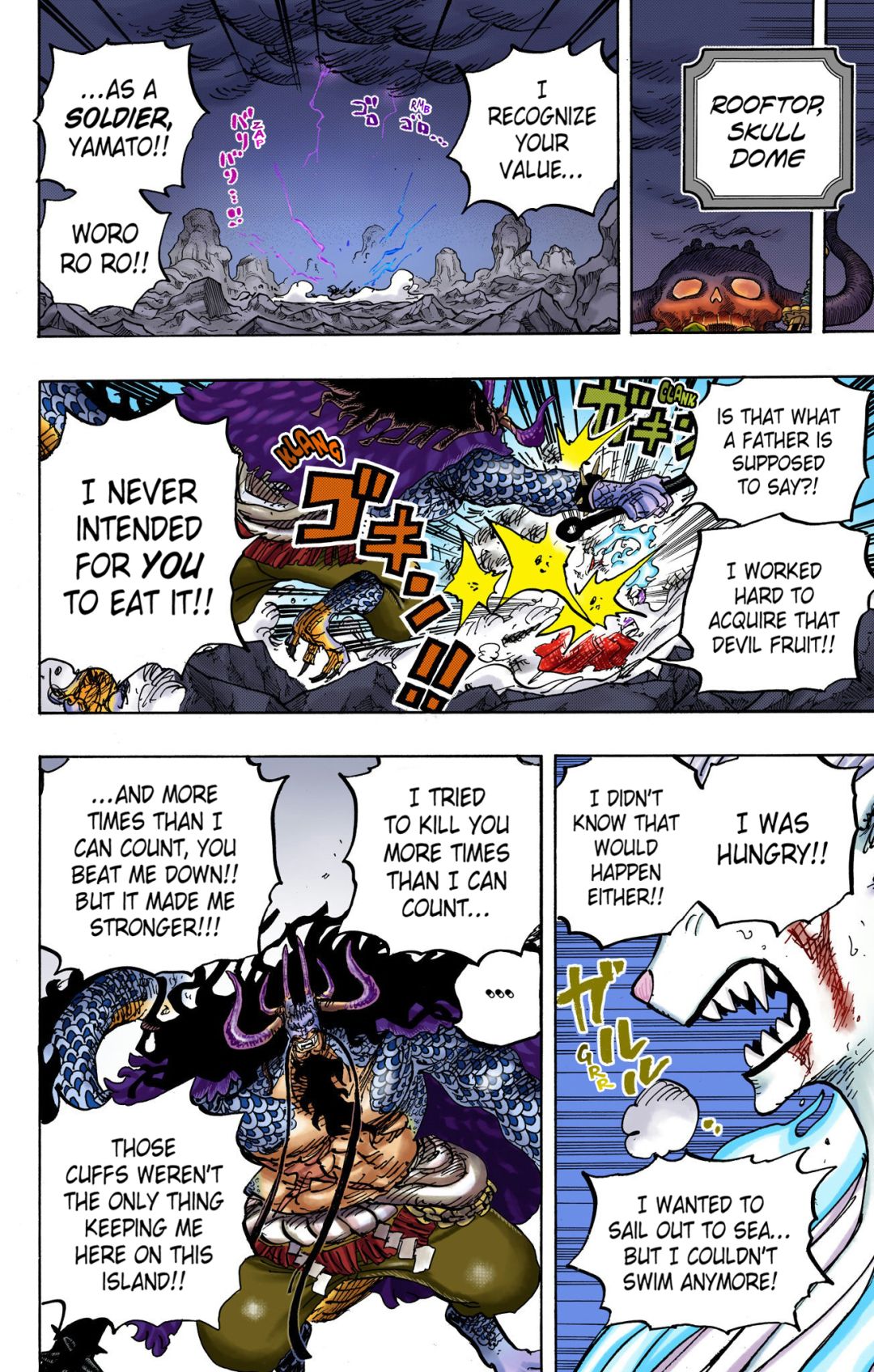
hot take, but killing yamato was NEVER the goal for kaido (CHARACTER + POWER analysis)

when we read this famous op clash-off, and see the panel where yamato accuses kaido of death, some instinctively have the urge to assume that kaido is trying to kill yamato and put her down for good (naturally), and some also assume he's going out just by virtue of being apparently bloodlusted.
i'm here and will give my interpretation as to why i don't think either of these are true, and also why there is far more nuance than what the panel alone suggests.

INTRODUCTION: DISMANTLING PRE CON-NOTIONS
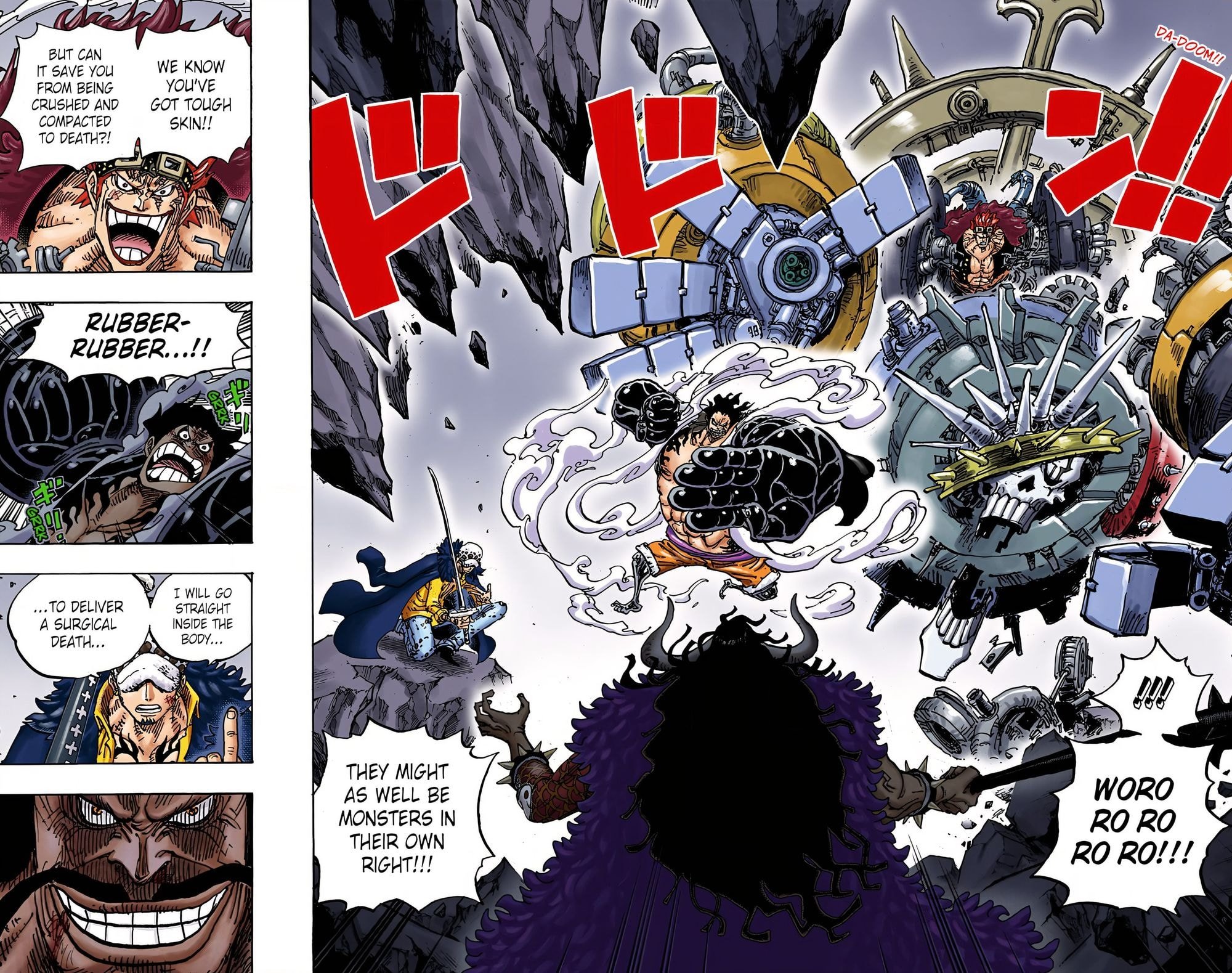
obviusly, to get the "he was going all out!" out of the way, we need to remember that wanting to kill (assuming kaido DID) is not even remotely the equivalent of going all out. we can see this in multiple moments with kaido's ommission, being him refusing to brings out objectively superior abilities that he has never used against yamato. things like busting out his drunk form, use FDD, and obviously show far-superior speed feats that even overwhelm that of gear 5. no need to really stay on this topic much because it's nigh-irrelevant and not held by most people, and people who insist otherwise are obviously disingenous as hell.
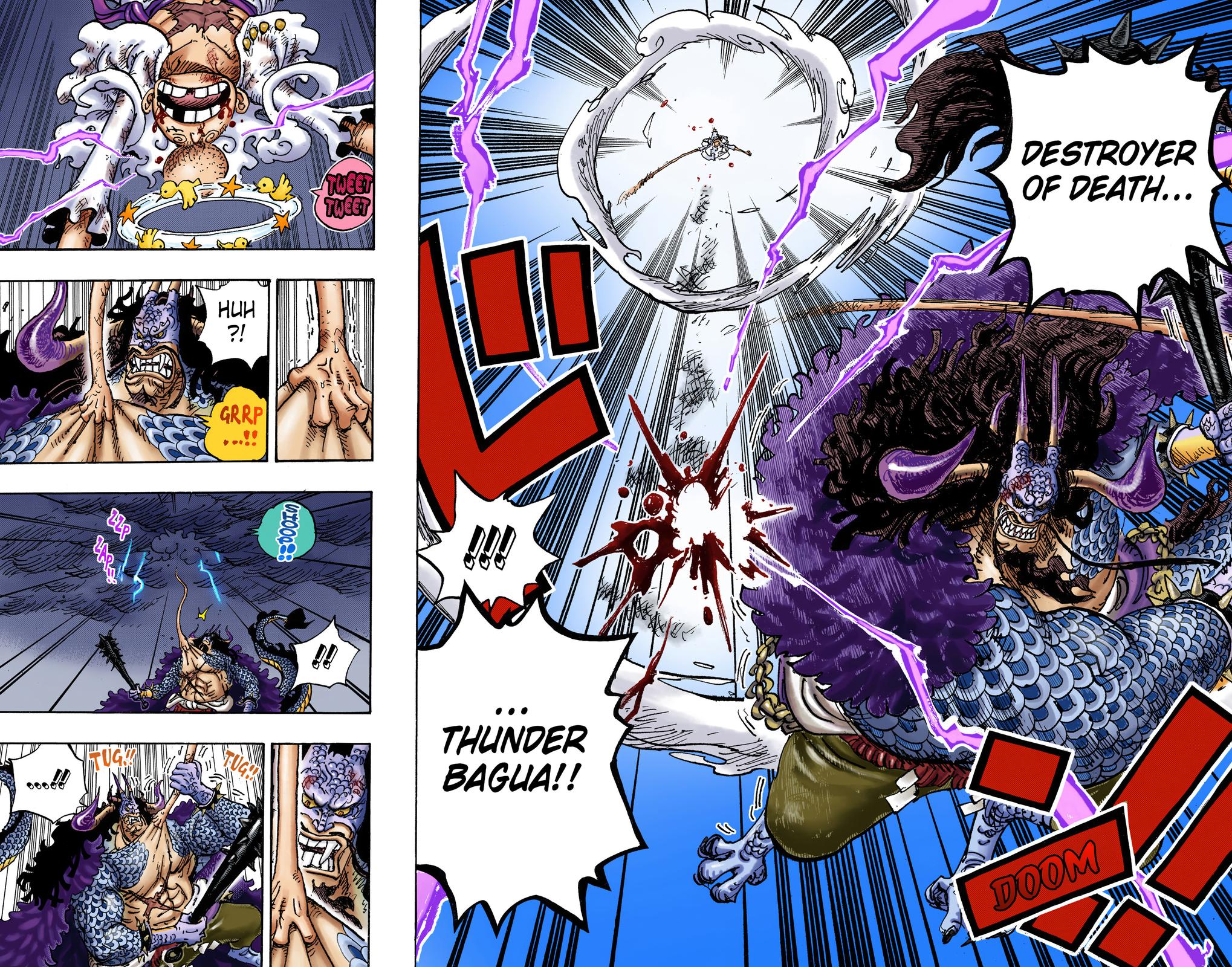
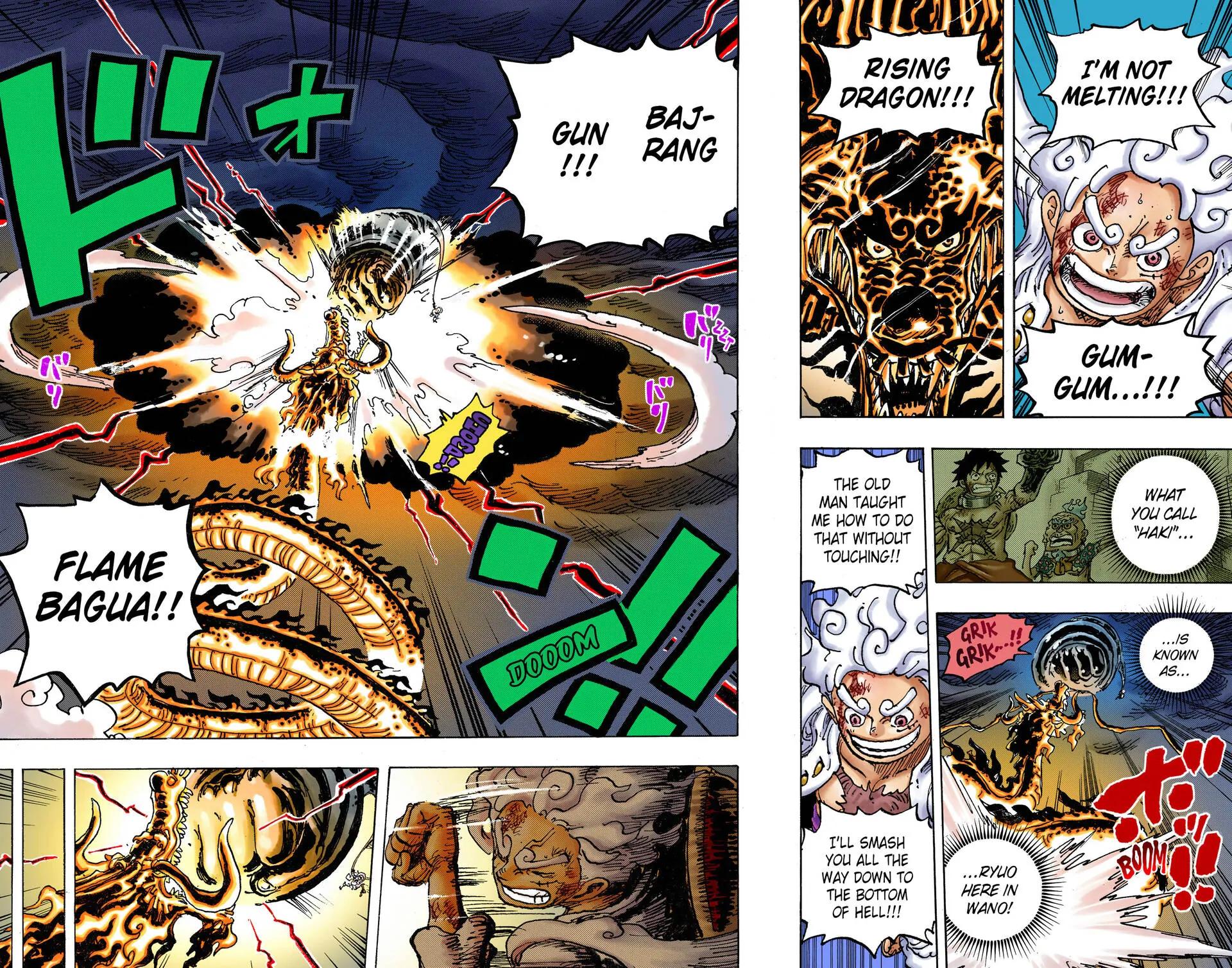
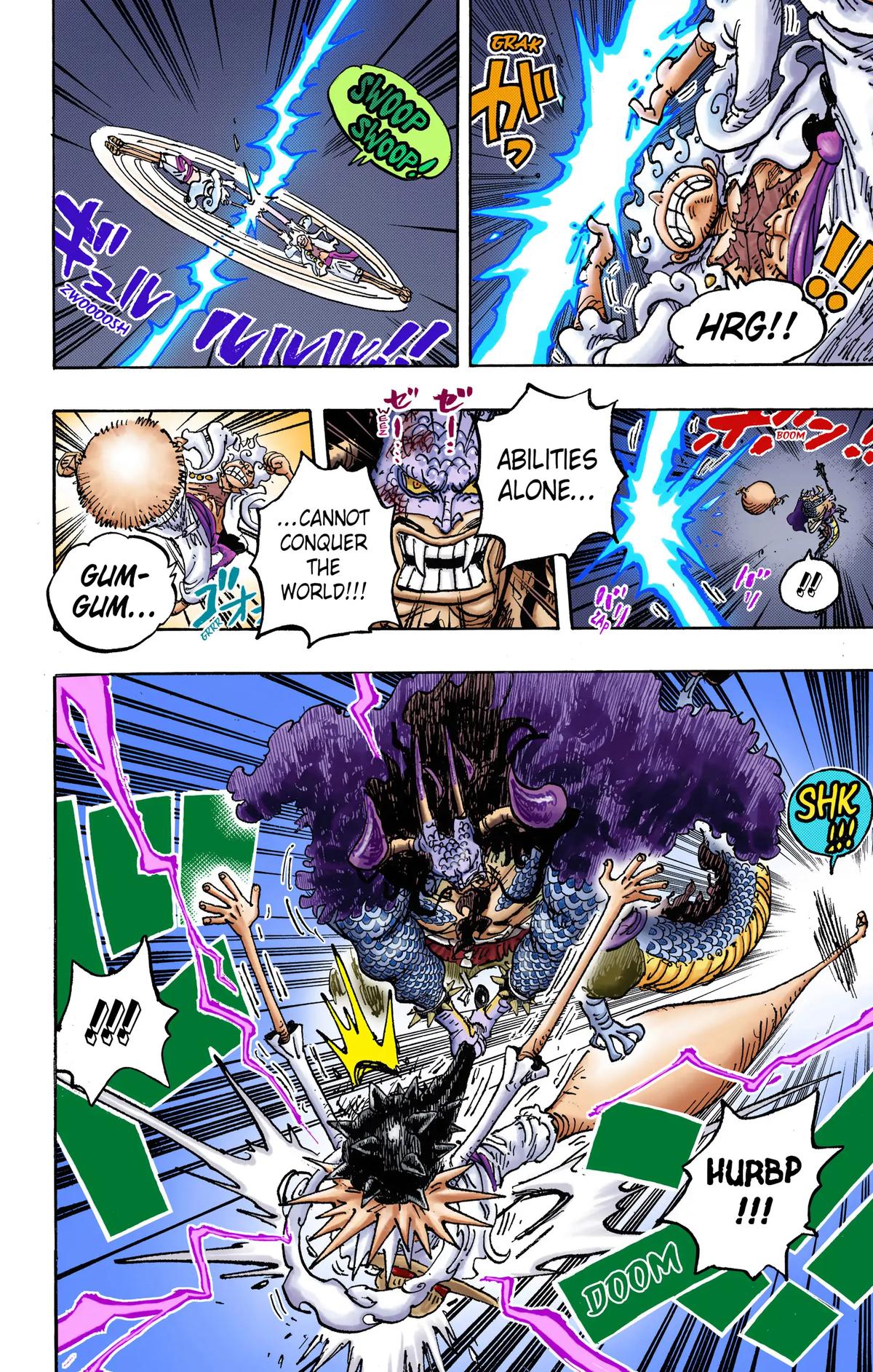
you would need to unironically prove this to be the case, and we know that he was definitively using powerful'er techniques such as DDTB, which is a direct upgrade to a regular TB. whatever, lets move on tho
ALWAYS TRYNA KILL
as for this next part, many insist kaido was genuinely trying to kill yamato, but if we actually read through-out the fight, we'll see in the next part why kaido says this: it's because of yamato bearing the name, "ODEN".

kaido isn't trying to "kill yamato" because he HATES her, he was never plotting and planning her assasination/execution on the day she was born, and if he truly wanted her gone-for-good, he could've simply put-end to her. however, at some point, he locked her in a cave, and let it be known to the audience (with the help of a beast-pirate fellow) that if she never changed her mind, she'd be dead.

on top of that, we're told on numerous occasion by yamato's personal account that she herself has attempted to kill, and fight kaido multiple times, and always physically paid-the-price. if kaido truly wanted yamato dead, there has never been anything, ethically, morally (one could even say at some point that it'd constitute as self-defense LMAO) and physically stopping him. so why not do it?

ez - he never desired for her to actively die. he left a "vent" for both yamato and samurai's to scream into if they wanted to be let out, only if they fulfilled their exam (here)

if i wanted to sum it up best, the best wording would be: kaido had already made up his mind that if yamato kept identifying as oden and kept fighting against him, he would eventually kill her.
was he willing to let it happen? sure, and yes. that is where we tie into the concept of "conditional intent", which is what yamato and VIZ was targeting, but was broadly misinterpeted. here are some good examples:
- "the boss intends to fire him if he keeps violating our policies"
- "I intend to defend myself if attacked."
- "If Yamato continues choosing Oden's path and thus keeps opposing me, I will eventually kill her."

obviously, yamato's quote makes it seem super-specific to her, (-"ME!!"), but we can interpret yamato's quote as kaido ALWAYS having intent to kill her, or anyone the minute they actively take the step to betray, and go against him, no matter what. we know this for a fact, because again, the condition for her death wasn't her existence, it was because she started bearing the name & title of "ODEN", thus, betraying kaido.

we see via canon examples that this, again, where dudes in wano get murked and executed via archer squad BECAUSE they go against kaido, even if for the sake of helping yamato. kaido always intended to kill anyone who went against him.
so, let's wrap this section up. the biggest issue here is that people often unconsciously read:
>"You've always intended to kill me."
as the following:
>"Since I was born, you've intended to kill me."
but the word "always" does not specify that in specific. it could mean:
- always since yamato declared herself oden.
- always since yamato began opposing kaido.
- always as long as yamato remained on that path.
- always in the sense that kaido never intended to make an exception for her.
however, we are only confirmed it's been since bullet #1 (which encapsulates 2 by proxy).
to me, it was always meant to reference the hand-cuff scene, where after luffy rips-off the cuffs that kaido had forced onto yamato, it explodes, showing that kaido ALWAYS intended to kill yamato, if she had ever left the island or tried harder to rebel.

let's go further into why kaido wasn't trying to "kill" yamato on rooftop, now that we've established "always" doesn't refer to that instance or in general.
KAIDO'S INTENT FOR YAMATO
if you read wano, you will eventually realize that kaido's dream and goal for yamato was for her to become the shogun of wano. he's made so many statements on how he wishes for this to be the case, and even wants it to occur in their fight. he wasn't trying to kill her in that instance and put her in an earli grave, he was just trying to convince her while also engaging in combat. here is my evidence:

there is so many pages and panels where kaido wants and wishes for yamato to be the shogun of wano. how can this work, even on the rooftop, if kaido also simultaneously decided he is going to kill yamato a few seconds before..? it just doesn't logically add up.
in that image, i also highlight the soldiers part, and how kaido recognizes value in her as one. if you read wano, you'll likely notice that kaido has a habit of keeping people alive, given he sees their value of a soldier. his goal and desire for these people isn't to have them dead, it's to add them to his army, for cryin out loud. we see it with law, kid, killer, luffy, the samurai, and more.


kaido doesn't desire to kill people whom he views as great soldiers, and never went on rooftop with the intent to put yamato in an early grave right then and there. yamato's feats on him were great, and fine enough. we have law confirm this too
WRITING ASPECT
to me, i didnt like yamato that much legit a couple hours ago but writing this really made me rethink and have to change how i see her as a character. piratefolk rotted my brain for a while, but I think parts of yamato were actually done quite well despite her character as a whole being not-the-best.
yamato, ultimately, as an individual, represents what kaido could've been, should he have sought guidance and not confined and limited himself to his worldview-only.
kaido and yamato is not a relationship about a drunkard dad trying to kill his daughter, but rather it's about a story of a father trying to force his sorrowful philosophy that maintains the world unto his own daughter, and failing to do so.

from his youger days, kaido gew up as an individual who was treated more a some weapon/military asset rather than an actual person. exploited & trafficked as a child, betrayed by his kingdom, and shaped by constant violence, he eventually came to the belief that strength is the only reliable metric that can help dudes survive in a world that threatened them 24/7. politically? you had to pay and get means for tribute, or it was over. your life meant nothing in the face of a celestial dragon, and the whole world was under rule by the authoritarian regime known as the world gov.
yellow = dehumanization, green = what he was forced to do, blue = traffick

politically, you aren't shit, but through strength could you supercede and brim past all of these things. kaido as a child was under mercy of the celestial dogs but as a grown man, they want no business even on wano in and of-itself.

at that stage, power isn't just muscle but is also where authority, justice and morals are built. whoever gains power decides what the norm is, and what justice is, as said by doflamingo in marineford. slavery shouldn't be the norm, but because the WG is so strong, they enfrce it.

as an individual who's grown up with this lifestyle 24/7, he tries to mold yamato into the ideal inheritor, and someone who can carry his empire and philosophy presumably to the new generation. by identifying with oden, tho, she embraces individualism and authenticism, and the belief that a person worth isn't dependent on strength alone.
this hard-crosses against what kaido believes, and creates a conflict that is FAR deeper than some family dispute. more deeper than that one plot of land you've never fucking seen.

i think it's quite obvious that kaido stops viewing yamato as a genuine daughter/child in 1024 as time goes on, and views her as rather, ideological opponet. his statement that its not a "family squabble" reflects and shows that in his eyes, anyone who chooses oden, chooses "war". he called yamato his child on so many accounts, but so many accounts show that he only rlly saw her as a tool.


to me, this is kaidos greatest virtue but also kaidos greatest flaw: he is a very byproduct of the system he suffered under. he reduces people to tools (like soldiers for HIS gain), and does the same with yamato. he doesn't seek her death, weirdly enough, but seeks her submission, which is arguably more dehumanizing. he isn't ridding her, but he is making her abandon her decades-long (idk how old yams is and dgaf) lifetime, experience, and ideology to serve for HIS gain. luffy would choose death over abandoning his dream and ideology, and wouldn't be a mental slave to kaido which is why its so damning when he does this. ideally, a mans dream should never die.

and yet, despite kaidos overwhelming strength in comparison (in admission of his own, and yamatos own words), he never once properly succeeded in tearing down yamato, demonstrating that some things just rlly cant be vanquished by strength alone.
because of all of that, yamato becomes living proof that kaidos transformation mentally, despite what he went thru, wasn't inevitable. thats what makes her such a threat that needed to be put tf down. its headcanon, but sometimes, i feel she makes kaido know deep down that "might makes right" wasn't the only ideal he could've taken. like many people, shes evidence that generational trauma can produces results other than cynicism & eyes for absolute-domination. thats why i think their relationship is so damn tragic, but also very amazing.
all in all kaido is a W character and wasn't trying to kill her in the sense people think he was.
u/Zoteku — 25 days ago
ANALYSIS on kaido vs shanks at marineford, and why kaido should NEVER be slandered for this
i've been recently seeing many people slander on kaido because of this and its time to showcase why this slander is unwarranted and why nobody is to be slandered off of this.
the last slide doesn't say that roger, rocks, wb, oden and shanks CANNOT beat kaido, or CANNOT go extreme diff, or CANNOT fight kaido, it is simply saying that the panel ONLY ever implies the outcome of "can fight kaido to a degree". that is the only thing the panel says. when going off of the panel ALONE, the other are inserted headcanons.
u/Zoteku — 28 days ago
▲ 99 r/nikerunclub
FINALLY CLOCKED MY FIRST HALF-MARATHONNNN
FULL MARATHON HERE WE COMEEE😤😤😤
u/Zoteku — 29 days ago
▲ 252 r/BlueLock
maturing is realizing lorenzo might've genuinely been a plot device
i'm aware we won't see every new generation world 11 at every single instance but jesus fucking christ. lorenzo has been absent from this manga for centuries. does this dude really have no other narrative besides having stopped kaiser?
this isn't like the other NEL masters. they served a great purpose in guiding and helping grow the players, but i cannot think of a single thing that lorenzo's done that stuck around
u/Zoteku — 29 days ago