When it comes to Nathaniel Hawthorne, I'm sticking solely with The Scarlet Letter
▲ 7 r/ClassicsBookClub+1 crossposts

When it comes to Nathaniel Hawthorne, I'm sticking solely with The Scarlet Letter

All my lit teachers in college would be rolling over in their graves, but I’m just not that into the iconic mid-1800s writer Nathaniel Hawthorne.

As I wrote back in 2011:

>One of the things about Nathaniel Hawthorne, like with other authors such as William Faulkner and James Joyce and David Foster Wallace, is that it never feels like there's enough time in life. Ernest Hemingway is short and to the point. So is F. Scott Fitzgerald. But Hawthorne fills his writing with diversions into the deep thoughts of his characters and interruptions in story flow for his own speculations on motives and the narrator's interactions with the reader, like an 1800s version of TV's The Office.

That said, I had to admit that “The Scarlet Letter is one heck of a story.” Hawthorne certainly deserves his spot near the top of the pantheon of great writers, if only because he, as a resident of Salem, Massachusetts, helped document the story of the Salem Witch Trials, albeit a century-and-a-half after their conclusion. He had some right to continuing their legacy, as his great-great-grandfather John Hathorne was a judge in the trials and was the only one who never apologized for his role in the executions of young women suspected of being evil.

Even as books continue their arguably declining impact on our society, Hawthorne remains an influential figure. For one, Herman Melville’s Moby-Dick was dedicated to him because Melville so cherished the author’s work.

He has a sway in pop culture too. Taylor Swift sings “we show off our different scarlet letters. Trust me, mine is better” in her song “New Romantics.” The Scarlet Letter also heavily influenced the screenplay of Emma Stone’s 2010 movie Easy A.

So, with all that hype, I decided to finally explore beyond Hawthorne’s greatest work. Unfortunately, I failed to truly enjoy any of the four Puritan-era short stories widely considered among his best.

“Young Goodman Brown” (1835)

The title character is a New England Puritan who finds his neighbors performing a satanic ritual in the woods. This leads him down a path of believing that humans are inherently evil and depraved. The description of life around the Salem witch-trial period is pretty great, but Hawthorne’s flowery language pulls down any hope for a truly page-turning plot.

★★★☆☆ 3/5

“The Minister’s Black Veil” (1836)

Reverend Hooper begins wearing a black veil for all his sermons and other occasions, which freaks out his congregation and leads them to think it represents their own evil nature. Other than again getting a nice representation of the fascinating period of Puritan New England, I mostly could care less about this story.

★★½☆☆ 2.5/5

“The Birthmark” (1843)

This one is relevant to today’s somewhat frivolous obsession with looks, image, and human perfection. A scientist becomes obsessed with removing a hand-shaped birthmark from his wife’s face, but it turns out that it is not a great idea to operate.

★★½☆☆ 2.5/5

“Rappaccini’s Daughter” (1844)

This one is my favorite of the four stories I read and probably Hawthorne’s most praised work in the form. It takes place in Padua, Italy, in the garden of a medical researcher who grows poisonous plants. His daughter tends the plants and becomes immune to their effects, but she also becomes poisonous to other people.

Some have analyzed the father as God and the daughter and her suitor as Adam and Eve. Like the other three stories, I thought this one was written in such floral and poetic language that it could indeed be beautiful to some. To me, though, it was still a bore.

★★★☆☆ 3/5

I’ve read The Scarlet Letter twice now, and if I ever feel the need to read Hawthorne again, that is what I’ll turn to. Tried and true, and, after my latest round of further reading, quite possibly the lone monument to his legacy.

When it comes to Nathaniel Hawthorne, I'm sticking solely with The Scarlet Letter

u/IcyVehicle8158 — 9 days ago
▲ 8 r/MTV

RIP Dave Kendall, who created MTV's 120 Minutes

As a former student at the London School of Economics, it is no surprise that Dave Kendall was perhaps the most intellectual voice of all the MTV video jockeys. More importantly, he helped define one of the most important eras in music television by giving alternative rock a national stage at exactly the right time.

Kendall passed away this month at age 63, but he leaves behind a storied legacy as the creator of MTV’s 120 Minutes, which ran from 1986 to 2003 and was a must-watch show for me for most of those years. He was also the host from 1986 to 1992. I watched more religiously during the later Matt Pinfield-hosted years simply because I liked college rock a lot more in the few years after ’92 than I did in the years before it, when I had left behind my earlier indie roots for my hair-metal-pop phase.

I digress. Kendall played an instrumental part in the moment when rock history shifted, when he announced the September 29, 1991 world premiere of Nirvana’s “Smells Like Teen Spirit” video.

Kendall and later Pinfield, and MTV by extension, played a major role in expanding the popularity of the kind of music I loved, like the Replacements, R.E.M., Dinosaur Jr., Teenage Fanclub, the Lemonheads, Pavement, Guided by Voices, Sebadoh, Pixies, Sonic Youth, Jane’s Addiction, and countless others. This was a time, at least prior to Nirvana, when you could almost count the number of college-rock radio stations on two hands, and the fact that these guys were giving it a spotlight on national TV, albeit cable, is pretty mind-blowing in retrospect.

Some of the bands the Welsh-accented Kendall, whose taste was relatively different from mine, loved to feature included the Stone Roses, Happy Mondays, Ride, and Lush. But we definitely shared a passion for the Jesus and Mary Chain, and it was very cool how he helped share this second wave of the British Invasion with American ears. Kendall also helped provide a path to success for countless record labels, including 4AD, Creation Records, Rough Trade Records, and Sub Pop, that might not have lasted without MTV exposure.

After leaving the channel, the VJ continued as a fixture in the alterna world with frequent appearances on radio, podcasts, and live events, and as a freelance music writer, a SiriusXM host, and a correspondent for the Bangkok Post, reporting on environmental causes. He recently lived in Thailand and Indonesia.

https://popculturelunchbox.substack.com/p/rip-dave-kendall-who-created-mtvs

u/IcyVehicle8158 — 26 days ago
▲ 3 r/obx

Boating in North Carolina's OBX adds a new perspective to my frequent destination

I’ve been traveling to the Outer Banks in North Carolina just about every year since I was five years old. In the early days, my parents and two older brothers would hop into the station wagon and bounce around in the far back, hanging out the windows. Highways and backroads were the thing, as completely connected interstates between Southern Illinois and the Atlantic Ocean weren’t around yet.

Some of my favorite memories included camping in the Smoky Mountains on the North Carolina-Tennessee border and gazing out the window, imagining what life must be like for the people in the houses throughout the South and in the mountains. One time, my oldest brother was driving and jumped a set of railroad tracks at such a speed and angle that the car flew through the air like a scene from Smokey and the Bandit. We landed with a flat tire. Another time he stepped in dog poop, got in the car, and caused a full evacuation of my family just moments later.

Nowadays, we do not get those kinds of memory moments anymore. My brothers and I and all the different pockets of my dad’s family come to the beach from our various corners: Oregon, Louisiana, Maryland and Washington, D.C., Florida, and Seattle. But for one week, which just finished up, we all get to see each other again, and different memories are made: body surfing the waves, frat-boy-like jumping off the second-story deck into the pool (thanks to my nutty son), looking for shells and walking on the beach, golf and tennis, puzzles on the tables, miniature golf, great food and drinks, and nonstop laughing. My family loves to laugh.

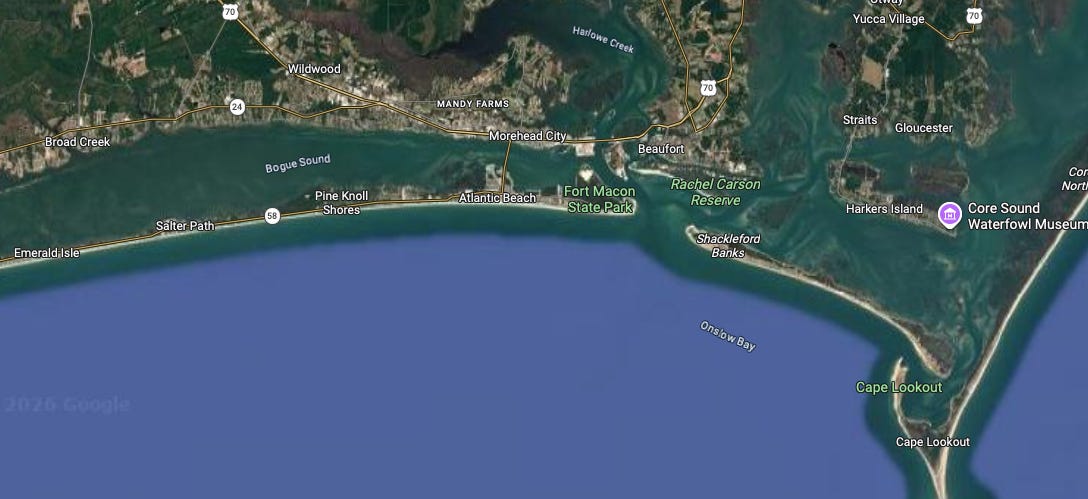
This year we added a new adventure. I’ve taken small boat rides in the Outer Banks before, but I had never done one on a tourist boat. The one we took held about 40 people, and the time frame of 9 a.m. to 11 a.m. worked well because, first, much longer and it would have simply gotten too hot, and second, I do not like to be away from the beach and all that fun back at our rental house. It was billed as a dolphin and wild horse sightseeing tour. The company, Lookout Cruises, based in Beaufort, North Carolina, runs several other types of rides, including a six-hour afternoon and sunset one for more of the drinking crowd, wedding rides, and probably just about any ride you would want to reserve. I am pretty sure they would accommodate you.

We oddly never saw any dolphins, but we did see the horses and lots of birds. The perspective of that area of the southern tip of the Outer Banks was well worth the ride. The captain pointed out the direction to the Intracoastal Waterway, which offers a 200-plus-mile shot northeast to Virginia Beach without ever having to enter the open sea. Then we sailed to parts of Bogue Sound that I have mostly only seen from the confines of Tony’s Sanitary Market restaurant in Morehead City and other land-based vantage points. I have still never been to the legendary Shackleford Banks (legendary in my family at least; I think we just like the sound of the two words together), but it was gorgeous to get so close to the long strip and those storied feral horses who reside there.

We sailed around Fort Macon State Park, which I have visited several times and is both the second-most-visited state park in North Carolina and, according to Wikipedia, where Confederate soldiers lived for a year in preparation for battle while equipping it with 54 heavy cannons. The Rachel Carson Reserve is named for a famous environmentalist author and is an official NOAA National Estuarine Research Reserve site. We could see the breathtaking Cape Lookout Lighthouse in the distance, with its unique checkered design: the center of the black diamonds points in a north-south direction, while the center of the white diamonds points east-west. We passed the cool little 1,000-plus-population community on Harkers Island and then went past the jaw-dropping mansions that have consumed the Beaufort shoreline in recent years.

I clearly love the Outer Banks, and if you have not been, I highly recommend it as one of the greatest treasures among the many across the United States. There are so many magnificent places across the country to get to on our travel lists, but of all the locales I’ve been on the Atlantic coast, there is no comparison, whether it is other beautiful shorelines in Florida, Georgia, New Jersey, or Maine.

https://popculturelunchbox.substack.com/p/boating-in-north-carolinas-outer-5ec

u/IcyVehicle8158 — 29 days ago

James Taylor brings his essential songs to a summer night at SPAC + my 17 favorite JT tunes

James Taylor is one of those artists who is quietly woven into the background of American life, and seeing him live at the age of 78 underlined that fact for me. Even if some of his albums are uneven, the best songs and the way he delivers them in concert have a warmth and staying power.

I remember Taylor being one of the first pop voices in my house as a kid. My parents had a copy of Walking Man, which, it turns out, isn’t a very good album, but there must have been others, because his classic hits are also firmly lodged in those early memories.

By now, he was among the handful of favorite artists I hadn’t seen in concert. That changed when I went with a large group of relatives to catch him on a hot summer night at the Saratoga Springs Performing Arts Center (SPAC). Taylor has survived a lot, including a heroin addiction, but he’s still got it on the guitar and has a crack band of session musicians behind him.

After a handful of songs I was only vaguely familiar with, once “Mexico” and “Shower the People” played, it was pretty much a greatest-hits show from there on out, with a sprinkling of insightful and fitting political commentary. One example is a story about how Richard Nixon didn’t like to appear in public and, when he did, his walk was kind of a primordial one.

Taylor soared with four songs that will likely survive very far into the future: “Country Road,” Carole King cover “You’ve Got a Friend,” “Carolina in My Mind,” and “Fire and Rain.” And “Sweet Baby James” was a fitting closer for the evening.

It was my fourth night in a row at concerts, after attending the three-day Solid Sound festival in Massachusetts, which might be a personal record. The mellow vibe of Taylor and SPAC’s lawn was a great way to come down from all the music.

Here are my 17 favorite JT tracks, in order, with “Carolina” being tops, and what I would consider the essential collection:

  1. Carolina in My Mind
  2. You’ve Got a Friend
  3. Fire and Rain
  4. Up on a Roof
  5. Country Road
  6. Your Smiling Face
  7. Sweet Baby James
  8. Shower the People
  9. Mexico
  10. Walking Man
  11. Don’t Let Me Be Lonely Tonight
  12. How Sweet It Is (To Be Loved by You)
  13. Handyman
  14. Everyday
  15. Her Town Too (with J.D. Souther)
  16. Something in the Way She Moves
  17. Copperline

https://popculturelunchbox.substack.com/p/james-taylor-brings-his-essential

u/IcyVehicle8158 — 1 month ago

If you're looking for great new stuff to listen to this month, Kasey Musgraves is among the tops on my list

When someone like Kasey Musgraves continues to make albums of such stunning beauty and emotionalism, it’s very difficult to pigeonhole the artist into a musical genre as fluffy as Top 40 pop-country. That’s the obvious home for Musgraves, but 2018’s Golden Hour, 2021’s star-crossed, and 2025’s Deeper Well were popular and artistic achievements that might only be topped by Taylor Swift, in terms of having strings of consistently excellent releases. And now we’ve got a fourth in a row …

Middle of Nowhere, Kacey Musgraves, ★★★★½ 4.5/5

Musgraves has officially placed herself as my favorite artist in a genre that might be called new-country-pop. Her insightful metaphors represent some of today’s best storytelling in any genre, and, on this album, she appears to be a free-agent in the game of love, and her journey is fascinating.

Parallel Stride, Doug Gillard, ★★★★½ 4.5/5

The guitar master of Guided by Voices doesn’t disappoint with yet another great solo album, with a pop sound and crunching licks that sound just like the title suggests. The guy’s got a serious strut.

Something Worth Waiting For, Friko, ★★★½☆ 3.5/5

This album is testament again to the powerful young Chicago indie-rock scene happening right now. While some of the songs grind on me, the highlights like “Hot Air Balloon” and “Seven Degrees” display some of the stylings that made Arcade Fire great when that band was firing on all cylinders. I would think great things could be ahead for Friko.

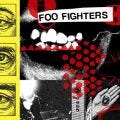
Your Favorite Toy, Foo Fighters, ★★★½☆ 3.5/5

The Foos’ first three albums remain true 1990s classics, but I don’t think the band has ever matched those works at any point this century. That said, more than half of this album is well worth adding to your library. It starts and ends strong, with a noticable dip in quality throughout the middle.

I Used to Go to This Bar, Joyce Manor, ★★★½☆ 3.5/5

A short but loud and clear release from these California emo rockers who have been around for a decade and a half. I’ve never known much about them until now, but this is fun stuff.

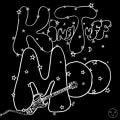
Moo, King Tuff, ★★★½☆ 3.5/5

This Vermont band always satisfies with its form of laid-back classic rock, and this album is another good one, with “Backroads,” “Invisible Ink,” and the Tom Petty-like “Unglued” supplying the high points.

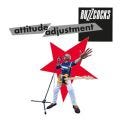
Attitude Adjustment, Buzzcocks, ★★★½☆ 3.5/5

I can’t believe this is only the pop-punk legends’ eleventh album. I also can’t believe how immaculate the first five songs are. They have a distinctive big-party, late 1990s-era Guided by Voices feel. The rest is pretty ho-hum, but I haven’t heard a better stretch of five in 2026 yet.

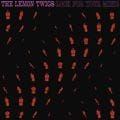
Look for Your Mind!, The Lemon Twigs, ★★★½☆ 3.5/5

Some of my least favorite elements of this, the Long Island brothers’ sixth proper album, are surprisingly the ones that still sound fab but are so committedly derivative of early works by the Beatles and Beach Boys, two of my most favorite bands ever. The songs I keep returning to have more of the Twigs’ personal touch, including “2 or 3,” “Nothin’ But You,” and “Fire and Gold.”

Doctor Faith, Christopher Cross, ★★★½☆ 3.5/5

Cross was hailed as a major pop star with the 1979 and 1983 releases of his first two albums. Those alone were enough to earn him a lifetime of goodwill in my eyes. This latest release supposedly doesn’t have any music from later than 2010, but it’s still welcome. Opener “Hey Kid” is among my very favorite of any of his songs. The quality thins with the last several songs but this is still a treat for Cross and yacht-rock fans everywhere.

Maitreya Corso, Maya Hawke, ★★★½☆ 3.5/5

I think this fourth release from the New York-based Stranger Things actress is a big step up in songwriting quality. From beautiful ballads to more rocking tunes, there are plenty to like here, and some of my favorites are “Love of My Life,” “Last Thoughts on Morning Star,” and “Great Minds.”

Slippers 08, Slippers, ★★★★½ 4.5/5

This mysterious little band has welcome echoes of the poppier sides of the 1990s Elephant 6 musical collective as well the Lemonheads’ Aussie side projects with Tom Morgan. The whole thing is a joy to listen to and will brighten up any indie-pop lover’s day, while “Wants for Everyone,” “Wasted Tonight,” and “Til You Know” are each in the running for my favorite songs of the year.

Brink, Girl Scout, ★★★½☆ 3.5/5

I didn’t think I liked this album until I got to the seventh track, “Operator,” which is in the running for my song of the year. I went back again and listened, and now I’m a fan of the whole collection, from a band of Swedes in a Snail Mail vein.

https://popculturelunchbox.substack.com/p/monthly-music-reviews-i-didnt-expect

u/IcyVehicle8158 — 2 months ago
▲ 63 r/u_IcyVehicle8158+1 crossposts

Jeff Tweedy for president? Solid Sound day 3 makes a strong case

We leisurely packed up our camping sites and headed to the third and final day of Wilco’s Solid Sound, with a shorter Sunday in store than Friday’s driving and half-day fest and Saturday’s epic full day of music and arts.

Again grabbing some seats on Joe’s Lawn, this time with two days under our belts for where to have optimal sights and sounds, we then headed into the museum to see some really cool modern art. That led us to stumble upon a soundcheck by Jeff Tweedy’s son Sammy. We came back to see his main show as well, which featured him in the center of a long space singing and dancing to swirly electro backbeats. Dad Jeff was also milling about.

Next we took in some of the art, including Laurie Anderson’s fascinating works, while Hannah Cohen’s performance echoed just outside.

One of the day’s most anticipated performances for me was the Autumn Defense. Earlier this year, I wrote that the band’s new album, Here and Nowhere, displayed “part of the reason why Wilco is so good. Even its bass player John Stirratt and keyboard/guitarist Pat Sansone can release a once-in-a-lifetime masterpiece like almost nobody else can.” They did not disappoint and I was excited to be down in front at the somewhat more intimate Courtyard C. They carry a lot of Americana references in their sound, such as the Eagles, the Jayhawks, America, and even quite a few yacht-rock touches.

A brief rainstorm hit for Nels Cline’s set in the spacious but open-air Courtyard D, so many attendees creatively found cover while doing their best to still listen. I went into an upstairs area with the bourbon and soda I ordered from a semi-hidden bar. I was happy to get that because I frankly wasn’t a huge fan of the beers and canned cocktails available throughout the venue.

The weekend rounded out with a bang as Tweedy and Friends launched into their set on Joe’s Field just as the skies cleared into bright sunshine. “One Tiny Flower” was the first song, just as it is on his 2025 30-song masterpiece Twilight Override. The two-hour, 24-song set was different but every bit as great as the Wilco one the night before. His kids and their friends who make up the band are so likable and talented. Highlights include “Feel Free,” “Lou Reed Was My Babysitter,” and covers “Hot Stuff” by Donna Summer, “Take Me Home, Country Roads” by John Denver, and closer “You Ain’t Goin’ Nowhere” by Bob Dylan. Special guests included all of Wilco and many of the bands who had performed throughout Solid Sound.

Solid Sound was three days of good-vibing music and art and community strengthening led by a person, Jeff Tweedy, who clearly has proven that he is worthy of being one of our country’s great leaders. The mountain mecca festival was every bit worth the effort of visiting all the way from Maryland and getting to see Wilco in a truly unique environment.

https://popculturelunchbox.substack.com/p/jeff-tweedy-for-president-solid-sound

u/IcyVehicle8158 — 2 months ago
▲ 134 r/wilco

Wilco and The Breeders headline day 2 at Solid Sound

After the first of three days at Wilco’s Solid Sound, we found our way in the dark to our yurts at Clarksburg State Park and got a good night’s sleep. All our gang needed was some coffee and oatmeal to fuel up for another day of music and art at Mass MoCa in nearby North Adams, Massachusetts.

We succeeded at saving sufficient lawn seats then grabbed coffees and bought t-shirts before watching a little of the mellow Souled American performance. Courtyard C was our next stop, for Living Hour, which we had caught for a moment inside the museum the day before. The Winnipeg band carried a big sound that reverberated with shoegaze melody, including the set’s highlight of Jeff Tweedy coming out to sing a Silver Jews’ song (Redditers: help me out, which song was it?). They had apparently met and hit it off previously with Tweedy’s kids. I’m sold and will definitely check out their four albums.

The Mini-Mekons were next, in Courtyard D, entertaining the expanding afternoon crowd with their unique style of UK alt-country punk. Sally Timms is a true music legend, as she displayed on the excellent “Millionaire” and lots of other fun political songs, co-led by the equally cute Jon Langford. I definitely want to go deeper into exploring the Mekons’ works than I ever have.

Staying so long at their set, however, meant we were locked out of the full-capacity comedy show at an inside theater featuring legends of The Daily Show Jordan Klepper and John Hodgman.

We also planned to check out upstarts Prewn but instead opted to wander, which was fortunate because we saw Ryan Davis signing autographs and Natalie Merchant leading a pop-up singalong off the beaten path. We arrived for the latter at the end of a sound check of sorts and waited for the main performance while the audience greatly expanded behind us. Her gig was highly entertaining despite the heat and a show-pausing medical emergency in a nearby bathroom.

There are lots of nooks and crannies to find at Solid Sound, so I enjoyed a New York pizza slice, grabbed some drinks, and sat to chill in the shade by a tiny miniature golf course and some giant penis artworks. Then we got free Ben and Jerry’s ice cream and yo-yos.

Davis and his Roadhouse Band started a powerful Saturday night trifecta that was soon to include The Breeders and Wilco. His last two albums have been high on my year-end lists so I was excited to hear his live version. It was not a letdown in Courtyard D as his crew was bound to excite anyone in the crowd looking for something between the rambling and enjoyable storytelling of Silver Jews, the alt-hipster-country of Orville Peck, and The Grateful Dead’s standard of basically all 10-minute songs. Sometimes it’s difficult to tell if the quasi-theatrical band is attempting some sort of spoof of rockstardom, but it takes little away from the fact that these are kick-ass songs.

Moving to our seats at Joe’s Field, the evening seemed to prove that this may have been the most crowded Solid Sound yet. People were certainly everywhere but high up on the hill it didn’t seem enough people were truly into Kim Deal’s band as much as they should have been. Admittedly, the sound was not as great up there as it was in many other spaces. But I was excited to see her Breeders, as it was somehow the first time I’ve ever seen them. I’ve seen Deal twice in the Pixies and once solo. “Driving on 9,” “Divine Hammer,” and “Cannonball” were obvious highlights.

Wilco opened with the Taxi theme song in honor of the recent passing of director James Burroughs. That was cool, as were two new songs called “Flawed Men” and “Losing Traction,” “It’s Just That Simple” off A.M. with bassist John Stirratt singing, and another festival appearance from Merchant on “You and I,” with her spot somewhat exasperatingly interrupted yet again, this time by a passing train. Typical Wilco highlight “Impossible Germany” had perhaps Nels Cline’s most different solo guitar work during the song that I’ve ever seen. It was of course still mega virtuoso and incredibly rocking.

https://popculturelunchbox.substack.com/p/wilco-and-the-breeders-headline-day

u/IcyVehicle8158 — 2 months ago
▲ 124 r/wilco

Day 1 at Wilco’s Solid Sound is Billy Bragg heaven

Day 1 of our three-day experience at the Wilco-curated Solid Sound Festival began when we arrived Friday at the parking lot in beautiful North Adams, Massachusetts at the base of the Berkshire Mountains.
For first-time Solid Sounders like me (the festival has been happening since 2010), the venue Mass MoCa starts off as pretty discombobulating, as it is after all the largest modern art museum in the U.S. But we made our way through the arty mazes to catch the last song of the pretty and shoegazey Living Hour. I liked them and will have to check out their catalog.

Luckily we had arrived on the early-ish side because finding a spot in Joe’s Field to set down our blanket and chairs, where the biggest acts play, was a little tough. We considered a tiny spot on the grass with a wicked angle but quickly decided instead on some bleacher seats.

Having accomplished that, we headed off to Billy Bragg, who played an excellent show in the courtyard of a warehouse section. A rain burst highlighted the show along with plenty of inspiring political commentary and great songs like “Greetings to the New Brunette,” “Sexuality,” “There is Power in a Union,” and “Waiting for the Great Leap Forwards.”

Next up was one of my favorite new bands the Sharp Pins, who I was seeing for the second time. The young Chicagoans opened for Stephen Malkmus’s band Hard Quartet at Washington D.C.’s 9:30 Club and they play a rousing blend of British Invasion that mixes early Beatles with Guided by Voices. A female guitarist has been added to what was a trio previously. Sharp Pins, arguably the most rock-starry performers of Day 1, didn’t disappoint.

The British Invasion of sorts continued at Joe’s Field with England’s post-punk legends Gang of Four. I’ve never gone much deeper than with the angular song “Damaged Goods” and the performance didn’t really win me over but they were definitely spirited.

I have to admit that the Billy Bragg collaborations with Wilco aren’t my favorite parts of the Wilco discography. But it was still pretty special to see a whole batch of tunes that I’ve never seen Wilco play in concert over the many times I’ve seen the band previously.

My two favorites of the so-called Mermaid Avenue songs are “California Stars” and “Airline to Heaven.” Plus Natalie Merchant of 10,000 Maniacs, who I hadn’t seen perform since the mid-80s when she opened for R.E.M., took the stage in wild-dance mode and sang along on several tracks, including “Way Over Yonder in the Minor Key” and “Birds and Ships.” To end the evening, Jeff Tweedy invited all the bands backstage and special guest Sarah Lee Guthrie to the stage for an uplifting sendoff with “This Land is Your Land.”

https://popculturelunchbox.substack.com/p/day-1-at-wilcos-solid-sound-is-billy

u/IcyVehicle8158 — 2 months ago

Ringo Starr's brilliance and lovability explained

Like almost everybody in the world, Ringo Starr is my least favorite of the Beatles. But if I put together a list of my favorite rock stars, I can’t imagine he would be anywhere close to outside my top 20.

Read the Beatles is possibly my favorite compilation of writing about my favorite band. And the section on Ringo has all kinds of great little tidbits about how, while he might not have been the most accomplished of the four musicians, he was arguably the most lovable.

In a Redbook article called “Ringo Starr: Domesticated Beatle,” by Robert Deardorff, excerpted from September 1965, we discover:

  • Ringo was so beloved in the Beatles’ first movie, A Hard Day’s Night, that the next one, called Help!, was built around Ringo “and his talent for being both sad and funny.” He says that is not an accurate description of him because he is usually feeling really good inside, but his face is just one that does not smile that much.
  • One of the reasons the Beatles liked making films so much was that the studio protected them from the masses of girls and other people who flocked to see them everywhere they went. The crowds were still at the studios, but they couldn’t interact with the Beatles until the four of them were either going in or out in the morning or evening.
  • As a child, Ringo was the poorest of the Beatles and the least educated, but despite his mistakes and grammar, “he has an unusual flair for language.” He was also the one who came up with the title A Hard Day’s Night.
  • One of the many good lessons he learned from his mother was that you should never lie to a child. Although the family was poor, his mom always tried her hardest to get the things that Ringo wanted. She also never encouraged him to say bad words, but she would not hit him if he did so. Instead, she would tell him he was saying a bad word and that he really should not say it.

The second article in the section on Ringo is from a book by Walter Everett called The Beatles as Musicians: The Quarry Men Through Rubber Soul. Everett seeks to describe why Ringo is a unique and special drummer:

  • The basis of Ringo’s technique, and really the height of his brilliance, are the expressive and idiosyncratic fills that provide transitions and, as Everett says, came about because he was a left-handed drummer playing on right-handed sets. Essentially, he goes in the opposite direction compared with most drummers, which is a pretty great explanation for why I’ve always thought Ringo is the greatest drummer of all time. Until reading this article, I just never could put my finger on exactly why I think he is the greatest.
  • Everett also notes that “unlike many rock drummers, Starr would play songs rather than simple beats.” Sign me up for that.
u/IcyVehicle8158 — 2 months ago

Hart to Hart still sparkles with glamour and charm on my classic-TV rewatch project

Hart to Hart is my favorite of all the Aaron Spelling-produced TV shows.

I even rank it above my beloved Beverly Hills 90210 because it captures that glossy, preposterous, big-hearted 1980s television style at its very best. What makes the show so fun on a rewatch is not just the mystery plots, but the strange mix of glamour, travel, fashion, and frothy danger that made Jonathan and Jennifer Hart feel like the ultimate rich people with excellent taste. Even when the show gets a little absurd, it still works because the chemistry between Robert Wagner and Stefanie Powers keeps it playful, stylish, and flat-out lovable.

The two-part pilot, which covers episodes 1 and 2, does not have the iconic theme song, but it does include superstars of the time like Roddy McDowall, Jill St. John, and Stella Stevens. It begins with Wagner’s Jonathan Hart visiting his own company, where people apparently do not get to be graced by his presence very often. Then he goes home, where, while Jonathan flips through one of his wife’s books about interviews she has had with famous people, his assistant Max (played by the relatively legendary actor Lionel Stander) informs him that Jennifer Hart is visiting Paris.

The show ran from 1979 to 1984 and these next two anecdotes from the script show you flavor of the times. First, Max and Jonathan feed Freeway the dog a smoothie mixed with bananas, eggs, orange juice, milk, and Jack Daniels. Then later in the episode, one of the residents of the health farm where the action shifts to, in what appears to be Palm Springs, asks Jonathan whether he drinks alcohol and he responds, “Constantly.”

St. John would go on to marry Wagner in real life in 1990. She interestingly looked a lot like Powers and plays one of the unfortunate patients of the resort that is at the center of the plot in the classic double episode, which made it clear from the start that Hart to Hart would be a massive hit.

We are led to believe at first that Jennifer is actually a Miss Channing from Santa Barbara and that she may be bad news since she has a gun hidden in her suitcase upon checking into the health farm.

The second half is not quite as good, but the creepiness of McDowall and Stevens, as well as our growing understanding of the playful romance of Jonathan and Jennifer, keeps it more than afloat. An added bonus: the non-sequitur ending of Jonathan playing a poker game in Africa at the end of part one is forgiven by the fact that his dress shirt is so far buttoned down it is as if the late 1970s took place on an entirely different planet from the one we currently inhabit.

The third episode, titled “Hit Jennifer Hart,” is the first time the classic theme song kicks off each episode. The show continues to display the jaw-dropping breadth of the Hart holdings, starting off at Hart Shipping Lines, where Jonathan goes undercover to expose the mistreatment of workers at his own factory and gets into a wicked fistfight along the way. Because of his interference with corrupt union leaders, they put out an elaborate hit on Jennifer, which ends with the iconic scene of the Harts kissing underwater in their swimming pool.

Then my classic-TV rewatch went a little sideways. My plan was to view the series chronologically, and I thought I was doing that until I realized the MeTV listings on my Fubo has mislabeled some of the episodes. What I thought were the fourth and fifth shows were actually a pair from the fifth and final season.

“Silent Dance” is not one of the stronger episodes, focusing on a convoluted plot to assassinate a senator at an ice-skating competition. But I enjoyed “Death Dig,” which is one of many international adventures we get to explore with the Harts. Jennifer is an antique art expert, which gets them in trouble with an architectural-digging company on the beautiful Greek island of Rhodes.

I think it is safe to say that Hart to Hart contributed to my lifelong love of travel and the many beautiful and exotic places around the globe. Greece certainly is high on the list of places I have not been yet but want to visit, so rewatching this episode, which I did not remember at all from the many times years ago that I watched and rewatched all these episodes, was a real treat. Jonathan’s motorbike chase through the streets is a big part of the cinematographic fun.

But one thing that is noticeable from watching the show out of order is that it seems like the Harts have lost a little of the spark they had in the first season. We will see if that tracks with other episodes as I continue my rewatch and compare seasons 1 and 5.

https://popculturelunchbox.substack.com/p/hart-to-hart-still-sparkles-with

u/IcyVehicle8158 — 2 months ago

The Future Saints is a rock-music novel that melds the genre's 1970s heyday with today

There’s a scene in the new novel The Future Saints by Ashley Winstead in which one of the main characters races out into a rip current to try to save another main character from drowning in the ocean. He is the only person to take action, while the other gawkers on the beach tell him he’s crazy and film it all with their phones.

It’s a powerful statement on what appears to be an increasing lack of empathy that exists these days. And it’s one of many moments that successfully ties what could feel like a dated 1970s classic-rock story into a vibrant one that fits in the now.

That timelessness helps The Future Saints fit snuggly alongside my favorite other rock n’roll novels of all time: Daisy Jones & The Six by Taylor Jenkins Reid and High Fidelity by Nick Hornby.

The Future Saints is the name of a middling California rock band that finds help from a young record label “band fixer” named Theo. Much talent is being wasted, but when the world quickly becomes aware of the source of pain in leader Hannah’s latest batch of songs, the Saints go viral in a tabloid sense almost never reserved anymore for rock musicians.

Other than a very few cringy moments that steal from the cliches of rock history, such as the person proclaiming to be, like Robert Plant of Led Zeppelin, “a golden god,” I consider this a perfect novel. It’s highly readable in the page-turning, beach-read sense; has well-developed characters; and brings enough of a stream of plot twists to make it an obvious choice for adapting into a 20-episode TV series.

If you like music or L.A. celebrity culture, this novel is a must-read for you.

★★★★★ 5/5

https://popculturelunchbox.substack.com/p/the-future-saints-is-a-rock-music

u/IcyVehicle8158 — 2 months ago

Chevy Chase's many egos unpacked in excellent documentary

I was a little surprised when I looked back at my list of 10 favorite Saturday Night Live performers and saw Chevy Chase listed at only No. 3. But then I remembered that he only appeared, believe it or not, in one and only one season of the comedy show. His Weekend Update clips and his pratfalls as Gerald Ford are every bit as memorable as his legendary run of movie performances that soon followed his exit from SNL. During that period, he had a mischievous glimmer unmatched by any other comic actor.

The new HBO documentary I’m Chevy Chase and You’re Not is not content to celebrate that brilliance. Instead, it goes straight after the harder question of how Chase became, and maybe still is, such an asshole, while also trying to explain the damage behind the ego.

Some theories from the many people interviewed are that he just didn’t like getting older. The interviewer tells present-day Chase that she is going to try to figure him out. He responds, “No shit.” And he says it’s not going to be easy because she’s not very bright. Ouch.

After attending Bard College alongside Donald Fagen and Walter Becker of Steely Dan and his first real love, actress Blythe Danner, he landed on SNL. He was perhaps the druggiest of all the so-called Prime Time Players, which is saying a lot. But it didn’t last long, as he married his second wife, who urged him that they needed to move to Los Angeles. They divorced soon after the move. Chase now says that he helped make the show with Lorne Michaels, and it was the kind of thing he really wanted to do, which suggests some level of regret for leaving.

His career skyrocketed for a while, with movie hits like CaddyshackSeems Like Old TimesFletchFoul PlayModern ProblemsChristmas Vacation, and Vacation. But a long series of lesser, or downright terrible, movies followed, including Fletch IISpies Like Us, and Memoirs of an Invisible Man, along with his rock-bottom late-night show.

Several people interviewed for the documentary say Chase was a terrible person and collaborator while he was on the way up, and they couldn’t imagine what he must have been like on the way down.

Part of that downfall included a trip to the Betty Ford Clinic for his cocaine addiction. After the short-lived talk show, he became depressed. The documentary explores Chase’s troubles and lands on childhood abuse by his father-in-law and mother as a major cause. He started to use humor and comedy to mask his pain. As part of the healing, his now longtime wife Jane decided they needed to move from Los Angeles to Bedford, New York.

He ended up having a good run on the TV show Community before fighting with writers, producers, and the cast and being written off. He had started drinking again and even showed up on set drunk. Then, during Covid, he had heart failure and went into a coma for eight days.

As one of his daughters says, “he came back from the dead.” Chase himself says it left him with a bit of poor memory, but he was good enough to make this documentary and also appear on the SNL 50th anniversary show. He believes he was slapped in the face by not getting to appear more in the show or to deliver the “Live from New York, it’s Saturday night” line that he uttered to place the show firmly in the American conscience.

★★★★½ 4.5/5

READ MORE:

https://popculturelunchbox.substack.com/p/chevy-chases-many-egos-unpacked-in

u/IcyVehicle8158 — 3 months ago

Greg Prato gives ’90s alternative rock the oral history it deserves

Alternative for the Masses: The ‘90s Alt-Rock Revolution: An Oral History, by Greg Prato, is a really interesting oral history of a decade that changed rock music in big ways. The era didn’t just feature a wave of hit bands, but rather, it was a deeply varied, messy, and unusually creative time that helped redefine what rock would become.

Prato has already earned a high place in my estimation as a rock journalist, and this book adds to a growing body of work that includes deep dives on the Meat Puppets and grunge. Here, he turns his attention to the wider alt-rock universe, making the case that ‘90s alternative rock was “rock’s last truly great movement.” I don’t entirely agree with that, since so much excellent rock music is still being made, but he is certainly right that it is hard to identify a comparable movement in today’s music.

As Curt Kirkwood of the Meat Puppets describes where ‘90s alternative rock came from, he notes that underground rock at the end of the 1980s could hit one night and miss the next. Nowadays, with social media, you can usually guess what kind of crowd will show up for a concert. Back then, I might catch Guided by Voices in Cicero’s basement bar in St. Louis with 25 people, or the Afghan Whigs in the same venue so packed that I had to hold the band’s guitarist Rick McCollum onstage for a song because he had no room to operate.

Jane’s Addiction was a bridge between hair metal and the alternative explosion that became Nirvana-led grunge. Lou Barlow of Dinosaur Jr. and Sebadoh thought they sounded like a kind of glam version of the Butthole Surfers, and former MTV VJ Kennedy makes a sharp comparison when she says Jane’s Addiction was like Beyoncé being replaced by Taylor Swift, who was the Nirvana of that moment. That kind of hindsight is part of what makes the book work so well.

Sebadoh is one of my favorite ‘90s bands, and I never knew where Barlow came up with that peculiar name. He said it looked sort of like the word “Play-Doh” and that he wanted to combine “Sesame Street” with something kind of gross. That perfectly captures both the silliness and the rough-edged charm that ran through a lot of the scene.

A lot of the musicians in the book also make a persuasive case for how much they loved the music that came before them. Some ‘90s rockers saw the 1970s as music for old fogies, but many others clearly respected it. Dinosaur Jr. embraced classic rock, and even the band’s name sounds like it could have belonged to a 1960s psychedelic hard rock or prog group. J Mascis and company also covered Peter Frampton’s “Show Me the Way” and liked to have stacks of gear behind them so, as Barlow said, they could “have stacks behind us like we were at fuckin’ Woodstock.” Evan Dando of the Lemonheads has long played Eagles covers at his shows and speaks admiringly of Joe Walsh and Cheap Trick. As he puts it, “for me, Pearl Jam sounds like Lynyrd Skynyrd. Pearl Jam weren’t afraid to embrace the ‘70s completely.”

Craig Wedren of Shudder to Think raises a good question when he wonders why Nirvana, when he first heard them, would have been any bigger with the public than Dinosaur Jr. It is not a knock on Nirvana so much as a reminder that several other bands in the scene could have broken through in similar ways. Dando says that when he heard Nirvana’s Incesticide, he knew there were people who understood him out there, with those hard guitars and melodies.

Hüsker Dü, the Replacements, and Sonic Youth all came close to the mainstream, but nobody in the scene really anticipated that a band would come along and knock Michael Jackson out of the top spot on the charts, as Nirvana did. Eddie “King” Roeser makes a strong point about how, on October 9, 1991, his band Urge Overkill was opening for Nirvana and it still felt like a regular rock show. Three weeks later, Nevermind was released and absolute insanity ensued. I was at a show on October 16, 1991, in St. Louis at Mississippi Nights that was already wild, and then Nirvana inspired so much chaos that Cobain had as many people as could fit on the stage from the crowd, which brought the cops into the mix.

Some people have said Nirvana ripped off the Pixies’ sound, but Frank Black is refreshingly laid-back about it. He says success just happens however it happens, and that they were all just a bunch of music geeks who wanted to take their listening a little further and actually make music.

Fred Armisen makes a funny point about the title of the Nirvana/ Sonic Youth tour film 1991: The Year That Punk Broke, noting that the real break came in 1981 when the Go-Go’s released Beauty and the Beat, the first punk album to reach the top 10. That detail is a reminder of how random music history can be in terms of who gets remembered.

One of the book’s strongest arguments is that the 1990s were such a great decade because of originality. The bands were wildly varied, and nobody really sounded like anybody else. Listeners were exposed to a huge range of music across the pop and rap spectrum, from the piano-driven Ben Folds Five to hip-hop acts like Arrested Development, from the rockabilly of Reverend Horton Heat to grunge bands that did not really sound alike either. As Al Jourgensen of Ministry says, there was “very little technology” then, but “nowadays there’s all this technology, and oddly enough, everyone sounds the fuckin’ same.” That is worth remembering when people start thinking AI can or should replace musicians.

Part of this was cyclical. After the synthesizers, drum machines, and samplers of the 1980s, producers in the 1990s, like Steve Albini, Paul Q. Kolderie, Ric Ocasek, John Agnello, Don Fleming, and Butch Vig, looked back toward capturing the raw sound of bands playing live in the studio. Vig also notes that Kurt Cobain had no patience for doing anything more than a couple of times. Agnello adds that by the time recording moved from the 1980s through the 1990s and into the 2000s, people partied less in the studio and got the work done in days or weeks rather than months.

Rock music also returned in a big way through movie soundtracks. Urge Overkill was invited by Quentin Tarantino to see a draft of Pulp Fiction because he wanted to use the band’s cover of Neil Diamond’s “Girl, You’ll Be a Woman Soon.” Diamond did not want his version associated with the drug use in the scene, but UO granted permission because they thought it was an awesome movie and never imagined it would become such a monumental classic. Roeser says, “Tarantino used songs to elevate the scenes. That kind of started with Tarantino.”

https://popculturelunchbox.substack.com/p/greg-prato-gives-90s-alternative

u/IcyVehicle8158 — 3 months ago
▲ 25 r/TheJam

Why did Paul Weller throw away The Jam for The Style Council?

The March issue of MOJO Magazine answered a good question. Many big fans of the legendary mod punkers The Jam were hypercritical of Paul Weller’s decision to end the band after 10 years and form a much lighter, jazzy, and soulful duo with keyboardist Mick Talbot.

I’m personally much less critical of the switch in direction. Although The Jam is one of my all-time favorite bands, I appreciate Weller’s very different next act. Although I think there are far fewer great Style Council and Weller solo songs than the almost perfect Jam ouevre, The Style Council has a handful of songs that I consider classic.

In the article, Weller tells the story that, after years of never taking a break from his Jam life, he finally offloaded in the French Riviera and began seeing the colors that existed there, unlike the bleak London of 1982. He also got out of his own head while reading Absolute Beginners, Colin MacInnes’s 1959 beat novel, and says “I had a rebirth of Mod when I read that book, about embracing all cultures and not being xenophobic or suspicious of anything foreign. It was a huge personal influence.”

The Jam were set to have a big tour for their latest, and what would be their last, album The Gift. He decided he would slowly break the news. He first told his dad, who said Paul was “mental.” Bandmates Bruce Foxton and Rick Buckler were equally “aghast.”

On the day that Weller reached out and asked Talbot to become the other main member of this project that would be called The Style Council, Talbot was on the edge of poverty and considering getting out of music altogether. But when it rains it pours. That same week, he was asked to join Kevin Rowland’s Dexy’s Midnight Runners, which was basking in its huge hit “Come On Eileen.” He had to make a decision, and he was now clearly staying in the music biz.

As this technicolor world continued to come into focus for Weller, and with talbot now aboard, he decided that the band’s first step would not be a traditional debut album. MOJO reports:

>

For me, The Style Council retained Weller’s extraordinary ability to create beautifully melodic soft sounds and balladry. He focused on this throughline much more in his new band but it was always there with Jam classics like “English Rose,” “Tonight At Noon,” and, yes, predictably, “Absolute Beginners.”

While I can’t listen to a lot of The Style Council, when the band is good, it is very good. My favorite songs compile a list that, if I may say, would make a killer mixed tape. Starting at the top with my 17th favorite down to my #1:

Shout to the Top

In Love for the First Time

With Everything to Lose

Spring, Summer, Autumn

Long Hot Summer

The Whole Point of No Return

Walls Come Tumbling Down

All Gone Away

A Man of Great Promise

The Paris Match

Speak Like a Child

A Solid Bond in Your Heart

Headstart for Happiness

Here’s One That Got Away

Come to Milton Keynes

You’re the Best Thing

My Ever Changing Moods

READ MORE: Weller was one of the last greats still on my never-seen list until I got to attend his D.C. concert in 2024.

https://popculturelunchbox.substack.com/p/why-did-paul-weller-throw-away-the

u/IcyVehicle8158 — 3 months ago
▲ 1 r/wilco

Solid Sound tent camping

We’re selling our tent campground tickets. Please let me know if you’re interested in buying them for what we paid.

reddit.com
u/IcyVehicle8158 — 3 months ago

Weapons, with Amy Madigan, leads the way on a batch of horror movies I've watched lately

When I was a little kid, I wrote massive movie review books with page after page of short movie summaries and a star system from 1 to 5. Looking back on those books years later, I realized I hadn’t even seen some of the movies, but I had given my best take anyway.

I promise that, as I caught up on some horror flicks I’d been meaning to watch, I actually watched each of the movies reviewed here. You live and learn. One pattern that developed across this batch is that horror works best when it does more than scare people. My favorites used monsters, pandemics, or social breakdown to explore fear, power, and dysfunction in the real world.

Weapons

This one might have passed me by except for two things. One, it stars Julia Garner, who was phenomenal in one of my favorite TV shows of all time: Ozark. Two, the promo materials, with the lady with makeup spread liberally around her lips and the surrounding facial area, are bonkers compelling. Both factors proved to be winners.

Garner stars as a schoolteacher, and nearly all the kids in her classroom run off one night. Josh Brolin plays a parent of one of the missing children, and he is on a quest to find his son. Amy Madigan was nominated for Best Supporting Actress at the Academy Awards. Fantastical forces are at work, and the focus is very now and Covid, in that the community is torn apart and needs to find its way back somehow. This is recommended for lovers of Steven Spielberg and Stranger Things-type productions that might have some scares and gore but who don’t really like horror movies that much.

★★★★☆ 4/5

Send Help

Sam Raimi will always have a spot in my heart for Evil Dead II if nothing else. It is arguably the most original horror movie I’ve ever seen. Nothing else on his long list of directing accomplishments, not even the 2002 to 2007 Spider-Man trilogy, will match it for me. That said, I really enjoyed Send Help, as will many other people who have experienced bosses from hell.

Rachel McAdams plays the brains of a financial firm and is on her way up when the CEO’s evil son, played by Dylan O’Brien, assumes control. The problem for the boss is that their plane goes down and the tables turn on a deserted tropical island. The twists and jump scares are plentiful, and this is another horror movie that non-horror fans might just dig.

★★★★☆ 4/5

4 stars

Eddington

This is one weird movie, pretty long, and sometimes a struggle to get through in the first half. But after the credits fade, it is likely to stick with you. Many reviewers say they have gone back to view it a second time, which seems like a good idea because, as soon as it ended, I was trying to piece the puzzle back together from a variety of directions.

Joaquin Phoenix is a sheriff in small-town New Mexico in 2020 during the Covid outbreak, and he refuses to wear a mask and is spiteful of the mayor’s campaign to keep the town disease-free. As Pedro Pascal’s mayor, the young protesters, and the various police departments battle it out over internet-inspired rabbit holes, a massive corporate data center swoops in amid the distraction. I want to give Eddington fewer stars, but I think it is actually something that is important, entertaining, and action-packed, albeit at times convoluted.

★★★★☆ 4/5

Smile

I enjoyed this 2022 psychological horror thriller in which, when you get smiled at, you are in for big trouble. It sounds like a bad and juvenile idea, but it works well, and true horror aficionados will not want to miss it.

★★★½☆ 3.5/5

Black Phone 2

Ethan Hawke is not known as a horror guy, but he returns here as “The Grabber” in a decent follow-up to the 2021 near-classic original. While this one is not as good, it is fairly essential for anyone who enjoyed the first movie because of the backstory it provides about the characters, including the motivations for The Grabber’s psychosis.

★★★☆☆ 3/5

Tiny Furniture

Including one last movie here that definitely doesn’t fit the horror theme, unless you want to include Lena Dunham in general in the horrific trainwreck category. I have always found her annoying but in a very endearing and watchable way. I never made it all the way through her iconic show Girls, but I mostly enjoyed the multiple seasons I did watch. Tiny Furniture is kind of a rough draft of that show and, after watching it, I no longer think I want to finish or rewatch Girls. It’s not that it is bad. I like watching her try to figure out herself and her relationships, and I think I’ve gotten the memo.

★★★☆☆ 3/5

https://popculturelunchbox.substack.com/p/weapons-leads-the-way-on-a-batch

u/IcyVehicle8158 — 3 months ago
▲ 2 r/10s

This is kind of fun. I got interviewed about my tennis life by the Tennis League Network

We caught up with Paul Mackie out of TennisDC.com

My name is Paul Mackie and I’ve been a tennis lover ever since I was a little kid. There were times in my life that I gravitated away from watching and playing the sport, but I’ve always come back to it. It’s my favorite sport and I think, in my wisdom, I’ve made the conscious decision to now always keep playing and watching. 

Which league are you a member of?

TennisDC

How long have you participated in your league?

I became a member in March 2014, but then I didn’t participate between 2016 and 2022. I didn't realize I had taken such a long break, but I guess I was busy in another local league in Washington D.C. and Montgomery County, Maryland and also in USTA. I think it was during Covid that I realized I wasn’t enjoying the competition in USTA nearly as much as I had enjoyed TennisDC and I decided to get back into our league more regularly and with more commitment towards playing.

How did you first learn about it?

I had played several informal matches against recommended it to me.

How often do you play?

In terms of matches, it depends how banged up my body is and how busy the rest of my life is. Ideally I play two TennisDC matches a week if I’m healthy and maybe one per week if I’m less healthy. That said, even when I’m not playing matches, I try to go out every other day and either hit around with someone to get a workout with the sweet Nisplay ball machine I recently purchased. I wrote about my experience with the machine at my personal website, where I also write about tennis quite a bit.

What do you like most about the league?

The price can’t be beat and I love the flexibility of playing wherever and whenever I want. Probably the thing I like most, though, is the people. Unlike some other leagues I’ve been in, where some of the players think they’re trying to qualify for the US Open or even take to cheating in what is supposed to be a friendly match, I can only remember one time when I had an unpleasant experience with another player in TennisDC. I’ve met so many friendly, fun-loving, and interesting people playing in TennisDC.

Tell us about your most memorable match(es)

There have been so many. Almost every single one of them is memorable! That said, I’ll mention two.

One was definitely in the first season I ever played, back in 2014. Granted, I started out probably a bit below what my level was at that time, in the 3.25 league, but there were tons of people who made the playoffs in that season and I ended up winning the championship. It was so cool getting a little trophy and was probably the highlight of my adult tennis career. I was pretty proud of myself.

But not all matches can be winners. My own personal goal of most matches, while winning is nice, is to have fun and get some rigorous exercise. That happened one match a couple of years ago at Turkey Thicket. Normally the hurdles there are the hordes of pickleball players and the people, like at Banneker, who will line up to wait for courts at busy times. Both those challenges were in place when I played a match one afternoon into evening, but the real problem was the 100-degree heat. My opponent and I had been playing an ultra-competitive, back-and-forth match for about three hours when we were headed into a third set and decided we needed to finish later. We met back the next morning to play for another hour or so, when the temperature had cooled to a frigid 90 degrees. I remember we were both happy just to have survived!

Who are your favorite rivals in the league? Why?

There are so many that it’s tough to name names. But I will mention one: Nick Bammon. We’ve played six matches, although not for a while. The first three matches, I beat him pretty handily in two sets each time. Then I beat him again in three sets, so at that point I was 4-0 against him. He must have had enough because he beat me the last two times we played, both in three sets. It was pretty awesome to see how he had been getting better and better in real time. Tough player and, even more importantly, like most TennisDCers, a really nice guy.

Do you have any other interesting comments about your experiences with the league?

Just a shout out to the admin who runs the service. They've done an amazing job of making it much easier to get out and play competitive tennis. That in itself is a noble goal and, throughout my life, wherever I’ve lived, it’s been really hard to always find players until I found TennisDC.

How did you get started playing tennis?

Before retiring, my dad was a professor at Southern Illinois University in Edwardsville, which had some pretty epic tennis teams back when I was a kid. So there were lots of courts where I grew up. Also, I have two older brothers who, like me, played on the high-school team and so I was playing with my whole family ever since I was a little kid, probably 4 or 5 years old.

Do you play to compete, or for fun?

Both.

What level player are you? (NTRP rating)

I’m at 3.5 right now, but I’ve been healing some injuries and improving my game and I think I’m ready to get placed back up at the 3.75 level, where I competed for many seasons a couple of years ago.

Who are your favorite pro players? Why?

When I was a little kid, I was obsessed with watching John McEnroe. He just felt so unorthodox and like less of a pro athlete than the other players that I couldn’t help but root for him. I think worshipping him so much actually hurt my game a little, because I built some questionable fundamentals that I’ve been trying to break my whole life. I also had a temper when I was younger and would sometimes do things like throw my racket. Luckily I’m pretty mellow and chill now. It takes a lot to make me angry. Through the years, my other favorites have been Jimmy Connors, Bjorn Borg, Andre Agassi, Guestavo Kuerten, Andy Roddick, Pete Sampras, Rafael Nadal, Francis Tiafoe, Carlos Alcaraz, Chris Evert, Steffi Graf, Martina Hingis, Venus and Serena Williams, Iga Swiatek, and Coco Gauff.

Tell us a little bit about yourself, for example: What do you do? Where did you grow up? What are your hobbies (besides tennis)? (Feel free to share any interesting details about your life.)

I grew up in Edwardsville, Illinois, outside of St. Louis. I went to college and worked as a reporter at daily newspapers in the region before moving to Washington D.C. to go to grad school at Georgetown. I didn’t plan to stay in D.C. but have now lived here for 27 years, where I’ve done strategic communications mostly in the worlds of environment, transportation, and energy. I also have my own consulting firm called Baseline Communications Consulting (see the tennis connection?).

I love music, have a ridiculously large collection of mostly rock and indie, and play guitar and sing in a neighborhood collective that gets together about once a month. I love to write at my own pop-culture website and I read tons of magazines, novels, non-fiction, and news. I love to ski, bike, and travel, and I love spending time with my wife, two kids, and extended families and friends.

https://tennisleagues.blogspot.com/2026/05/paul-mackie-he-wasnt-enjoying-usta.html

u/IcyVehicle8158 — 3 months ago
▲ 115 r/Vonnegut

Kurt Vonnegut’s high-school band stories show how teachers quietly shape character

Kurt Vonnegut’s writing is so wildly creative that it seems he found inspiration in just about anything and everything he encountered in life.

One particular element of his youth, growing up in Indianapolis, was playing in the school band, and in Vonnegut’s Complete Stories, there is a section titled “The Band Director” that center a series of five stories around a caricature of his own high-school band director. These connected stories explore how music, patience, and small civic rituals shape kids’ lives. Read together, they make a strong argument that ordinary teachers and modest institutions, such as band directors and school rituals, are where character, self-worth, and community are quietly made.

“The Kid Nobody Could Handle” (1955, Saturday Evening Post; later in Welcome to the Monkey House) introduces George M. Helmholtz, “a very kind fat man with a head full of music,” the devoted band director at Lincoln High. When he sees Jim Donnini, a troubled boy living at a diner, Helmholtz gently intervenes: after catching Jim vandalizing school rooms, he trades his prized trumpet (said to have belonged to John Philip Sousa) for the boy’s cherished black leather boots, insisting Jim take the trumpet and play. It’s a sentimental setup and a little unbelievable, but the story sweetly shows how a teacher’s faith can change a kid’s path.

★★★★½ 4.5/5

“The No-Talent Kid” (1952, Saturday Evening Post; later in Bagombo Snuff Box) follows Walter Plummer, tone-deaf and forever angling for a letterman’s jacket. He’s a thorn in Helmholtz’s side, yet his persistence and a clever resolution around a prized drum show Vonnegut’s thesis in action: not everyone can excel at everything, but most people can find one or two things to love and do well. It’s heartfelt and satisfying.

★★★★½ 4.5/5

“Ambitious Sophomore” (1954, Saturday Evening Post; later in Bagombo Snuff Box) returns to Helmholtz’s conflicts with the school powers that be, this time an assistant principal tightening the budget. Helmholtz insists on a particular uniform and prop to help a piccolo player march straight, arguing that small investments in dignity matter. It’s the smallest of the band stories, but a funny, humane reversal of how high school arts often get short shrift compared with sports.

★★★½☆ 3.5/5

“The Boy Who Hates Girls” (1956, Saturday Evening Post; later in Bagombo Snuff Box) puts Helmholtz into an existential wobble when he misreads a student’s drunkenness for marching failure. The episode exposes a teacher’s doubts about method, authority, and unintended harm and is an empathetic portrait of a man wrestling with the limits of his influence.

★★★★☆ 4/5

“A Song for Selma” (from 2009’s Look at the Birdie) is a gem that folds mistaken identities, awkward teenage passion, and creative pride into an ambiguous but deeply human comedy. Based on the confidential IQ files in the principal’s office, a kid named Schroeder is a genius. He’s written a mountain of compositions for the band over his years at Lincoln High. But one day he tells Helmholtz he no longer wants to write music and instructs the teacher to trash all his work. But then dumb kid Big Floyd suddenly turns in a love ode about a classmate named Selma for the band to rehearse. Selma sneaks into the IQ files and determines Floyd is really the smart one and Schroeder the dumb one, and that Helmholtz is also a genius. Helmholtz claims to know nothing about IQ measurement but discovers Selma had misread the files, mistaking the IQ numbers for body-weight calculations. The story is one of the richest, funniest pieces in Complete Stories and left me eager to next read the section on “Behavior.”

★★★★★ 5/5

Also read Part 1 of my series on Vonnegut’s Complete StoriesKurt Vonnegut clearly saw a future of overpopulation that would lead to many ethical questions

https://popculturelunchbox.substack.com/p/kurt-vonneguts-high-school-band-stories

u/IcyVehicle8158 — 3 months ago

In The Vacationers, Emma Straub delivers family drama to the beach breezes of Mallorca

I was drawn to The Vacationers by Emma Straub because it’s set in Mallorca, Spain. I’ve never been there, although I think I’ve flown over it and looked down at it a couple of times on the way to Africa, but the little island is home to one of my favorite tennis players, Rafael Nadal, and he has a massive tennis training center there. Even though tennis doesn’t play a major role in the story, Straub uses the setting well, including a big tennis center where a former tennis star gives lessons, to help give shape to one of the novel’s many good storylines.

Another reason I was drawn to the book is that Straub has been on my to-read list for too long. For one, she is the daughter of Peter Straub, who co-authored The Talisman with Stephen King. She also owns an independent bookstore in Brooklyn, which is pretty cool in its own right. But she also has several other books that sound right up my alley, including Modern Lovers from 2016, which I’m always up for because of the rock ’n’ roll angle, and the collection Other People We Married from 2011. I love it when novelists release short stories because they are such a great way to sample an author and see whether they write to your personal beat.

Based on The Vacationers, from 2014, Straub is on my beat. Franny and Jim Post are the heart of the family but have major hurdles to navigate as they celebrate 35 years of marriage. Meanwhile, they must put on a good face for their children, 18-year-old eye-rolling and sex-obsessed Brown University-committed Sylvia and late-twenties Bobby who brings along his older girlfriend/personal trainer Carmen. Frannie’s long-time best friend Charles and his husband Lawrence provide a buffer zone for this potentially explosive combination of humans under one roof. The locals who appear (Sylvia’s tutor and Frannie’s tennis coach) provide much of the sexual tension that fires the story.

Straub is known as a favorite for fans of the juicy beach-read genre, and The Vacationers shows why. It’s a breezy, entertaining, and excetionally well-written novel, with compelling characters and fully realized back stories set in a location well worth visiting, if not in person than at least via the written page. I loved the way she tied together the ending, with realistic resolve but also creativity.

Based on The Vacationers, released in 2014, Straub is on my beat. She turns a sun-soaked family vacation into an emotionally layered exploration of trying to heal relationships filled with somewhat minor tensions. Franny and Jim Post are the heart of the family, but they have major hurdles to navigate as they celebrate 35 years of marriage. Meanwhile, they must put on a good face for their children, 18-year-old, eye-rolling, sex-obsessed Sylvia, who has committed to Brown, and late-twenties Bobby, who brings along his older girlfriend and personal trainer Carmen. Franny’s longtime best friend Charles and his husband Lawrence provide a buffer zone for this potentially explosive combination of humans under one roof. The locals who appear, Sylvia’s tutor and Franny’s tennis coach, provide much of the sexual tension that fires the story and keeps it tumbling along.

Straub is known as a favorite for fans of the juicy beach-read genre, and The Vacationers shows why. It is a breezy, entertaining, and exceptionally well-written novel, with compelling characters and fully realized backstories set in a location well worth visiting, if not in person then at least via the written page. I loved the way she tied together the ending, with realistic resolve but also creativity.

★★★★½ 4.5/5

https://popculturelunchbox.substack.com/p/in-the-vacationers-emma-straub-delivers

u/IcyVehicle8158 — 3 months ago

Álvaro Enrigue’s stories in Hypothermia reveal a brilliant eye for humorous despair

Álvaro Enrigue landed on my radar not long after I got my undergrad literature studies degree because of his 1996 novel Death of an Installation Artist, which later was named one of the key novels of the Mexican 20th century.

So he’s been on my list to read forever, and to finally dip my toes in, I started with his also highly acclaimed 2013 short-story collection Hypothermia, which is said to explore “the brutal gravity of cultural misunderstandings and the coldly smirking will to self-destruction hiding within our irredeemably carnal lives.”

Enrigue has Mexican and Spanish heritage, received his Ph.D. at the University of Maryland, and teaches at Hofstra University. His writing reflects a world-weariness, including settings such as Washington, D.C., the North Carolina Outer Banks, California, Mexico, and beyond.

Here are my thoughts on the first four stories from Hypothermia:

“Dumbo's Feather” kicks off the collection and I instantly liked Enrigue’s vibe. There’s nothing earthshaking about the story, but it is a slice of life about a writer whose wife once thought he would someday be famous. His son doesn’t respect his art, but at least his friends consider the married pair to be Renaissance people because, even though they have almost no money, they love to enjoy the arts and the finer things in life. By the end, the writer is resolved to be a really strong TV watcher, with a viewing room he plans to design that will be second to none. Hilariously apathetic.

★★★★☆ 4/5

”Self Help” kicks off a section of the collection titled “Scenes From Family Life.” I found nearly every single sentence of this minor story gripping, or at the very least amusing. Told from the perspective of a jaded, drunk, and unsuccessful writer, possibly the same one as in the first story, he panics a little at the thought that he and his wife have a baby on the way and practically no money. He then irritates his boss, who threatens to fire him. But when the writer challenges the boss to say he could write a good book, he is given a contract for six months, during which time he delivers what turns out to be a self-help bestseller on the art of discipline. All irony aside, the writer returns to crafting a novel, which gets published and sells a grand total of 423 copies. It doesn’t really matter that I just told you the entire story. What matters is the journey, and the clear fact that Enrigue is a genius of humorous storytelling.

★★★★★ 5/5

“Gula, or: The Invocation” is where Enrigue comes back to earth a little bit. A writer and his wife are struggling with their life in Mexico City and have decided they will move. He runs into an astrologer friend in the supermarket who predicts a series of maladies that will infect their lives over the coming months, including the predicted death of their beloved cat Gula. This is another very short story, and while entertaining in its structure, it falls pretty flat in terms of character development and motivation.

★★★☆☆ 3/5

“Diary of a Quiet Day” is about a literature professor who is vacationing with his family at the North Carolina Outer Banks. He decides to stay home while his wife, son, and wife’s relatives go off to sightsee in Kitty Hawk and across Cape Lookout and Ocracoke. He realizes it’s the first time he’s had what he calls a bachelor day in a long time and devours a huge amount of the relatives’ Froot Loops, Doritos, and Diet Coke. Throughout the day, he reads and intersperses his thoughts about The Odyssey and the nearby sinking of Blackbeard’s ship with his own worries. He becomes suddenly uncomfortable being in a situation of having little responsibility, like when he himself was younger, and wells up with worry about whether everyone is still safe on their trip. It’s again an excellent short story, made even better by my familiarity with the Outer Banks.

★★★★½ 4.5/5

Enrigue’s short stories reveal how absurd, funny, and quietly despairing ordinary life can be, and that mix makes him worth reading. The start of Hypothermia has me entranced. When I finish it, I’m looking forward to his 2022 novel You Dreamed of Empires, which reimagines life at the height of Tenochtitlan civilization, in 1509, when conquistador Hernán Cortés meets Emperor Moctezuma.

https://popculturelunchbox.substack.com/p/alvaro-enrigues-stories-reveal-a

u/IcyVehicle8158 — 3 months ago