▲ 9 r/WorIdPoIitics
At least 75 pro-Palestinian protests planned worldwide on Oct. 7 anniversary, many deemed high risk | The Jerusalem Post
jpost.comu/bubikx9 — 8 days ago
The local chapter of Students for Justice in Palestine at Columbia University is organizing a rally tomorrow in support of Hamas to commemorate October 7. The event includes Arabic text stating "Glory to the martyrs, resistance until victory."
The Dinah Project is the leading organization dedicated to getting recognition and justice for victims of conflict related sexual violence on October 7th and afterwards.
If you are able to, please take a look at the book/report the Dinah Project has published. It’s heavy but an important read:
“Based on extensive research and analysis, the report establishes that:
- Sexual violence was widespread and systematic during the October 7 attack, occurring across at least six different locations: the Nova music festival, Route 232, Nahal Oz military base, and Kibbutzim Re'im, Nir Oz, and Kfar Aza.
- Clear patterns emerged in how the sexual violence was perpetrated, including victims found partially or fully naked with their hands tied, often to structures like trees or poles; evidence of gang rapes followed by execution; genital mutilation; and public humiliation.
- Sexual violence continued in captivity, with multiple returnees reporting forced nudity, physical and verbal sexual harassment, sexual assaults, and threats of forced marriage.
- Most victims were permanently silenced — either murdered during or after the assaults or remain too traumatized to talk—creating unique evidentiary challenges that require a tailored, context-sensitive evidentiary model adapted to the unique challenges
of CRSV.”
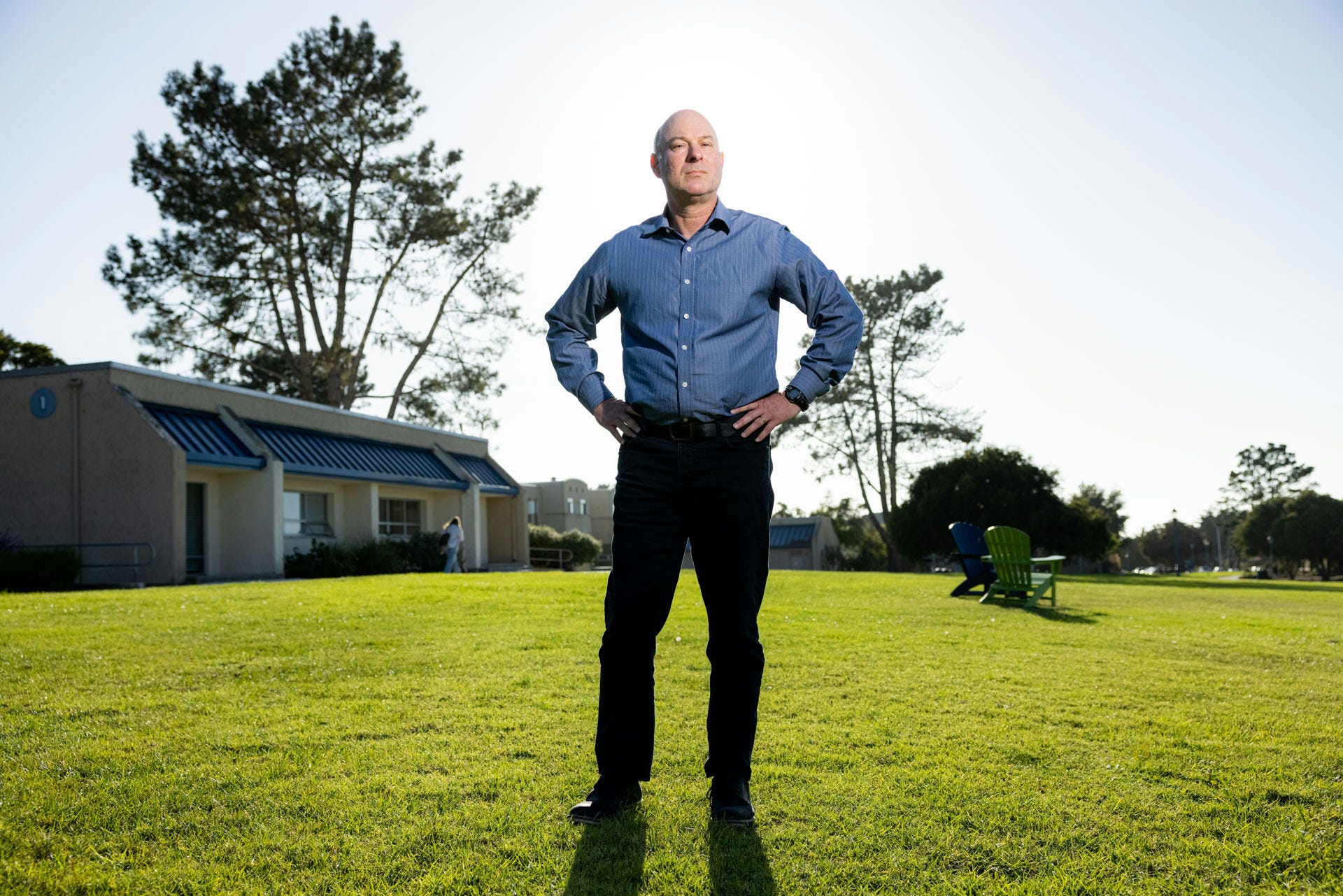
>Rob Weisskirch’s office at California State University, Monterey Bay, where he is chairman of the Department of Human Development and Family Science, has been decorated with union memorabilia ever since he began paying dues to the California Faculty Association (CFA) in 2001. He even went on strike in solidarity with Monterey Bay’s unionized faculty in 2024.
>That all changed earlier this month. On September 11, Weisskirch resigned from the CFA and cleared out every union hat, button, sign, and award from his office, including his “2019 Unionist of the Year” trophy. He couldn’t stand to look at them anymore.
>How Weisskirch reached this point is a story of persistent, entrenched antisemitism within the faculty ranks at colleges and universities—and a union’s apparent refusal to afford Jewish members the kind of representation granted to other groups.
>Rob Weisskirch removing his “Unionist of the Year Award“ from his shelf after resigning from the California Faculty Association. (Jacon Henry for The Free Press)
>The CFA says it represents 29,000 professors, lecturers, librarians, counselors, and coaches at the 22 campuses in the California State University (CSU) system. What those union members teach and say matters because CSU has more than 470,000 students and awards more than 123,000 degrees every year.
>While the number of reported antisemitic incidents on campuses appears to have fallen from its peak during the 2024–2025 school year, some Jewish faculty members in the CSU system like Weisskirch say their efforts to confront the surge that began after Hamas attacked Israel on October 7, 2023, have been met with resistance and outright hostility.
>On September 10, the union’s Council for Racial and Social Justice (CRSJ) was supposed to vote on the creation of a mission statement for a new Jewish Caucus, led by Weisskirch and eight other colleagues. It was part of an agenda that included routine matters such as contracts and board membership, and the meeting was scheduled to last just half an hour.
>The CRSJ already had several caucuses focused on specific groups, including Asian American, African American, and female members. A Palestine, Arab, and Muslim Caucus formed around October 2023. According to the union, the CRSJ is “committed to dismantling oppression” that is based on religion, nationality, or nearly 20 other forms of identification listed on its website.
>The Jewish Caucus’s proposed mission statement laid out 12 goals, centered on fighting “antisemitism, white supremacy, and systemic racism and discrimination” in the CSU system, the union, “within our communities, and within the State of California.” It also proposed educating CFA members about Jewish history and antisemitic tropes, building coalitions with other union caucuses, and holding the CFA accountable “to take seriously” and “act when concerns about antisemitism are raised.”
>The mission statement defined antisemitism as “prejudice, hostility, and/or discrimination toward Jews as a racial, religious, and/or ethnic group.” The word Israel was mentioned only once, in a reference to members of the proposed Jewish Caucus engaging in “collaboration with colleagues from Israel.”
>Weisskirch told me he wasn’t all that optimistic about the vote, since two previous presentations of the proposed mission statement to the CRSJ resulted in objections from some members who opposed identifying Israel as the Jewish homeland. Nevertheless, Weisskirch and other Jewish Caucus organizers incorporated some of the feedback.
>The Zoom meeting included over 60 participants and began in typical fashion: with a land acknowledgement and a breathing exercise. Then Earl Aguilera, an associate professor in the teacher education department at CSU East Bay in Hayward, read the union’s “interruption guidelines,” according to a transcript of the meeting reviewed by The Free Press.
>“When we experience examples of racial narratives, racism, or white supremacy in our meetings, we can interrupt the meeting and draw the issue to one another’s attention,” Aguilera told the assembled union members. He added that “white supremacy and racism operate in tandem with interlocking systems of oppression, colonialism, racial capitalism, class, cis-heteropatriarchy, ableism, and neuroableism.” That meant members were free to interrupt one another during the meeting if they felt someone had crossed one of those lines.
>None of the other items on the agenda were discussed. First, the CRSJ’s associate vice president, sociology lecturer Christopher Cox of San José State University, brought up the planned vote on the Jewish Caucus, according to the transcript. Then, Teresa Velasquez, interim chair of ethnic studies at California State University, San Bernardino, and a member of the union’s Palestine, Arab, and Muslim Caucus, invoked the interruption guidelines and said there should be no vote at all.
>Even allowing the proposal to get this far showed that some members had “made themselves complicit with racism” against Palestinian, Arab, and Muslim communities, Velasquez claimed, adding that the Jewish Caucus’s central goal would be “to legitimize and promote racism, settler colonialism, and ongoing genocide against Palestinian, Arab, and Muslim communities,” the transcript said.
>Velasquez also objected to the International Holocaust Remembrance Alliance (IHRA) definition of antisemitism, even though it wasn’t referred to in the proposed mission statement. Velasquez argued that “Zionist groups have used” the IHRA’s definition “to cover up the Israeli genocide and to force academic and other public institutions to adopt it.”
>An ethnic studies professor chimed in to say that he “would love a Jewish caucus, but I do not want a Zionist caucus,” according to the transcript. Another meeting participant said that “we have better things to do than to entertain what we need to do to basically cover up for people who pretend to be attacked like the Promise Keepers,” apparently a reference to the evangelical Christian men’s group that opposes same-sex marriage and says men should be the head of their households. And yet another person at the meeting called the proposal a “Zionist, right-wing, settler-colonialist project.”
>Participants often called each other “comrade” and sometimes “habibi,” an Arabic word that means “my love.” When one union member suggested delaying the vote, another responded: “We’re dealing with genocide, and we’re dealing with people who are advocating genocide, who are trying to make it okay. . . . So you cannot just do this.”
>In a Zoom message to the full group, Omar Zahzah, an assistant professor of Arab, Muslim, ethnicities, and diaspora studies in San Francisco State University’s (SFSU) Department of Race and Resistance Studies, wrote that the mission statement suggested collaboration with Israel, which must be boycotted because it is a “genocidal apartheid state.” (He also is the author of Terms of Servitude, which its publisher describes as a book about how American technology companies “support the Israeli settler-colonial project.”) During the meeting, Mark Allan Davis, an associate professor of Africana studies at SFSU, wrote in his own Zoom message: “Are we going to be considered ANTI Semitic? You bet.”
>Instead of lasting the scheduled 30 minutes, the meeting continued for nearly 90. It adjourned with no vote taken on the proposal. Instead, the CRSJ decided that the proposed mission statement “does not meet the criteria set forward by CRSJ.”
>The Free Press sought comment from each meeting participant who criticized the proposed statement and is identified by name in this article. None of them responded. After The Free Press sought comment from the CFA, the union told members in an email that a transcript of the meeting and its Zoom messages had been leaked. “We understand that this breach invokes fear and concern, for faculty, and especially faculty of color, who face unique barriers to keeping employment and advancing in the tenure process,” the email said.
>What happened on September 10 was a bitter defeat for Weisskirch and the other colleagues who had spent nearly two years trying to respond to antisemitism in the CSU system. In April 2024, pro-Palestinian protesters occupied two buildings at California State Polytechnic University, Humboldt, for more than a week, leading to a campus-wide shutdown, dozens of arrests, and a federal investigation into alleged campus antisemitism.
>Monterey Bay cinematic arts and technology professor Enid Baxter Ryce told me that she decided to leave the CFA last year after a student intern event commemorated October 7. She wasn’t surprised at all by the hostility shown toward the creation of the Jewish Caucus.
>“What you’re talking about is the ideological capture of a union that represents professors who teach K-12 teachers, child psychologists, social workers, and people who interact with children,” Baxter Ryce said.
>Weisskirch told me that the Jewish Caucus’s organizers have never been told exactly what the criteria are for approval of the mission statement.
>“I think they’re really the worst kind of antisemites because they will say out of one side of their mouths that ‘We condemn antisemitism,’ but on the other side, they just stand silent for any kind of action,” he said. “It’s academic antisemitism, in that it’s all very cerebral. It’s couched in this intellectual movement. And it’s couched in social justice in a way that appeals to our students.”
>Weisskirch said about Jewish faculty, “We are in support of social justice. We’re in the fight, but we can’t do it with CFA.”