▲ 49 r/Marvel
Appearance-wise, how should the real symbiote costume be differentiated from the cloth version?
u/Toon_Ghost_3 — 23 hours ago
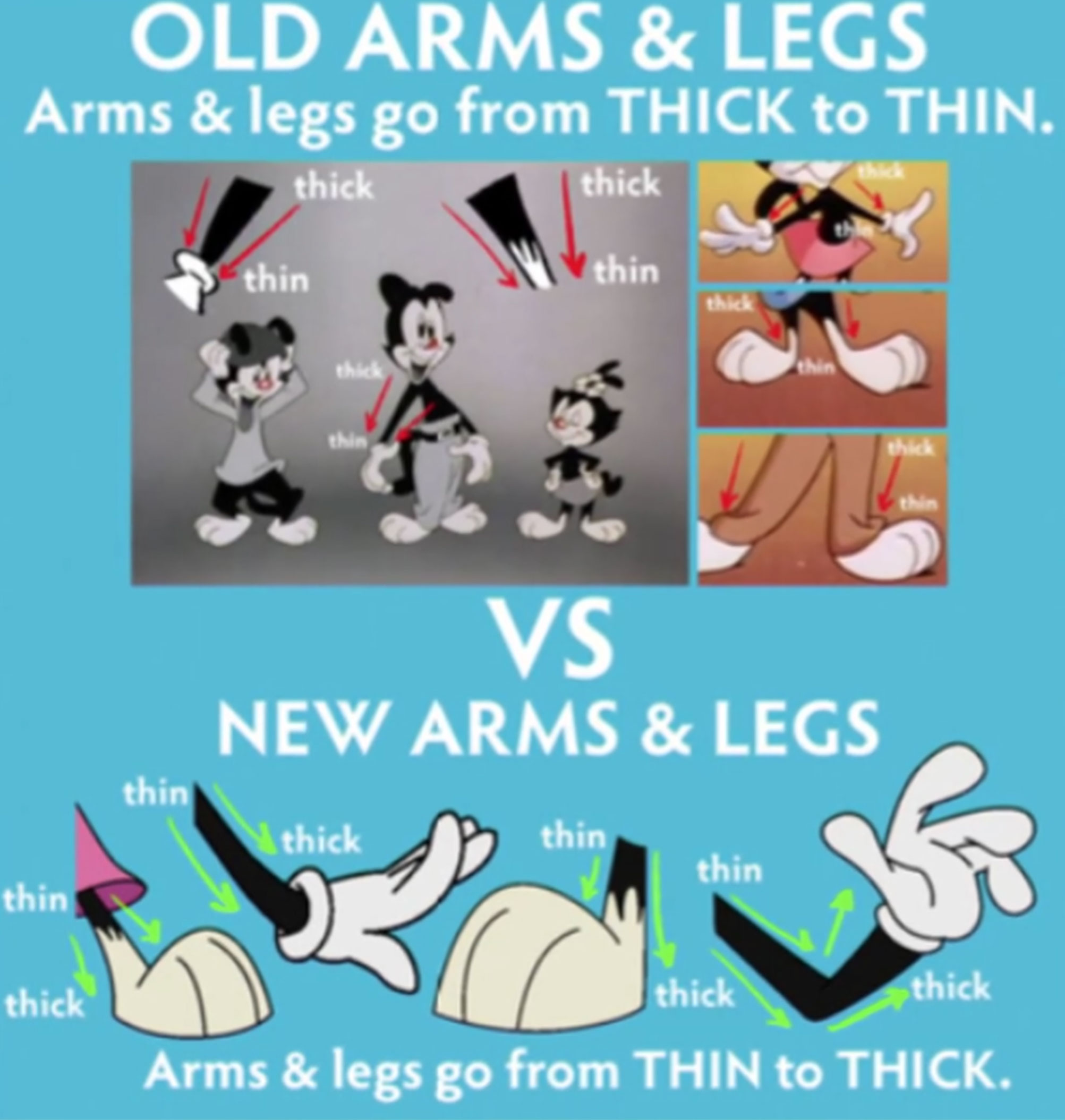
First, does a rubber-hose character's limbs need to be uniform, or would it still be a rubber-hose character if its limbs are tapered ("thick-to-thin" and "thin-to-thick")?
Second, what kind of character do you get when you give a rubber-hose character joints? (Yes, I already know that joints defeat the purpose of this style, but still.)
Finally, what kind of character do you get when you give a rubber-hose character joints, visible eyeballs with regular pupils (in place of dotted or pie-cut pupils), as well as an organic and asymmetrical body build?
I mean, you were harsh and furious with someone for doing something bad or stupid, just because you were worried for their safety or something? At this point, why are you still putting up with their crap?
If anything, the "Anger Born from Worry" thing seems like you hate that person out of nowhere, no matter whether or not you claim to be "concerned" for their safety or whatever, and it makes me wonder if you TRULY saw that person as a friend/sibling/ally/family member in the first place.
If you never really saw that person as such and thus, hate them for what they've done, then why not unfriend or disown them? I know it sounds exceedingly harsh, but still.
I know it defeats the point of the rubber-hose style, but still.
I know that adding joints defeat the point of the rubber-hose style, but still.
If I'm wrong, then I'm not sure if I should describe this game as "Don Bluth meets Looney Tunes", or "If Don Bluth and Ralph Bakshi had collaborated with Tex Avery" or something else, since Brain Dead 13 is inspired by Dragon's Lair, but not only do the character designs look more exaggerated (akin to those from either a Looney Tunes or Tex Avery cartoon), but some of the death scenes are over-the-top and cartoony.
In RYB (primary colors of pigment), there are:
Red = Green
Yellow = Purple
Blue = Orange
In both RGB and CMYK (the primary and secondary colors of light), there are:
Red = Cyan
Green = Magenta
Blue = Yellow
Some say that the RYB color model is outdated, and that both RGB and CMYK are accurate.
Despite this, some still use RYB, and some (allegedly) believed that darkness isn't black, but is actually purple (or blue-violet), which implies that light isn't white, but is actually either yellow or orange.
My thoughts: This take on the Frowning Critters logo is good, but unique to say the least. The artist in this post however, comes off as obnoxious and egotistical to me.
Here, the characters' teeth are shown as vertical rectangles. It's as if the top and bottom teeth have been fused together.
Does this count as a downplayed example of Thin-Line Animation: This cartoon style uses thin outlines as well as simple and rounded shapes, but not only does it lack bean-shaped mouths, bean-shaped heads, dome-shaped teeth, Tooth Strip, Black Bead Eyes, but the character are either Noodle People or have Rubber-Hose Limbs (albeit as downplayed examples)?
Do the White Rabbit from "The Care Bears' Adventure in Wonderland (1987)", as well as Cookie Cop and Cookie Crook (both are former Cookie Crisps mascots) count as downplayed examples of having Rubber-Hose Limbs?
How is Thick-Line Animation one of the most defining traits of present-day American animation, even if it was used just to emphasize the difference(s) between American and Japanese animation?
3a. Are there any other defining traits of present-day American animation? Don't visual styles like Disneyesque and Thin-Line Animation count?
3b. What about the Inkblot Cartoon Style, due to the emergence of games like Bendy And The Ink Machine, Cuphead, and MOUSE: P.I. For Hire?
The angular and stylized versions of both Wander and Major Threat on the right are from "The Legend (Jamie's story)".
Edit: If the answer is neither, then which design is better?
It's a reversal of the phrase "Reject Modernity, Embrace Tradition", which was made by Conservatives and Traditionalists.